
Summary
- National Space Day 2026 is observed on August 23 to commemorate Chandrayaan-3’s successful Moon landing in 2023.
- Chandrayaan-3 made India the fourth country to achieve a soft lunar landing and the first to land in the Moon’s southern polar region.
- India’s space ambitions are expanding from robotic lunar exploration to human spaceflight through Gaganyaan.
- Indian astronaut Group Captain Shubhanshu Shukla’s 2025 Axiom-4 mission to the ISS provided valuable experience relevant to India’s human-spaceflight programme.
- Gaganyaan requires advanced technologies for crew safety, life support, emergency escape, re-entry and astronaut training.
- India’s space programme also supports everyday needs, including agriculture, weather forecasting, disaster management, communications and environmental monitoring.
- The growth of India’s private space sector is creating a wider ecosystem of startups, researchers, manufacturers and entrepreneurs.
- Future missions such as Chandrayaan-4 and plans for the Bharatiya Antariksh Station point towards increasingly ambitious space exploration.
- India has also outlined a longer-term ambition of sending humans to the Moon by 2040.
- National Space Day 2026 is therefore about more than past achievements. It reflects India’s ambition to build the scientific, technological and human capacity needed for the next phase of space exploration.
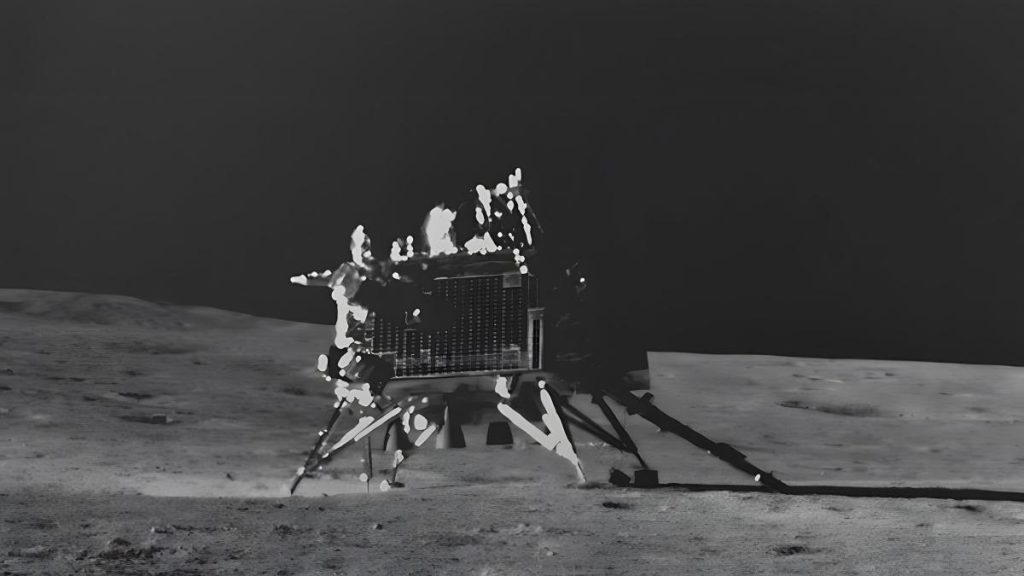
On August 23, 2023, millions of Indians watched a historic moment unfold. The Vikram lander of Chandrayaan-3 gently touched down on the Moon, making India the fourth country to achieve a soft landing on the lunar surface and the first to land in the Moon’s southern polar region. The Pragyan rover subsequently travelled across the lunar surface, conducting experiments and transmitting scientific data back to Earth. The achievement was particularly significant because it demonstrated the country’s ability to design, launch, navigate and land a spacecraft in one of the most technically demanding environments in space.
It was this stride that gave August 23 a new place in India’s scientific calendar. The Government declared the date National Space Day to commemorate Chandrayaan-3’s landing.
But by 2026, the meaning of the day has expanded. India’s space story is no longer only about reaching the Moon. It is increasingly about what the country can do once it gets there, what it can learn in orbit, and whether it can build the technological infrastructure required to keep humans in space.
Introducing the Gaganyaan and new horizons
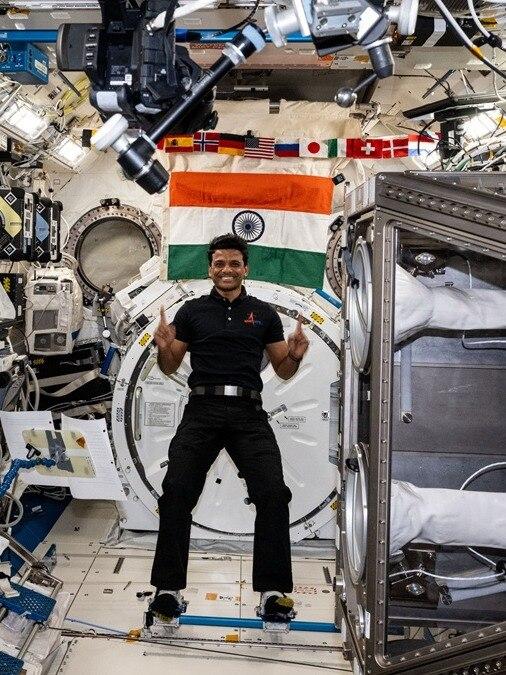
Between 2023 and 2026, a lot has changed. Case in point: when Gaganyaan astronaut Group Captain Shubhanshu Shukla looked out of the window of the International Space Station in July 2025, India was no longer looking at space only through cameras and instruments. The Indian Air Force test pilot, who travelled to the ISS as part of the Axiom-4 mission, carried with him something larger than a national flag: years of preparation for India’s human spaceflight ambitions. During his 18-day mission, Shukla conducted scientific experiments in microgravity and gained practical experience that has relevance for India’s own human spaceflight programme. His journey was, in many ways, a preview of where India’s space programme is headed next.
Shukla’s journey to the ISS occupies an important place in this transition. His Axiom-4 mission was not itself a Gaganyaan flight, but it offered Indian scientists and space officials an opportunity to study the realities of human spaceflight. His experience in microgravity, astronaut training, mission protocols and scientific experimentation provides a practical foundation for India’s own efforts to send astronauts into orbit.
The image of an Indian astronaut working aboard the ISS also represented a shift in how India’s space programme is imagined. For decades, the country’s space achievements were represented largely through rockets, satellites, spacecraft and scientists working in mission-control rooms. Shukla’s ascent to the ISS offered another promising image.
Shifts in policy and ambitions
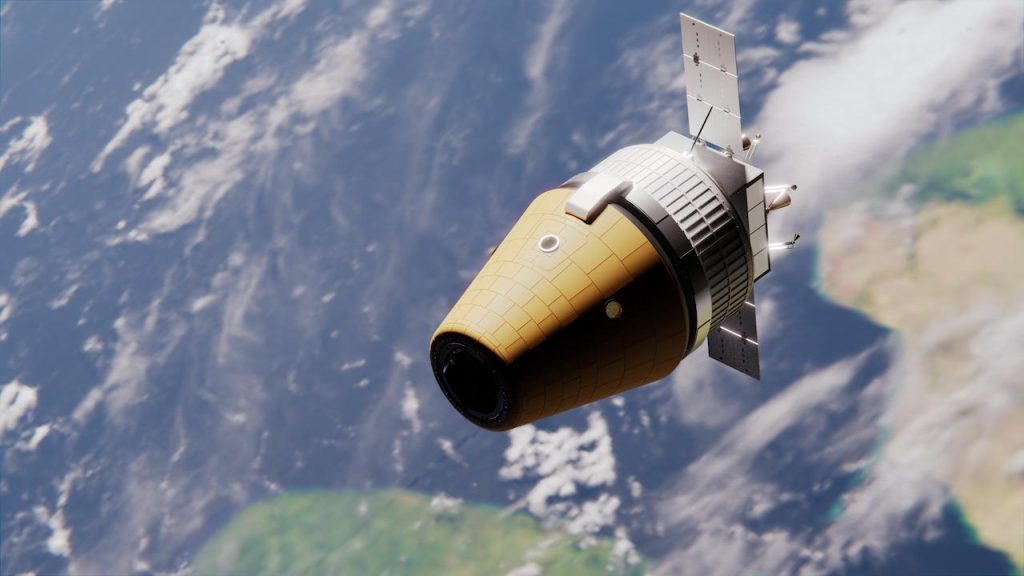
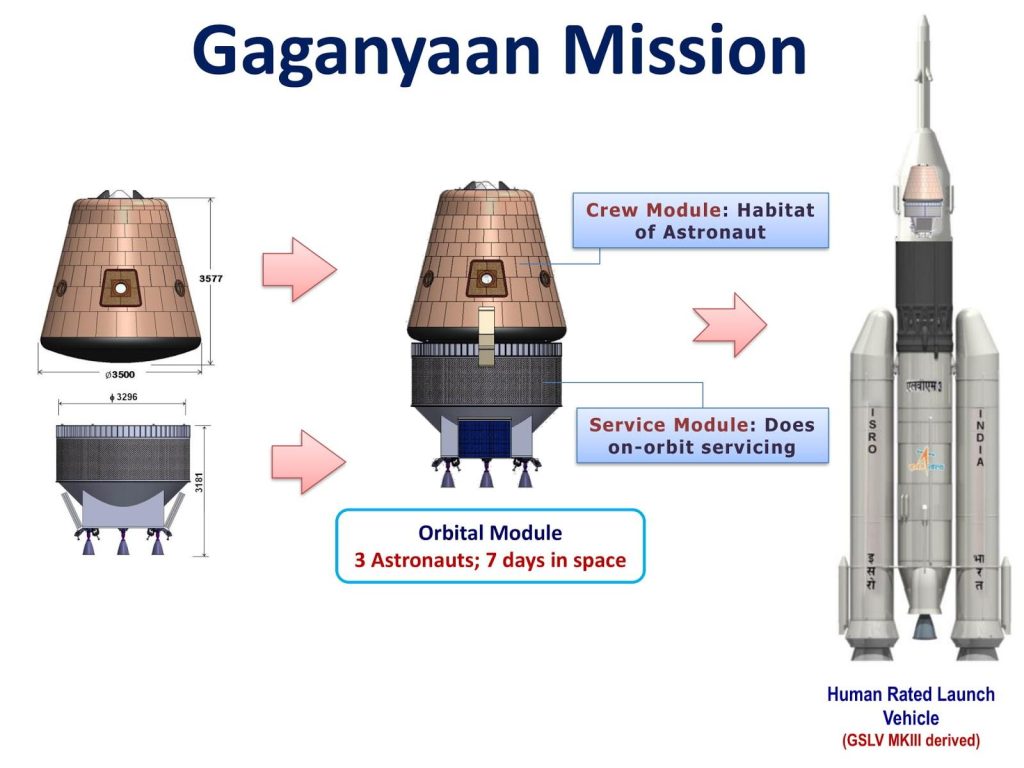
The shift from Chandrayaan-3 to Gaganyaan represents a fundamental change in the complexity of India’s ambitions on the space front. If we focus, then Chandrayaan and Gaganyaan represent two different stages of India’s space ambitions. The Chandrayaan missions are primarily about exploring the Moon through unmanned spacecraft. Chandrayaan-3, for instance, used the Vikram lander and Pragyan rover to reach the lunar surface, conduct experiments and gather information about the Moon. Gaganyaan, in contrast, is India’s human spaceflight programme, designed to send Indian astronauts into Low Earth Orbit and bring them safely back to Earth. This requires a fundamentally different set of technologies, including a human-rated launch vehicle, crew module, life-support systems, emergency escape mechanisms, parachutes and astronaut training.
The transition from Chandrayaan to Gaganyaan therefore marks a shift in what India wants to achieve in space. Chandrayaan demonstrated that the country could successfully operate a spacecraft on another celestial body; Gaganyaan seeks to demonstrate that India can sustain human life in space. With human missions, the emphasis moves from robotic exploration and scientific observation to human safety, endurance, microgravity research and the development of a wider space infrastructure. In this sense, India’s space programme is moving from exploring space through machines to establishing the capability for humans to operate in space.
This is also why Shubhanshu Shukla’s journey to the International Space Station is significant: his experience as an Indian astronaut working in orbit provides valuable knowledge as India prepares for its own crewed missions. His ascent in space is thus important in paving a way for more and more astronauts to advance space research in India.
Paving a way to more imaginative future
India’s space programme uses satellites not only for scientific research but also for applications that support governance, livelihoods and public services. Earth-observation satellites provide data for agriculture, forestry, water-resource management, land-use mapping and environmental monitoring. Satellite-based systems also contribute to weather forecasting, cyclone tracking and disaster management, television broadcasting, telecommunications and connectivity across geographically diverse regions.
At the same time, India’s private space sector has expanded rapidly. More than 400 space startups had been recognised by the government by early 2026, reflecting a shift from a largely state-led space programme towards a broader ecosystem involving private companies, researchers, manufacturers and entrepreneurs. This expansion is pertinent because a mature space programme cannot depend entirely on government laboratories. It requires an industrial base capable of developing launch systems, satellites, components, software and other technologies at scale. The growing participation of private companies could therefore determine not only how many missions India can undertake, but also how competitive its space economy becomes.
Gaganyaan is ultimately a bridge to a rather ambitious goals, towards a Bharatiya Antariksh Station, as a part of which we further human-spaceflight missions and increasingly sophisticated lunar exploration. Chandrayaan-4, for instance, is expected to move beyond simply reaching the lunar surface by attempting to collect lunar samples and return them to Earth. The longer-term vision is even more ambitious.
India has outlined plans for a crewed lunar mission by 2040, alongside the development of its own space station. These goals place the country within a new phase of global space exploration, one increasingly shaped not only by national agencies but also by commercial space companies and international partnerships.
National Space Day 2026, therefore, is less a celebration of a mission but a marker of a changing national imagination. The question is now whether the benefits of its space programme can reach people far beyond the launchpad. But reaching that future will require more than just rockets and spacecrafts. Sustained investment in space infrastructure will need to be matched by investment in human capital. The next phase of India’s space journey, therefore, will be measured not simply by how far it can travel, but by whether it can create the scientific and human capacity to stay the course.
FAQs: National Space Day 2026
1. What is National Space Day 2026 in India?
National Space Day 2026 is observed on August 23 to commemorate the successful landing of Chandrayaan-3 on the Moon in 2023.
2. Why is Chandrayaan-3 significant for India?
Chandrayaan-3 made India the fourth country to achieve a soft landing on the Moon and the first to land in the lunar southern polar region.
3. What is the Gaganyaan mission?
Gaganyaan is India’s human spaceflight programme, designed to send Indian astronauts into Low Earth Orbit and safely bring them back to Earth.
4. How is Gaganyaan different from Chandrayaan-3?
Chandrayaan-3 was a robotic lunar exploration mission, while Gaganyaan focuses on human spaceflight. It therefore requires technologies such as crew systems, life support, emergency escape and human-rated launch systems.
5. Who is Shubhanshu Shukla and why is his spaceflight important for India?
Group Captain Shubhanshu Shukla is an Indian astronaut and Indian Air Force test pilot who travelled to the International Space Station as part of the Axiom-4 mission in 2025. His experience in astronaut training, microgravity and scientific experimentation offers valuable practical experience for India’s human-spaceflight ambitions.
6. How does India’s space programme benefit people on Earth?
Satellites support agriculture, weather forecasting, disaster management, telecommunications, environmental monitoring, land-use mapping, water-resource management and connectivity.
7. What are India’s future space ambitions?
India is working towards missions including Chandrayaan-4, the development of the Bharatiya Antariksh Station and a longer-term goal of sending humans to the Moon by 2040.