Summary
Poverty line in India is measured through household consumption expenditure rather than income, since informal work and seasonal earnings make income hard to track reliably. Data comes from National Statistical Office surveys, with monthly per capita expenditure compared against an official threshold adjusted for regional prices.
The methodology has shifted substantially over time. The Alagh Committee (1979) anchored poverty in calorie requirements — 2,400 per day in rural areas, 2,100 in urban. The Tendulkar Committee (2009) replaced calorie norms with a broader consumption basket covering health, education and transport, producing the 21.9 per cent below-poverty-line estimate for 2011–12. The Rangarajan Committee (2014) proposed a more generous normative basket and a correspondingly higher poverty count, though its recommendations were never formally adopted. NITI Aayog’s Multidimensional Poverty Index now supplements expenditure measures by tracking deprivation in health, education, sanitation and living standards.
The article’s central argument is that the poverty line, while indispensable for targeting welfare, gives only a partial picture. It ignores households clustered just above the threshold who remain one hospitalisation, job loss or crop failure away from falling below it. It underweights India’s regional cost-of-living gaps and the specific pressures of urban life — rent, commuting, private schooling and healthcare. And it says nothing about job security, quality of public services, or social exclusion. Poverty, the piece concludes, is better understood as a question of capabilities and dignity than of position relative to a numerical cut-off.
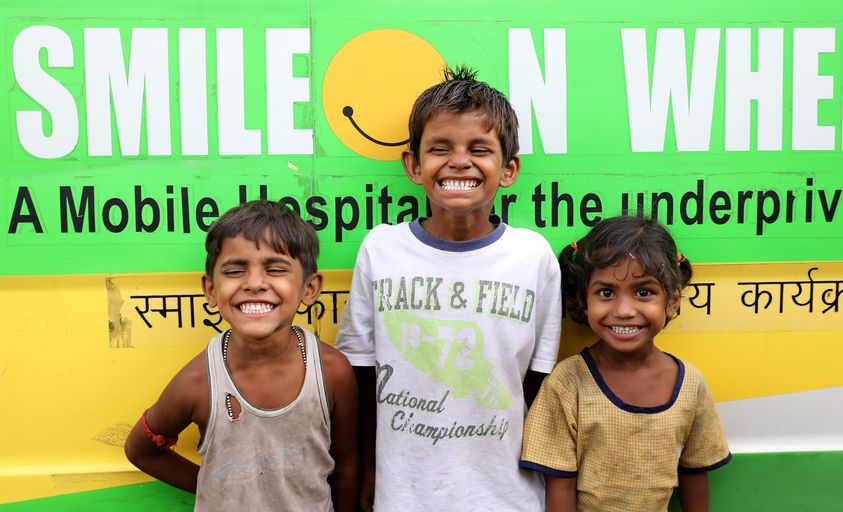
Who is poor? Poverty line in India
For decades, a single question has shaped India’s anti-poverty policies: Who is poor? The question is important because its answer determines who receives and should receive subsidised food, housing assistance, pensions, scholarships, healthcare benefits and many other benefits in a country like ours so divided on lines of class. Yet making sense of poverty and being able to describe it is far more complicated than drawing a line between those who have enough and those who do not.
The definition of poverty is also complicated to arrive at because poverty is not merely about income but it is about whether people can live with dignity, access opportunities and withstand life’s uncertainties. As India’s economy has expanded and living standards have changed, the debate over how poverty should be measured has also expanded to become one of the country’s most contested public policy questions.
In this context, the poverty line in India is essentially a statistical threshold that estimates the minimum level of consumption or expenditure required to meet basic needs. Individuals or households whose consumption falls below this threshold are classified as living in poverty. While the concept appears straightforward, determining where to draw this line involves difficult judgments about several factors that vary widely across India’s regions.
The rise of multidimensional poverty
Despite its apparent simplicity, the poverty line in India is neither a fixed income threshold nor a universally accepted benchmark. In India, it has significantly evolved over several decades, reflecting the changing understandings of what constitutes a minimum acceptable standard of living.
Unlike many developed economies that primarily use income-based measures, India estimates poverty through household consumption expenditure. With a sizeable informal economy, seasonal employment, and fluctuating earnings, household income is often difficult to measure accurately. Consumption expenditure, by contrast, tends to provide a more reliable indicator of living standards.
Data are collected through nationally representative household surveys conducted by the National Statistical Office. Economists then estimate each household’s monthly per capita consumption expenditure and compare it with an officially determined poverty threshold, adjusted for regional price differences.
India’s earliest poverty estimates were rooted in nutritional requirements. The Y. K. Alagh Committee (1979) recommended defining poverty as the minimum expenditure required to consume 2,400 calories per person per day in rural areas and 2,100 calories in urban areas. While this calorie-based methodology reflected concerns about food security and undernutrition at the time, critics argued that it overlooked the growing importance of non-food expenditures such as healthcare, education, transport, housing and energy, all of which increasingly shaped household well-being.
Recognising these limitations, the Suresh Tendulkar Committee (2009) fundamentally revised India’s poverty estimation methodology. Moving away from calorie norms, it proposed a broader consumption basket that reflected actual household expenditure patterns and incorporated essential non-food needs. The committee also recommended a uniform poverty basket for rural and urban India while accounting for interstate price variations. Using this methodology, an estimated 21.9 per cent of India’s population was classified as living below the poverty line in 2011–12, a benchmark that informed official poverty estimates for nearly a decade.
The debate, however, did not end there. The C. Rangarajan Committee (2014) proposed a more comprehensive normative consumption basket that allocated higher expenditure for food, protein intake, healthcare, education, clothing, transport and housing. Unsurprisingly, this revision produced a higher poverty threshold and consequently a larger estimate of the poor. Although the Rangarajan recommendations were not formally adopted by the Government of India, they underscored an enduring methodological question: should poverty lines reflect bare subsistence or the minimum resources necessary to participate meaningfully in contemporary society?
This debate has become even more relevant as conceptions of poverty have expanded beyond income or consumption alone. Increasingly, policymakers recognise that deprivation is multidimensional, encompassing deficits in health, education, sanitation, housing, nutrition and access to basic services. Reflecting this shift, NITI Aayog now publishes India’s Multidimensional Poverty Index (MPI), which assesses poverty across multiple indicators. Multidimensional measures offer a more comprehensive understanding of persistent disadvantages.
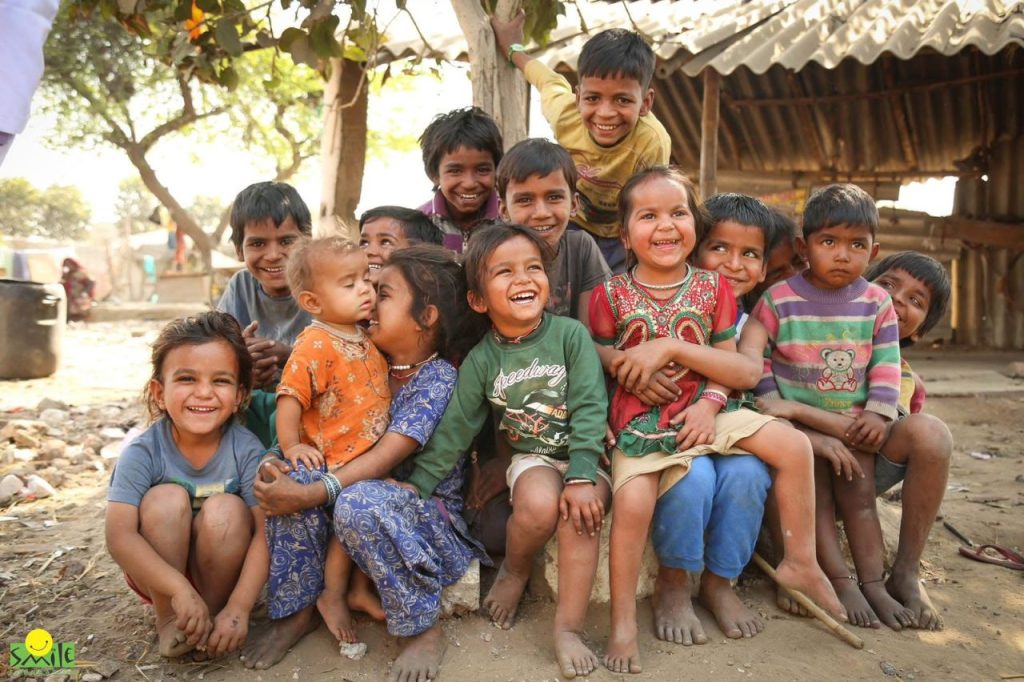
The downside of the measure of poverty line in India
Despite its value as a policy tool, the poverty line in India offers only a partial picture of deprivation. By reducing poverty to a single expenditure threshold, it identifies those who fall below a statistical benchmark but often overlooks millions of households living just above it, who remain highly vulnerable to financial shocks. A medical emergency, job loss, crop failure or period of high inflation can quickly push these families into poverty, revealing how precarious their economic security truly is.
The measure also struggles to capture India’s vast regional disparities in the cost of living. A household considered above the poverty line in a small town may find the same income insufficient in metropolitan centres, where housing, transportation, childcare and other essential expenses are substantially higher. Similarly, while official poverty estimates account for average expenditure, they often underestimate the devastating impact of out-of-pocket healthcare costs.
India continues to have one of the highest levels of household health spending globally and a single episode of hospitalisation can force families to exhaust savings and incur debt. Such health expenditure frequently pushes even non-poor households into poverty, exposing a dimension of economic vulnerability that conventional poverty lines rarely reflect.
Urban poverty presents another challenge. Rising rents, longer commutes, digital connectivity, and the growing dependence on private education and healthcare have significantly increased the cost of living in cities, yet these realities are not always adequately incorporated into official poverty thresholds. Beyond these economic limitations, the poverty line says little about the quality of public services, job security, social exclusion or an individual’s ability to withstand future risks.
As development economists increasingly argue, poverty is not simply about surviving above or below a numerical cut-off; it is about whether people possess the capabilities and opportunities to lead lives of dignity. Ultimately, while the poverty line remains indispensable for estimating deprivation, it cannot by itself capture the complex and multidimensional nature of poverty in contemporary India.
FAQs
1. What is the poverty line in India?
Poverty line in India is a statistical threshold representing the minimum consumption expenditure needed to meet basic needs. Households spending below it are classified as living in poverty, and the line determines eligibility for subsidised food, pensions, housing assistance, scholarships and healthcare benefits.
2. Why does India measure poverty by consumption instead of income?
India has a large informal economy with seasonal employment and irregular earnings, which makes household income difficult to record accurately. Consumption expenditure tends to be steadier and more reliably reported, so it serves as a better proxy for actual living standards.
3. Who collects the data used to estimate poverty?
The National Statistical Office conducts nationally representative household surveys. Economists then calculate monthly per capita consumption expenditure for each household and compare it against the official threshold, adjusted for price differences across regions.
4. What did the Tendulkar Committee change?
The Tendulkar Committee (2009) moved away from calorie-based norms and built a consumption basket reflecting real household spending patterns, including essential non-food needs. It also recommended a uniform basket for rural and urban India while adjusting for interstate price variation. Its methodology yielded the estimate that 21.9 per cent of Indians were below the poverty line in 2011–12.
5. Why were the Rangarajan Committee’s recommendations controversial?
The Rangarajan Committee (2014) proposed a normative basket with higher allocations for food, protein, healthcare, education, clothing, transport and housing. This raised the threshold and therefore increased the estimated number of poor people. The Government of India did not formally adopt the recommendations, but the debate they triggered remains unresolved: should a poverty line measure bare subsistence or the resources needed to participate meaningfully in society?
6. What is the Multidimensional Poverty Index?
Published by NITI Aayog, the MPI assesses poverty across several indicators rather than expenditure alone — including health, education, sanitation, housing, nutrition and access to basic services. It captures forms of persistent disadvantage that a single spending threshold cannot detect.
7. What are the main limitations of the poverty line in India?
Poverty line in India excludes the large number of households living just above the threshold who remain highly vulnerable to shocks; it struggles to reflect regional cost-of-living differences; it underestimates the impact of out-of-pocket healthcare spending, which is among the highest in the world and routinely pushes non-poor families into poverty; and it captures nothing about job security, public service quality or social exclusion.
8. Why is urban poverty harder to measure?
Rising rents, longer commutes, digital connectivity costs and growing reliance on private schooling and healthcare have pushed up the real cost of urban living. Official thresholds do not always incorporate these pressures, so a household above the line in a small town may be effectively worse off in a metropolitan area on the same income.