
Despite aspirations for stable careers and better living standards, thousands of young people encounter barriers not limited to the classroom. Limited access to quality education, inadequate digital literacy, financial hardship and social discrimination often restrict their employment opportunities to the informal economy, where wages are low, jobs are insecure and career growth is minimal.
But over the past two decades, two sectors have silently emerged as powerful drivers of social mobility — Business Process Outsourcing (BPO) and organised retail. While these industries are often associated with customer service, shopping malls and multinational companies, they have also become important gateways into the formal workforce for thousands of first-generation employees from economically disadvantaged communities.
For many young people living in urban slums, these sectors represent much more than a pay cheque, offering dignity, confidence, financial independence and the opportunity to rewrite the trajectory of their lives.
Although BPO and retail may not typically feature in discussions of poverty alleviation, they have become unlikely heroes of youth empowerment by creating accessible employment pathways for individuals who might otherwise have remained trapped in cycles of informal work and economic vulnerability.

Understanding the Employment Challenge Facing Urban Youth
India has one of the world’s youngest populations, with nearly 65 per cent of its citizens below the age of 35. This demographic advantage has the potential to fuel economic growth, but only if young people possess the skills and opportunities needed to participate in the workforce.
For youth living in urban slums, however, securing formal employment remains particularly challenging. Many attend under-resourced schools, leave education early due to financial pressures, or lack exposure to professional workplaces. Even when they complete their education, employers increasingly seek communication skills, digital literacy, customer service abilities and workplace etiquette, competencies that are not always taught in traditional classrooms.
As a result, countless young people enter low-paid informal jobs with limited opportunities for career progression. Breaking out of this cycle requires industries that are willing to recruit based on potential rather than privilege.
Why BPO and Retail Sectors Stand Out
Unlike many specialised industries that require advanced technical qualifications or years of experience, the BPO and retail sectors often prioritise communication skills, adaptability, willingness to learn and customer engagement. This makes them particularly accessible for first-time job seekers.
A young graduate from an underserved community may not have an engineering degree or professional network, but with the right training, they can succeed as a customer support executive, retail associate, sales consultant, inventory coordinator or store supervisor. These positions provide an entry point into the organised economy while offering structured career progression, formal salaries, employee benefits and opportunities for continuous learning.
Perhaps more importantly, these industries have demonstrated that employability is not determined solely by academic qualifications but also by soft skills, confidence and professional readiness.
More Than Employment: Building Confidence and Identity
The impact of formal employment extends well beyond monthly income. For many young people from marginalised communities, securing their first corporate or organised-sector job transforms how they see themselves and how society perceives them.
Employment often becomes the first experience of financial independence. Young adults who previously relied on their families are suddenly able to contribute to household expenses, support younger siblings’ education or save for their own futures. For women, formal employment can significantly increase decision-making power within families while delaying early marriage and expanding opportunities for higher education and professional growth.
The workplace also becomes a space for developing communication skills, teamwork, problem-solving abilities and confidence. Interacting with customers, managing responsibilities, meeting performance targets and collaborating with colleagues helps young employees acquire life skills that remain valuable throughout their careers.
In this sense, BPO and retail sectors create not only economic mobility but also social mobility.
Formal Employment Brings Stability

One of the most important differences between informal work and organised employment is stability. Informal jobs often offer irregular wages, limited legal protections and little job security. Workers may lose income due to illness, economic downturns or seasonal fluctuations.
Formal employment within BPO and retail sectors typically provides structured salaries, regulated working hours, training opportunities, employee benefits and clearer career pathways. These features contribute to greater financial security while encouraging long-term career planning.
For families living on the margins of poverty, the shift from unpredictable daily wages to regular monthly incomes can fundamentally change household finances. Stable employment enables families to invest in education, healthcare, nutrition and housing, creating benefits that extend across generations.
Why Skills Matter as Much as Jobs for BPO and retail sectors
While employment opportunities exist, many employers continue to report significant skill gaps among young job seekers. Technical knowledge alone is often insufficient for success in customer-facing industries.
Communication skills, digital literacy, English language proficiency, workplace behaviour, teamwork, time management and problem-solving have become equally important. These transferable skills allow young people to adapt across industries throughout their careers.
This is where skill development becomes critical. Preparing young people for employment requires more than vocational training; it requires building confidence, professionalism, and resilience alongside technical capabilities.
How Smile Foundation Bridges the Employability Gap
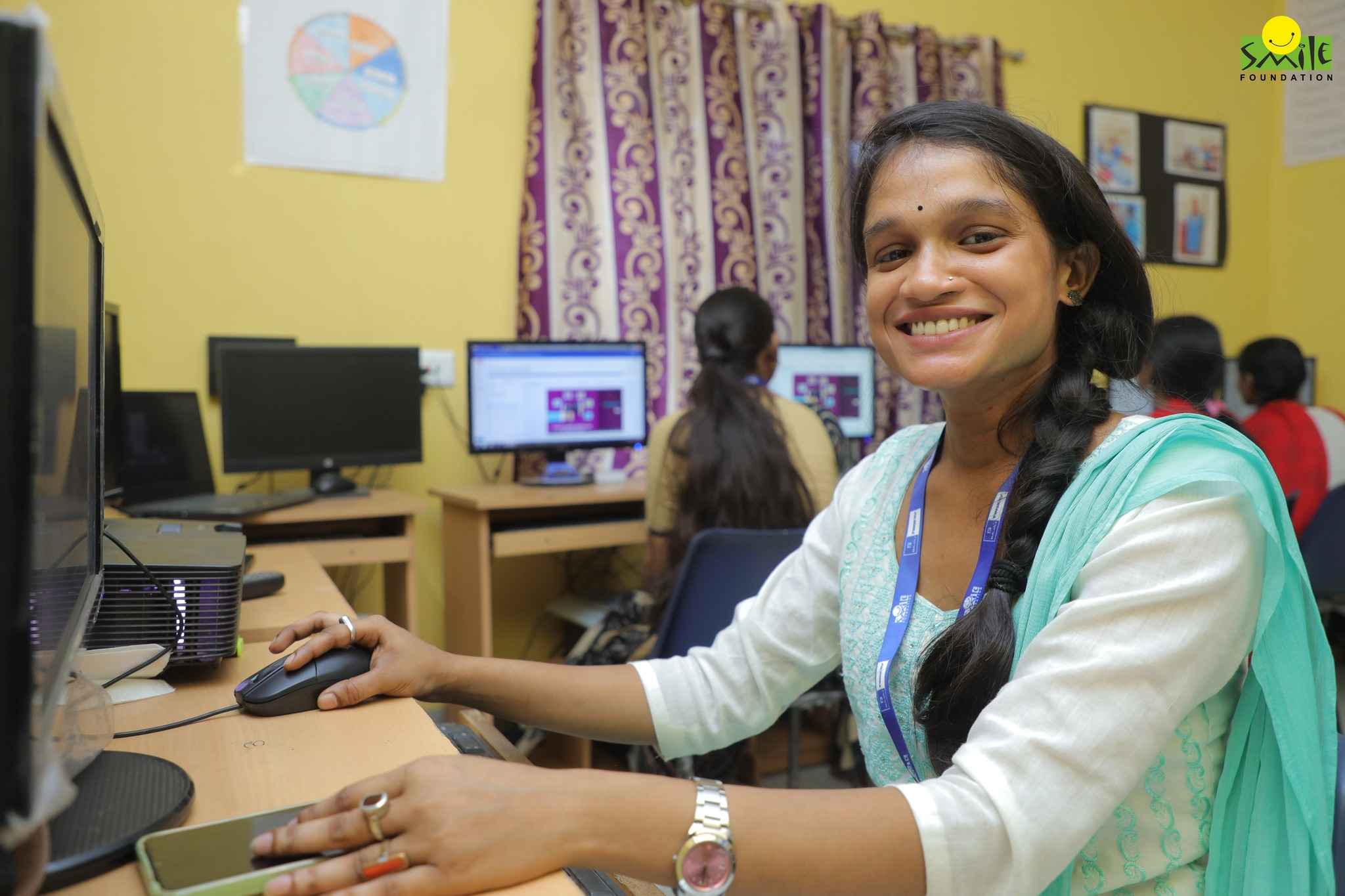
Recognising that education alone does not always translate into employment, we at Smile Foundation have adopted an integrated approach that connects learning with livelihoods. Through our STeP (Smile Twin e-Learning Programme), the organisation equips underserved youth with industry-relevant skills that improve their employability across sectors such as BPO and retail sectors and more.
The programme focuses not only on technical competencies but also on communication, spoken English, digital literacy, personality development, interview preparation and workplace readiness. This holistic approach helps bridge the gap between education and employment, particularly for first-generation learners who may have limited exposure to professional environments.
Many young participants enter the programme lacking confidence despite having completed school or college. By the end of their training, they are better prepared to participate in recruitment processes, navigate professional workplaces and pursue careers in organised sectors that offer greater financial stability.
Smile Foundation’s livelihood initiatives complement its broader interventions in education and healthcare, recognising that sustainable employment is closely linked to overall human development. When young people are healthy, educated and equipped with relevant skills, they are better positioned to build secure and fulfilling careers.
Employment as a Tool for Breaking the Cycle of Poverty
Poverty is rarely caused by a single factor but is often reinforced by limited education, poor health, inadequate employment opportunities, financial insecurity and social exclusion. Addressing only one of these challenges may not be sufficient to create lasting change.
Formal employment can interrupt this cycle by creating new opportunities for individuals and families. A young person’s first organised-sector job may finance a sibling’s education, improve household nutrition, support healthcare expenses or enable better housing conditions. Over time, these improvements accumulate, creating lasting social and economic mobility.
This multiplier effect explains why employment should not be viewed solely as an economic indicator but as a powerful development outcome.
Challenges That Still Remain
Despite their contribution to youth employment, neither the BPO nor retail sector is a complete solution to India’s employment challenges. Both industries face issues such as high employee attrition, evolving technology, changing customer expectations and increasing demand for advanced digital skills.
Second, automation and artificial intelligence are transforming customer service functions, while organised retail is becoming increasingly technology-driven. Employees therefore require continuous learning and upskilling to remain competitive.
Furthermore, many young people from underserved communities continue to face barriers related to language, gender norms, transportation, financial constraints, and limited access to quality education. Bridging these gaps requires sustained investments in public education, digital infrastructure, vocational training and employer partnerships.
Looking Beyond the First Job

Perhaps the greatest contribution of the BPO and retail sectors lies not in the jobs themselves but in what those jobs make possible. A first formal job often becomes a stepping stone rather than a destination. Many employees go on to pursue higher education, transition into managerial roles, explore entrepreneurship or move into entirely new industries.
The confidence gained from entering the organised workforce often reshapes aspirations for both individuals and their families. Children who witness parents working in formal employment are more likely to remain in school, pursue professional careers and imagine futures that extend beyond survival.
This is why youth empowerment should not be measured solely by placement numbers. It should also be measured by expanded opportunities, greater self-belief, stronger financial resilience and improved quality of life.
India’s BPO and retail sectors may not traditionally be viewed as engines of social transformation, yet they have silently become important pathways for youth empowerment, particularly for those growing up in underserved urban communities. By offering accessible entry points into the formal economy, these industries provide far more than employment—they offer dignity, confidence, financial independence and opportunities for long-term career growth.
However, jobs alone are not enough. Young people also need the skills, confidence, and support to seize these opportunities. This is where organisations such as Smile Foundation play a vital role. Through our initiatives, we prepare underserved youth with the technical, digital, and interpersonal skills needed to thrive in today’s evolving job market. By connecting education, employability and livelihood development, we aim to help transform employment from a short-term opportunity into a pathway towards lasting social mobility.