There are few questions modern societies ask more instinctively than, “How much do you earn?” aka, the Capability Approach. It appears in conversations about careers, in government reports on poverty, in business forecasts and in national debates about progress. Rising incomes are treated as evidence that lives are improving. Falling incomes signal distress. Entire economies are judged by how quickly they grow and how much wealth they produce.
The attraction of income is obvious. It is easy to count, compare and convert into statistics. Policymakers can draw poverty lines. Economists can chart trends. Governments can point to rising GDP as proof of success. Yet numbers that are simple to measure are not always the ones that matter most.
For the Nobel Prize-winning economist Amartya Sen, this dependence on income has always overlooked something fundamental. Money is important, but only because it enables people to live the lives they value. A salary, however large or small, tells us little about whether someone is healthy, educated, safe, respected or free to make meaningful choices. To judge human wellbeing by income alone, Sen argues, is to mistake the means for the end.
Through what became known as the Capability Approach, Sen challenged the world to rethink what progress actually means. Instead of asking how much wealth people possess, he urged us to ask what they are genuinely able to do with their lives. It is a shift in perspective that has influenced global development policy for decades and remains especially relevant in a country as diverse and unequal as India.
What Shaped Capability Approach?
Sen’s thinking was shaped by the Bengal Famine of 1943, which he witnessed as a child growing up in Santiniketan. More than three million people died, not because food had disappeared altogether, but because millions could no longer afford to buy it. Decades later, Sen demonstrated that famines are rarely caused by an absolute shortage of food. They occur when people lose their entitlement to food through unemployment, inflation, rising prices or failures of public policy. That argument overturned conventional thinking about famine. More importantly, it laid the foundation for a much broader idea: poverty is not simply about lacking resources. It is about lacking the freedom to convert those resources into a life of dignity.
That distinction sits at the heart of the Capability Approach.
Sen introduces two ideas that sound technical but describe something deeply human: functionings and capabilities. Functionings are the things people manage to be and do. Being healthy, completing an education, participating in community life, earning a livelihood or living with self-respect are all examples of functionings. Capabilities, on the other hand, refer to the real opportunities people have to achieve those outcomes. They represent the range of lives a person can genuinely choose from.
Consider two girls growing up in neighbouring villages. Their families earn roughly the same income. Both attend primary school. Yet one village has a secondary school within cycling distance, reliable public transport and parents who support their daughter’s education. The other has no secondary school nearby. The journey is unsafe, and social norms discourage girls from travelling alone. She leaves school at fourteen and is married a few years later.
If we judge these families by income, they appear almost identical. But their daughters do not possess the same opportunities. One has the capability to continue her education; the other does not. Their futures diverge not because of differences in earnings, but because of differences in freedom.

The same principle applies far beyond education. A wheelchair user and an able-bodied person may earn identical incomes, yet face vastly different opportunities if public transport, schools and workplaces are inaccessible. An elderly person living with chronic illness may require significantly greater resources than a younger adult simply to enjoy the same standard of health. A woman may contribute equally to household income yet have little say over how that income is spent. In each case, the availability of money tells only part of the story.
This is why Sen insists that development cannot be reduced to economic growth alone. Income expands opportunities, but it does not guarantee them. A society becomes more developed not merely when people earn more, but when they enjoy greater freedom to live healthy, educated and meaningful lives.
Inspiration for United Nations Human Development Index (HDI)
This idea has reshaped the way the world measures progress. Until the late twentieth century, national development was largely discussed through economic indicators such as Gross Domestic Product. Countries with rapidly growing economies were assumed to be progressing, even when millions remained illiterate, malnourished or unable to access basic healthcare.

Working closely with Pakistani economist Mahbub ul Haq, Sen helped inspire the United Nations Human Development Index (HDI), which combines income with life expectancy and education to provide a broader picture of development. The message was revolutionary in its simplicity: a country cannot be considered successful merely because it is wealthier. If its people cannot live long, healthy and educated lives, development remains incomplete.
The same thinking later informed the Multidimensional Poverty Index, which measures deprivation across health, education and living standards rather than income alone. A household may earn slightly above the official poverty line yet still lack clean drinking water, sanitation, quality schooling or access to healthcare. Conversely, another household with similar earnings may enjoy far greater wellbeing because essential public services are available.
What is means for India?
For India, this broader understanding of poverty is especially significant.
The country has made remarkable economic progress over the past three decades, lifting millions out of income poverty. Yet the benefits of growth have not been shared equally. Maternal anaemia remains widespread. Millions of children continue to experience malnutrition despite improvements in household incomes. Access to healthcare depends heavily on where a person lives. Educational outcomes vary sharply across states, communities and income groups. Gender, caste, disability and geography continue to shape opportunities long before individuals enter the labour market.
A child born into a remote tribal village does not begin life with the same opportunities as one growing up in an urban neighbourhood with well-funded schools and hospitals. Their incomes may eventually converge, but the capabilities available to them from birth are profoundly different.
This is precisely why Sen’s framework continues to resonate. It reminds us that inequality is rarely the product of income alone. It is reinforced through unequal access to education, healthcare, nutrition, transport, information and political participation. These disadvantages often accumulate, limiting what people are realistically able to achieve throughout their lives.
The Capability Approach also changes how we think about public policy. Investing in schools is not simply about increasing enrolment figures; it is about expanding children’s capabilities. Strengthening primary healthcare is not merely about treating illness; it enables people to live longer, healthier and more productive lives. Improving nutrition, particularly during pregnancy and early childhood, creates capabilities that influence learning, health and opportunity decades later.
Seen in this light, development programmes are investments in human freedom.
Smile Foundation’s Work
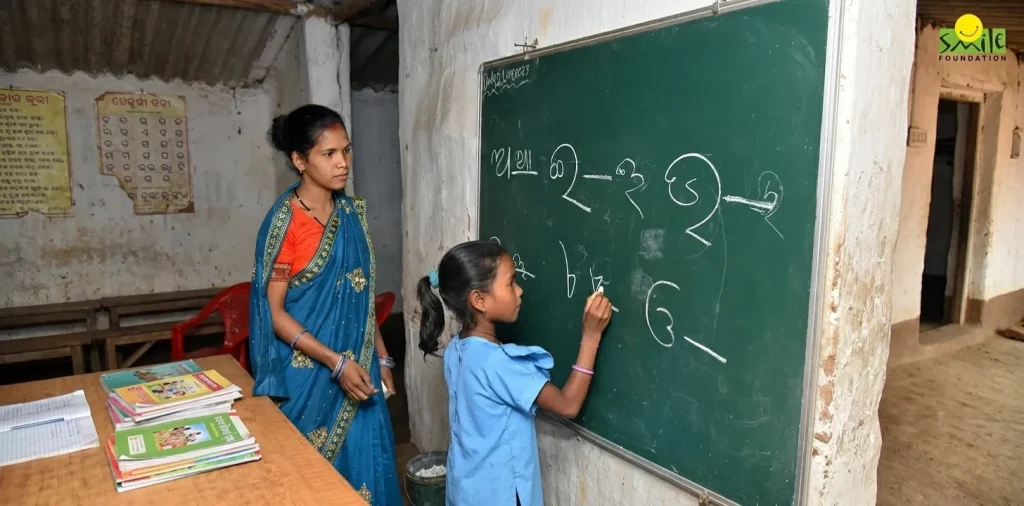
This perspective is reflected in the work of organisations like Smile Foundation, whose programmes address multiple dimensions of deprivation rather than income alone. Through Mission Education, children from underserved communities gain access to quality learning environments that expand their opportunities beyond the classroom. Community healthcare initiatives improve maternal and child health, while livelihood programmes strengthen economic resilience. Together, these interventions recognise what Sen argued decades ago: poverty cannot be understood through income alone because human wellbeing depends on many interconnected freedoms.
Critics have argued that the Capability Approach is difficult to measure. Which capabilities matter most? Should every society define them differently? These are legitimate questions, and Sen himself deliberately resisted producing a fixed list, arguing that democratic societies should decide such priorities collectively. Yet the difficulty of measurement is not a reason to ignore reality. Education, health, safety, dignity and participation may be harder to quantify than income, but they are no less central to human wellbeing.
Perhaps that is Sen’s greatest contribution. He shifted the conversation from wealth to freedom, from resources to opportunities and from economies to people.
The question, then, is not whether income matters. It clearly does. Poverty remains a profound constraint on human life and economic growth remains essential for improving living standards. But income is only valuable because it enables something else. It allows people to pursue education, protect their health, participate in society, care for their families and make choices about the lives they wish to lead.
When those opportunities are absent, rising incomes alone cannot compensate.
The Capability Approach asks us to look beyond what people possess and consider what they are genuinely free to become. It challenges governments to measure progress not only by economic output but by the expansion of human possibility. And it reminds each of us that a society should ultimately be judged not by the wealth it creates, but by the freedoms it makes possible.
Perhaps, then, the wrong question has never been “How much do you earn?” The more meaningful one is far harder to answer, but infinitely more revealing:
What kind of life are you truly free to live?
Frequently Asked Questions (FAQs)
1. What is the Capability Approach?
The Capability Approach is a framework developed by Nobel laureate Amartya Sen that defines wellbeing not by income or wealth, but by the real opportunities people have to live healthy, educated and fulfilling lives.
2. Why does Amartya Sen argue that income alone cannot measure poverty?
Because two people with the same income may have very different opportunities. Factors such as health, education, disability, gender, social discrimination and access to public services determine what people are actually able to achieve.
3. What is the difference between ‘capabilities’ and ‘functionings’?
Functionings are the things people are able to be or do—such as being healthy, educated or employed. Capabilities are the genuine freedoms and opportunities people have to achieve those outcomes.
4. How has the Capability Approach influenced global development?
Sen’s ideas inspired measures such as the Human Development Index (HDI) and influenced the Multidimensional Poverty Index (MPI), encouraging governments to assess progress through health, education and quality of life—not economic growth alone.
5. Why is the Capability Approach particularly relevant to India?
Despite significant economic growth, many Indians continue to face unequal access to quality education, healthcare, nutrition and employment. The Capability Approach helps explain why improving incomes alone is not enough to ensure equal opportunities.
6. How does education expand people’s capabilities?
Education does far more than improve earning potential. It equips people with knowledge, confidence and critical thinking, enabling them to make informed decisions, participate in society and pursue opportunities that would otherwise remain out of reach.
7. How does Smile Foundation’s work reflect the Capability Approach?
Through initiatives in education, healthcare, skilling and women’s empowerment, Smile Foundation helps expand people’s capabilities. By improving access to essential services and opportunities, it enables individuals and communities to build lives of greater choice, dignity and resilience.