
Summary
- Anganwadis combine nutrition, healthcare and early learning for children under six.
- Nearly 14 lakh Anganwadi Centres operate across India, run by lakhs of women workers.
- ASER 2024 shows Anganwadis are India’s largest provider of pre-primary education.
- The first six years of life are critical for brain and cognitive development.
- Smile Foundation has upgraded Anganwadi infrastructure across several states through CSR partnerships.
Imagine juggling lots of tasks in a day. In a modest community centre, tucked away in a village or a small town, that’s exactly what is happening each day. The workers are managing child care, nutrition, maternal check-ups, early childhood education and a lot more. For millions of children, this is where the story begins. This is where a child receives their first nutritious meal, participates in their first structured learning activity and gains access to basic health services. This place is the Anganwadi.
For five decades, Anganwadi Centres have shaped the lives of millions of children and mothers across India. They have helped fight malnutrition, improved access to healthcare and introduced young children to learning long before they enter a formal classroom. Despite their reach and impact, Anganwadis are often viewed through a narrow lens, seen primarily as centres that distribute food. In reality, they are so much more. Anganwadis sit at the heart of India’s child development ecosystem. They influence how children grow, learn and thrive during the years that matter most.
The Idea Behind Anganwadis
India recognized the significance of early childhood development long before it became a focal point on the global stage. Back in 1975, the government rolled out the Integrated Child Development Services (ICDS) programme, establishing a comprehensive system aimed at supporting young children, expectant mothers and new moms. The programme was built on a straightforward yet impactful concept: a child’s future hinges not just on education, but also on proper nutrition, health and care during those crucial early years. Anganwadi Centres emerged as the cornerstone of this initiative.
With time, the programme transformed into one of the largest community-based child development networks in the world. According to government statistics, there were 13.96 lakh Anganwadi Centres registered on the Poshan Tracker platform as of June 2023. This impressive network is backed by a dedicated workforce of around 12.8 lakh Anganwadi Workers and 11.6 lakh Helpers.
Far More Than a Nutrition Centre
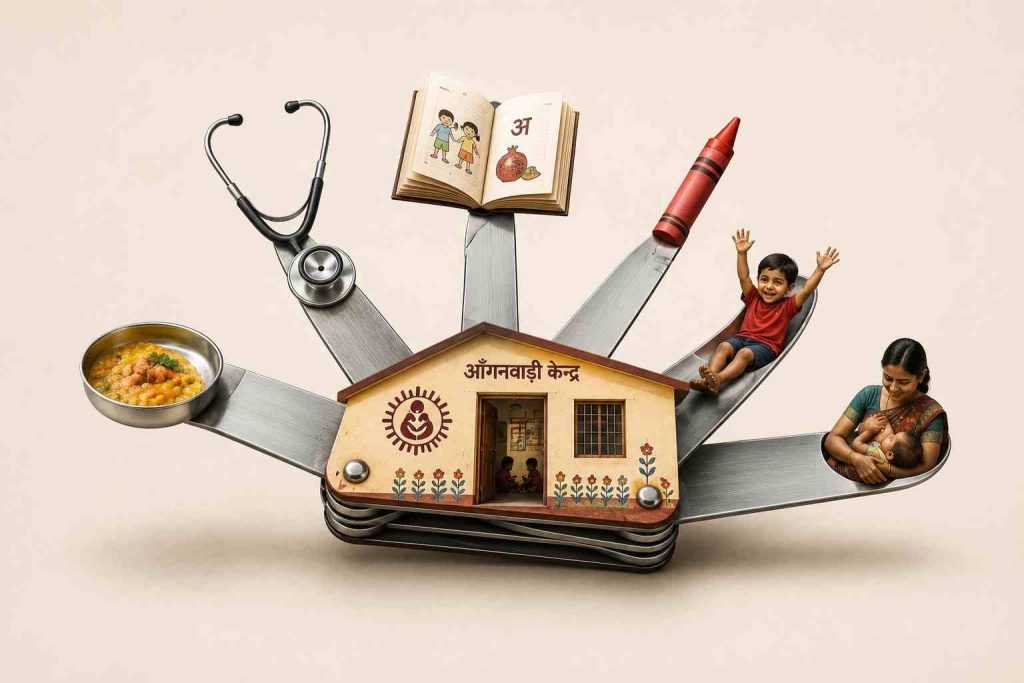
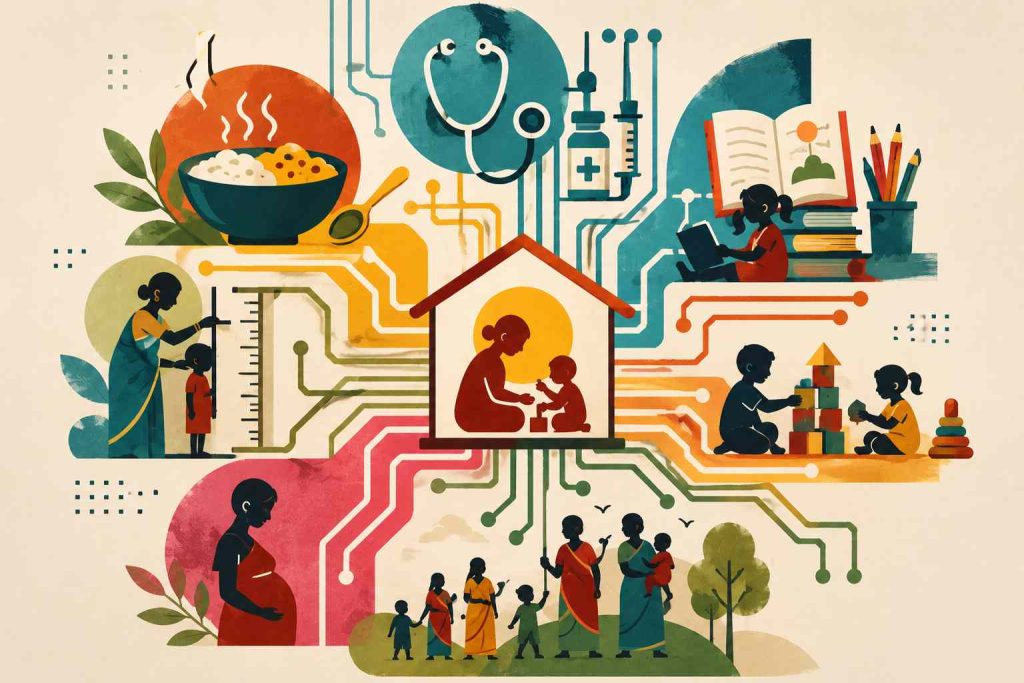
Ask people what an Anganwadi does and many will mention food distribution. While nutrition remains a central function, reducing Anganwadis to feeding centres misses the larger picture. An Anganwadi brings together three elements that shape a child’s future: nutrition, healthcare and early learning. Few public institutions combine all three under one roof.
Nutrition is often the first point of contact for families. Children under six receive supplementary nutrition through hot cooked meals and take-home rations, while pregnant and lactating women receive additional nutritional support. Anganwadi Workers regularly monitor children’s growth, tracking height and weight to identify signs of undernutrition at an early stage.
This work has a profound impact that lasts a lifetime. When children don’t get the right nutrition in their early years, it can hinder their physical growth, brain development, immune system and even their ability to learn. Once these developmental gaps appear, it becomes significantly more challenging to address them.
On another note, Anganwadis play a crucial role in connecting communities with the healthcare system. They are instrumental in supporting immunization campaigns, organizing health check-ups and helping families navigate government health programmes. Expectant mothers receive valuable advice on nutrition and maternal care, while new moms get essential counselling on breastfeeding and feeding their infants.
In many communities, particularly those far from formal healthcare facilities, the Anganwadi Worker is often the first person families approach for advice on health and nutrition.

Anganwadi as the First Classroom
Then comes a role that receives far less attention but may be equally important. For millions of children, the Anganwadi is their first classroom. Through stories, songs, games, drawing and play-based activities, children begin to build the language, communication and social skills they need before they ever step into a school. In these spaces, learning starts to feel structured but still happens in a safe, familiar environment.
It’s easy to underestimate how important this is. The Annual Status of Education Report (ASER) 2024 shows that Anganwadis are still the largest provider of pre-primary education in India, with more than half of all three- and four-year-olds enrolled in them. In many villages, they are the only organised early learning space young children can access. This is why experts increasingly see Anganwadis as early childhood care and development centres, not just nutrition hubs. Their role goes far beyond feeding children. They help create the conditions for children to grow, learn and truly flourish.
Why Child Development Begins Here
The first six years of life represent the most rapid period of human development. During these years, the brain forms critical neural connections that shape learning, behaviour, emotional well-being and health throughout life. What children experience during this period matters enormously. A nutritious meal supports physical growth. Regular health monitoring helps detect developmental concerns before they become severe. Exposure to stories, language and play strengthens cognitive development. Daily interaction with peers helps children build confidence, communication skills and emotional resilience.
These outcomes are deeply interconnected. A child who is well-nourished but lacks opportunities to learn enters school at a disadvantage. Similarly, a child exposed to learning activities may still struggle if poor health or malnutrition affects their development. Researchers increasingly emphasise that child development depends on a combination of nutrition, health, early stimulation and responsive care rather than any one intervention in isolation.
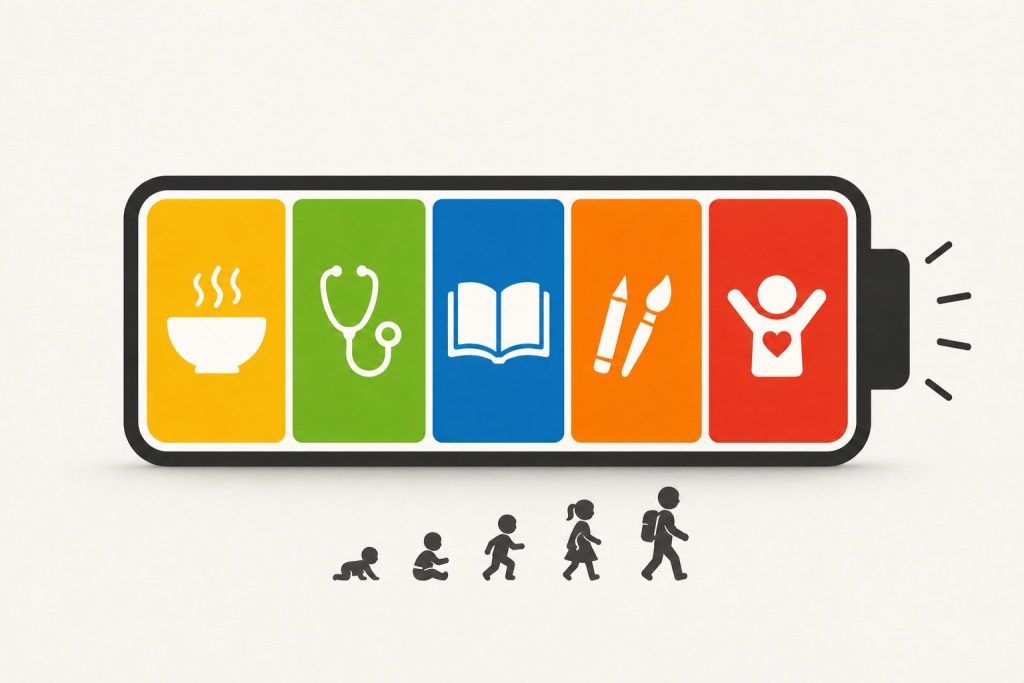
That is precisely where Anganwadis make a difference. They bring these services together at the community level. Instead of treating nutrition, healthcare and education as separate priorities, they address them simultaneously. Few public institutions have a grassroots presence, like Anganwadis do.
The Women Who Make the System Work

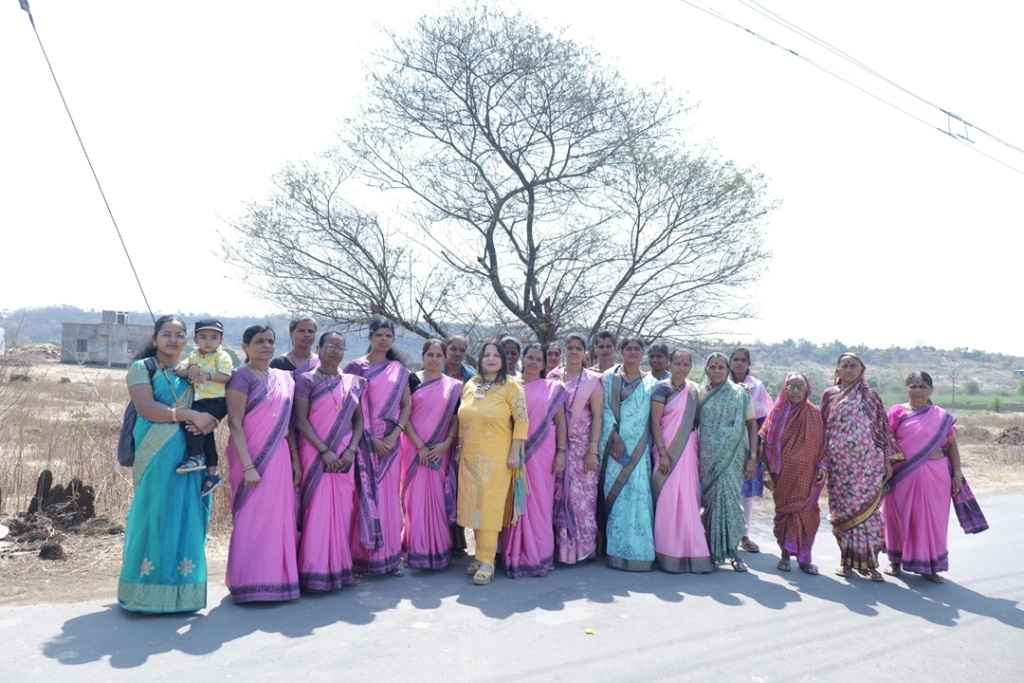
Behind every Anganwadi stands a workforce of women who perform far more roles than their job titles suggest. Anganwadi Workers and Helpers monitor nutrition, support immunisation drives, conduct home visits, maintain records, organise preschool activities and counsel families on health and childcare practices.
Despite their importance, many continue to work under difficult conditions, often managing heavy workloads and limited resources. India’s ambitions for better learning outcomes, lower malnutrition rates and stronger human capital cannot be separated from the strength of its Anganwadi system. What it needs now is sustained investment, stronger infrastructure and continued support for the women who keep the system running.
More importantly, Anganwadis deserve to be recognised for what they truly are. They are a child’s first classroom, a mother’s support system and a community’s frontline institution for health, nutrition and early learning.
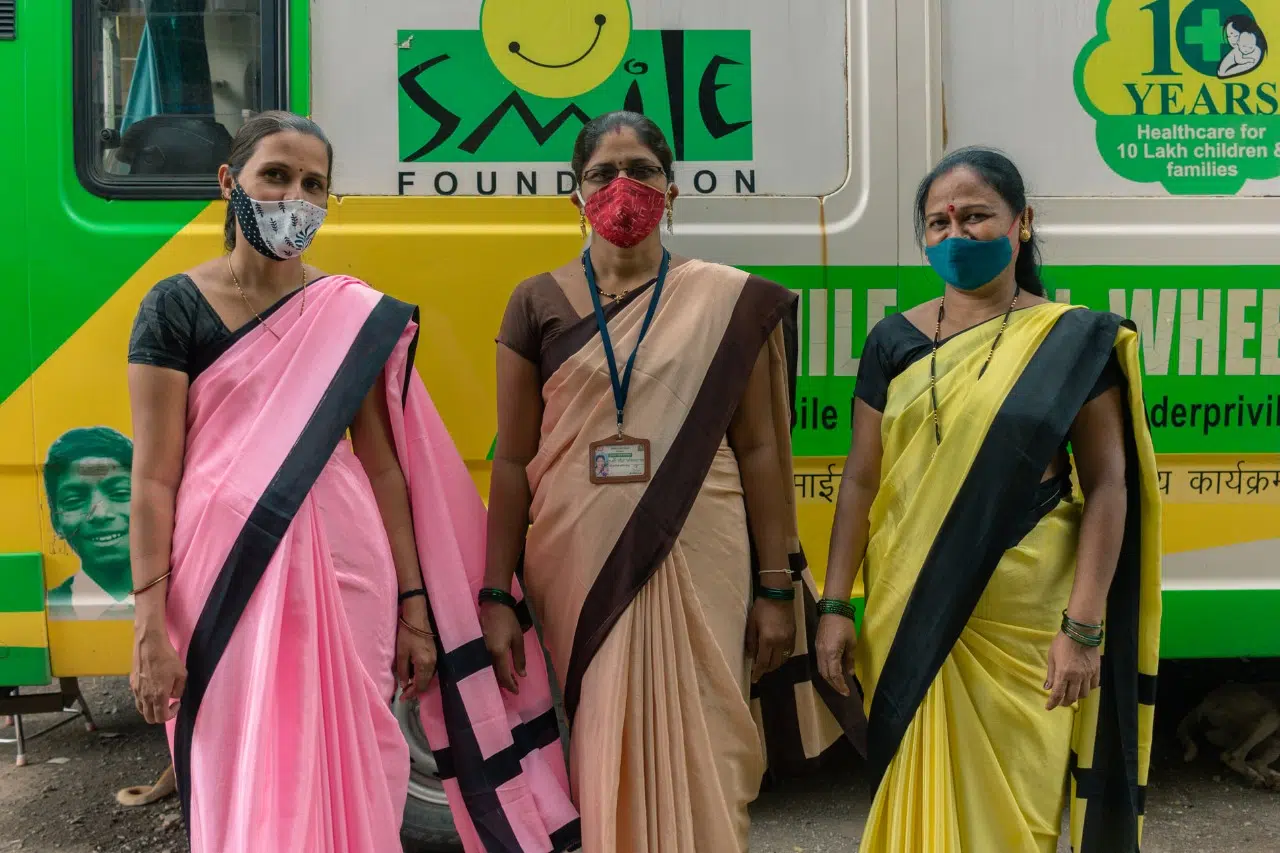
Smile Foundation, through CSR partnerships like the Mars Wrigley Foundation’s Community Connection grant in Maharashtra, has strengthened Anganwadi infrastructure and services across multiple states. Complementing this, under the Swabhiman women’s empowerment programme, Smile has upgraded Anganwadis in Tamil Nadu, Odisha and other states with toilets, solar lights, water filters and hygiene and nutrition training, while mobile units link families to services—demonstrating its belief that investing in Anganwadis today builds healthier, better-educated communities.

Frequently Asked Questions (FAQs)
1. What is an Anganwadi?
A community-based centre offering nutrition, healthcare and early learning for young children and mothers.
2. When did the Anganwadi system start?
It began in 1975 under the Integrated Child Development Services (ICDS) programme.
3. How many Anganwadi Centres exist in India?
Around 13.96 lakh centres were registered on the Poshan Tracker platform as of June 2023.
4. Why are Anganwadis called a child’s first classroom?
Over half of all 3- and 4-year-olds enrolled in pre-primary education attend Anganwadis.
5. How is Smile Foundation supporting Anganwadis?
Through CSR partnerships, Smile Foundation has upgraded infrastructure, hygiene and training across multiple states.