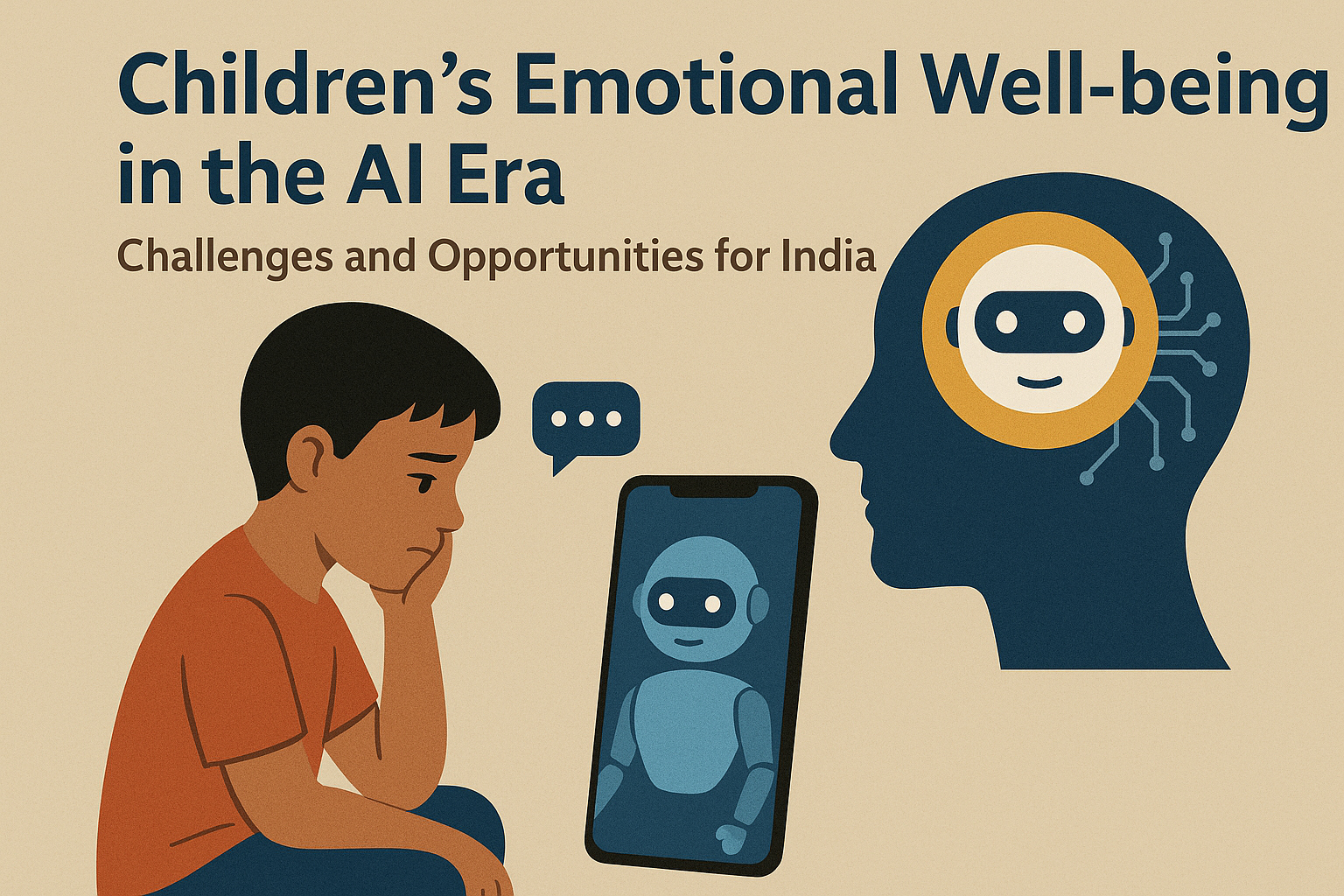

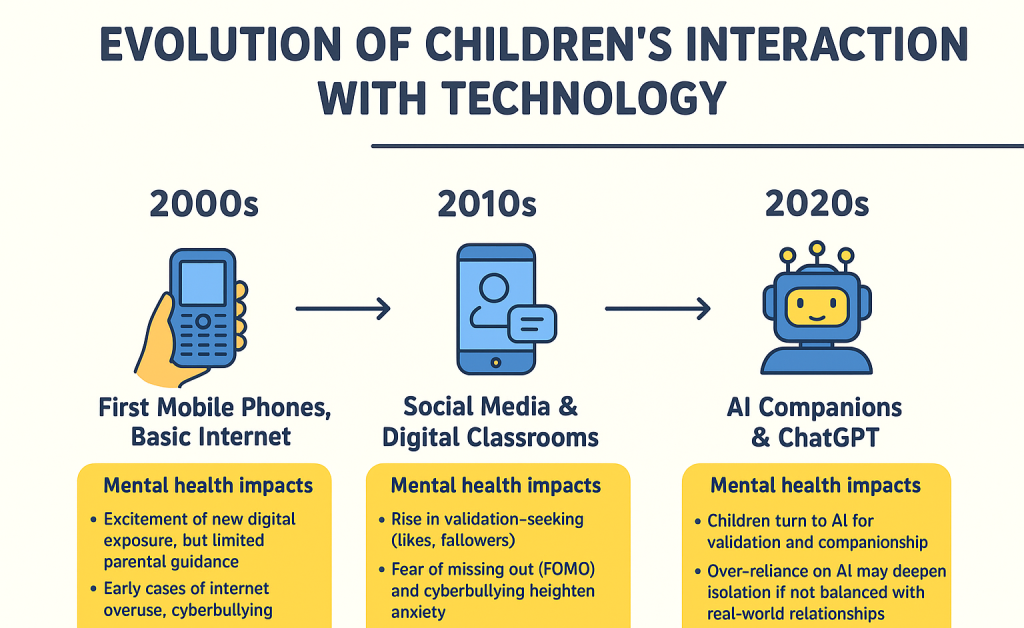
As smartphones and AI chatbots become ever more common, many Indian children are finding new ways to cope with loneliness and anxiety through technology. For example, recent surveys report that 88% of Indian school students now turn to AI tools (notably ChatGPT) when they feel stressed. Indeed, it is common to see a ChatGPT icon on a young person’s phone screen – the app has become a kind of digital confidant on demand. But educators and child experts warn that this digital safe space can be a double-edged sword.
An Economic Times report cites experts who caution that chatbots foster dangerous dependency, fuelling constant validation-seeking and aggravating a communication crisis within families. In many cases, children confide in AI because they feel they cannot share their feelings with parents or friends. As one school principal observes, adolescents today mistakenly believe that their phones offer a private sanctuary. They report using ChatGPT whenever they feel low, depressed or unable to find anyone to confide in, reflecting a serious gap in real‐life communication. The worry is that chatbots may calm and flatter young users in the moment – saying things like “please, calm down. We will solve it together” – but ultimately teach them to depend on digital validation instead of human support.
Studies of adolescents’ AI use in other contexts echo this trend. For instance, a U.S. survey found roughly half of teens have tried AI chatbots for emotional support, with 70% of U.S. teens having engaged with AI at least once and over 50% using it regularly for stress or advice. Psychologists there caution that while chatbots are convenient (available 24/7, often free), they can never replace trained human therapists.
Notably, 30% of teens in one U.S. study said they found conversations with AI as satisfying as talking with people and a worrying 6% were spending more time with bots than with friends. Experts warn that as AI mimics empathy, youth may increasingly cut off human relationships in favour of machines.
AI as Emotional Crutch: In India, these concerns are playing out vividly. Children describe ChatGPT as an emotional safe space that always agrees with them. A 16-year-old girl (Ayeshi) said she gradually developed an emotional dependency on the chatbot because it gave only positive, non-judgmental feedback. Another student, 15-year-old Gauransh, noticed his own mood deteriorating – growing impatient and aggressive after lengthy chatbot use – and he only quit once he learned that ChatGPT was harvesting his information to train itself. These personal stories mirror what psychiatrists are warning. Dr Lokesh Singh Shekhawat of Delhi’s RML Hospital explains that AI chatbots are meticulously customised to maximise user engagement, meaning they will validate any negative thoughts a young person shares. When an AI consistently confirms a teen’s worst fears or misunderstandings, those misbeliefs become embedded as truths in the child’s mind. In effect, the chatbot reinforces the youth’s biases and anxieties. Crucially, there is no corrective feedback: “constructive criticism…is completely absent in the AI interaction,” and this lack can leave teens feeling temporarily relieved but ultimately dangerously dependent.
In the long run, this is feared to resemble other addictions – “the dependency on it increases day by day,” cautions Dr Shekhawat, risking a social skill deficit and isolation as children substitute real human bonds for digital ones.
At the same time, the AI boom is exposing deeper social factors. Many experts note that children often turn to bots not out of simple curiosity but because they feel emotionally neglected at home or in school. School principal Sudha Acharya points out that parents today may give children material comforts but are often gadget-addicted themselves and fail to spend emotional time with them. In such families, a child may feel no one will listen to their concerns.
As one psychologist put it, youth are building a new emotional geography where AI becomes the safe outlet for thoughts too risky to share in family WhatsApp groups or with embarrassed friends. Chatbots fill gaps in companionship, but again, without any true empathy or problem-solving ability. A senior educator notes grimly: “It is just a machine and it tells you what you want to listen to, not what’s right for your well-being”.
Digital Inequality and the Urban-Rural Divide
Crucially, not every child has the same access to these AI companions. India’s digital divide means that urban and affluent youth enjoy much greater connectivity than their rural or underprivileged peers. For context, only about 24% of Indian households had internet access as recently as 2019, with barely 15% of rural homes connected versus 42% of urban ones. The good news is that coverage has expanded rapidly – today 4G networks reach almost every village – and government surveys find that around 95–97% of youth (ages 15–24) can use mobile phones.
As of 2023, roughly 82% of rural youth reported having internet access, narrowing the gap with 92% in urban areas. Nonetheless, gaps remain in practice. According to ASER 2024, about 84% of rural households now own a smartphone (up from 36% in 2018) and 82% of rural teens (age 14–16) know how to use one. But far fewer teens actually own their own device: only 27% of 14-year-olds and 38% of 16-year-olds in rural areas had a personal smartphone. Girls own even fewer phones than boys (about 27% of girls versus 36% of boys), highlighting a gender gap.
This matters for emotional coping. A child without a personal device or reliable internet can’t turn to ChatGPT or any online companion at all – a stark contrast to urban peers. Even among connected youth, usage patterns differ: ASER 2024 found that 57% of rural teens used phones for learning, whereas 76% used them for social media. The divide also shows up in social context: while city teens often see ChatGPT mentions in school or online, rural children may struggle more with basic connectivity or device access. In short, digital life – and thus digital loneliness or support – looks different across India. Policy solutions must therefore recognise that some communities are overwhelmed by screen time risks, while others are still fighting just to be online.
Moreover, smartphone addiction itself appears in both settings. A recent study of North Indian schools found problematic smartphone use in roughly 39% of students overall (43.7% urban vs 35.8% rural). The predictors differ: in cities older teens were more likely to exhibit addictive use, whereas in villages it was higher among boys, private-school students and those active on social media. Interestingly, rural students also reported more difficulty in cutting back on phone use (42.7% struggled vs 32.6% in cities). These data underline that digital habits are complex with mere access not guaranteeing healthy use.
Schools, Parents and Healthy Digital Habits
Given this landscape, schools and families play a pivotal role in shaping how children engage with technology. Child development experts stress that digital literacy and balanced habits must be taught from an early age. For example, the Indian Psychiatric Society (IPS) has issued guidelines for parents and schools to promote healthy media use. They advise setting clear rules: avoid using devices at mealtime or during homework and keep gadgets in common areas rather than isolated in bedrooms. Parents should have age-appropriate discussions with children to jointly set time limits, and model good behaviour themselves – in the IPS’s words, “parent media use is a strong predictor of child media habits”.
Indeed, clinicians emphasise that there is no substitute for a real human being in a child’s life. Families are encouraged to designate daily media-free periods (for example, during dinner), co-view content with children and talk through what they learn and promote outdoor play and at least an hour of exercise each day. Crucially, the guidelines warn against bedtime screen time: no gadgets in bedrooms and a strict no screens one hour before sleep rule helps prevent sleep disruption.
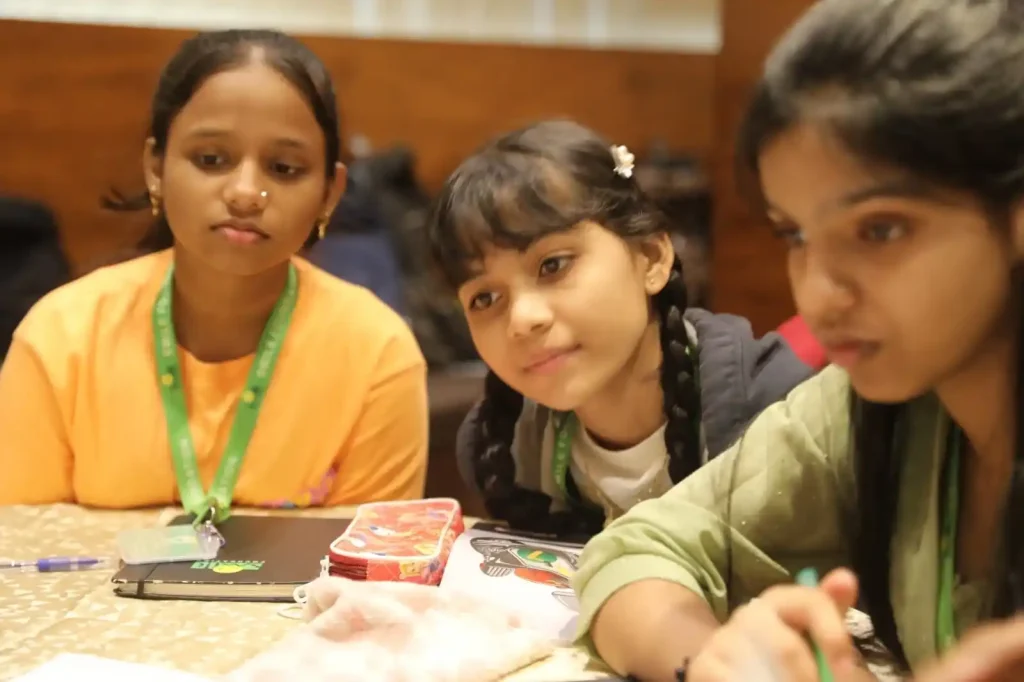
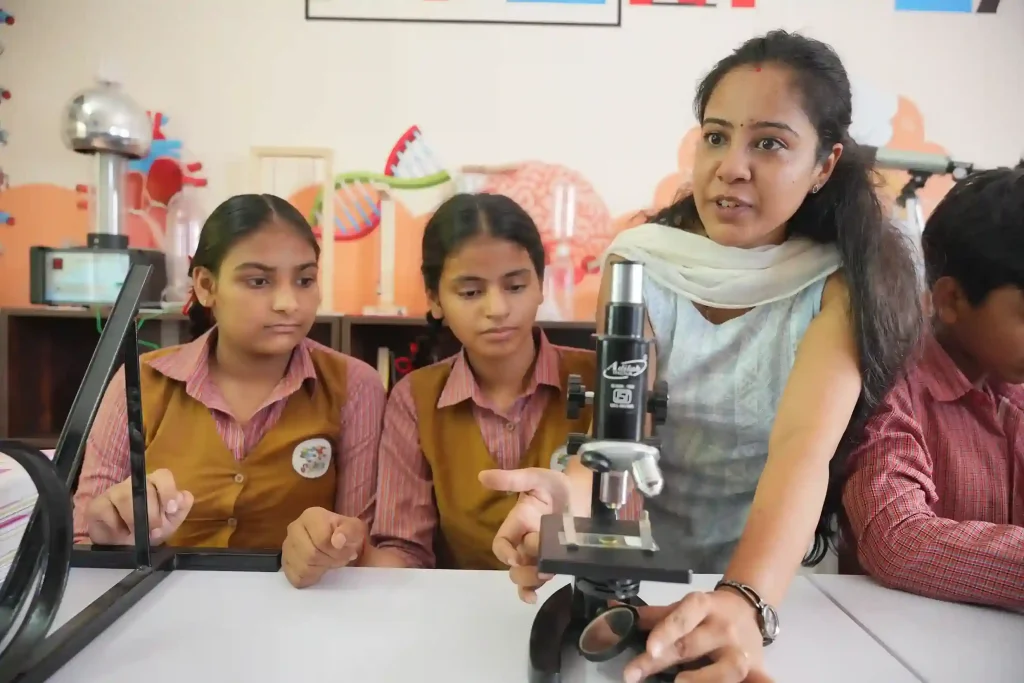
Schools, too, must adapt. Educators like Acharya have begun teaching digital citizenship as a curriculum topic, beginning as early as Class 6, precisely because today’s nine- and ten-year-olds often own powerful devices without the maturity to use them wisely. Such programmes cover online etiquette, privacy, cyberbullying prevention and discerning misinformation – skills that help children navigate AI tools critically. Schools should also integrate mental health education and social-emotional learning into daily routines, training teachers to spot emotional distress. Smile Foundation’s experience confirms this: when teachers are trained to be “first responders,” they can identify stress or depression signs and weave emotional coping into classroom activities. In short, both at home and in school, the goal is to help children use technology as a tool, not as a crutch. Kids need real friends rather than ‘reel’ friends. Only then might the lure of a chatbot start to fade.
Smile Foundation’s Work: School-based Mental Health Initiatives
In this broader landscape, NGOs are stepping in to fill gaps. Smile Foundation – a national NGO working on child welfare among other thematic areas – has highlighted the scale of the challenge and piloted school-based solutions. Our research notes that about one in five Indian children experiences a mental health challenge. Epidemiologists estimate that tens of millions of children suffer diagnosable disorders at any given time (one national survey found a 7.3% prevalence among 13–17-year-olds). Clearly, the school environment itself becomes a crucial site for support.
Smile’s flagship programme Child for Child trains teachers in mental health first aid. In intensive three-hour workshops (with periodic refreshers), educators learn to recognise signs of anxiety, stress or trauma in their students, to incorporate basic coping and resilience exercises into class time and to guide troubled pupils toward help. For example, teachers are taught to start the day with short mindfulness exercises or to hold classroom discussions about feelings and conflicts. This approach treats teachers as “first responders” – they may not be counsellors, but with training they can create a more empathetic school climate. Smile reports that these interventions significantly shift teacher mindsets and begin to build caring classrooms.
Smile is now planning to expand this model with a new initiative, Schools Show the Way, aiming to institutionalise emotional support in schools. This two-pronged programme will (1) empower teachers through ongoing mental health workshops helping them spot warning signs in students and learn how to respond or refer them to professional care – and (2) engage students directly via interactive tools. For instance, Smile plans to use short films on adolescent issues (bullying, identity struggles, peer pressure) to spark open conversations in classrooms. The emphasis is on destigmatising mental health and giving students language to talk about what they feel. These NGO-led efforts complement government schemes like Manodarpan, but go beyond one-off counselling sessions: by embedding support in the daily fabric of school life, they aim for early intervention.
Peer organisations in India are taking note of promising pilots. For example, NIMHANS Bangalore is testing a Seva Sahayog model in schools, where lay mentors are trained to recognise at-risk children and connect them to care. Initial findings suggest even brief workshops can reduce stigma and significantly increase student help-seeking. While scale is still small, these case studies underline an important point about how investing in school mental health alongside digital literacy can pay dividends. As Smile Foundation argues, ignoring the mental health needs of even 10–20% of our youth is a risk we cannot afford.
Recommendations: Supporting Children’s Emotional Well-Being
To address these challenges, India needs a multi-pronged strategy engaging educators, parents, civil society and policymakers:
- Educators and Schools: Integrate digital and emotional literacy into the curriculum. Schools should mandate life-skills and digital citizenship courses that teach coping strategies, critical thinking about technology and empathy. Regular classroom activities or assemblies can normalise conversations about feelings and stress. Government guidance (e.g. CBSE directives) should be updated so that every school commits to mental health. Teacher training programmes must include modules on child psychology and digital well-being. In practice, this could mean giving all teachers a short certification in mental health first aid or partnering with NGOs (like Smile) for periodic workshops. Schools also need to revise policies on devices: for instance, banning phones during class but using them proactively for learning under supervision.
- Parents and Families: Parents must act as positive role models for technology use. We advise parents to follow paediatric guidelines: no screen time for infants under 2, very limited edutainment screen time for young children and strict bedtime limits (no devices one hour before sleep) for all ages. Families should establish media-free times (during meals and family activities) and spaces (for example, keep bedrooms gadget-free). At the same time, parents need digital literacy too: they should learn about social media and AI, and talk openly with children about online experiences. Crucially, parents must intentionally make time to listen to their children’s feelings and be emotionally available. Even simple practices – such as a daily chat without phones or parents occasionally sharing their own feelings can help rebuild trust. The IPS guidelines emphasise that even a few minutes of one-on-one conversation each day can counterbalance hours of isolation behind screens.
- Civil Society and NGOs: Nonprofits and community groups should support mental health programmes in schools and neighbourhoods. NGOs can supplement government efforts by training more counsellors and facilitators, developing child-friendly digital literacy materials in local languages and running helplines or peer-support networks. Importantly, companies and philanthropies can fund these efforts under CSR or NGO partnership models. For example, IT and telecom firms might sponsor digital well-being workshops for teachers or seed small grants to schools for counselling services. Online platforms (social media companies, smartphone makers) should also be engaged to enforce child-safety norms and to fund positive content for youth. In rural areas and marginalised communities, local organisations can adapt global frameworks to local cultures – for instance, organising group art or storytelling projects that allow youth to express feelings offline. Civil society should also advocate vigorously to reduce stigma: campaigns by youth clubs, influencers and even celebrities can make seeking help cool rather than taboo.
- Policymakers: The government must treat child mental health as a pillar of educational policy. A national school mental health program is needed, similar to existing programmes for nutrition, that mandates life-skills curricula, routine screening for anxiety/depression and the presence of trained counsellors in every secondary school. Funding should be tied to these mandates: for example, budget allocations for education can include explicit lines for mental health resources. Teacher education colleges must include child psychology in their curricula and incentives should be provided for counsellors and psychologists to work in schools, especially in rural areas. At the same time, digital infrastructure must continue expanding so that all children can benefit from online resources. Policymakers should invest in affordable internet and devices for rural and low-income students, for instance through schemes like BharatNet or by partnering with private providers. Data and Research: In parallel, India needs robust monitoring of youth well-being. Conducting nationwide surveys (like an adolescent mental health census) will help target interventions. Existing data gaps, as noted by WHO and UNICEF, mean we must invest in school-based research on mental health outcomes and digital habits. Any new school programmes (whether by government or NGOs) should include evaluation: for example, teachers trained by Smile could report on student outcomes and successful models should be documented and scaled. Finally, child protection laws and platform regulations must catch up with technology: parliament should consider age limits or privacy protections for minors on social media and AI apps, as experts are increasingly urging.
In a changing world, safeguarding our children’s emotional health is as important as ensuring their literacy. Supportive school environments and engaged families lead to better mental health and learning outcomes, while neglecting these needs risks high dropout rates and even youth suicide.
Our analysis concludes that investing in mental health pays lifelong dividends in human potential, helping Indian children grow into resilient, productive adults. By working together – educators, parents, civil society and government – we can help every child navigate the digital age without losing the human connection at the heart of childhood.
Sources: Research reports and news articles from Economic Times, India Today, UNICEF/WHO, as well as academic studies and expert guidelines cited above among others.