
Every year on April 7, the world pauses to ask a difficult question: what does it really mean for health to be a right, and not a privilege? World Health Day, led by the World Health Organization, is where that question moves from principle to action.
The reality behind it is hard to ignore. According to WHO’s Universal Health Coverage data, at least 4.5 billion people, more than half the global population, still do not have full access to essential health services. Preventable diseases continue to claim millions of lives, and the gap between those who can access care and those who cannot remains wide.
This guide is for those who want to go beyond acknowledging the problem. Whether you are part of a nonprofit, a public health initiative, an educational institution, or simply someone trying to understand where you can contribute, this is meant to offer both context and direction. It looks at where World Health Day comes from, what it focuses on in 2026, and how that focus can translate into meaningful action.
Whether you are planning a campaign, organising a community event, or trying to understand why this day continues to matter, this is a starting point.
Summary
- World Health Day is observed every year on April 7 and has been led by WHO since 1950.
- The 2026 theme, “Together for health. Stand with science,” highlights the importance of scientific collaboration and the One Health approach.
- More than half the world still lacks access to essential health services.
- Individuals, organisations, and communities all have a role to play in turning awareness into action.
What Is World Health Day?
World Health Day is an internationally recognised health awareness day observed on April 7 each year. Unlike awareness days that focus on a single issue, this one looks at health more broadly, bringing attention to systemic challenges and shared global concerns.
The date marks the founding of the World Health Organization in 1948. Since then, it has served as a reminder that health is not just a sector, but a collective responsibility that cuts across systems, societies, and borders.
Each year, WHO identifies a central theme that reflects the most urgent health challenge of the moment. These themes guide campaigns, conversations, and policy focus across countries.
Who Organises World Health Day?
The World Health Organization leads World Health Day globally, working with governments, institutions, and partners across more than 150 countries. But the day is not owned by one organisation alone. It is carried forward by a wide network of actors, including nonprofits, schools, healthcare providers, and communities, each adapting the message to their own context.
A Brief Look at Its Origins
World Health Day was first observed in 1950, originally on July 22, before being moved to April 7 to align with the founding of WHO. The idea that shaped it from the beginning was simple but ambitious: that every person has the right to the highest attainable standard of health.
That idea still holds. But the challenge has always been in making it real.
Over time, the themes of World Health Day have reflected shifting global priorities. Early years focused on infectious diseases and sanitation. Later, attention moved to non-communicable diseases, mental health, and strengthening health systems. More recently, the focus has expanded to include climate, pandemics, and access to care.
World Health Day 2026: Theme and Focus
The 2026 theme, “Together for health. Stand with science,” brings attention to a growing reality. Health challenges today are interconnected, and so must be the solutions.
At its core, the theme emphasises the role of science and collaboration in protecting health. It highlights the need to translate evidence into action, and to ensure that scientific progress does not remain confined to research or policy spaces.
A key part of this approach is the idea of One Health, which recognises that human health is closely linked to the health of animals, plants, and the environment. Whether it is the spread of diseases, the impact of climate change, or antimicrobial resistance, these connections are becoming harder to ignore.
The theme also reflects another concern that has grown in recent years: trust. Trust in science, in public health systems, and in the information people rely on to make decisions about their health.
Why This Theme Matters Now
The emphasis on science and collaboration is not abstract.
Despite major advances in healthcare, access remains uneven. Millions still struggle to reach services in time, afford treatment, or navigate systems that are often complex and under-resourced.
Scientific breakthroughs alone cannot solve this. They must be supported by systems that ensure:
- Access at the last mile
- Clear and reliable communication
- Trust between communities and providers
In many parts of the world, including India, these gaps are visible in everyday experiences of healthcare.
Why World Health Day Still Matters
The significance of World Health Day lies in its ability to connect global priorities with local realities.
The numbers tell part of the story:
- 4.5 billion people lack full access to essential health services
- 1.3 billion people are affected by neglected tropical diseases
- Non-communicable diseases account for 74% of global deaths
- Mental health remains one of the most under-addressed areas of care
But beyond the data, the day serves as a reminder that health systems are only as strong as their ability to reach people consistently.
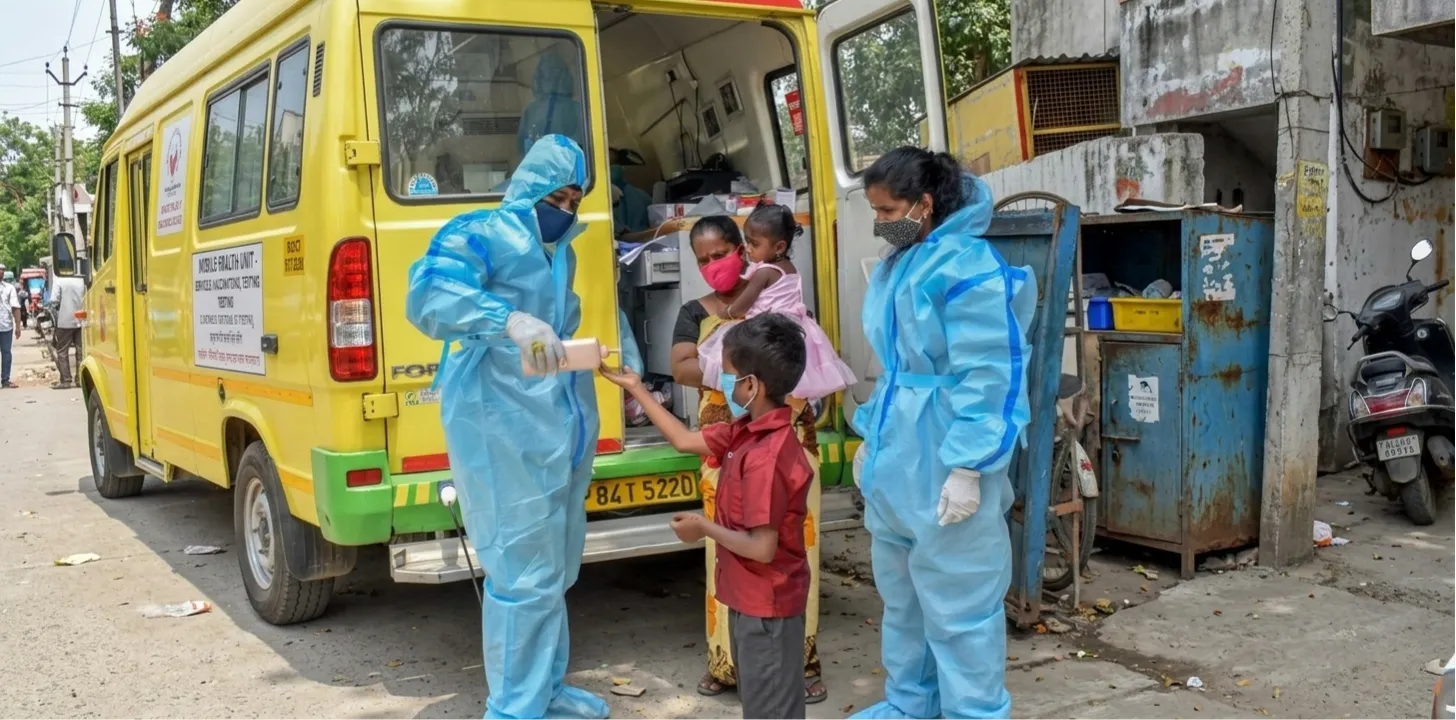
In India, organisations like Smile Foundation work to bridge these gaps by bringing healthcare closer to underserved communities through mobile health units, awareness programmes, and community-based interventions.
Conclusion
World Health Day returns each year with a different focus, but the underlying question remains the same. Who is being reached, and who is still left out?
The 2026 theme, “Together for health. Stand with science,” points toward a future where collaboration and evidence guide decisions. But that future depends on whether systems can carry those solutions far enough.
Until then, the gap between possibility and access will continue to define how health is experienced.
And that is what this day ultimately asks us to confront.
Frequently Asked Questions
When is World Health Day observed?
It is observed every year on April 7.
Who organises World Health Day?
It is led by the World Health Organization.
What is the theme of World Health Day 2026?
The theme is “Together for health. Stand with science.”
What does the theme mean?
It highlights the importance of scientific collaboration, trust in evidence, and the One Health approach to addressing interconnected health challenges.
What is the One Health approach?
It recognises the link between human, animal, and environmental health, and promotes coordinated solutions.
How can people participate?
By engaging with accurate information, supporting health initiatives, and contributing to community efforts.
How does Smile Foundation support healthcare?
Through mobile healthcare services, awareness programmes, and outreach in underserved communities.