Every morning before school, 14-year-old Rina wakes up before the rest of her family in a low-income neighbourhood on the outskirts of Patna. She sweeps the floor, prepares tea, fetches water and helps her younger brother get ready. By the time she reaches school, she is already tired. When she returns in the afternoon, the work resumes—cooking, cleaning, caring. Homework is pushed to late evenings, if it happens at all.
Rina’s day is not unusual. Across India, millions of adolescent girls shoulder a volume of unpaid domestic and care work that remains largely invisible in statistics and classrooms. This labour—essential to household survival—is rarely acknowledged as work. Yet it shapes girls’ education, health, mental well-being and future opportunities in profound ways.
While much attention has been paid to early marriage, school dropout and malnutrition among adolescent girls, far less scrutiny has been directed at the daily workload that underpins all three. In low-income households, girls’ time is often treated as elastic: infinitely stretchable, readily available and ultimately expendable.
What the data shows and what it hides
According to India’s Time Use Survey (2019), women and girls spend nearly six times more time on unpaid domestic and care work than men and boys. Among adolescents, the gender gap appears early. Girls aged 15–19 spend significantly more time on household chores, sibling care and caregiving than boys of the same age.
Yet these averages mask deeper inequalities. In low-income households, especially in urban slums and rural areas, girls’ unpaid workload increases sharply when families face economic stress, illness, migration or lack of public services. Water shortages, absence of childcare facilities and unreliable public transport all translate into more work for girls.
What is missing from most datasets is the cumulative impact. Unpaid labour does not occur in isolation. It intersects with schooling, nutrition and rest. Girls who work more at home often attend school less regularly, arrive fatigued and struggle to keep up academically. Over time, the gap widens.
School attendance does not equal participation
India has made progress in enrolling girls in school. But enrolment figures conceal unequal learning conditions. Teachers and administrators often describe adolescent girls as “quiet,” “disengaged” or “falling behind” without asking what their days look like outside school.
Research by UNICEF and UNESCO has consistently shown that girls’ domestic responsibilities are a major factor in irregular attendance and learning loss, particularly at the secondary level.
- UNICEF on adolescent girls and unpaid care: https://www.unicef.org
- UNESCO GEM Report: https://www.unesco.org/gem-report
In low-income homes, girls are often expected to balance school with responsibilities that would overwhelm many adults. When performance slips, the narrative quickly shifts from structural constraint to individual failure.
Care work as crisis response
Girls’ unpaid labour intensifies during crises. During the COVID-19 pandemic, school closures and health emergencies dramatically increased household care needs. Studies conducted during this period found that adolescent girls took on more cooking, cleaning and caregiving than before, often at the expense of schooling.
In households affected by illness, girls frequently become informal caregivers. In families facing job loss or migration, they step in to manage domestic stability. These expectations are rarely temporary. Once normalised, they persist even after the crisis passes.
The pandemic did not create this pattern. It exposed it.
The health costs of invisibility
The physical toll of unpaid labour on adolescent girls is poorly documented but significant. Carrying water, standing for long hours while cooking, and lack of rest contribute to fatigue and musculoskeletal strain. Combined with inadequate nutrition, these demands exacerbate anaemia and delayed growth.
Mental health consequences are even less visible. Constant responsibility, limited leisure and lack of autonomy contribute to stress, anxiety and emotional withdrawal. For girls navigating puberty, these pressures coincide with hormonal changes and social restrictions, compounding vulnerability.
Despite growing awareness of adolescent mental health, unpaid labour remains absent from most intervention frameworks.
Why girls and not boys?
The unequal distribution of household work is often justified as cultural norm. But norms are reinforced by policy choices. When public services are weak, unpaid care fills the gap, and when childcare is unavailable, girls step in. Same with when water is scarce, girls fetch it. When elder care is unsupported, girls provide it.
This is not accidental. It reflects whose time is valued.
Economists have long argued that unpaid care work subsidises the formal economy. In India, women’s unpaid labour is estimated to contribute trillions of rupees in economic value annually, yet it remains uncounted in GDP.
Adolescent girls enter this invisible economy early, often before they have the language to describe it.
Education at risk
Unpaid labour is a key but under-acknowledged driver of school dropout among adolescent girls. When families face trade-offs, girls’ education is more likely to be disrupted. Not because parents undervalue education, but because girls are seen as indispensable to household functioning.
This dynamic becomes particularly acute at puberty, when mobility restrictions increase and domestic expectations intensify. Education begins to compete with marriage preparation, caregiving and household management.
Policies aimed at keeping girls in school—scholarships, bicycles, uniforms—address visible barriers. They rarely confront invisible labour.
Why policy keeps missing the problem
India has robust policies addressing adolescent health, nutrition and education. But unpaid care work falls between ministries. It is not clearly owned by education, health or labour departments.
As a result, interventions remain fragmented. Schools are not equipped to recognise care burden as a learning barrier. Health programmes focus on outcomes without addressing time poverty. Social protection schemes often assume adult beneficiaries.
Until unpaid labour is acknowledged as a structural constraint, solutions will remain partial.
What change could look like
Addressing the invisible workload of adolescent girls does not require dismantling families. It requires rebalancing responsibility.
Key interventions include:
- Reliable access to water, sanitation and cooking fuel
- Affordable childcare and eldercare services
- School schedules that recognise domestic constraints
- Community dialogue that includes boys and men
- Integration of time-use awareness into adolescent programmes
Crucially, girls must be part of the conversation. Their labour is often discussed without their voice.
Civil society’s role on the ground
Some organisations have begun to address this invisibility indirectly, by reducing the load rather than naming it. Smile Foundation’s work with adolescent girls offers an example of this approach.
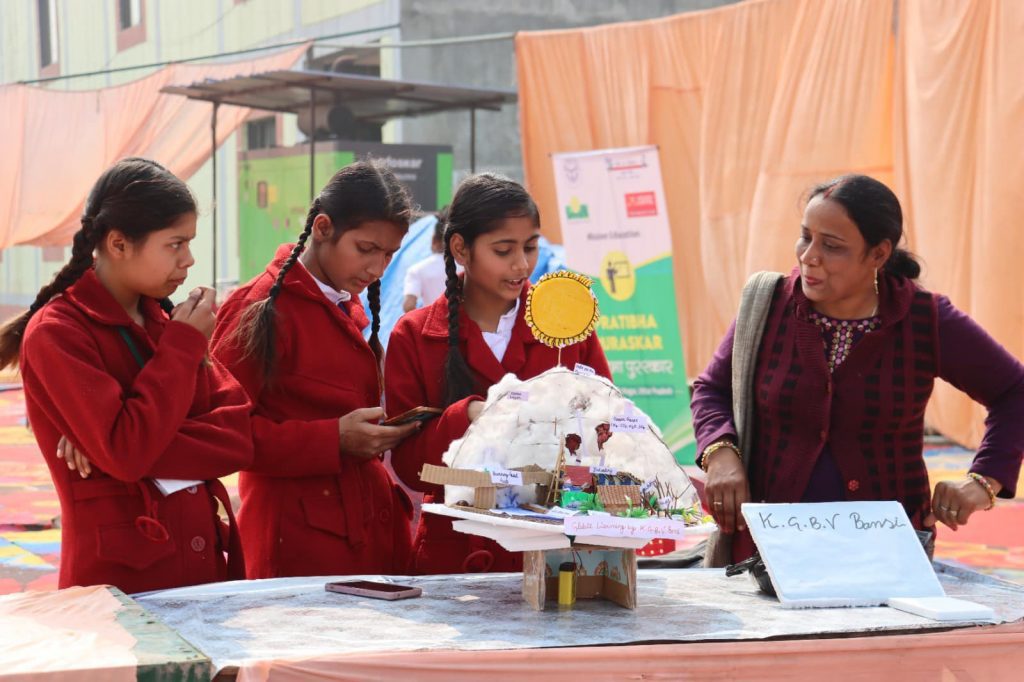
Through programmes like Swabhiman and Mission Education, the Foundation combines academic support with health, nutrition and life-skills interventions. By providing after-school learning spaces, nutritional supplementation and health check-ups, these programmes reduce the daily strain that pulls girls away from education.
In several communities, Smile Foundation engages families to redistribute responsibilities, encouraging shared household roles and supporting girls’ continued schooling. Counselling and mentoring sessions help girls articulate their challenges and advocate for their time.
These efforts do not eliminate unpaid labour. But they make it visible, negotiable and, in some cases, lighter.
Making the invisible workload of adolescent girls visible
The workload adolescent girls carry is not a private matter. It is a public issue with long-term consequences for education, health and gender equality.
As India seeks to harness its demographic dividend, it cannot afford to ignore the unpaid labour that quietly limits half its youth. Girls’ time is a finite resource. When it is consumed by invisible work, opportunities shrink.
Recognising this labour does not diminish its value. It demands that the burden be shared.
Until then, millions of girls like Rina will continue to do the work that keeps households afloat—unseen, uncounted and unpaid—while being told to work harder at school.
Recent resources
- Government of India, Time Use Survey: https://mospi.gov.in
- UNICEF on adolescent girls and care work: https://www.unicef.org
- UNESCO Global Education Monitoring Report: https://www.unesco.org/gem-report
- International Labour Organization on unpaid care work: https://www.ilo.org