
In India, women’s progress has often been told as a story of triumph — classrooms once closed to girls now filled with ambitious students, workplaces brimming with female professionals and political platforms featuring women leaders who once would never have been given a seat at the table. On paper, the numbers speak of remarkable advancement like more women earning degrees than ever before, joining STEM fields, launching start-ups and leading social change. Laws around inheritance and workplace safety, government schemes supporting girls’ education and employment and even quotas in politics appear to cement a steady march toward equality.
But for too many Indian women, education and employment do not automatically translate into safety, respect or agency. The independence that should signal freedom often triggers resentment, stigma or violence. Women who visibly succeed are still punished for defying patriarchal expectations and institutions meant to protect them frequently fail. The paradox is striking: India celebrates women’s empowerment in headlines, while everyday stories reveal how precarious that empowerment remains.
The paradox of progress and peril
On July 10, 2025, Radhika Yadav, a 25-year-old state-level tennis player and coach from Gurugram, was shot dead by her father. Her crime was independence. Radhika had built a coaching venture, gained public recognition for her achievements and supported her family financially. In many societies, her success would be a cause for celebration. In her home, it triggered resentment and violence.
Her story is not isolated. In Odisha, a 20-year-old college student who filed a formal sexual harassment complaint against her professor set herself on fire after institutional inaction. In Pune, young women in a hostel who sought police support were dismissed, harassed and denied protection. In each case, women who showed agency — by filing complaints, by standing up, by seeking justice — were betrayed not just by individuals but by the systems meant to protect them.
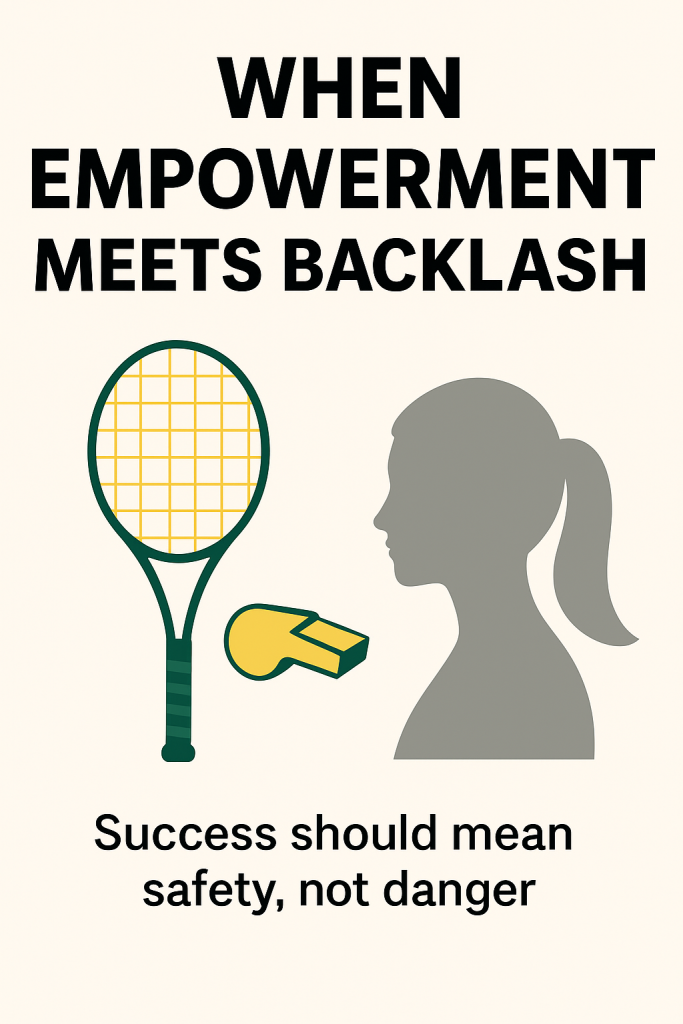
The tragedy is systemic. Empowerment, when unsupported by institutional safeguards and cultural change, becomes perilous. Women’s agency may place them in greater danger if patriarchal backlash is left unchecked. This is the dissonance India grapples with today: symbolic empowerment that often collides with lived powerlessness.
Numbers behind the narrative
The statistics paint an equally unsettling picture.
- In 2022, India reported 445,256 crimes against women — over 51 cases every hour, a 4% rise from the previous year (NCRB).
- The national rate stood at 66.4 crimes per 100,000 population, with Uttar Pradesh topping the list (65,000 cases), followed by Maharashtra and Rajasthan.
- Over 30,000 cases of rape were registered, with Rajasthan, Uttar Pradesh and Madhya Pradesh leading the grim tally.
- NFHS-5 data shows that 29% of women still face marriage-related violence, with alarming figures in Karnataka (44%), Bihar (40%), Telangana (~38%) and Manipur (39%).
At the same time, NFHS indicators on bank account ownership, mobile usage and property rights highlight progress in women’s economic and social agency. More women are included in financial systems, education is climbing and their visibility in workplaces is growing.
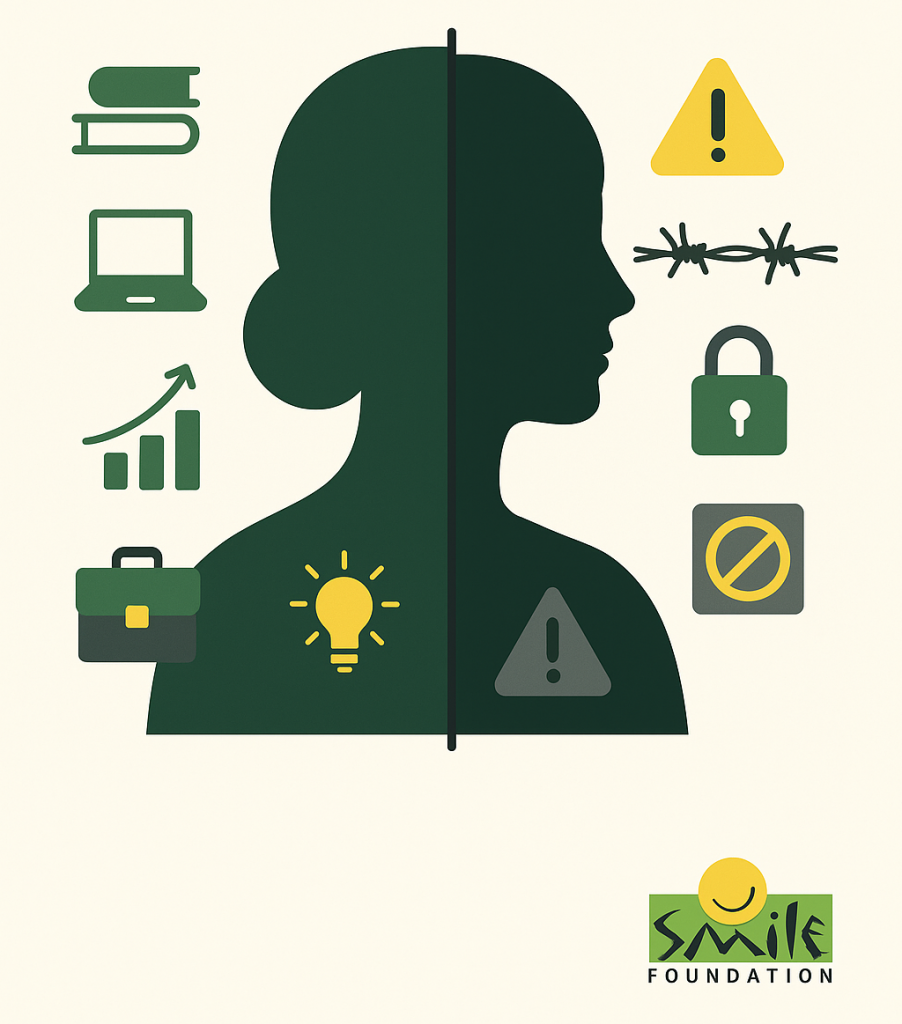
But the paradox of rising visibility with rising violence persists. Empowerment and vulnerability sit side by side, underlining that access without safety is an incomplete victory.
Structural failures: Laws without teeth
India has no shortage of laws designed to protect women — from the Sexual Harassment of Women at Workplace Act (2013) to amendments in criminal law following the Nirbhaya case. Welfare schemes promise support through conditional cash transfers, employment initiatives and maternal health entitlements.
But implementation falters. Workplace complaints go unanswered. Police refuse to register FIRs. Court delays deny justice for years. Social expectations continue to push women back into caregiving roles regardless of their education or employment. Too often, policies treat women as beneficiaries of welfare rather than agents of change.
The result is a widening gulf between empowerment as a statistic and empowerment as a lived reality. Women may have a bank account, but not the freedom to decide how to use it. They may have a seat at a workplace, but not protection from harassment. They may hold a degree, but not the autonomy to marry or move freely.
A global lens: India is not alone
This paradox is not unique to India. Across the Global South, women’s empowerment on paper frequently clashes with entrenched patriarchal realities.
- In Bangladesh, rising garment sector employment has given millions of women financial independence — yet reports of gender-based violence remain high, particularly against working women.
- In Kenya, despite women’s strong presence in informal markets, land ownership remains overwhelmingly male, constraining women’s decision-making.
- In the United States, women occupy leadership roles in record numbers, yet face rising maternal mortality rates, particularly among Black women, pointing to systemic neglect of gendered health needs.
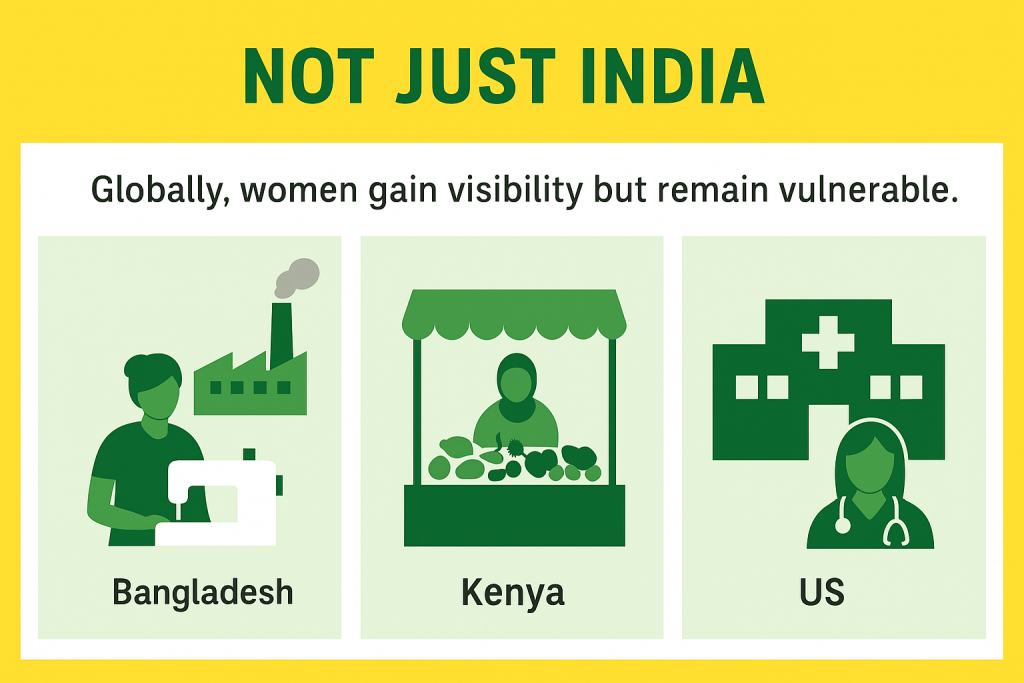
Globally, progress in economic participation is often undermined by stagnant or worsening indicators on safety, health and representation. The UN’s 2023 SDG Gender Snapshot warns that not a single target on gender equality is on track to be met by 2030. Less than 1% of women and girls live in countries with both high empowerment and low gender inequality.
India’s paradox is thus part of a global crisis: the risk that empowerment rhetoric outpaces structural reform.
Feminist movements and the call for gender education
If structural failures weaken empowerment, feminist movements provide the counterweight. From protests after the 2012 Delhi gang rape to campaigns against child marriage and workplace harassment, India’s women’s rights movements have consistently forced political and social attention onto issues often brushed aside.
Globally too, feminist movements have held democracies accountable. In Latin America, campaigns like Ni Una Menos mobilised millions to confront femicide. In the Middle East, women-led protests in Iran and Afghanistan defied authoritarian crackdowns. These movements demonstrate that gender equality advances only when power is contested, not when it is benevolently granted.
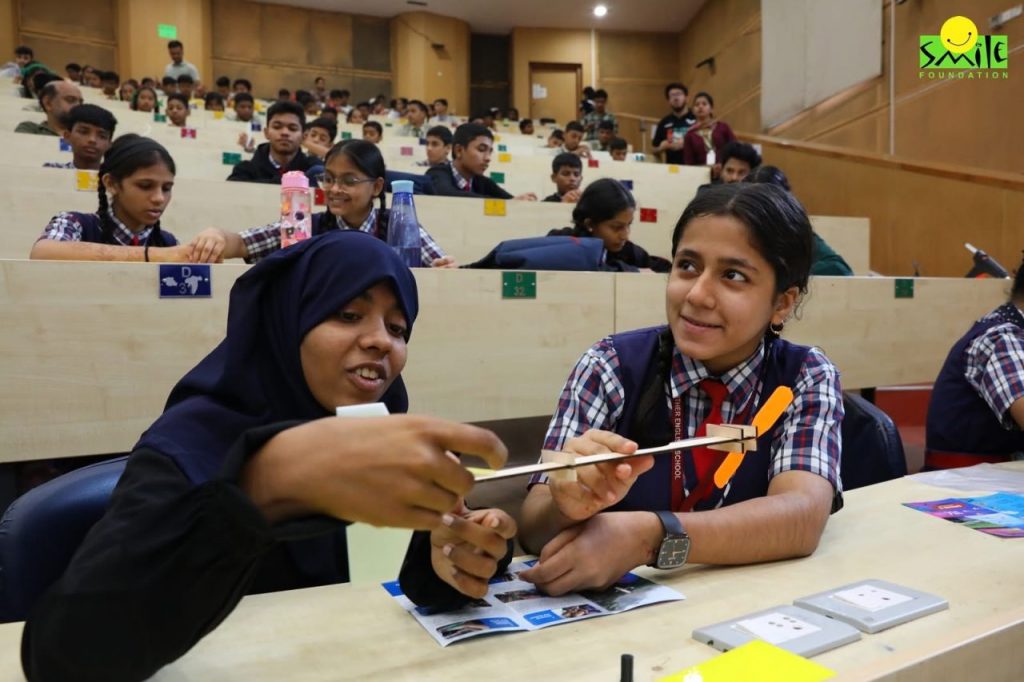
One enduring solution lies in gender education. Integrating feminist studies, critical thinking and gender awareness into classrooms can help dismantle harmful norms early. Schools are not just spaces of instruction, but of social conditioning. By challenging unequal power dynamics in education itself, India can build generations less bound by patriarchal structures.
Civil society’s role: Bridging the gap
During COVID-19, when formal systems collapsed, India saw the importance of grassroots organisations in action. The Smile Foundation’s Health Cannot Wait campaign reached vulnerable communities with hygiene kits and protective gear. Its community health workers conducted tele counselling and awareness campaigns when misinformation was rampant.
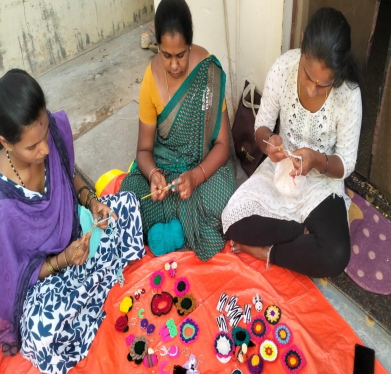
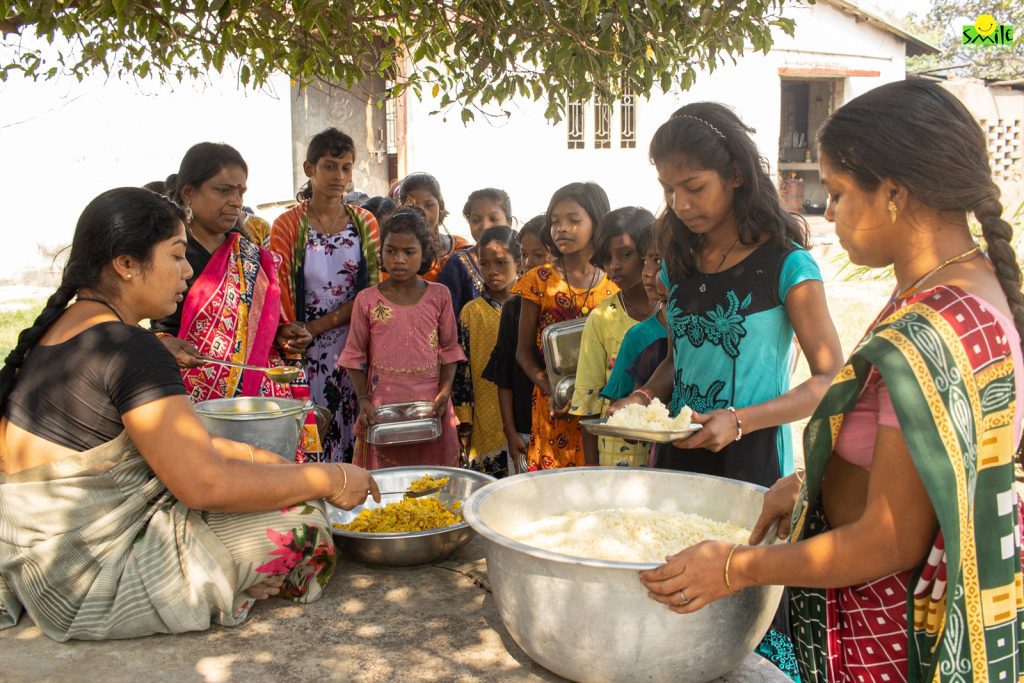
Beyond health, Smile Foundation’s Swabhiman programme, launched in 2005, embodies how civil society can strengthen empowerment. Swabhiman works with socially excluded women across urban and rural areas, focusing on nutrition, healthcare and livelihood. It capacitates women through community practices, enabling them to seek healthcare, earn independently and participate in decision-making. Importantly, the programme engages men and boys to challenge patriarchal attitudes — tackling empowerment as a societal transformation rather than a women-only project.
Its impact is measurable: 68 women-led businesses and micro-enterprises were created in FY24, alongside thousands of women trained in financial literacy, digital skills and entrepreneurship. Each case is a reminder that empowerment anchored in skills, safety and social awareness can translate to genuine agency.
The way forward: Beyond symbolic empowerment
So what would it take to move from symbolic empowerment to substantive equality? A few pathways emerge:
- Safety as a non-negotiable baseline: Without bodily safety and institutional accountability, empowerment is precarious. Police reform, gender-sensitive law enforcement and fast-track courts must be prioritised.
- Redefining empowerment: Policies must shift from seeing women as beneficiaries of welfare to agents of change. Schemes should embed women’s decision-making power, not just extend support.
- Feminist education: Gender studies should be integrated into mainstream curricula, building critical thinking around equality from an early age.
- Economic independence + social support: Skilling programmes must go hand-in-hand with safety nets and family sensitisation, ensuring women who step into workspaces are not penalised at home.
- Civil society and CSR partnerships: NGOs and corporate partners must expand outcome-driven models, pooling resources to deliver measurable change — from digital inclusion to entrepreneurship.
With or without power
India’s women today live in contradiction. They are more educated, more visible and more ambitious than any generation before. But their achievements are too often shadowed by danger, stigma and systemic neglect.
True empowerment is not about counting women in classrooms or boardrooms, but about ensuring those women can walk home safely, speak without fear and claim their rights without retaliation. It is about shifting from symbolic progress to structural power.
The choice India faces is stark, that of continuing celebrating milestones while ignoring the dangers or confront the paradox head-on by investing in safety, feminist education and inclusive systems. Civil society, movements and policy reforms together can ensure that empowerment is not a veneer but a lived reality.
Because empowerment without safety is not empowerment at all.