

Every year on March 8, offices across India hang purple banners, HR teams plan panel discussions, and social media fills with appreciation posts. But why is Women’s Day celebrated, and does it go beyond the cupcakes and motivational quotes?
The answer is rooted in over a century of struggle. International Women’s Day was born from the courage of working-class women who risked their livelihoods to demand basic rights. Today, it carries forward that same urgency, translated into boardroom conversations, corporate CSR commitments, and grassroots activism.
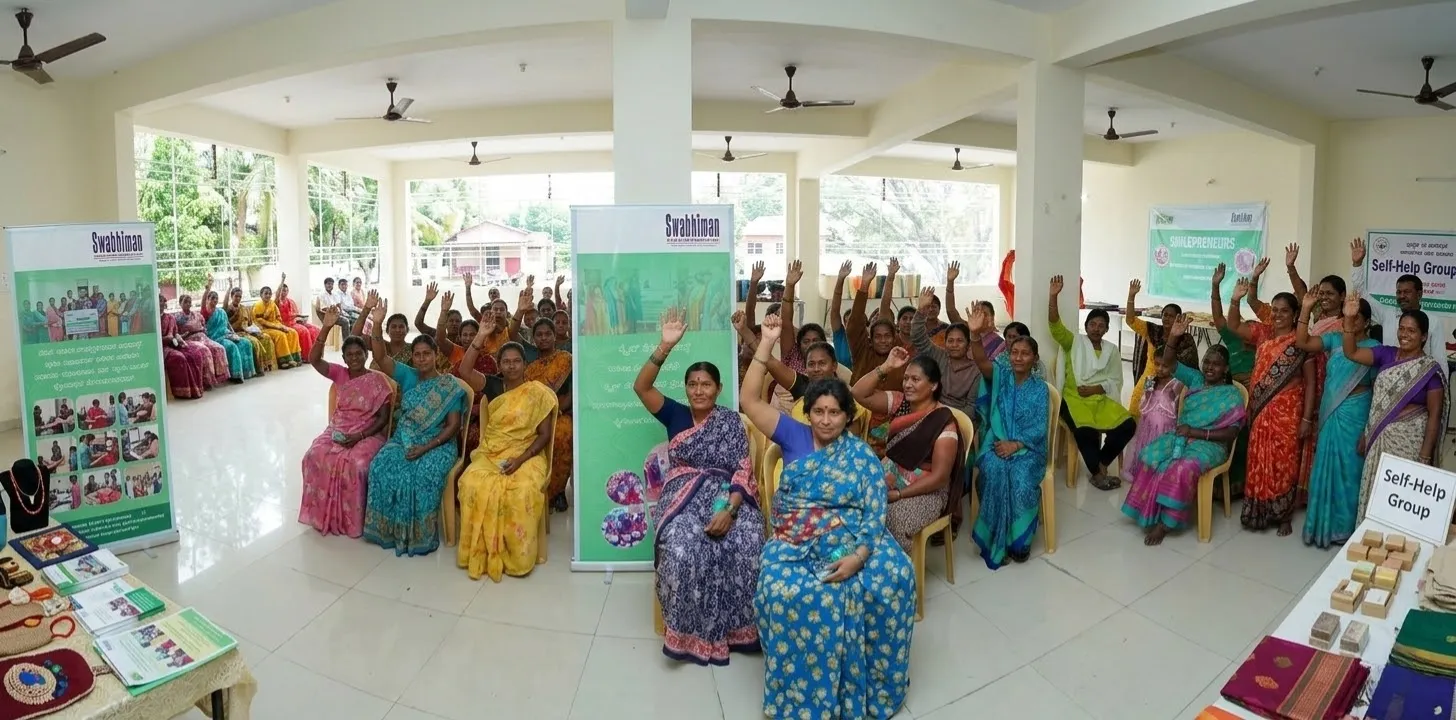
Nowhere is this more visible than in the work of organisations like Smile Foundation India, which has spent over two decades building a lifecycle of support for India’s most underserved women and girls, from nutrition in pregnancy to income in adulthood.
For CSR decision makers, corporate leaders, and social impact donors in India, understanding why this day exists is the first step toward honouring it in a way that creates real change. This guide walks you through the complete history, the reasons IWD still matters today, what Smile Foundation is doing on the ground, and exactly how your organisation can turn this Women’s Day into a genuine force for transformation.
At a Glance
|
What Is International Women’s Day and Why Does It Matter?
International Women’s Day (IWD) is an annual global observance held on March 8 that celebrates the achievements of women across all spheres of life, political, social, cultural, and economic, while calling for urgent action to close gender gaps that persist worldwide.
It is neither a commercial holiday nor a simple appreciation day. IWD is a movement, backed by the United Nations, observed in over 100 countries, and increasingly adopted by the private sector as a cornerstone of ESG (Environmental, Social, Governance) and CSR strategy.
The Core Purpose of IWD
The three-part mission of International Women’s Day is:
- Celebrate: Recognise women’s achievements in leadership, science, business, arts, and activism
- Educate: Raise awareness about gender inequality, systemic barriers, and the data behind the gender gap
- Activate: Drive concrete change through policy, corporate action, donations, and community programmes
This tripartite structure is why IWD resonates differently with different audiences. For individuals, it is a moment of appreciation. For policymakers and NGOs, it is an advocacy platform. For corporates, it is an opportunity to demonstrate and deepen commitment to gender equity in the workplace and in the communities they operate within.
Why It Remains Relevant in 2026
Despite decades of progress, gender inequality remains one of the world’s most persistent challenges. According to the World Economic Forum’s Global Gender Gap Report 2024, at the current rate of progress, it will take 134 more years to close the global gender gap. In India specifically, the report ranked the country 129th out of 146 countries in overall gender parity.
These are not abstract statistics. They represent millions of women in India who face wage discrimination, limited career progression, barriers to education, and disproportionate domestic burden. IWD exists precisely because the work is not done.
The History of International Women’s Day, From 1908 to Today
Understanding why Women’s Day is celebrated begins with understanding where it came from. The history of International Women’s Day is a story of labour rights, suffrage, and the unstoppable momentum of collective action.
The 1908 New York Garment Workers’ Strike
The modern story of IWD begins on March 8, 1908, when approximately 15,000 women garment workers marched through New York City’s Lower East Side. These workers, many of them immigrant women, were demanding three things:
- Shorter working hours (they routinely worked 12 to 16-hour days)
- Better pay (earning a fraction of what male colleagues earned)
- The right to vote
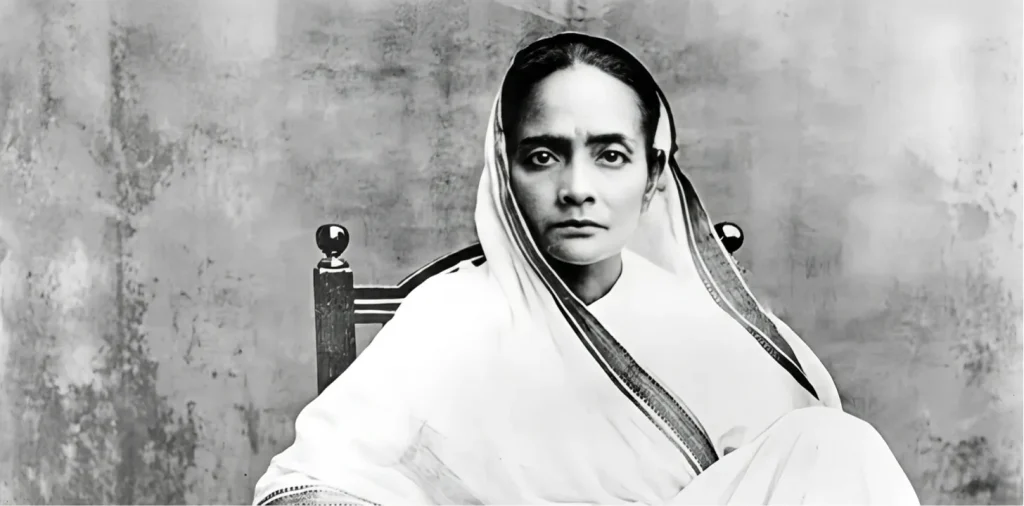
The march, organised partly by Theresa Malkiel, a socialist activist and labour organiser, became one of the defining moments in the American labour rights movement. The following year, in 1909, the Socialist Party of America declared the first National Women’s Day, observed on February 28.
Clara Zetkin and the Birth of IWD (1910)
The leap from a US national day to an international one came in 1910, thanks to Clara Zetkin, a German socialist activist and advocate for women’s rights. At the International Conference of Working Women held in Copenhagen, Denmark, Zetkin proposed that an annual Women’s Day be established internationally, the same day in every country, to build solidarity and amplify demands for women’s suffrage and labour rights.
The proposal was unanimously adopted by 100+ women delegates from 17 countries in attendance.
The first International Women’s Day was observed in 1911 in Austria, Denmark, Germany, and Switzerland, with over one million people participating in rallies and marches. Women demanded the right to vote, to hold public office, and to end gender discrimination in employment.
Just one year later, in 1912, the Triangle Shirtwaist Factory fire in New York killed 146 garment workers, mostly young immigrant women, reinforcing the urgent need for labour protections and cementing IWD’s connection to the cause of working women.
United Nations Recognition and Global Adoption
For decades, IWD was primarily observed by socialist and communist movements. Its transformation into a truly global day came through the United Nations.
In 1975, the UN designated it the “International Women’s Year,” and in 1977, the United Nations officially proclaimed March 8 as the International Day for Women’s Rights and International Peace. Member states were invited to observe the day annually.
Since then, IWD has evolved from a political protest day into a multi-dimensional global observance adopted by governments, civil society organisations, corporations, and individuals across every continent.
Why Is Women’s Day Celebrated on March 8?
This is one of the most commonly asked questions, and the answer lies in Russian history.
On March 8, 1917 (February 23 in the Julian calendar then used in Russia), thousands of women in Petrograd (now St. Petersburg) took to the streets demanding “Bread and Peace”, protesting food shortages and Russia’s continued involvement in World War I. This strike by women textile workers is widely considered one of the catalysts that ignited the Russian Revolution.
Just four days later, Tsar Nicholas II abdicated. The new provisional government granted Russian women the right to vote. Russia was one of the first major governments to do so.
This historic convergence of women’s protest and political transformation on March 8 gave the date its permanent, symbolic weight. When the UN formally adopted IWD in 1977, it chose March 8 to honour this legacy.
Today, March 8 is a public holiday in several countries including Russia, China, Uganda, and Vietnam, and a culturally significant day in India, even where it is not an official holiday.
Why Is International Women’s Day Still Celebrated Today?
Some argue that in an era of women CEOs, female heads of state, and widespread gender awareness, Women’s Day has become redundant. The data tells a starkly different story.
The Gender Gap in Numbers
- According to the World Economic Forum (2024), the global gender gap in economic participation stands at 60.5%, meaning women have only achieved about 60% of economic parity with men.
- The ILO (International Labour Organization) reports that women earn on average 20% less than men worldwide.
- Women represent only 31.7% of senior management roles globally, according to Grant Thornton’s Women in Business Report 2023.
- In India, women’s labour force participation rate stood at approximately 37% in 2023, compared to over 76% for men, according to World Bank data.
Women Empowerment in India: The Current Picture
India presents a complex picture. On one hand, the country has seen women lead major corporations, reach the Supreme Court, and win Olympic medals. On the other, ground-level realities are sobering.
- India ranks 64th out of 67 countries surveyed in the Grant Thornton 2023 report for women in senior leadership.
- The National Family Health Survey (NFHS-5) found that only 40% of women in India have a bank or savings account they use themselves.
- Violence against women, limited access to quality healthcare, and educational disparities in rural India remain deeply entrenched.
These numbers make the case clearly: Women’s Day is celebrated not because equality has been achieved, but because it has not.
And they explain exactly why organisations like Smile Foundation are doing the work they do, every single day.
Smile Foundation and Women Empowerment in India
When we ask why Women’s Day is celebrated, the most honest answer is: because millions of women across India still need what Women’s Day stands for. Smile Foundation, established in 2002, is one of India’s most credible and impactful development organisations working to bridge that gap.
With over 400 active projects across 27 states, reaching more than 20 lakh children and families every year, Smile Foundation takes a lifecycle approach to social change. Women and girls are not a side programme. They are at the centre of everything Smile Foundation does. More than 50% of all beneficiaries across Smile’s programmes are female.
Swabhiman: Smile Foundation’s Women Empowerment Programme
The flagship women empowerment initiative of Smile Foundation is called Swabhiman, a Hindi word meaning self-respect. Launched in 2005, the programme was built on a simple but powerful insight: that women’s empowerment cannot be addressed through one intervention alone. A woman who receives a skill but has no access to healthcare is not truly empowered. A girl who gets a scholarship but faces child marriage pressure at home is not truly free.
So Swabhiman was designed as a lifecycle programme covering five interconnected areas:
- Healthcare and Reproductive Health: Awareness sessions, health camps, telemedicine services, and door-to-door visits covering maternal health, menstrual hygiene, nutrition, and reproductive rights
- Nutrition: Community nutrition workshops, cooking demonstrations, and support for pregnant and lactating mothers through Anganwadi partnerships
- Education and Scholarships: The Scholarships@Smile programme has supported over 1,00,000 students, mainly girls, with financial aid, life-skills workshops, and mentoring
- Livelihood and Entrepreneurship: Business skills training, financial literacy, micro-enterprise development, and linkages to self-help groups (SHGs) for economic independence
- Community Mobilisation: Identifying and training women as Change Agents who then drive awareness and behaviour change within their own communities, ensuring impact multiplies beyond the direct beneficiary
This is not a top-down programme. It is community-driven, government-aligned, and built to last.
Ground-Level Impact: What Smile Foundation Is Actually Achieving
The numbers behind Swabhiman are not projections. They are verified results from real communities across India.
| Impact Area |
Verified Achievement |
|---|---|
| Total women and girls reached (Swabhiman) |
5,60,000+ |
| Women sensitised on Reproductive and Child Health |
76,000+ |
| Women who received healthcare services |
72,000+ |
| Women-led micro enterprises initiated |
68+ |
| Students (mainly girls) supported through Scholarships@Smile |
1,00,000+ |
| States of operation |
27 |
| Villages and urban slums covered |
2,000+ |
Source: Smile Foundation Annual Report 2023-24
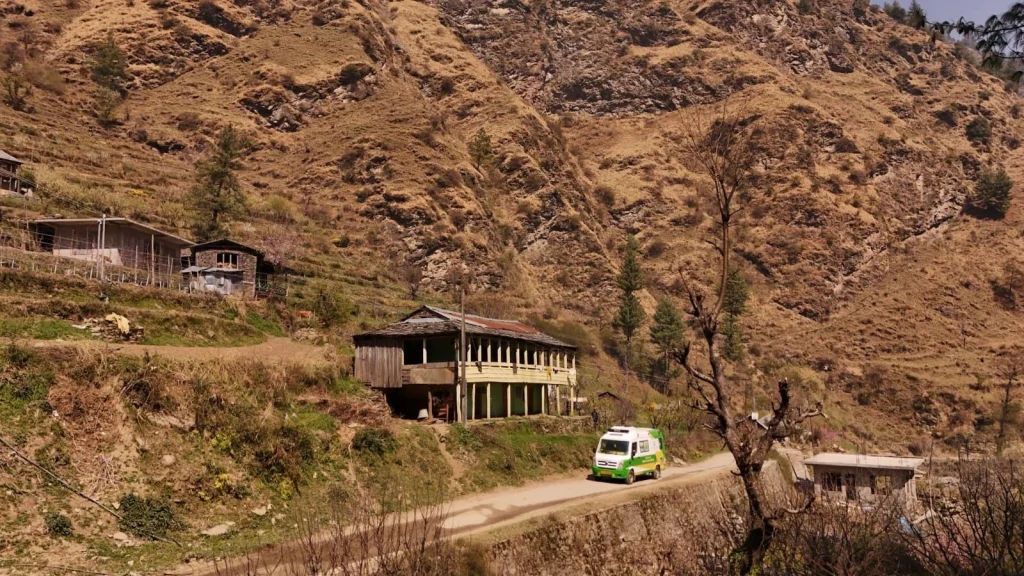
Beyond Swabhiman, Smile Foundation’s Smile on Wheels mobile hospital programme has provided free healthcare to over 15,41,000 children and families, with women and children as the primary focus group. In remote villages and urban slums where no clinic exists, a Smile on Wheels vehicle brings a doctor, nurse, pharmacist, and medicines directly to the doorstep.
From Numbers to Real Lives: Stories from Swabhiman
Statistics matter, but the real case for Smile Foundation’s work is best understood through individual stories.
| Ishwati, Palgarh, MaharashtraA widow with four children who struggled to feed her family on day wages. With initial support from Smile Foundation through Swabhiman, she began cultivating vegetables on a small plot of land. She then organised neighbouring women into a self-help group to expand the effort. Today, Ishwati not only feeds her family but has diversified her income and mentors other women in her village. |
| Ruby, Gurugram, HaryanaBorn in a remote village in West Bengal, Ruby moved to Gurugram after marriage and spent four years as a full-time homemaker. Through Swabhiman’s women’s entrepreneurship training, she learned garment stitching and enterprise development. She took a loan of Rs 1,00,000, opened a small boutique, and now runs a business with 10 employees. |
These are not exceptional cases. They are the programme working as designed, at scale, across hundreds of communities.
Why CSR Partnership with Smile Foundation Is the Right Move This Women’s Day
For corporate India, Women’s Day is increasingly a moment of scrutiny as much as celebration. Employees, investors, ESG rating agencies, and civil society are watching whether your company backs its rhetoric with resources.
Partnering with Smile Foundation for your Women’s Day CSR initiative offers something most organisations struggle to deliver on their own: proven, measurable, ground-level impact that aligns with national development goals.
What Your CSR Investment Goes Into
When you partner with Smile Foundation for women empowerment, your funds are channelled into specific, trackable interventions:
- Skill training and livelihood programmes for women from low-income urban and rural communities, leading to documented income generation
- Scholarships for girls to complete secondary and higher education, breaking cycles of early marriage and dependence
- Health camps and telemedicine services reaching women in communities where no healthcare facility exists
- Entrepreneurship development including business training, financial literacy, and SHG linkages
- Nutrition education and maternal health support reducing maternal and infant mortality in underserved areas
- Community awareness campaigns on reproductive rights, gender-based violence, and government entitlements
Every project is implemented within a framework of FCRA compliance, transparent reporting, and SROI (Social Return on Investment) tracking, making it directly usable in your company’s CSR and ESG disclosures.
Smile Foundation is one of India’s few development organisations to be recognised with awards from ASSOCHAM, CSR Connect Summit, and the IHW Council specifically for healthcare and CSR excellence, providing an additional layer of credibility for corporate partners.
Business and Social Benefits of the Partnership
A CSR partnership with Smile Foundation for women empowerment is not philanthropy alone. It is a strategic business decision with tangible returns.
For ESG and annual reporting: Smile Foundation’s programmes align directly with the UN Sustainable Development Goal 5 (Gender Equality) and SDG 3 (Good Health). This gives your CSR team ready-made SDG alignment language for investor communications and annual reports.
For employee engagement: Volunteers from corporate partners have participated in Smile Foundation programmes, from awareness drives to mentoring sessions. Employees who engage with real impact work report significantly higher job satisfaction and organisational pride.
For brand credibility: In an era where greenwashing and CSR-washing are increasingly called out, associating with a 20-year-old NGO with verified impact numbers and FCRA compliance protects and strengthens your brand’s social equity narrative.
For supply chain and community: If your company operates in or sources from rural or peri-urban India, women in those same communities are likely Smile Foundation beneficiaries. Supporting their health, education, and economic independence builds a stronger, more stable operating environment for your business.
Corporates like Honda India Foundation and Berger Paints India have already demonstrated this model. Honda partnered with Smile Foundation on a Swabhiman project that reached approximately 40,000 women and girls through reproductive health education. Berger Paints’ collaboration on the iTrain on Wheels initiative earned the 7th ICC Social Impact Award 2025.
How Corporates Can Celebrate Women’s Day Meaningfully
For CSR decision makers and corporate leaders in India, Women’s Day is far more than a day for cake and Instagram posts. It is a strategic touchpoint to demonstrate your organisation’s commitment to gender equity, in the workplace and in the communities you serve.
Here are high-impact approaches, divided into internal and external action.
Women’s Day Celebration Ideas in the Office
1. Host a “Women Who Lead” speaker series
Invite women leaders from your industry, customer base, or NGO partners to share their stories. Bringing in a Smile Foundation programme beneficiary or field officer creates rare, powerful impact, connecting your employees directly to the communities your CSR supports.
2. Launch a mentorship matching programme
Use Women’s Day as the launch date for a structured mentorship initiative pairing senior women leaders with mid-level female employees. Research by McKinsey and Company shows that women with sponsors and mentors are 2x more likely to advance.
3. Run an unconscious bias workshop
Facilitated workshops that surface hiring, promotion, and salary biases have documented impact. These work best when mandatory for managers, not optional.
4. Create a “Women’s Wall of Impact”
A physical or digital display celebrating the achievements of women in your organisation, across departments, tenures, and roles, makes recognition visible and lasting.
5. Conduct a pay equity audit and share findings
Transparency is the most powerful statement. Use Women’s Day as the occasion to commit to, and communicate, your company’s equal pay policy.
6. Run a company-wide donation drive for Smile Foundation’s Swabhiman
Instead of gift hampers, let employees contribute to Smile Foundation’s women empowerment fund in honour of Women’s Day. Show the impact map: which states the funds will reach, which interventions they will support.
Donation and CSR-Driven Women Empowerment Activities
For companies with formal CSR budgets, Women’s Day is an ideal moment to fund or launch programmes with measurable social impact through Smile Foundation:
- Sponsor a cohort of Swabhiman scholars (girls from low-income backgrounds completing secondary education)
- Fund a health camp reaching 500 to 1,000 women in an underserved community
- Support micro-enterprise development training for a group of women in your company’s operating geography
- Contribute to Smile on Wheels to bring mobile healthcare to communities near your facilities
- Fund nutrition education workshops for pregnant and lactating mothers in tribal or rural areas
Each of these interventions comes with defined beneficiary counts, geographic mapping, and impact documentation, giving your CSR team exactly what they need for reporting.
Step-by-Step Guide: Planning a Women’s Day Initiative with Smile Foundation
Executing a Women’s Day CSR initiative that moves beyond symbolic gestures requires intentional planning. Here is a practical framework for CSR and HR leaders.
Step 1: Define Your Goal
Before planning anything, answer: what do we want to achieve? Options include raising internal awareness, funding a ground programme, engaging employees in volunteering, or launching a year-long partnership. Your goal shapes everything else.
Step 2: Connect with Smile Foundation Early
Reach out to Smile Foundation’s corporate partnerships team at smilefoundationindia.org at least 4 to 6 weeks before Women’s Day. Discuss your focus area (education, health, livelihood), geography (which state or city), and budget. Smile Foundation will map a suitable Swabhiman project to your organisation’s objectives.
Step 3: Assemble Your Internal Planning Committee
Include women across seniority levels, departments, and backgrounds. A committee of only senior women or only HR representatives will miss perspectives that make the initiative meaningful to all employees.
Step 4: Design the Internal and External Programme
Pair an internal event (panel discussion, bias workshop, recognition ceremony) with the external CSR component (Smile Foundation donation, volunteer day at a Swabhiman project site). The internal event creates cultural change. The external component creates community change.
Step 5: Communicate Early and with Purpose
Send save-the-dates 3 to 4 weeks in advance. Build internal buzz with educational content about IWD history, the gender gap in India, and what Smile Foundation’s Swabhiman programme does on the ground. Make the cause tangible before asking for participation or donations.
Step 6: Execute with Inclusion
On the day, ensure men are meaningfully included, not just as audience members. Include actionable commitments, not just inspiration. If a Smile Foundation team member or beneficiary is participating virtually or in person, give them the space and dignity they deserve.
Step 7: Measure, Publish, and Follow Through
Collect feedback, share impact data from donations made, and publish a brief Women’s Day Impact update on your company’s intranet and social channels. Do not let this be a one-day event. Use Women’s Day as the launch of a year-round commitment, with Smile Foundation as your implementation partner on the ground.
Common Mistakes Organisations Make on Women’s Day
Even well-intentioned organisations fall into predictable traps. Avoid these:
Mistake 1: Performative gestures without structural change
Sending a cupcake to every woman employee while maintaining a gender pay gap is not celebration. It is cognitive dissonance, and IWD amplifies whatever your culture actually is.
Mistake 2: Excluding men from the conversation
Gender equity is not a women’s issue alone. Events and workshops that exclude men miss the most important audience for behaviour change. The UN’s HeForShe campaign was built on this insight.
Mistake 3: Treating Women’s Day as a one-day event
Real progress requires year-round commitment. If your only women-focused initiative is a March 8 panel discussion, your organisation is using IWD for optics, not impact. Smile Foundation’s Swabhiman programme runs 365 days a year. Your partnership should, too.
Mistake 4: Choosing token speakers or awards
Inviting a woman speaker because she’s available, not because she’s relevant and inspiring, signals that diversity is a checkbox. Curate with care.
Mistake 5: No connection to actual business or CSR goals
Women’s Day celebrations should connect to your company’s stated gender equity commitments, ESG goals, or CSR strategy. Disconnected events feel hollow to employees and investors alike.
Mistake 6: Choosing NGO partners without verifying credibility
Not all NGOs are equal. Partnering with an organisation that lacks transparency, FCRA compliance, or verified impact data exposes your company to reputational and legal risk. Smile Foundation’s two decades of operation, publicly available annual reports, and consistent award recognition from bodies like ASSOCHAM and the IHW Council make it a low-risk, high-credibility choice.
Mistake 7: No measurement or follow-up
If you cannot answer “What changed after our Women’s Day initiative?” you have not planned for impact. Work with Smile Foundation to define beneficiary counts, geographic reach, and outcome indicators before the programme begins.
Expert Tips for CSR Leaders and Corporates
Pro Tip 1: Align your Women’s Day CSR spend with SDG 5 through Smile Foundation
The UN’s Sustainable Development Goal 5 (Gender Equality) provides a globally recognised framework for measuring and reporting women empowerment impact. Smile Foundation’s Swabhiman programme is explicitly designed to advance SDG 5 indicators including women’s economic participation, reproductive health access, and educational attainment. Structuring your CSR reporting around these indicators, anchored by Smile Foundation’s field data, gives your ESG disclosures immediate credibility with global investors and rating agencies.
Pro Tip 2: Use Women’s Day to launch a year-round gender equity partnership, not a one-time donation
Instead of a one-day fund transfer, approach Smile Foundation about a structured, multi-year partnership within your CSR framework. Define annual targets, intervention areas, and reporting timelines. This signals institutional commitment and generates richer impact data for your annual reports.
Pro Tip 3: Publish a Women’s Day Impact Report with real numbers from Smile Foundation
After each Women’s Day, publish a brief impact report: how many women reached, which communities, what interventions funded. Smile Foundation provides this data as part of its corporate partnership reporting. This builds credibility with employees, investors, and civil society.
Pro Tip 4: Send employees to Swabhiman project sites as corporate volunteers
Nothing builds organisational empathy like first-hand exposure. Smile Foundation facilitates corporate volunteer days at Swabhiman project sites, where employees can participate in health camps, mentor scholars, or support community sessions. These experiences transform passive CSR donors into active advocates within your company.
Pro Tip 5: Tie executive performance to gender equity metrics and community investment
The most powerful lever of all: include gender representation, pay equity progress, and CSR community impact in executive KPIs. When leadership advancement depends partly on these metrics, change accelerates. Partnering with Smile Foundation gives you the external verification that makes these KPIs credible.
Frequently Asked Questions
Q: Why is Women’s Day celebrated?
International Women’s Day is celebrated to honour the social, economic, political, and cultural achievements of women worldwide, and to accelerate action toward gender equality. It grew out of early 20th-century labour rights protests and was formally established in 1910, later recognised by the United Nations in 1977. Today it serves as both a day of recognition and a global call to action.
Q: When was the first International Women’s Day?
The first International Women’s Day was observed on March 19, 1911, in Austria, Denmark, Germany, and Switzerland, following a proposal by German activist Clara Zetkin at the 1910 International Conference of Working Women in Copenhagen. Over one million people participated in that inaugural year. The date later moved to March 8 to commemorate the 1917 Russian women’s strike.
Q: Why is Women’s Day celebrated on March 8?
March 8 commemorates the women’s strike in Petrograd, Russia, on March 8, 1917, when women textile workers marched demanding “Bread and Peace”, a protest that helped trigger the Russian Revolution and led to women gaining voting rights in Russia. The United Nations chose March 8 as the permanent date for IWD in recognition of this historic event.
Q: What is the theme of International Women’s Day 2026?
The official theme for International Women’s Day 2026, as declared by the United Nations, is “Accelerate Action”, calling for faster progress toward gender equality, reflecting that at current rates it will take over 100 years to close the gender gap.
Q: What is Smile Foundation’s Swabhiman programme?
Swabhiman, meaning self-respect, is Smile Foundation India’s flagship women empowerment programme launched in 2005. It takes a lifecycle approach to empowering marginalised women and girls through five interconnected areas: healthcare, nutrition, education and scholarships, livelihood and entrepreneurship, and community mobilisation. As of the latest data, Swabhiman has reached over 560,000 women and girls across India.
Q: How can my company partner with Smile Foundation for Women’s Day CSR?
You can connect with Smile Foundation’s corporate partnerships team via smilefoundationindia.org. Smile Foundation works with corporates to design FCRA-compliant CSR programmes aligned with your industry, geography, and SDG reporting requirements. Programmes range from one-time health camps to multi-year livelihood and education initiatives with verified impact reporting.
Q: What are good Women’s Day celebration ideas for the office?
Effective office Women’s Day celebrations include hosting a women leader panel discussion, running an unconscious bias workshop for managers, conducting a pay equity audit, launching a company-wide donation drive for Smile Foundation’s Swabhiman, and sending employees to volunteer at a Swabhiman project site. The best initiatives combine internal culture-building with external community impact.
Q: Why is International Women’s Day still celebrated today?
International Women’s Day remains essential today because gender inequality persists globally. The World Economic Forum’s 2024 report found it will take 134 years to close the global gender gap at the current rate. In India, women’s labour force participation is around 37%, and only 40% of women have their own bank account according to NFHS-5 data. IWD is celebrated to maintain urgency, celebrate progress, and accelerate change.
Q: What are the best women empowerment activities for CSR in India?
The most impactful women empowerment CSR activities in India include funding scholarship programmes for girls, sponsoring livelihood skill training for women from low-income communities, supporting mobile healthcare services for women in remote areas, and backing community-based entrepreneurship development. Partnering with Smile Foundation’s Swabhiman programme provides access to all of these intervention types, with verified beneficiary counts and SDG 5-aligned impact reporting.
Conclusion
Why is Women’s Day celebrated? Because a century ago, women chose to march when the world told them to sit down, because that fight is not yet over, and because organisations like Smile Foundation are proof that change is possible when resources meet resolve.
International Women’s Day is a living reminder that gender equality is not a gift to be granted, but a right to be secured through sustained, collective action. From the garment workers of 1908 New York to the first-generation scholars in Smile Foundation’s Swabhiman programme today, the arc of women’s progress has always been shaped by those willing to speak up, show up, and stand behind meaningful commitments.
- IWD began as a labour rights protest in 1908 and became a global movement by 1911
- March 8 was chosen to honour the 1917 Russian women’s strike that helped trigger the Russian Revolution
- Gender inequality remains acute globally and in India: 134 years to close the gender gap, 37% female labour force participation
- Smile Foundation’s Swabhiman programme has reached 560,000+ women and girls across 27 states through healthcare, nutrition, education, and livelihood interventions
- Partnering with Smile Foundation for Women’s Day CSR turns a calendar moment into verified, year-round, SDG-aligned social impact
- Meaningful celebration goes beyond symbolism. It involves mentorship, pay equity, community investment, and accountability
If you are a CSR decision maker or corporate leader in India, use this Women’s Day not to perform commitment. Prove it. Partner with Smile Foundation, fund a Swabhiman intervention that reaches real women in real communities, and measure the change you create.
| Take ActionThe women in your community, your workforce, and your supply chain are not waiting for acknowledgement. They are waiting for action. This Women’s Day, give them that. Visit smilefoundationindia.org to start. |
Sources and References
- World Economic Forum. Global Gender Gap Report 2024
- United Nations. International Women’s Day Background
- UN Women. IWD 2026 Theme “Accelerate Action”
- International Labour Organization. Gender Equality
- Grant Thornton. Women in Business Report 2023
- World Bank. Female Labour Force Participation, India
- National Family Health Survey (NFHS-5), India
- Smile Foundation India. Annual Impact Report 2023-24




2 replies on “Why Is Women’s Day Celebrated? History, Impact & How to Act with Purpose”
Very good thinking and writing. Elaborately we can think women’s use of technology and social change.
Thank you so much. We will cover more women-oriented topics in our future blog posts.