
Public conversation about artificial intelligence proceeds with a certain determinism. We are told that technology advances, tasks disappear and labour adjusts accordingly. The arc, we are assured, is both inevitable and efficient.
But inevitability is a poor analytical tool.
If one lesson from the study of causality has endured, it is this: outcomes do not emerge from technology alone. They arise from systems — from the interaction between innovation, institutions, incentives and human capability. To attribute labour market shifts solely to artificial intelligence is to mistake correlation for cause.
In India today, this distinction matters.
Upskilling painters in the age of AI emergence
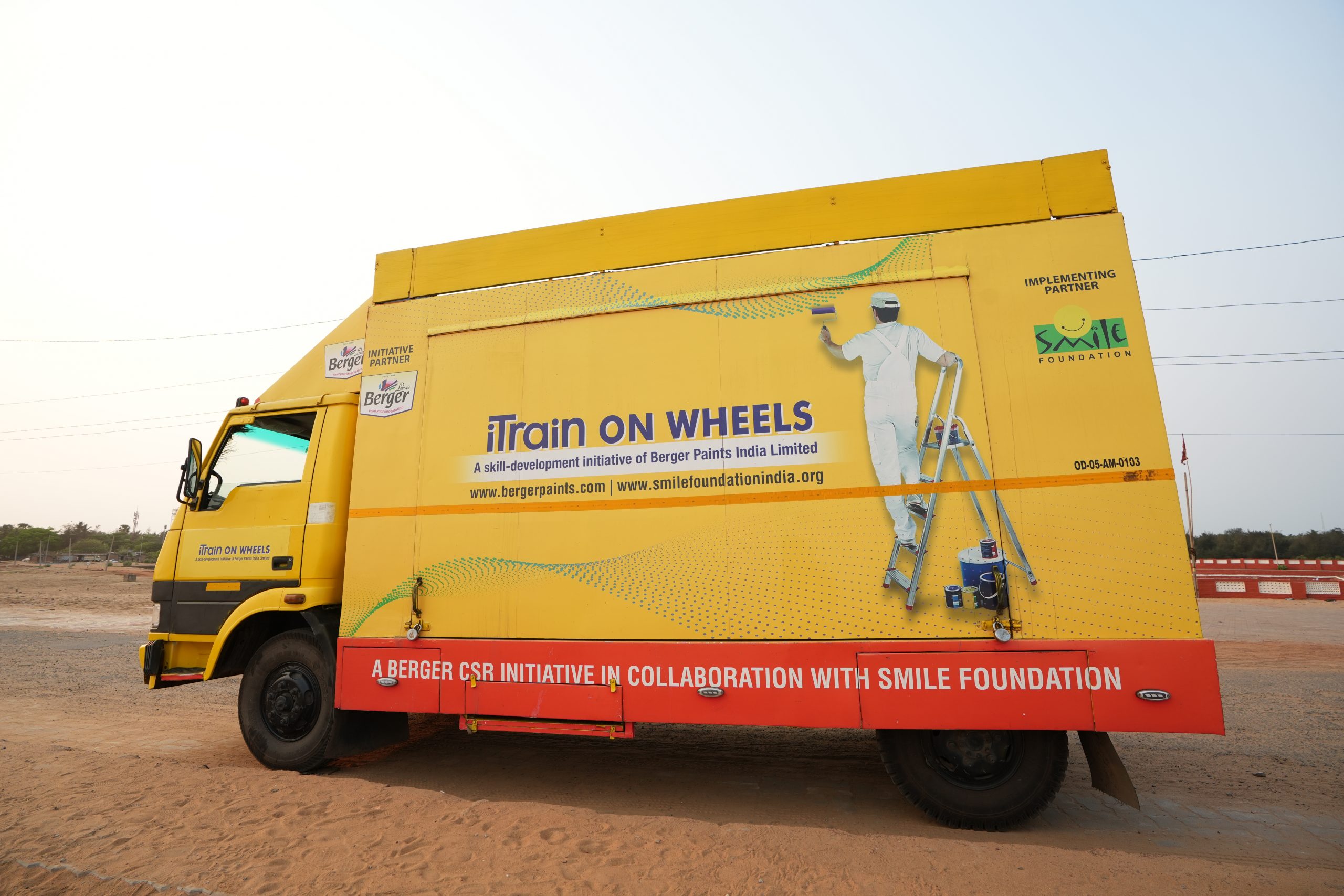
Consider the expansion of iTrain on Wheels, a mobile skilling initiative led by Smile Foundation in partnership with Berger Paints India. Since 2021, the programme has operated across more than 440 districts in 26 states and three Union Territories, reaching over 5000 locations and covering 51 aspirational districts. Each year, more than 1.5 lakh painters receive structured training. The fleet has travelled over 1.2 million kilometres to deliver instruction in modern painting techniques, mechanised application, wood polishing, decorative finishes and entrepreneurship.
At first glance, this has little to do with artificial intelligence. On closer inspection, it has everything to do with how societies respond to technological change.
The dominant narrative suggests that as machines grow more capable, human labour retreats. But this framing obscures the causal pathway. If technology alters the space of possibilities then institutions determine who benefits, and finally, skill determines who participates.
In the residential painting sector in India, automation is neither imminent nor total. Walls are irregular with varying moisture levels and fluctuating plaster quality. Clients revise preferences mid-project. The task environment is dynamic and resistant to full standardisation. A robotic arm may paint a controlled industrial surface but it does not negotiate with a homeowner in Coimbatore about colour durability during monsoon.
The more relevant question might lean more towards whether painters will adapt to rising standards shaped by technological innovation within their own industry, and not if machines would replace human painters.
Paint chemistry evolves and mechanised tools increase efficiency. Consumers preview finishes digitally and expect precision. In such a context, the causal chain is clear: improved product innovation leads to heightened consumer expectation which increases demand for skilled application and skilled application requires training.
Absent training, the result is not technological triumph but worker exclusion.
In controlled industrial environments, automation can deliver speed and precision.
Requires judgement, moisture testing, surface preparation, and local climate knowledge.
Client communication, trust-building, and real-time problem-solving remain human strengths.
Texture work demands hand control, adaptation, and surface sensitivity beyond automation.
The World Bank’s World Development Report 2019: The Changing Nature of Work makes a related point. Automation changes task composition, but sustained inclusion depends on human capital investment. More recently, Daron Acemoglu and Simon Johnson in Power and Progress (2023) argue that technological advances increase inequality when complementary institutions fail to strengthen worker capability. Technology does not distribute its benefits autonomously because distribution is structured.
In India’s predominantly informal labour market, structured skilling is often the missing institutional complement.
Most paint applicators learn through apprenticeship. Techniques are inherited. Knowledge updates occur sporadically, if at all. When market expectations shift — textured finishes, improved durability, mechanised spraying — the worker without access to updated instruction faces declining competitiveness.
A mobile training unit, therefore, is both a logistical innovation and an intervention in the causal chain.
By bringing instruction directly to neighbourhoods, iTrain on Wheels reduces the opportunity cost that prevents informal workers from seeking training. A day without wages can destabilise a household budget. When training arrives locally, participation increases. Exposure to mechanised equipment improves productivity. Modules on costing and client communication reduce chronic under-pricing. The effect manifests as higher earnings, repeat clients and improved bargaining confidence.
In Mysuru, painters attending a recent session described how customers increasingly demand finishes seen online. Without updated skills, contracts shift elsewhere. After training, some reported greater willingness to offer structured estimates rather than informal quotes. The shift may appear incremental. But incremental changes, when repeated across 1.5 lakh workers annually, accumulate into structural improvement.
The temptation in AI discourse is to elevate software as the central actor and treat labour as a passive variable. A more accurate model recognises interdependence. Artificial intelligence may optimise colour simulation tools or streamline supply chains. But the execution of a durable finish on a damp wall remains contingent on human judgement.
If we are to reason causally, the conclusion is straightforward. Technological change increases the returns to skill. Where skill investment lags, inequality widens. Where skill investment expands, opportunity diffuses.
Interventions such as iTrain on Wheels are therefore not peripheral to the AI conversation. They represent the institutional choices that shape its consequences.
In aspirational districts, meaning regions marked by income volatility and limited institutional presence, the stakes are amplified. Even modest increases in earnings can influence educational continuity, debt reliance and household resilience. The causal pathway from training to income stability to intergenerational mobility is neither immediate nor guaranteed, but it is observable.
Informal, basic techniques ₹650
After skill upgrade
Artificial intelligence will continue to evolve. Its trajectory is unlikely to slow. The question before all relevant stakeholders is not whether innovation occurs, but whether complementary investments in human capability keep pace.
To frame the future as a contest between artificial and human intelligence is analytically imprecise. A more accurate formulation is this: technology defines the opportunity set; human skill determines who can access it.
In strengthening the capabilities of paint applicators across India, Smile Foundation and Berger Paints are, in effect, altering the distribution of opportunity within a changing market. They are inserting training at a point in the causal chain where exclusion might otherwise occur.
The lesson is broader than painting. When societies confront technological acceleration, the rational response is not resignation to inevitability, but deliberate investment in those whose work underpins the physical economy.
Machines may calculate. But it is still skilled hands that prepare the surface, steady the brush and deliver the outcome.
And the prosperity that follows depends on whether those hands are trained to meet the moment.