


When economists and policymakers speak of India’s ambition to become a $7 trillion economy, they often talk about infrastructure, foreign investment, digital innovation and green energy. But one of the most overlooked levers of this transformation lies inside Indian homes: the unpaid care work performed overwhelmingly by women.
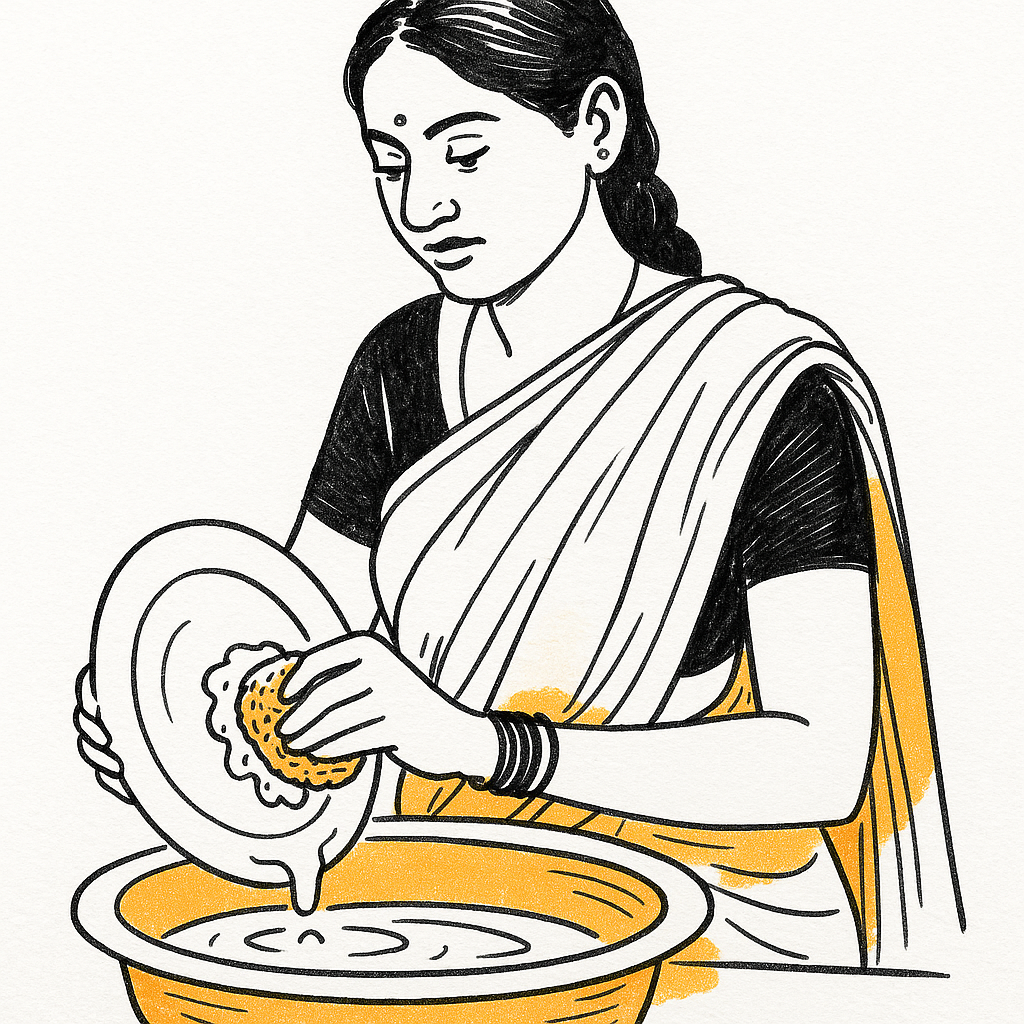
Unpaid care—including child-rearing, elder care, cooking, cleaning and fetching water—makes up a significant portion of India’s real economic activity. But because it doesn’t pass through a market transaction, it remains unmeasured in GDP. The National Sample Survey Office (NSSO) data shows that women in India spend up to six hours a day on unpaid domestic and caregiving responsibilities, compared to men’s average of less than one hour. This disparity has deep implications for labour force participation, productivity and gender equality.
In fact, India’s female labour force participation rate is among the lowest in the world. Much of this is linked not to a lack of willingness or skill, but to the sheer load of unpaid domestic labour. This is the silent tax women pay, restricting their opportunities for paid employment, education or entrepreneurship.
The Economic Case for Change
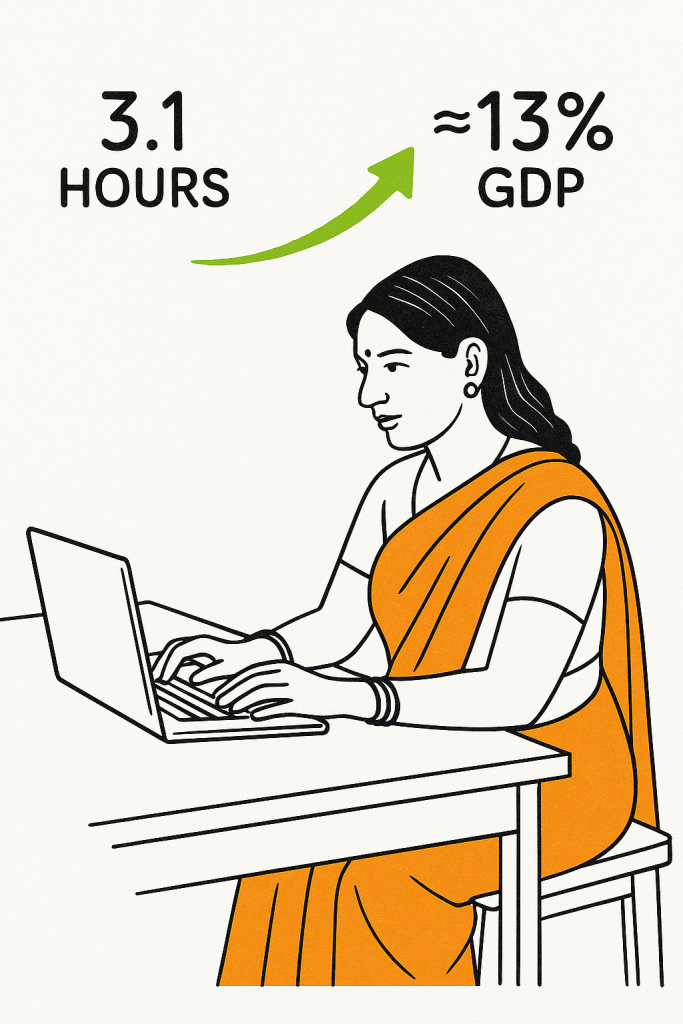
If this unpaid work were monetised, it could account for nearly 13% of India’s GDP, according to estimates from the International Labour Organization. But the case isn’t just moral or statistical; it’s economic. Reducing women’s unpaid work and enabling their entry into the formal workforce could significantly increase India’s productivity.
A 2023 report by McKinsey estimated that advancing gender parity in India could add $770 billion to GDP by 2025 (but isn’t 2025 getting over already!). Unlocking this requires coordinated efforts in childcare infrastructure, flexible work policies, social norms change and capacity building — all areas where civil society has an outsized role to play.
Smile Foundation and Women Empowerment
Smile Foundation’s livelihood and women empowerment programmes offer a compelling example of how this transformation can be grounded in practical, scalable models.
Through its women-centric STeP (Smile Twin e-Learning Programme), the Foundation trains young women in urban slums in market-aligned skills such as digital marketing, patient care and retail services. The programme includes flexible learning schedules, family counselling and confidence-building workshops, all designed to help women overcome both time poverty and social restrictions.
One graduate, Priyanka from Delhi, once spent her entire day caring for siblings and managing the household. After enrolling in STeP, she received digital and soft-skills training, secured employment in a retail chain and now supports her family financially. Importantly, her working status shifted the dynamics at home: responsibilities are more equitably distributed and her younger siblings have started seeing career possibilities for girls.
In rural areas, Smile Foundation integrates early childhood care and education (ECCE) centres with mother’s support groups. These centres serve a dual purpose of preparing children for school and freeing up hours of women’s time each day, which can be redirected to income-generating or educational activities.
Childcare Infrastructure: A National Gap
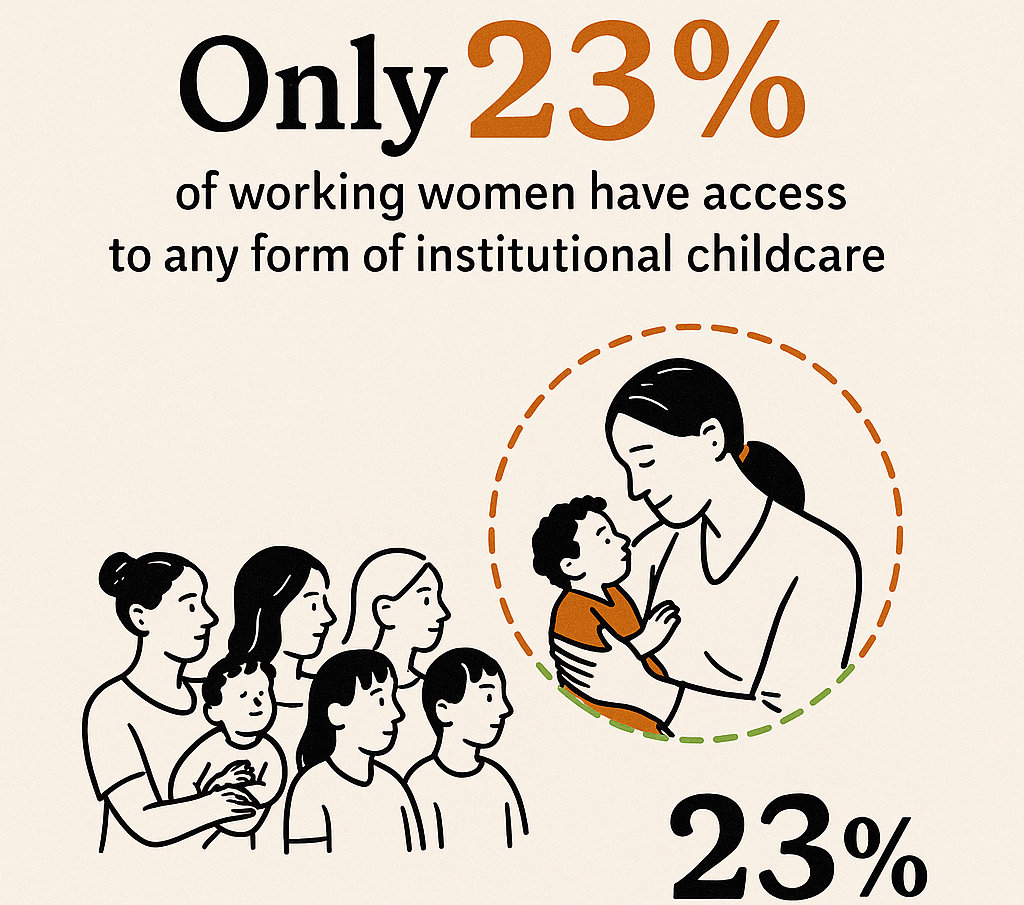
India lacks adequate childcare infrastructure, especially in informal and low-income urban areas. According to a 2022 report by UNICEF, only 23% of working women have access to any form of institutional childcare.
Smile Foundation’s approach to solving this includes community-run creches, mobile education units and parental sensitisation sessions. These efforts enable women not just to seek employment but also to sustain it over time.
Norms Change: The Slow Revolution
Even as infrastructure improves, change must also come from within families and communities. Deep-rooted gender norms are not easily dislodged. Smile Foundation works closely with men and boys, organising gender workshops, intergenerational dialogues and father-focused campaigns to foster shared responsibility.
A key insight from our work is that public messaging alone is insufficient. What works better is proximity: seeing one’s neighbour share domestic work or hearing a daughter’s success story can be more persuasive than a government poster.
Smile Foundation’s interventions show that multi-sectoral solutions anchored in local contexts can effectively address unpaid care burdens. Policymakers must integrate care economy measures into mainstream economic planning — from expanding ICDS and Anganwadi services to mandating workplace childcare and funding community creches.
The upcoming Union Budget could, for instance, introduce care credits or tax rebates for caregiving households, incentivise employers to adopt family-friendly practices and fund public awareness campaigns on unpaid care.
From Invisible to Invaluable
For India to meet its growth ambitions, it must start counting what counts. Unpaid care work isn’t a peripheral issue — it is central to economic resilience, human development and social justice.
As India aims to become a $7 trillion economy, it must free half its population from the invisible chains of care work — not by eliminating caregiving, but by redistributing it more fairly and valuing it more visibly. Only then can the country move from promise to possibility, powered equally by the hands of all its people.








One reply on “Freeing Women from Unpaid Care”
This piece on women’s unpaid care limiting India’s growth is so eye-opening—my mom spends 5+ hours daily on unpaid work (cooking, childcare) that’s never counted, which perfectly matches the points here! Just wish there was a quick nod to small policy wins already helping (like local daycare schemes), but it still drives home how critical this issue is for the economy.