“We all have a little bit of Rudolph in us,” says Dr. Yong Zhao, a Professor in the School of Education at the University of Kansas, in his 2015 TEDx Talk, referencing the story of Rudolph the Red-Nosed Reindeer. Rudolph’s glowing red nose, once seen as a flaw that made him an outcast, ultimately became his greatest strength, enabling him to lead Santa’s sleigh through a storm. This tiny tale captures a vital truth about human beings: each person is unique, carrying individual traits that may set them apart but also hold great potential.
Drawing from this context, it is natural to consider the transitive thought: Is every child too unique? Undoubtedly, just like Rudolph, each child has their own strengths, talents, and passions—qualities that may set them apart and deserve to be recognised and nurtured. But, given the global system we live in, we often treat children as if they are meant to be the same, holding them to identical expectations and standards, rather than honouring their individual differences. Moreover, the uniqueness of every child extends beyond academic or vocational skills. It encompasses emotional, social, and cultural dimensions, all of which contribute to a child’s identity and capacity for growth, making it pertinent that we address this uniqueness and henceforth create a safe environment.
Stepping away from norm
Historically, education in India was deeply rooted in contextual, value-based learning, transmitted through systems such as gurukuls where spiritual, practical, and intellectual development were integrated. However, the present-day Indian education system has diverged sharply from these holistic foundations. Over the last few decades, it is largely characterised by rote memorisation, exam-centric evaluation as well as limited engagement with real-world applicability. Unsurprisingly, this disconnect has contributed to an unemployment rate for those with postgraduate degrees and above was 13.6 per cent as per 2023-24 Periodic Labour Force Survey (PLFS) report by NSSO.
In light of this, a critical examination of current educational practices is essential. From early schooling onwards, students are compelled to conform to rigid academic frameworks and standardised assessments that define success narrowly—often in terms of marks, ranks, and entrance exams. This institutional emphasis on uniformity leaves little room for individual growth, creativity, or emotional development. As a result, students who do not align with the system’s narrow criteria are frequently marginalised, despite possessing talents that fall outside conventional academic measures. This reductive, “one-size-fits-all” model not only suppresses innovation but also undermines the diverse potential of learners across the country.
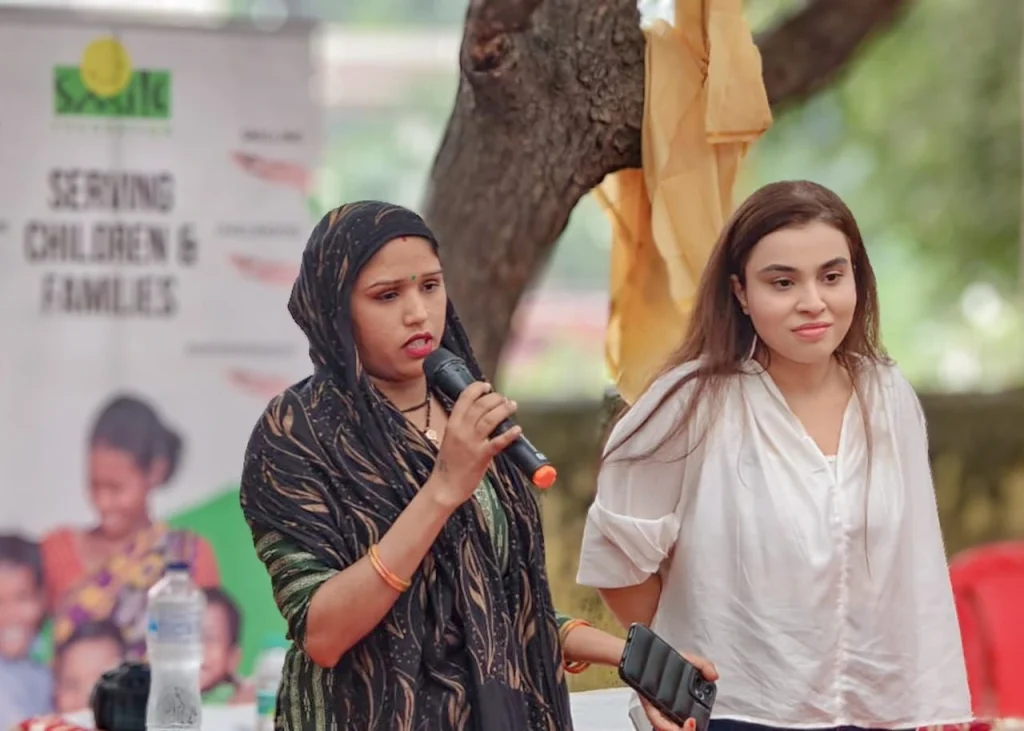
In a country as diverse as India, recognising that every child is unique is not just a philosophical stance—it is a practical necessity. Educational frameworks and social policies must therefore adopt holistic models that accommodate diverse backgrounds and learning styles. In fact, the education systems and aligning policies need to move beyond mere acknowledgment of diversity to actively accommodate it. This means creating equitable environments where children can discover themselves, pursue their strengths, and grow holistically. Smile Foundation’s ‘Every Child in School’ campaign is a key example that translates this vision in action. Through its Mission Education programme, the initiative identifies out-of-school children from marginalised communities—whether in remote villages, tribal regions, or urban slums—and provides them access to quality education tailored to their context. Importantly, Smile’s work extends beyond academics to address health, nutrition, and co-curricular development, thereby nurturing each child’s full potential.
Such a model reaffirms the core idea: when we embrace the uniqueness of every child, we lay the foundation for a more just and inclusive educational future.
Towards an equivalent system
In addition to changes at the classroom and school levels, systemic transformation must also occur at the policy level. Educational reforms need to prioritise flexibility in curriculum design, invest in continuous teacher development, and promote the recognition of multiple forms of intelligence—not just academic achievement. The National Education Policy (NEP) 2020 marks a significant step in this direction by advocating for learner-centric and inclusive approaches by encouraging flexible curricula that cater to diverse learning styles. This approach resonates strongly with the work of Smile Foundation in the vocational training space. Through initiatives like Project Manzil, we have supported youth by providing them with market-oriented skill training, life skills education, and job placement support, allowing them to make more informed decisions about their lives in the due course.
In line with these policy directions, another one of Smile Foundation’s programmes called Child for Child (CFC) exemplifies grassroots efforts to nurture empathy and social responsibility among young learners. This initiative—started in 2006—focuses on sensitising privileged children and their families to the deep social and educational inequalities that exist around them and in the process, nurture empathy, social responsibility, and a strong value system in young minds, so they grow into conscientious citizens and agents of change. Through visits to schools and interactive sessions, ‘CFC’ encourages privileged children to reflect on their own circumstances, recognise the challenges faced by their less fortunate peers, and understand the importance of equity and inclusion. In doing so, the programme not only fosters compassion but also reinforces the idea that every child’s experience is unique—and that acknowledging and respecting these differences is the first step towards building a just and supportive educational ecosystem.
The question of whether every child is truly unique calls for more than just recognition—it requires purposeful action. We must not only acknowledge the distinct strengths and talents each child possesses but also commit to creating systems and environments that nurture these differences. By doing so, we enable children to develop their individual potential fully and pave the way for a more just society where every child has the opportunity to thrive on their own terms.