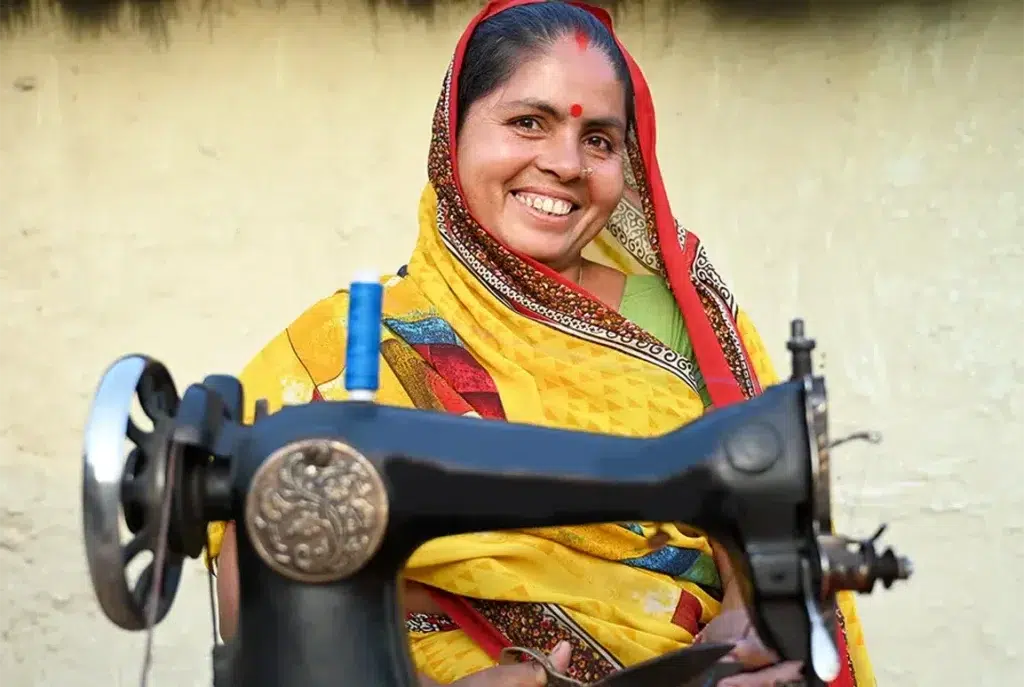
On a humid afternoon in eastern Uttar Pradesh, a woman in her thirties sits on a plastic chair inside a temporary health camp, her phone balanced on her lap. She is not speaking to a doctor in the room. Instead, a physician appears on the screen, asking questions about her blood pressure readings and the dizziness she has been experiencing for weeks. The interaction lasts under ten minutes. She leaves with advice, a prescription and instructions on when she should seek in-person care.
For millions of Indians, this is increasingly what healthcare looks like.
Not because telemedicine has been carefully designed as the country’s front line of care, but because, in many places, there is little else. As India continues to grapple with doctor shortages, uneven primary care coverage, and rising chronic disease, telemedicine has begun to function as the health system’s most reliable first point of contact — often by default rather than intention.
A system shaped by scarcity
India’s healthcare access problem is well-documented. The country has fewer doctors per 1,000 people. Specialist care remains concentrated in urban centres, while roughly two-thirds of the population lives in rural or semi-urban areas. Primary Health Centres and Community Health Centres continue to face staffing and infrastructure gaps, particularly in remote districts.
For patients, this translates into delay. Seeking care often means travelling long distances, losing daily wages, arranging childcare or negotiating household permission — barriers that disproportionately affect women, older adults, and people with disabilities.
In this context, telemedicine has emerged not as a futuristic solution, but as a workaround. A way to answer basic questions, triage symptoms and decide whether the effort of reaching a hospital is necessary.
The pandemic accelerated what was already coming
Telemedicine existed in India well before COVID-19, but adoption was limited. That changed abruptly in 2020, when lockdowns made in-person consultations difficult or impossible. In response, the government released formal Telemedicine Practice Guidelines, legitimising remote consultations and clarifying legal responsibilities for providers.
Around the same time, the national eSanjeevani platform expanded rapidly. Initially conceived as a hub-and-spoke model connecting primary centres to specialists, it evolved into a direct doctor-to-patient service. As of 2024, the platform has delivered more than 200 million teleconsultations, according to government figures, making it one of the largest public-sector telemedicine programmes in the world.
What is notable is not just the scale, but the geography. Most eSanjeevani consultations originate outside major cities. Many are first-time interactions with the formal health system.
Telemedicine, in other words, has become less about convenience and more about access.
First contact, not full care
Clinicians involved in telemedicine are careful to describe its role narrowly. Remote consultations work best, they say, when they are used for triage, follow-up and basic management — not complex diagnosis.
For common conditions such as fever, respiratory infections, skin complaints or medication refills for chronic diseases, telemedicine can be effective. It allows doctors to assess urgency, provide guidance and direct patients appropriately. In overstretched systems, that filtering function matters.
A growing body of research supports this cautious use. Studies from India and other low- and middle-income countries suggest that telemedicine can improve continuity of care for non-communicable diseases when combined with physical monitoring and referral pathways. But outcomes depend heavily on how services are integrated.
Used in isolation, telemedicine risks becoming a dead end. Used as part of a broader primary care strategy, it can reduce pressure on hospitals and shorten delays.
Uneven gains, persistent gaps
Telemedicine’s rise has not been uniform. Connectivity remains inconsistent, especially in tribal and mountainous regions. Digital literacy varies sharply by age, gender, and education. Language barriers persist, particularly for patients who do not speak Hindi or English comfortably.
There are also questions about quality. Not all platforms maintain the same clinical standards. Prescribing practices, follow-up mechanisms, and data privacy safeguards differ widely across providers.
A 2022 World Health Organization report on digital health warned that without deliberate equity measures, telemedicine could widen existing gaps by primarily benefiting those who are already connected.
India’s experience reflects that tension. While urban users increasingly treat teleconsultations as routine, many rural patients rely on intermediaries — frontline workers, pharmacists or mobile health staff — to navigate digital care. Where such facilitation exists, telemedicine works better. Where it does not, uptake remains low.
Gender, privacy and the appeal of distance
One area where telemedicine’s impact is more consistently visible is women’s health. For women constrained by mobility, caregiving responsibilities or social norms, remote consultations lower the threshold for seeking care.
Maternal health advice, menstrual health concerns, nutrition counselling and mental health screening are among the most common reasons women use telemedicine platforms, according to both public and private providers.
Privacy plays a role. Speaking to a doctor without travelling, waiting in crowded clinics or negotiating multiple permissions can make care feel more accessible. That said, access still depends on phone ownership and control, which remain unequal.
Chronic disease and continuity
India is facing a steady rise in non-communicable diseases, including diabetes, hypertension and cardiovascular conditions. Managing these illnesses requires regular follow-up, medication adherence and lifestyle counselling — tasks that overburden physical facilities.
Telemedicine has increasingly been used to fill these gaps. Remote check-ins allow clinicians to adjust treatment plans, review reports and monitor symptoms without requiring repeated hospital visits. For patients, this reduces both cost and disruption.
However, clinicians caution that telemedicine works best when paired with periodic physical examinations and diagnostics. Remote care can maintain continuity, but it cannot replace the need for on-ground services.
Civil society’s role in bridging the last mile
Some of the most effective uses of telemedicine in India have emerged not from standalone apps, but from hybrid models that combine digital consultations with physical outreach.
Non-governmental organisations and community health programmes have integrated telemedicine into mobile clinics, school health initiatives, and rural outreach efforts. These models address two persistent barriers: trust and follow-through.
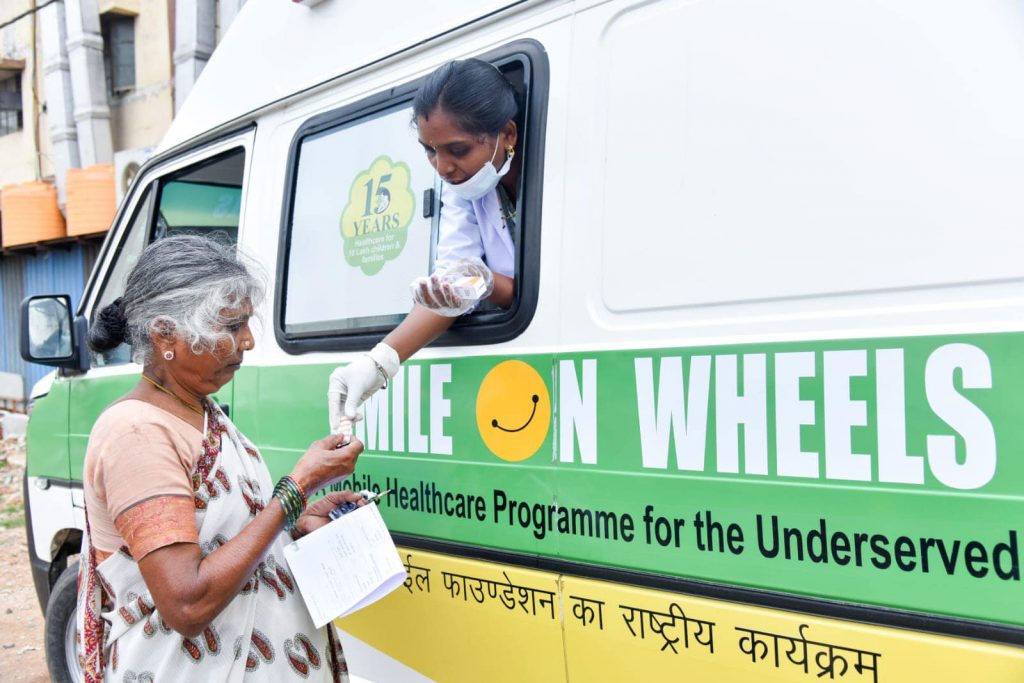
Smile Foundation’s Smile on Wheels programme is one such example. Operating mobile medical units across multiple states, the programme uses telemedicine to connect patients in underserved communities with doctors when specialists are not physically present. Basic diagnostics and physical assessments are conducted on-site, while teleconsultations provide clinical guidance and referrals.
The approach reflects a broader lesson from India’s telemedicine experience: technology alone is insufficient. What matters is how it is embedded within existing care relationships.
Smile Foundation has also used telemedicine for health education, adolescent counselling and follow-up care, particularly in regions where public services are thin. These interventions do not replace government systems, but operate alongside them, often reaching populations that remain outside routine care.
Policy momentum, unresolved questions
Government support has been central to telemedicine’s expansion. Platforms like eSanjeevani are now part of India’s broader digital public infrastructure, alongside initiatives such as the Ayushman Bharat Digital Mission, which aims to integrate health records and identifiers.
Yet challenges remain. Provider training for digital care is uneven. Data protection frameworks are still evolving. Quality assurance mechanisms are limited, particularly in the private sector.
There is also the question of sustainability. Telemedicine grew rapidly under emergency conditions. Whether it continues to receive investment and regulatory attention as a core component of primary care remains to be seen.
A quiet shift, still in progress
Telemedicine has not transformed India’s healthcare system. It has not eliminated shortages or erased inequities. What it has done is narrow the gap between concern and contact.
For millions of patients, the first interaction with a doctor now happens through a screen. Sometimes that interaction leads to reassurance. Sometimes to referral. And, sometimes to nothing more than advice to wait and watch. But it happens — and that, in a system long defined by delay, is not insignificant.
Whether telemedicine remains a stopgap or evolves into a durable layer of care will depend on how deliberately it is integrated into India’s health system. For now, it is filling a role that few others have managed to occupy: the first mile.