
“A nation will be empowered only when its women population gets empowered.”
Dr APJ Abdul Kalam
Once upon a time, a jewel that weaved and nurtured beyond the walls of her home, gradually faded inside the walls– neglected as if she never existed – a woman’s journey in India, once a fairy tale, faded gradually; her status in the society diminished as the magic vanished away after midnight. Today, she still awaits for a happy ending – where her status is revered as an equal, where her health is a priority.
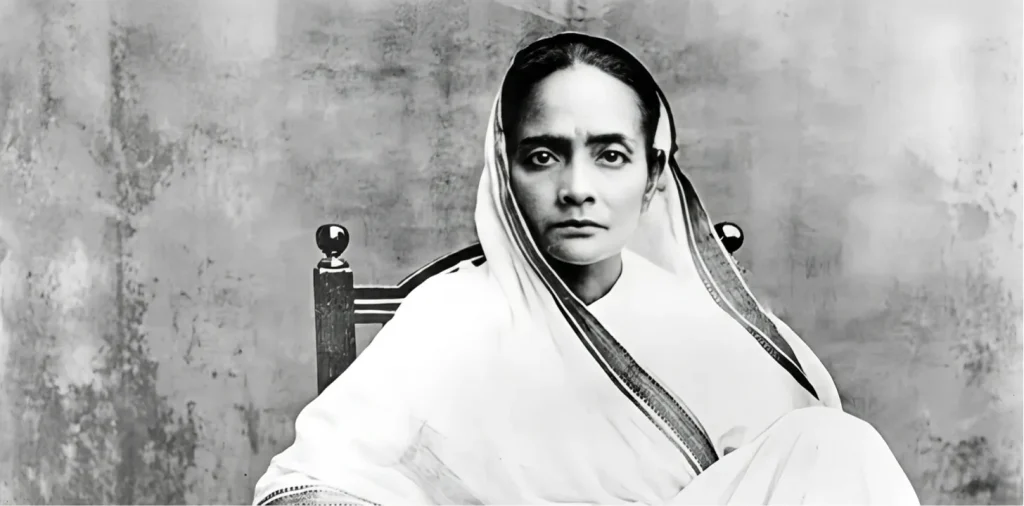
The story of women’s health in India is inseparable from the story of women’s status. In the Rig Vedic age, women stood at the centre of intellectual and social life, but as history unfolded, their place was diminished, their rights eroded. Even in today’s modern era, the struggle continues. On one side, the lingering chains of patriarchy, binding women to a subordinate role; on the other, the urgent need for society to face an undeniable truth: a woman’s place is not a concession to be granted, it is a certainty. She is an equal – entitled to the same rights enshrined in the Constitution, chief among them the right to good health.
As Dr Kalam observed, a nation’s power rests on many pillars, but its true foundation lies in the well-being of its women and children. In this light, on 17 September 2025, the Prime Minister of India, Narendra Modi, launched the Swasth Nari Sashakt Parivar Abhiyaan – one of the country’s largest health mobilisation drives for women, adolescents and children.
This mission speaks with clarity: women’s health is not an afterthought, but a right that has always belonged to them. To restore that right is to give women the strength and dignity they deserve and through them, to build healthier, stronger communities across India.
Women’s Health with Swasth Nari Sashakt Parivar Abhiyaan
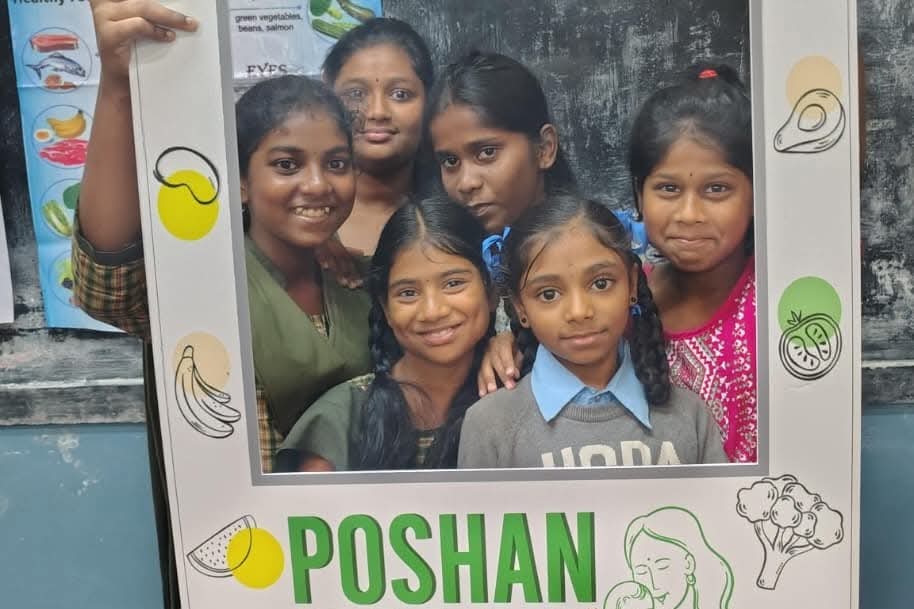
Being launched along with the 8th edition of Poshan Maah – the Swasth Nari Sashakt Parivar Abhiyaan is a strategic synchrony of the government’s effort towards uplifting women, children and adolescents health in India.
Where Poshan Maah focuses on nourishing, this Abhiyaan builds systemic care, together forming a dual front to strengthen women and her community.
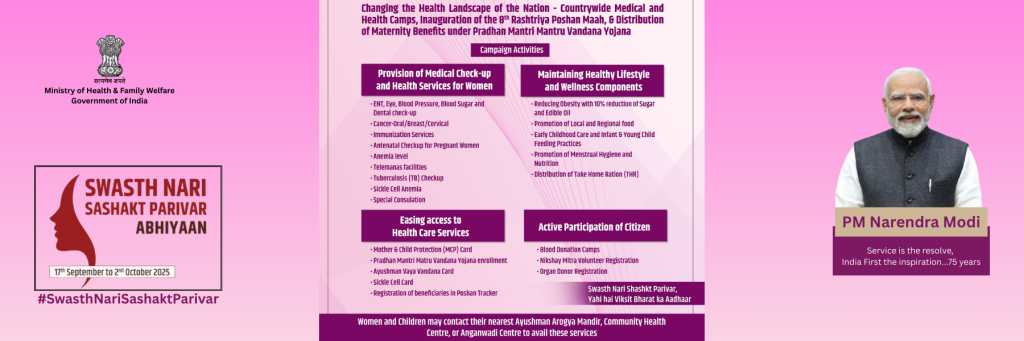
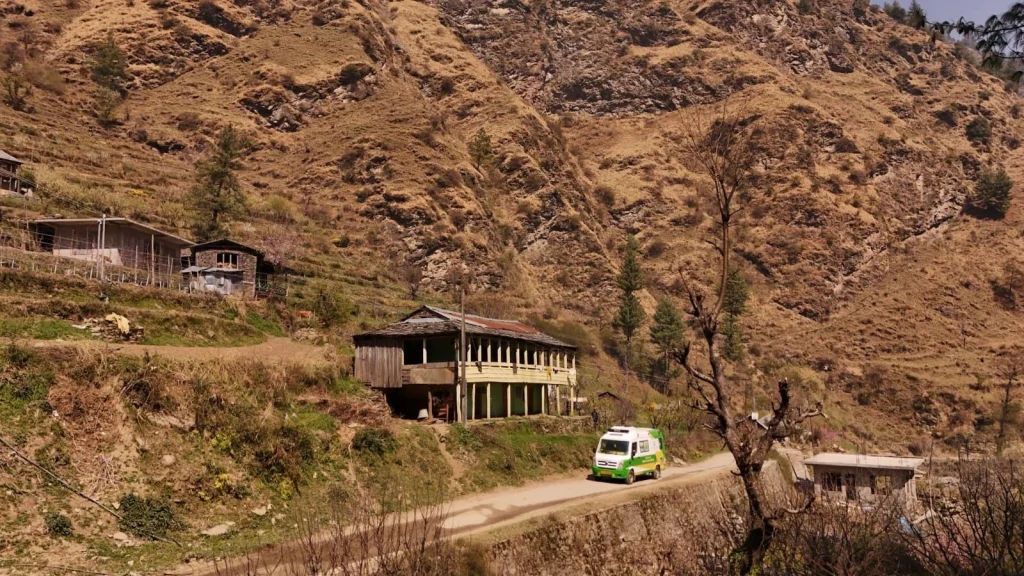
Starting from 17 September to 2 October 2025, with the support of the Ministry of Health and Family Welfare and the Ministry of Women and Child Development, the Abhiyaan will unfold nationwide. Community health centres, Ayushman Arogya Mandirs and Anganwadis will become the stage for screenings, interventions and awareness programmes bringing healthcare to the very heart of communities.
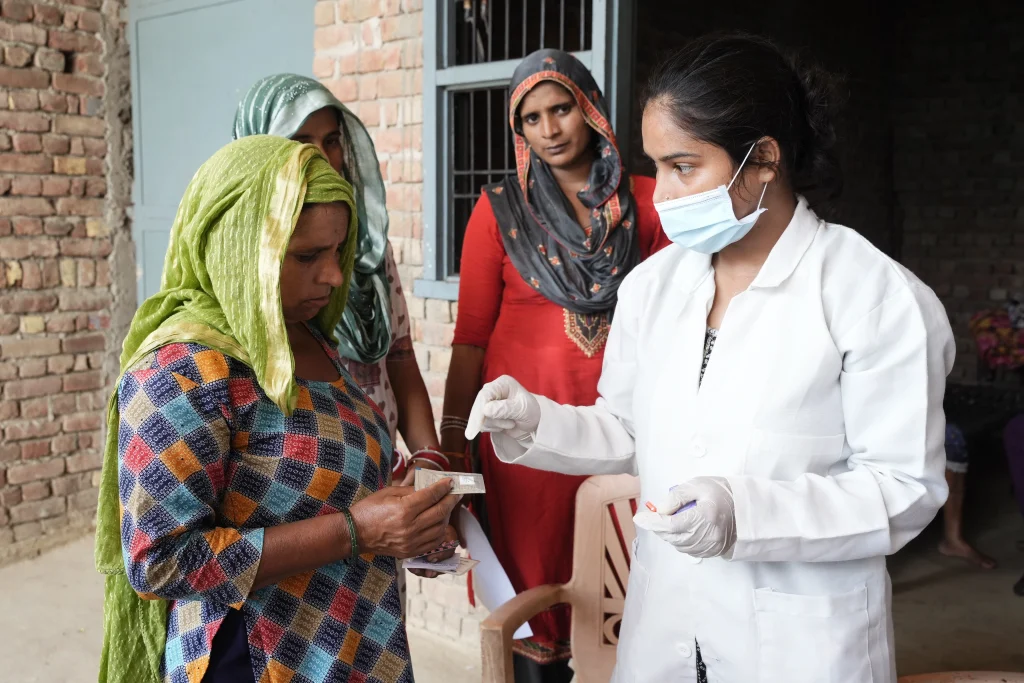
According to the Ministry of Health, this initiative extends the state’s long-term commitment: to ensure that women, especially in rural and urban-poor settings receive uncompromised access to quality healthcare. At its core, the campaign targets critical challenges
- Anaemia
- Tuberculosis
- Sickle cell anaemia
- Cancers of the breast and cervix
- Oral cavity
It also aims in strengthening antenatal care, expanding vaccination drives, establishing blood donation camps and integrating AYUSH-based wellness – ranging from nutrition literacy and local food promotion to menstrual hygiene, early childhood care and distribution of take-home rations. Digital health services such as Ayushman Bharat Health Accounts (ABHA) and PM-JAY will provide continuity of care.
This mobilisation rests not only on institutions, but also on the people who carry trust into households. ASHA and Anganwadi workers, ANMs, self-help groups and panchayati raj institutions under the MY Bharat initiative will drive grassroots awareness.
Specialist services in gynaecology, paediatrics, dermatology, psychiatry, ophthalmology and dentistry routed through medical colleges, district hospitals and apex institutions like AIIMS, ESIC and CGHS will ensure last-mile access to women’s health and child care.
The Health Ministry frames this campaign as aligned with the Prime Minister’s larger vision: a future where health, nutrition and fitness are not privileges, but pillars of a developed India by 2047.
The Generational Struggle
In India, women’s health is a mirror of the nation’s deeper struggles between progress and neglect, between bold schemes and persistent gaps. To understand these generational challenges is to recognise the silent currents shaping not just women’s lives, but the destiny of families and entire communities.
Four challenges that have been clouding women of India’s health for centuries are anaemia, malnutrition, chronic disease like diabetes and fragile antenatal care.
- Anaemia – The Invisible Weakness
Anaemia is both widespread and insidious. According to the NFHS-5 report, nearly 59% of adolescent girls and 67% of children are anaemic, while 32 million pregnant women battle the condition at any given time.
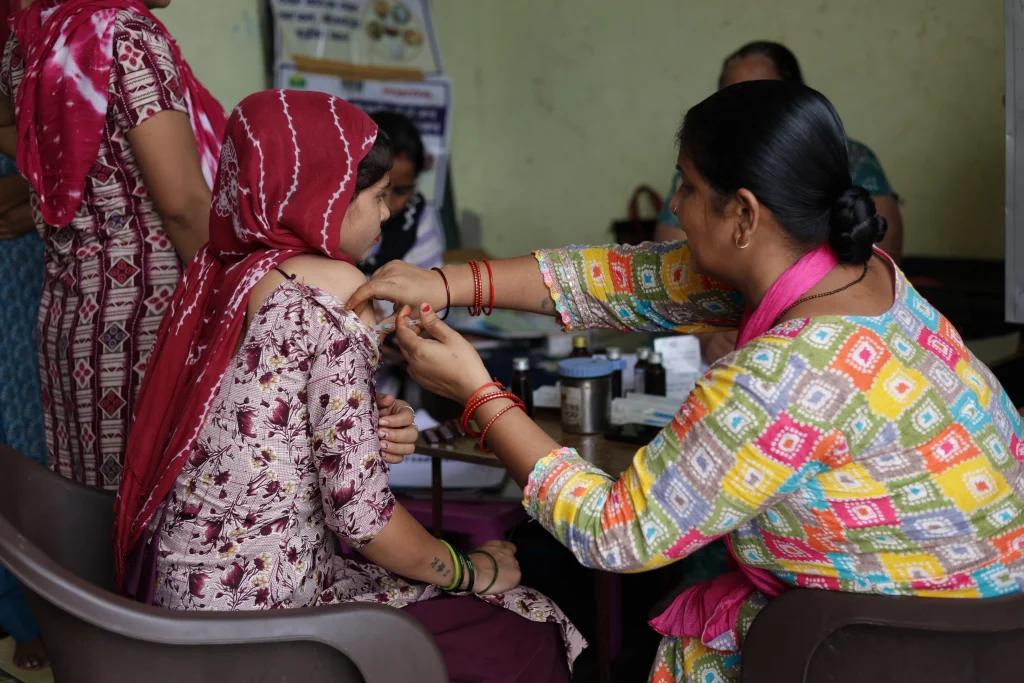
This long battle has robbed several mothers from strength and vitality; they have a risk of low birth weight, prematurity and maternal death. The government’s Anaemia Mukht Bharat campaign attempts to counter this through the 6x6x6 strategy that covers
- Iron and folic acid supplementation
- Deworming
- Digital tracking
- Fortified foods
- Community outreach
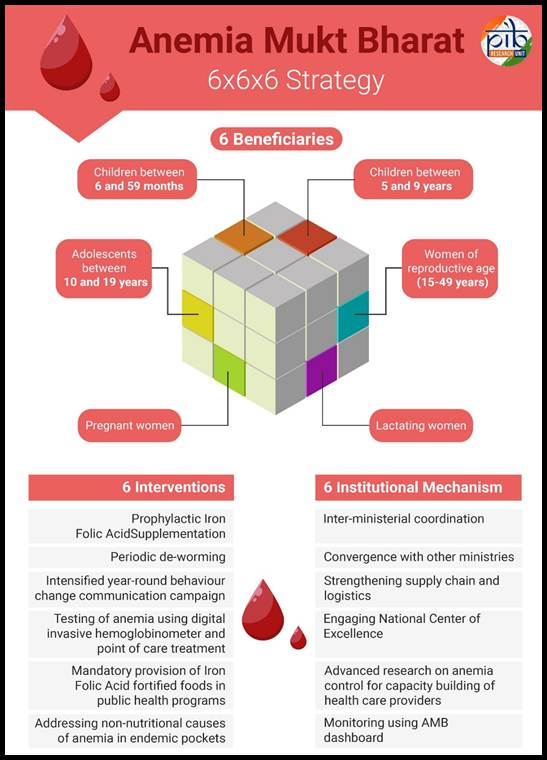
In 2024-2025, almost 154 million children and adolescents have received supplementation, but iron intake still remains low in three out of women. The anaemia struggle is not limited only to medical services, but cultural behaviours like diets lacking diversity, gender norms that force women to have inadequate diets and poverty are few of the reasons that result in women and young girls to be a victim of this silent disease.
- Malnutrition v/s Overweight – The Double Burden
Malnutrition and overweight are two challenges that women’s health in India faces alarmingly. On one side lies chronic energy deficiency, with millions of women entering pregnancy being underweight, weakened by insufficient protein and calorie intake. On the other hand, the alarming rise in overweight and obesity among adolescent girls adds a new layer of danger to women’s health in India.
This double burden accelerates the cycle of poor maternal and child outcomes, as undernutrition leads to stunted child development, while obesity in young girls and women seeds chronic diseases like diabetes and hypertension in early adulthood.
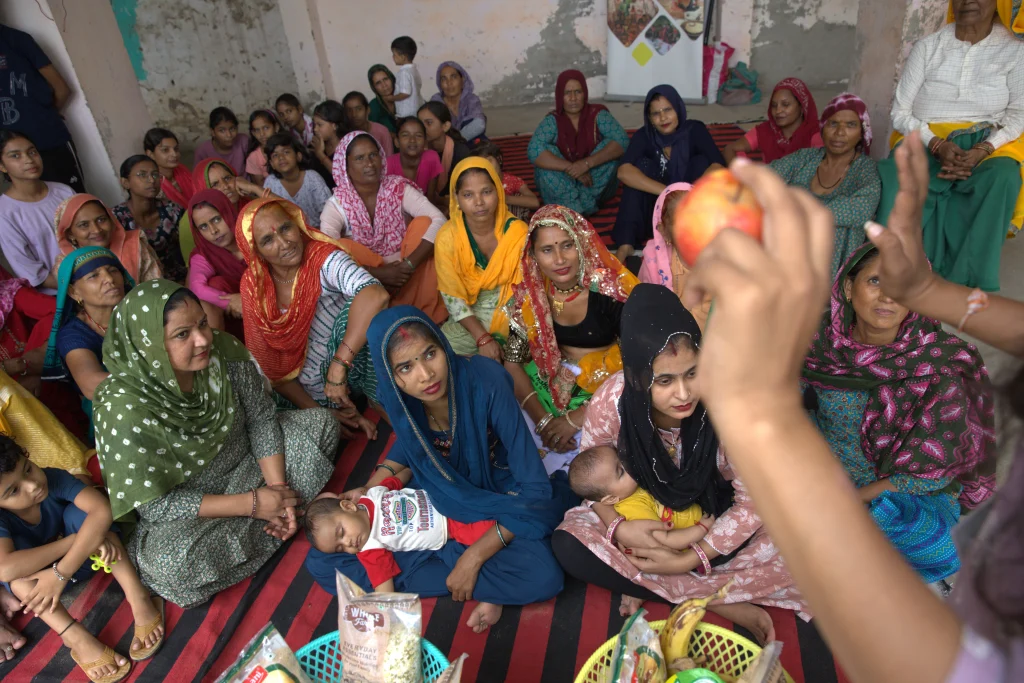
Government programmes such as Poshan Abhiyaan seek to balance this through
- Counselling
- Promotion of local foods
- Take home rations
- Community-based awareness programmes
However, the concerning factor that our society faces is the harsh truth of behaviour change demanding consistent efforts and reduction in the resistance of transformation.
- Antenatal Care – The Quality Gap
The WHO in 2016 revised its prescribed four antenatal visits to at least eight visits for safe motherhood and inspired from this India’s National Health Mission mandated that pregnant women must receive at least 4 or more antenatal check-ups that shall include
- Timely registrations
- Essential lab tests
- Tetanus toxoid vaccination
- 100 days of iron and folic acid
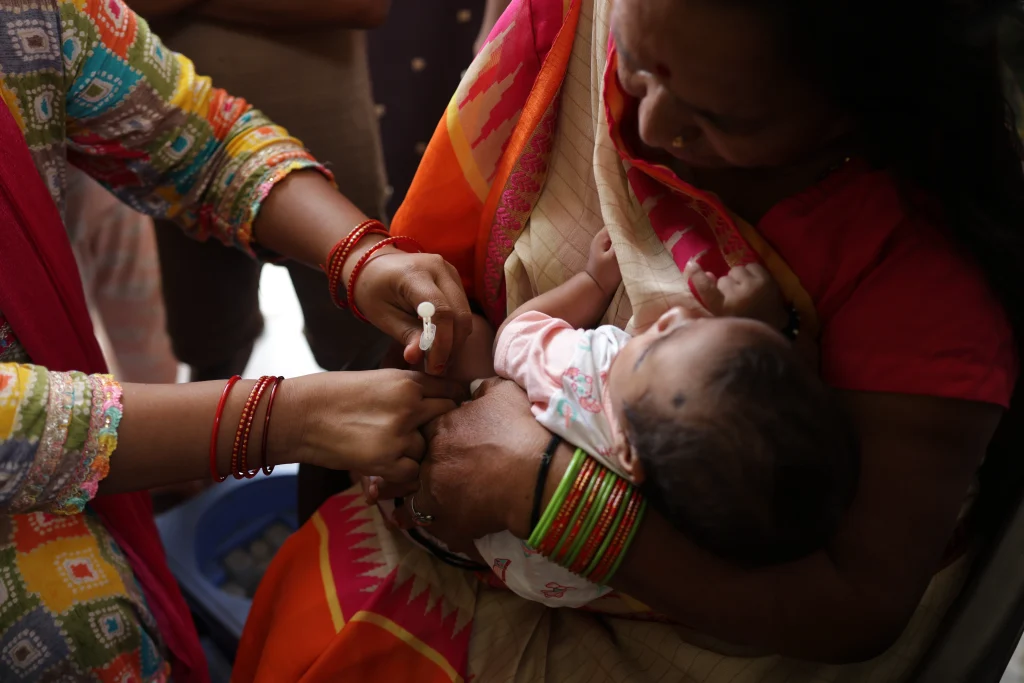
Yet, the gap lies not in numbers but in the quality of antenatal checkups in India especially for women belonging to rural India. Even as flagship efforts like the Pradhan Mantri Surakshit Matritva Abhiyan and its predecessors policies have driven the maternal mortality ratio down from 130 to 93 per lakh live births and the infant mortality rate from 39 in 2014 to 27 in 2021 – still the machinery falters at the level of practice. Check-ups often become perfunctory rituals, danger signs go unnoticed and counselling – the most human part of care – is absent.
- Menstrual Hygiene – A Hidden Fault Line
Menstruation in India remains less a biological reality than a battlefield of silence and stigma. In rural regions, despite schemes for free of subsidised sanitary products, millions of women such as 85% of women belonging to the Juang community, an ethnic group of Odhisha’s Keonjhar and Angul district still continue to depend on old cloth during menstruation.
The continuation of unsafe menstrual hygiene practices still continue in India because of financial constraints, weak supply chains and cultural shame. Infrastructure gaps compound the issue – shared toilets without water, poor disposal systems and inadequate privacy – push women into unsafe practices, raising the risk of infection and long term reproductive harm.
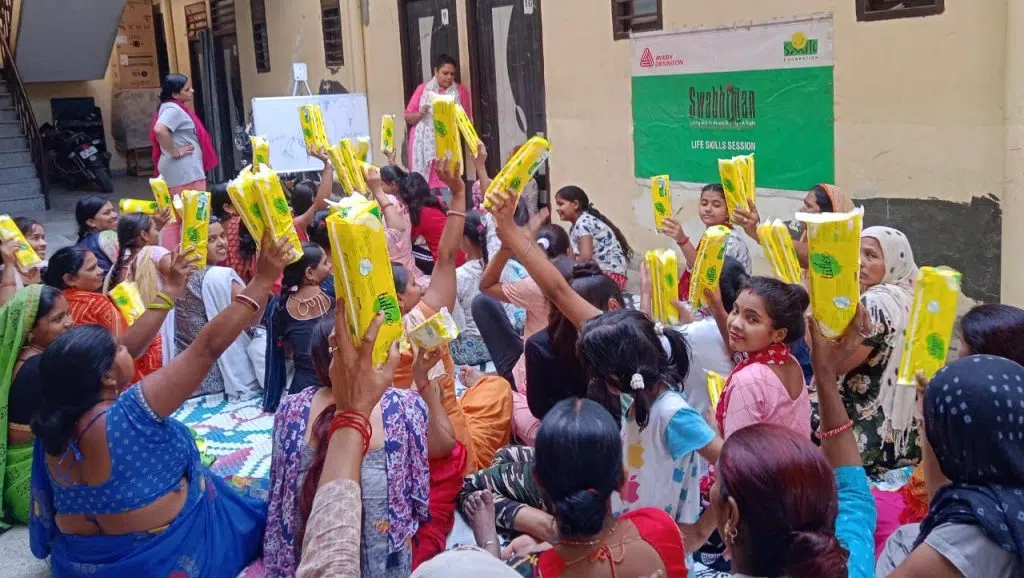
The consequences ripple far beyond discomfort. Girls end up missing school, opportunities shrink and psychological scars accumulate. A mother weakened by neglect passes vulnerability to her children and that ends up in continuing this generational cycle of shame and treating menstruation as a taboo.
The Indian state has built a massive machinery for achieving robust women’s health conditions in India, but the reality is that impact lies when execution is done at the smallest details. A pill missed, a danger sign gone unnoticed, rations misallocated – individually they may be small, but continuity of them erodes the strategy.
The women’s health crisis in India is generational and to solve this, it requires more than policy – it demands precision, relentless vigilance and the reshaping of cultural habits that have kept women last at the table.
Swabhiman’s Efforts for Women’s Health
Women’s health in India is trapped in a cycle of neglect – anaemia, malnutrition, unsafe motherhood and the chronic erosion of dignity. The state has erected vast programmes for women’s health as beacon of hope with policies and intent, however, the battle against these diseases would be won only when the execution of these policies are done at the smallest levels, where vigilance falters and neglect renews itself. Here social stakeholders such as NGOs become indispensable.
Smile Foundation’s Swabhiman initiative exists to sharpen this edge. Our efforts are to amplify the government initiatives for women’s health in India. By aligning our efforts with campaigns like Poshan Abhyaan, Anaemia Mukht Bharat and Swasth Nari Sashakt Parivar Abhiyaan, we transform the government’s intent into reality to ensure the accomplishment of sustainable development goals and national development goals holistically.
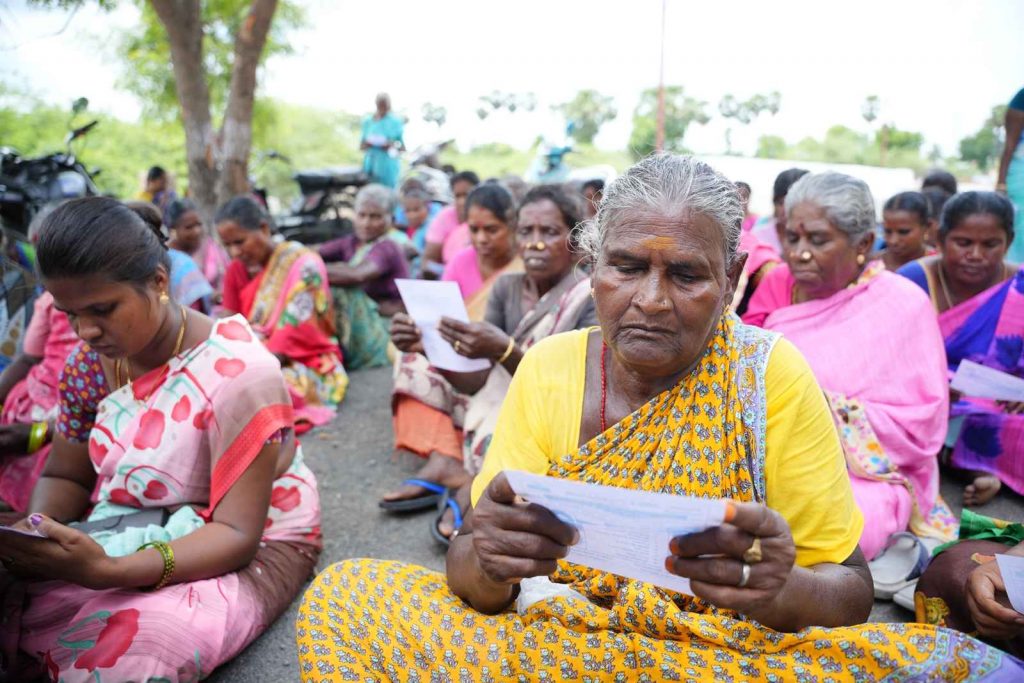
Our projects like the Pink Smile, launched in Mathura have screened over 1700 women to combat anaemia. With medical camps, tele- consultation and nutritional support we have aimed in developing a methodical behavioural change towards women and young girls health in the grassroot communities.
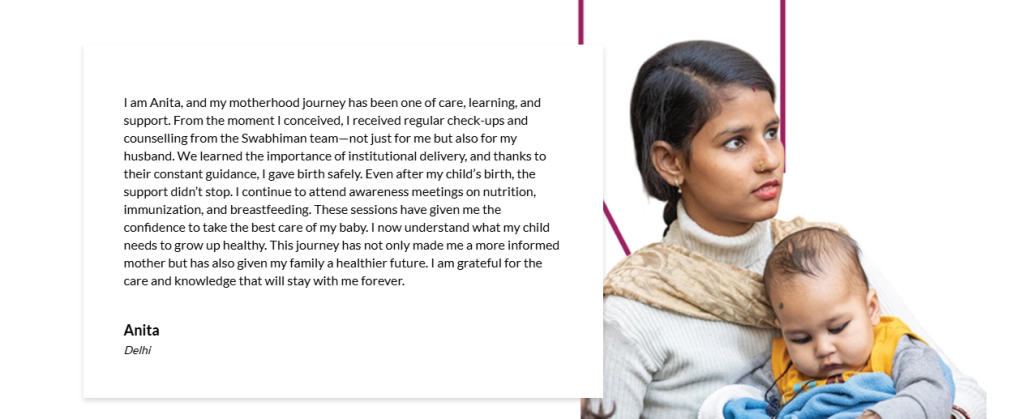
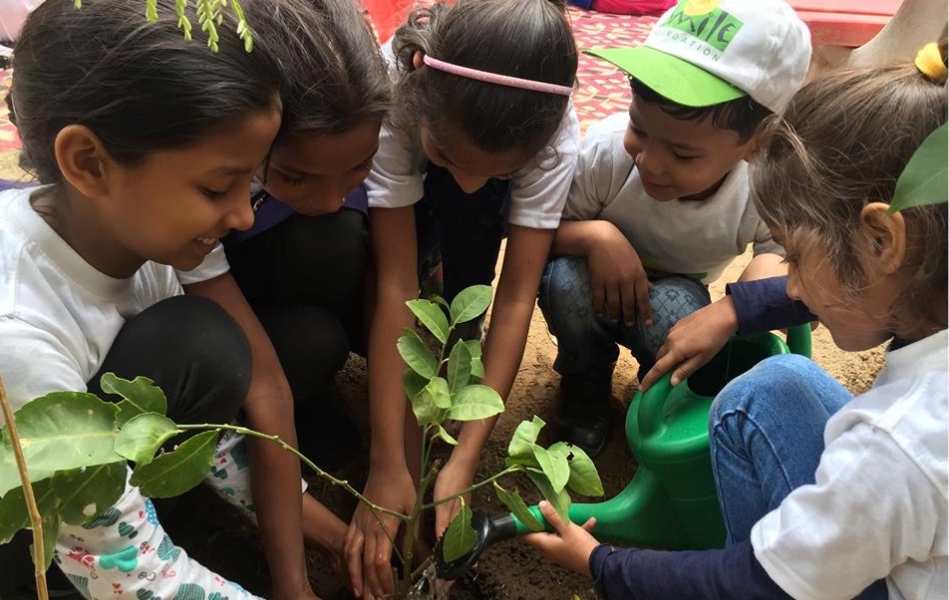
Swabhiman has been designed to see beyond treatment. It embeds nutrition into the household itself. 150 kitchen gardens have been established, so that food is no longer a luxury that cannot be dispensed but a practice cultivated; iron rich, locally sourced and sustaining regional food to ensure that women who once ate last and least are taught to reclaim the household table through low cost recipes and nutritional breakfast for expectant mothers.
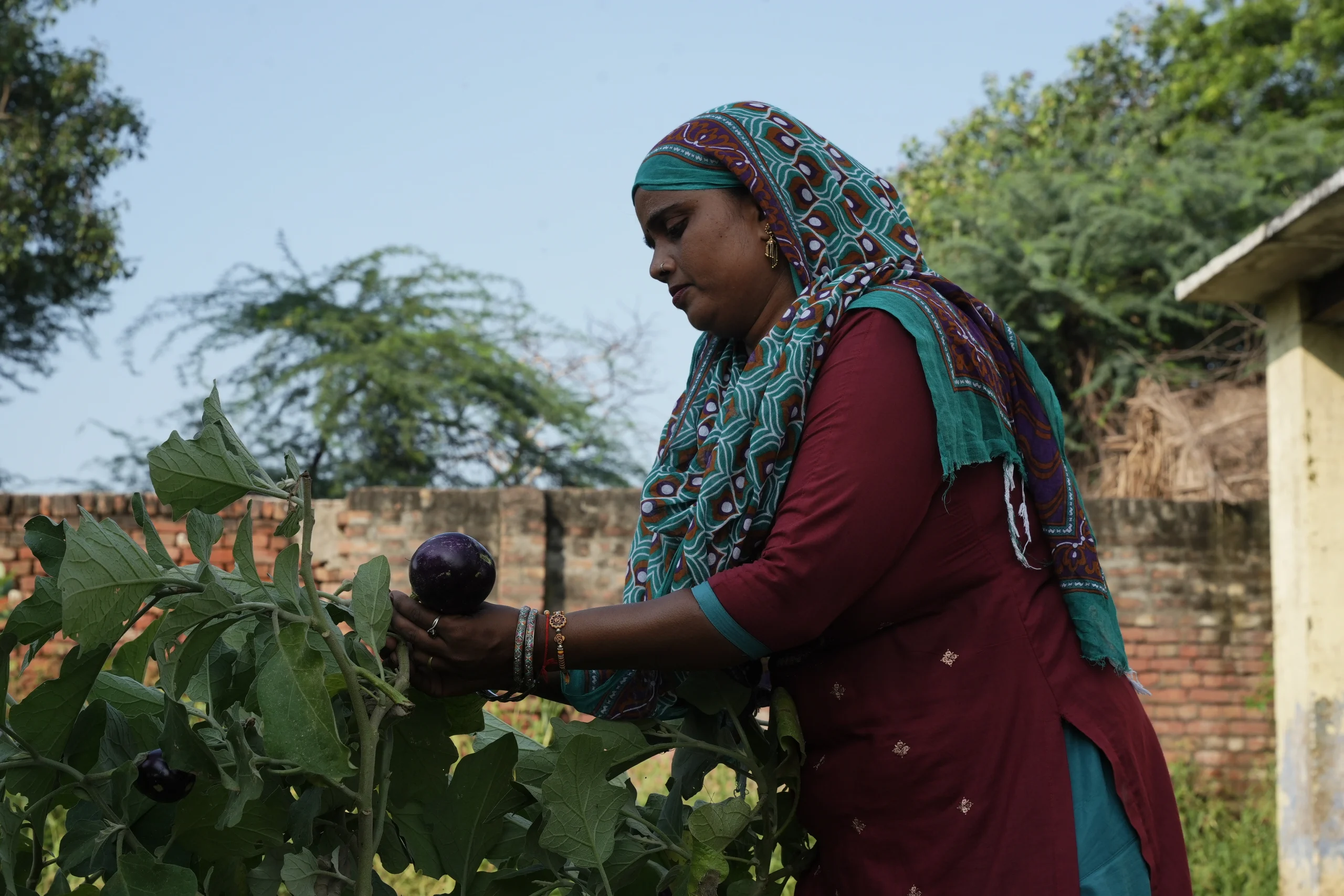
Swabhiman understands that health is not only an individual concern– it shapes the community. Therefore, to ensure that communities rise healthy, our intervention kickstarts right from the critical thresholds of motherhood. Through Godh Bharai ceremonies, couple counselling and reproductive awareness, Swabhiman aims at shifting the mother’s role from passive patient to informed decision maker.
By training ASHAs, ANMs and Angandwadi workers, Swabhiman strengthened the women’s healthcare system at the grassroots level ensuring accountability in the service delivery.
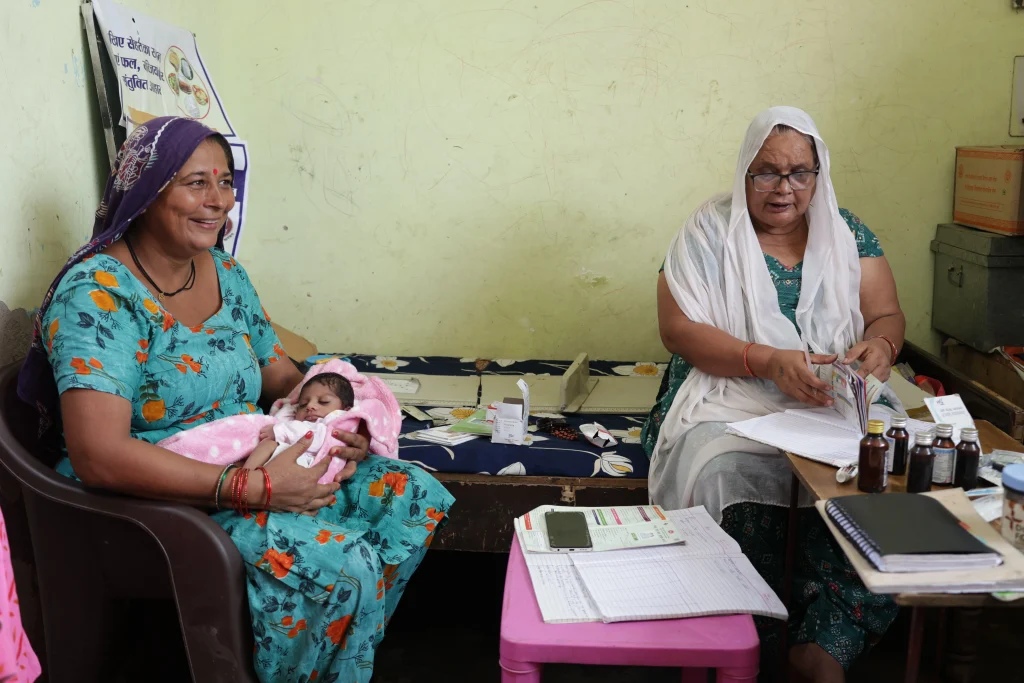
Equally, Swabhiman confronts the challenges around menstrual hygiene in girls. Our aim is to dismantle the long buried shame associated with menstruation. Through awareness campaigns, counselling and sanitary napkin distributions, our interventions do not just aim at maintaining hygiene, but cultivate young girls with autonomy on their body and future.
At the core of every Swabhiman intervention lies a single unyielding truth–women’s health is generational. A weakened mother gives rise to a weakened child and the cycle reviews itself with ruthless precision.
Swabhiman exists to break this cycle, through exacting work on the ground and the deliberate reshaping of habits and norms that have long condemned women to the margins of society and denied them their most fundamental needs – right to quality healthcare.
Our purpose is not charity, but restoration; to see women, children and young girls of India rise strong, uncompromised and unashamed – claimed at last, as equal citizens and rightful architects of this nation’s future.
Stand with us to forge a healthier, nourished India – where strong girls and women build resilient communities. Support Swabhiman!
Sources:
- PM Modi launch of ‘Swasth Nari, Sashakt Parivar Abhiyaan’
- Gender inequality makes beating malnutrition hard
- Swasth Nari Sashakt Parivar Abhiyaan
- Chances of dying from chronic disease increased in India, women affected more: Lancet study
- A half-won battle: why India’s growth is leaving a generation of women behind
- An analysis of inequality in physical health status of women in India: 2015‒2021
- India’s Fight Against Anemia- Nourish, Prevent, Protect