
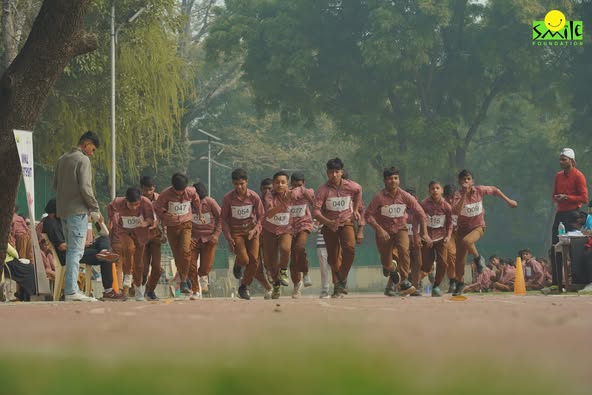

India has long celebrated its scholars, but sports remain a vast unexplored frontier, especially for children in government schools and low-income communities. Around the world, nations like Kenya, Brazil, and China have harnessed early sports infrastructure to win medals and also to shape discipline, confidence, and social mobility at scale. In India, however, inequality in sports access reinforces educational and economic disparities.
Smile Foundation’s Education Quality Improvement Project (EQuIP) launched across hundreds of government schools integrates sports infrastructure and activity into school transformation. As India grapples with under-performance in global sports stages, particularly from public sector schools, the urgency to invest in grassroots sports for social change has never been clearer.
The global story: How nations turn grassroots into gold
Kenya’s world-class runners often trace their beginnings to rural highlands where daily life blends endurance with competition. Brazil’s football culture starts in neighbourhood courts, fostering informal learning, and improvisation from early childhood. China’s structured school and local systems identify athletic talent early across swimming, gymnastics, and table tennis.
Those countries teach a simple lesson: sports is not just extracurricular, it is infrastructure for confidence and belonging.
Outcomes are tangible. Kenyan youth benefit from discipline and resilience; Brazilian sports schools nurture self-esteem alongside skills; and Chinese urban-rural sports academies increase upward mobility and national pride. In contrast, India’s public education system offers stadium-scale infrastructure only to a select few, the remainder often go unserved.
India’s gap: Talent exists but opportunity does not
India’s public school system remains largely academic. Most government schools have no playgrounds, no trained coaches, and limited organised physical education. Research shows over 80% of low-income schools lack basic sports infrastructure. As a result, students miss out on building crucial life skills like teamwork, perseverance, spatial awareness that employers increasingly value.
For underserved children, the impact is more severe. With limited recreational avenues and NO recognition for sporting ability, students from rural or peri-urban backgrounds are rarely shortlisted for scholarships or sports-based entry into education streams. The talent pool remains dormant, not for lack of ability, but for absence of opportunity.
Why sport belongs in classrooms
- Improved Attendance and Engagement: Schools offering regular sports activities report up to 30% better attendance. Play becomes incentive to come to school and stay.
- Enhanced Well-Being and Mental Health: Physical activity reduces anxiety, builds emotional resilience, and improves concentration in class.
- Skill Building for the Workforce: Gig work, hospitality, retail—all demand teamwork, discipline, and adaptability—traits honed through sport.
- Equity and Inclusion: Sports allow children to succeed outside of exams, even those with academic struggles can shine.
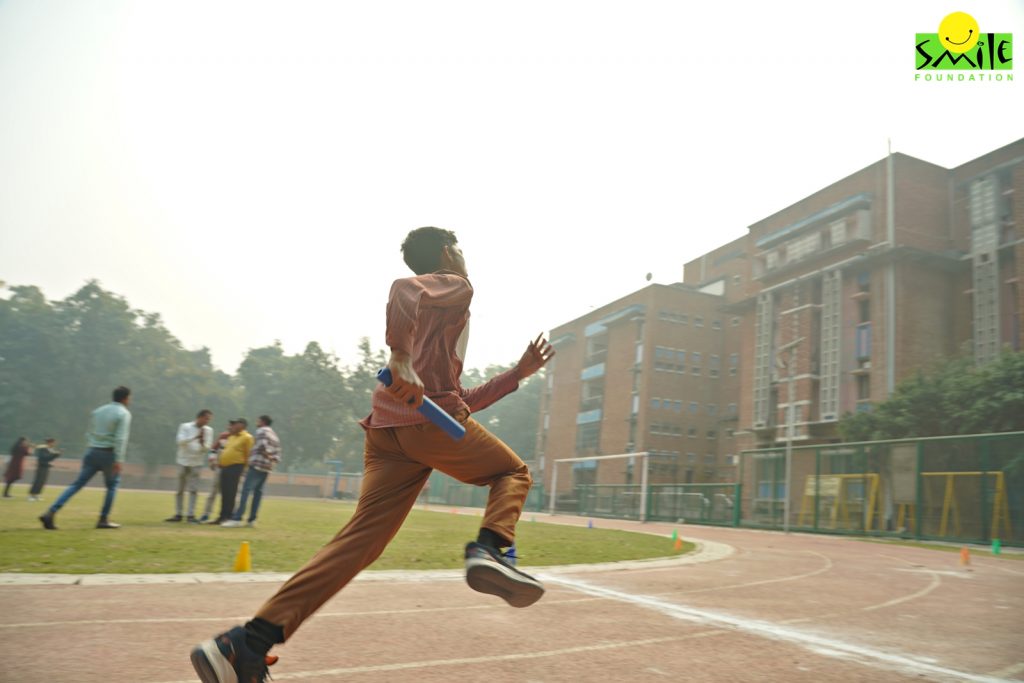
These benefits are systemic. A child who learns to run relay or shoot hoops under supervision builds confidence that a quiz score may never inspire.
Smile Foundation and EQuIP: Sports as part of school transformation
Smile Foundation’s EQuIP initiative works in low‑resource government schools across 15 states, supporting over 1,660 schools as part of its Mission Education(ME) centres. While its broader goal is improving learning outcomes, EQuIP stands out for embedding sports within every school’s transformation strategy.
Key elements include:
- Provision of play materials and infrastructure like balls, hoops, and safe play spaces.
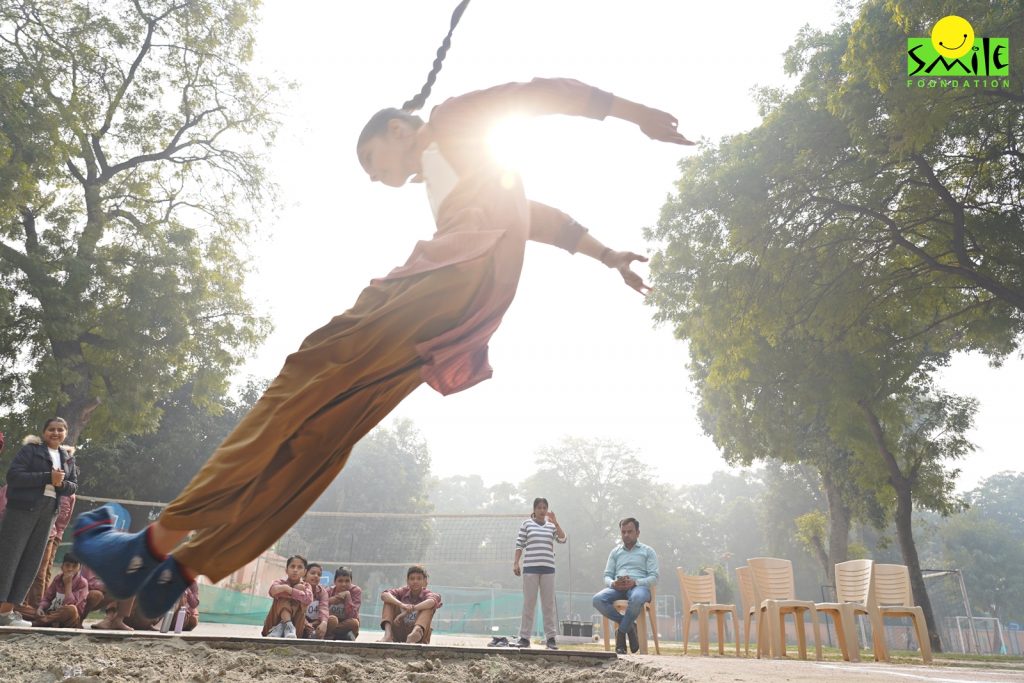
- Organising sports meets: Smile ran athletics events like long jump, shot put, races for students from Mission Education Centres, with coaching support and gear.
- Teacher training on how to integrate physical activities into daily classroom time.
- Linking health with play: sports, well-being sessions, nutrition education, all working together under EQuIP.
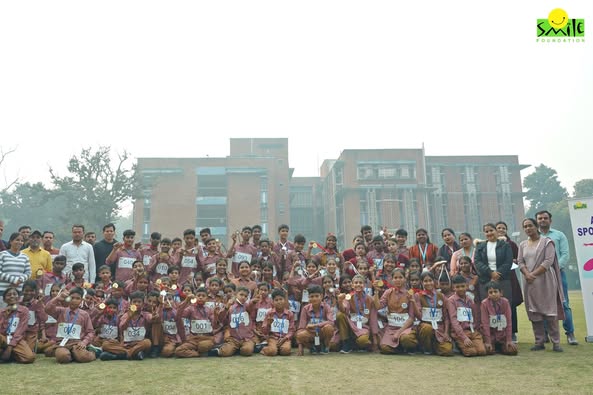
One highlight: in Pune, ME children selected through school trials participated in a broader sports meet with Smile supplying equipment and support. These experiences build early exposure to organised athletics without requiring elite pathways.
Social impact through sport: What evidence shows
While Smile’s internal metrics are still maturing, broader studies demonstrate:
- 30% higher retention rates in primary school where physical activities are embedded.
- Improved gender inclusion: in mixed sports meets, girls show increased participation and confidence.
- Teacher motivation: where simple tournaments take place, staff morale improves and absenteeism drops.
- Parental trust and engagement: communities form pride when their children represent the school in sports.
In Smile’s Pune pilot, adolescent girls involved in sports reported stronger school engagement and expressed new ambition about higher education and employment.
Why CSR and policy makers should care
Social innovation programmes and CSR funders must recognise a simple truth that sport equals social capital. By partnering with school transformation efforts like EQuIP, CSR efforts unlock multiple returns:
- Education outcomes: focus on the whole child.
- Equity: sports opportunity is one of the few levelers.
- Talent pipeline: scholarship, vocational access, and eventual employment.
- Scalable rollout: low-cost models of sports integration can be replicated across districts.
CSR budgets targeted at education or nutrition alone miss the multiplicative impact of investing in simple sports infrastructure. A patch of ground, a ball, an annual sports meet—these create space for identity, movement, belonging.
Why India must act now
India lags not due to lack of athletes but due to a lack of structured, inclusive sporting opportunities. Other nations design for equity:
- Brazil’s Favela PC initiatives bring football training into informal settlements.
- Kenya partners with NGOs to deliver school-based athletics hubs.
- China’s sunshine sports agenda mandates rural school participation in sports.
India’s public system grants stipend-level fellowships to Olympic hopefuls, but offers nothing to the child running barefoot in a government school playground.
Smile Foundation’s EQuIP offers a middle ground, a meaningful, scalable, low-cost sport integration into public schools, where most Indian children study.
Recommendations for stakeholders
To amplify impact, stakeholders should urgently consider:
- Policy Integration: Ministry of Education can institute mandatory minimal sports infrastructure and activity days in government school norms.
- CSR Collaboration: Brands investing in education should allocate a portion to sports infrastructure—play spaces, coach training, tournaments.
- Public-Private Partnership Scaling: Models like EQuIP should be replicated state-wide with measurable outcomes tied to attendance and well-being indicators.
- Monitoring & Evidence Building: Collect longitudinal student data like attendance, drop-out, psychosocial well‑being from sports-intervened schools.
- Inclusive Design: Ensure facilities are gender-sensitive, disability‑inclusive, and culturally adapted.
A promise worth investing in
In villages across Almora, Kangra, Odisha, and Mumbai, Smile-supported schools show that even simple sports events can change how a child sees herself. Not only as a student, but a runner, a jumper, a team player. These identities matter. They seed ambitions that exams alone may never rea;lise.
Public policy and CSR must recognise this truth: sport breeds social agency.
When India truly commits to building equitable sports ecosystems in schools, the country will no longer produce only academics but confident, disciplined, resilient young citizens ready to shape India’s future.





One reply on “Why India Needs Sports Education for Every School?”
I am working on writing two paper on different topic related to sports,
1. Sports culture in Rural Schools.
2. Understanding how social work students see sports for rural development.
Currently I am pursuing my bachelor’s in social work from Tata Institute of social sciences. I am intrested in working for the community and youth development through sports.