
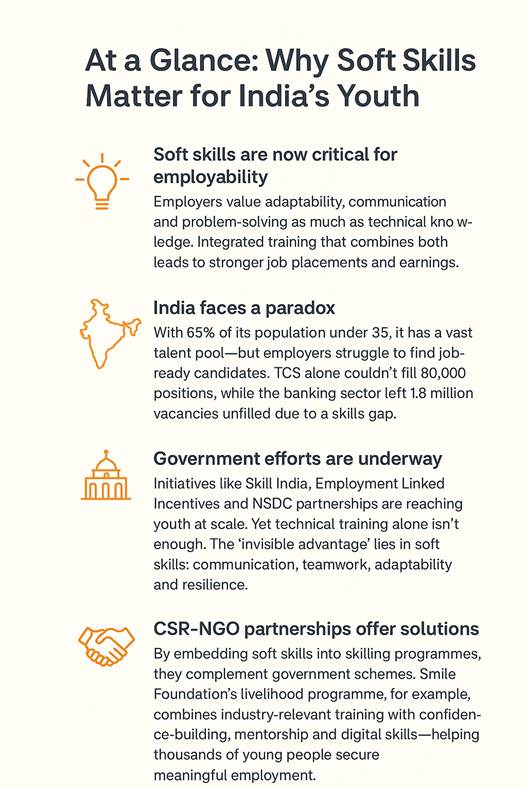
With nearly 65% of Indians under the age of 35, the nation’s youth carry the aspirations of a rising economic powerhouse. But a critical challenge persists: employability. In a growing economy, the issue is not simply a lack of jobs, but a shortage of well-rounded, job-ready young people. Unless this skills gap is addressed, the promise of India’s demographic dividend could remain only partially fulfilled, leaving much of this generation’s potential unrealized.
Beyond technical training: The role of soft skills
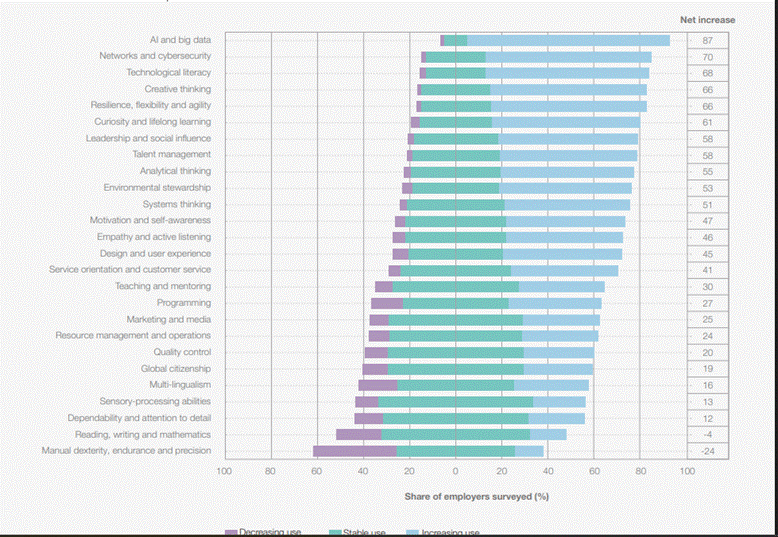
Employability today is shaped by more than academic degrees or technical certificates. The World Economic Forum’s Future of Jobs Report 2025 makes this clear – “soft skills” like creative thinking, resilience and curiosity are more important than ever in the workforce. Employers are looking beyond hard technical expertise to qualities like adaptability, effective communication, teamwork and problem-solving. In India, the challenge is sharper when many youth enter the job market with solid theoretical knowledge but little exposure to workplace behaviour, customer engagement or confident communication.
Global programmes have demonstrated the power of pairing technical training with soft skills development. For instance, the European Union’s Youth Guarantee, the U.S.-based Year Up, and WorkAdvance in multiple countries all show that combining sector-specific training plus soft skills coaching and job placements leads to stronger employment outcomes. These integrated models produce graduates who not only have the knowledge for a job, but also the workplace readiness to excel – yielding higher hiring rates and even long-term earnings gains.
For India, this points to a need for an integrated approach to employability where a mix of competencies is cultivated:
- Technical skills – solid sector-specific knowledge and digital literacy.
- Communication skills – fluency in communication, customer engagement and confidence-building.
- Teamwork and problem-solving – ability to collaborate, think critically and solve real-world problems.
- Adaptability and resilience – agility to learn and cope with changing technologies and work environments.
Emerging Themes Shaping Employability
As India’s economy grows and technology advances, it’s increasingly clear that a standalone college degree or an isolated short course is no longer sufficient to secure meaningful employment. The World Bank and other experts have found that blended models – combining soft skills training with practical work experience and targeted industry placements – deliver significantly higher returns on investment than traditional education or training alone. In other words, a holistic preparation makes a young person far more employable than theoretical knowledge by itself.
Global best practices reinforce this approach. Initiatives such as the EU’s Youth Guarantee, Year Up and WorkAdvance show that pairing technical instruction with “employability” skills and on-the-job learning not only accelerates job placements but also enhances long-term career growth. The evidence unequivocally is that soft skills are not optional but fundamental to workforce readiness.
The World Economic Forum’s Future of Jobs Report 2025 highlights several key trends and data points underscoring why soft skills matter for the future:
- Digital readiness as a priority: Broadening digital access is expected to be the most transformative trend – with 60% of employers anticipating it will reshape their business by 2030. Indian youth will need technical literacy alongside adaptability and communication skills to thrive in increasingly digital and hybrid workplaces.
- AI and automation reshaping roles: Technologies like AI, big data and robotics are driving both job creation and displacement. In fact, 86% of employers expect AI and information-processing tech to transform their operations by 2030. To stand out in this new market, young workers must complement hard tech know-how with resilience, complex problem-solving and critical thinking.
- Economic volatility fuels demand for adaptability: Rising living costs and slower economic growth are top concerns globally. In such uncertainty, agility, creativity and emotional resilience become crucial for young professionals to navigate job instability and shifting opportunities.
- Demographic shifts intensify the skills challenge: India’s expanding working-age population is a double-edged sword – a huge talent supply if adequately skilled. Employers increasingly value mentorship, motivation and self-awareness training to channel this youth potential effectively in the workplace. Young Indians will need guidance in soft skills to convert demographic advantage into productivity.
- Soft skills needed for tech adoption: As fields like AI, cybersecurity and data analytics dominate emerging roles, purely technical proficiency isn’t enough. Companies seek creativity, teamwork, flexibility and empathy in candidates to ensure human collaboration enhances technology. The human touch – driven by soft skills – is what enables tech to be applied effectively.
- Health, well-being and inclusivity are valued: 64% of employers globally have flagged supporting employee health and well-being as a key strategy for talent retention. Additionally, 83% of employers report implementing diversity, equity and inclusion (DEI) initiatives. This means traits like empathy, emotional intelligence and social awareness are increasingly seen as core professional skills – attributes that improve team dynamics and innovation, and thus boost a young candidate’s employability.
- Upskilling is a universal imperative: An estimated 59% of the global workforce will need reskilling or upskilling by 2030. In India, this translates into not only building new domain knowledge, but also continually honing soft skills like communication, leadership and adaptability to seize new-age opportunities. Lifelong learning mindsets – often rooted in self-motivation and curiosity – will be essential soft skills themselves.
India’s Unemployability on the Rise – Why?
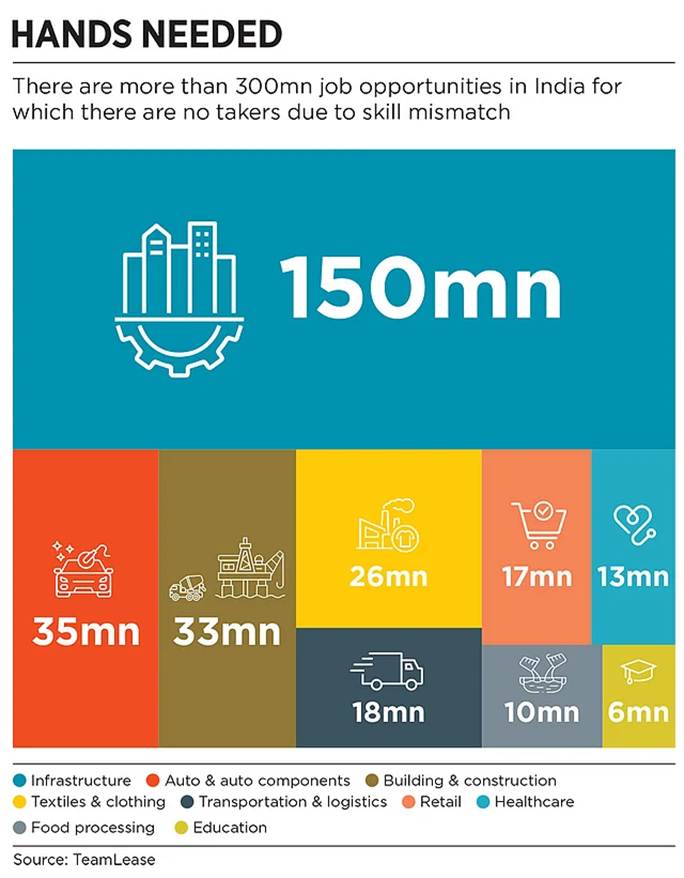
Despite a growing economy and millions of young job seekers, India is experiencing a troubling skills paradox – plentiful jobs on offer, but not enough “employable” candidates to fill them. The issue of youth unemployment in India is not due to an absolute lack of jobs, but a lack of job-ready skills among graduates.
Major employers have sounded the alarm. In mid-2024, TCS reported it was unable to fill 80,000 open positions because applicants lacked the required skills. At the same time, the financial services sector had about 1.8 million (18 lakh) vacancies go unfilled in a single year despite high demand for talent. These stark examples highlight a critical gap in India’s youth development spectrum: a large portion of the educated youth are graduating without the practical skills or workplace competencies that industries need.
In short, India’s young population is struggling with “unemployability.” According to the latest data, only about 51% of Indian youth are considered employable upon entering the workforce – meaning nearly one in two young people are not adequately prepared for the jobs available. This gap stems from mismatches between academia and industry needs, insufficient vocational and soft skills training, and limited opportunities for real-world exposure. If unaddressed, the country risks losing out on the full benefit of its demographic dividend, as educated but unskilled youth remain underemployed or unemployed.
India’s Skill Development Initiatives: Progress So Far
Recognising the urgency of the skills gap, the Government of India has launched a series of initiatives to boost youth employability. Drawing inspiration from its success with Production-Linked Incentive (PLI) schemes in manufacturing, the government introduced Employment Linked Incentive (ELI) schemes to encourage employers to create formal jobs. The logic is to provide incentives for companies to expand their workforce and they will hire more. While these schemes signal strong intent and have had some positive impact, India’s massive youth demographic means that scaling up collaboration across public and private stakeholders is necessary for a truly transformative impact.
Industry linkages lie at the heart of effective skilling. Through the Skill India Mission, public agencies like the National Skill Development Corporation (NSDC) have partnered with industry to align training with market demand. As of March 2024, NSDC had partnered with 62 corporate employers on 131 skilling projects, benefiting over 3.1 lakh young people across the country (including youth in 42 aspirational districts). These partnerships ensure that training curricula are relevant to industry needs and that trainees gain exposure to real work environments.
Innovative financing models are also being explored. In 2021, NSDC launched the Skill Impact Bond, a pioneering Development Impact Bond that leverages private sector investment with a pay-for-results approach. By tying funding to measurable outcomes like job placement and retention, this model increases accountability in skilling programmes. Early results are promising – between November 2021 and March 2024, about 29,365 candidates were enrolled (74% of them women), with over 23,000 completing certification and 19,209 securing job placements under the Skill Impact Bond initiative. Such outcome-focused approaches ensure that training efforts actually translate into employment, especially for women and underserved groups.
These steps mark commendable progress in laying the foundation for youth skilling. However, given the pace of change in job markets and technology, sustaining and strengthening this foundation is crucial. Technical training must be continually updated and, importantly, augmented with the soft skills and support systems that enable youth to thrive in the workplace.
How CSR–NGO Partnerships Strengthen Government Efforts
While government programmes set the macro framework for skills development, it is clear that they cannot do it alone. To truly empower rural and marginalized youth to compete and thrive in the job market, collaborative support from the private sector and civil society is essential. This is where CSR (Corporate Social Responsibility) initiatives and NGO partnerships can play a transformative role, complementing government efforts with innovation and grassroots reach.
Corporate-NGO partnerships can add value in several key ways:
- Bridging the Last Mile: Ensuring that skilling schemes reach remote and rural youth who need them most. NGOs can mobilise and train young people in underserved areas – especially women in aspirational districts – who might otherwise be missed by urban-centric programmes. This last-mile connectivity helps make youth in every region employable, not just those in the metros.
- Adding Soft Skills: Embedding crucial soft skills development into technical training programs. CSR-funded projects can integrate modules on communication, teamwork, professional etiquette and adaptability alongside teaching trade skills. This combination produces well-rounded candidates ready for workplace challenges, rather than just technicians.
- Local & Inclusive Solutions: Designing community-driven skilling models tailored to local needs. For example, a non-profit might run digital literacy classes for rural girls, or partner with industry to create “green jobs” training for semi-urban youth in sustainable agriculture or solar panel installation. Such localised innovations ensure inclusivity – bringing marginalised groups into the skilled workforce with programmes relevant to their context.
- Connecting Training to Jobs: Creating apprenticeship and placement pipelines. Companies can provide on-the-job training slots or internships for trainees, while NGOs offer mentorship, counseling and follow-up support to improve retention. This handholding through the transition into formal employment is often the key to turning training into a stable career.
- Fostering Innovation & Accountability: CSR funding can support outcome-oriented and tech-enabled models that the government alone might not implement. For instance, performance-linked funding (where training partners are paid more when trainees get jobs) can be piloted, or digital platforms can be used to track alumni employment progress. These innovations drive greater impact and ensure that resources are used effectively, with measurable results.
In essence, CSR–NGO partnerships can amplify the reach and effectiveness of government skilling efforts. They bring in additional resources, fresh ideas, and on-ground experience working with communities. By working in tandem – government setting broad policy and quality standards, companies providing expertise and demand insights, and NGOs delivering training and mentorship – India can build a skilling ecosystem that is holistic and future-ready.
Smile Foundation’s Livelihood Programme: Bridging the Skills Gap
One example of a successful collaborative approach is the Smile Foundation’s Skill Training and Employability Programme (STeP), which focuses on empowering youth with a blend of market-oriented skills and soft skills. This livelihood programme targets young people – often school or college dropouts from economically weaker sections – and equips them with the competencies needed to secure decent jobs in growing industries.
Holistic Training: Smile Foundation’s STeP curriculum goes beyond technical know-how. Yes, participants receive industry-relevant training (for example, in sectors like BFSI – Banking, Financial Services and Insurance – retail management, digital marketing, healthcare, etc.), but they also undergo rigorous soft skills development.
- Communication skills are honed through spoken English and customer handling exercises Confidence-building is achieved via personality development and interview preparation
- Workplace etiquette and teamwork are taught through group projects and role-plays
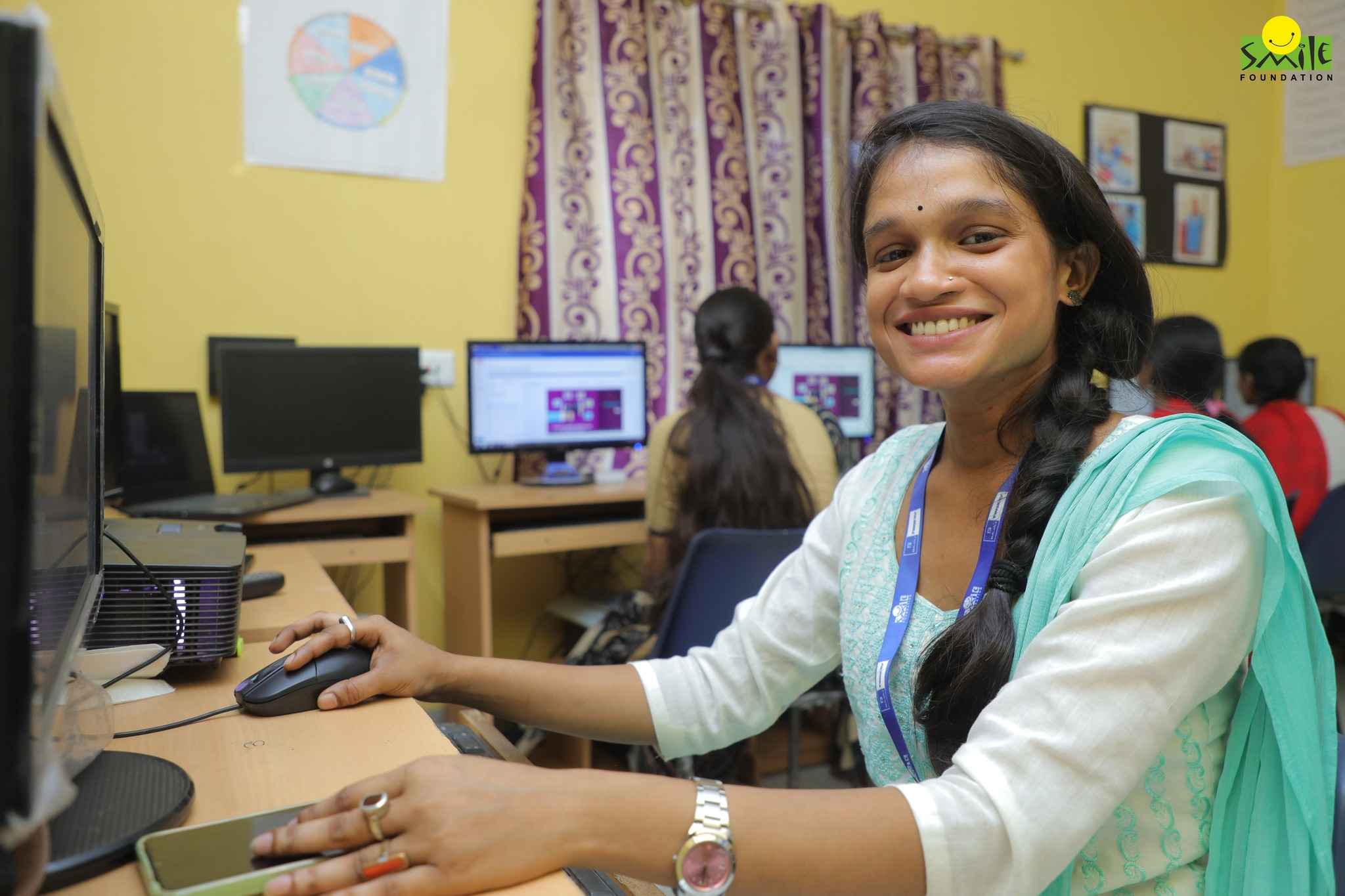
- Modules on computer literacy ensure youth are digitally savvy.
This holistic training bridges the education-to-employment gap by producing graduates who can not only do the job, but also fit into modern workplace culture from day one.
Industry Partnerships: A cornerstone of the programme is its close partnership with employers. Smile Foundation collaborates with over 400 companies – from retail chains and banks to hospitality firms and IT/BPO companies – to ensure training aligns with real job requirements. Industry experts frequently conduct guest lectures or practical sessions, and many trainees visit corporate offices or shop floors for exposure. Such industry linkages also create a pipeline for job placements: employers often recruit directly from STeP batches, knowing that these youth have been trained in both hard and soft skills. By aligning with the Government’s Skill India initiative and working hand-in-hand with industry, the programme increases the chances that students find sustainable jobs after training.
Impact at a Glance:
- 9,000+ youth trained through Smile Foundation’s livelihood programme to date
- 5,500+ youth placed into jobs across sectors (a majority of graduates gain employment within months of completing the training)
- 74 skill training centres operated across 8 states in India, ensuring local access to quality training
- 800+ industry exposure and counselling sessions conducted, connecting youth with mentors and real-world insights
- 400+ employment partners actively providing job opportunities, internships or apprenticeships to program graduates
- 100,000+ painters upskilled through a specialized collaboration (the Berger Paints iTrain project) across 25 states, demonstrating the scale of impact possible when corporates join hands with skilling initiatives
Through a combination of classroom training, personalised counseling and on-the-job exposure, Smile Foundation’s STeP is enabling thousands of young Indians to become confident, competent contributors to the workforce. Each success story not only transforms one life but also has a ripple effect on families and communities – inspiring others to pursue skill development.
Stories of Impact
To understand the human impact, consider a few individual journeys shaped by soft skills training:

Coming from a low-income background, Priyanka enrolled in Smile Foundation’s BFSI training course. Over several weeks, she gained technical knowledge in banking operations, loans, and financial products. Equally important, she built soft skills in customer engagement, problem-solving and professional etiquette. Graduating with this well-rounded preparation, Priyanka now feels job-ready and has secured an entry-level position at a microfinance bank, where her confidence in dealing with clients is setting her apart.

Once uncertain about her future due to limited means, Aadhya joined Smile Foundation’s 21st-century skills programme. The training equipped her with basic computer literacy, resume writing and interview skills, and workplace soft skills such as communication, teamwork and time management. Today, Aadhya is employed by a reputable organisation in Hyderabad – the first girl in her family to attain formal employment. Her success has not only lifted her family’s economic status but also changed mindsets in her community about women working.

Suman grew up in a semi-urban town where career options seemed limited. She enrolled in Smile Foundation’s Retail Management course under STeP. During the course, she learned practical skills like customer service, inventory management, billing systems and workplace behaviour. Alongside, she underwent intensive soft skills coaching – improving her communication, self-presentation and self-belief. Upon completing the training, Suman started working as a retail associate at a large supermarket. She aspires to grow step by step into supervisory roles and become a role model for her younger siblings. Her journey exemplifies how confidence and soft skills can unlock ambition.
These stories underscore that when youth are given the right opportunities, training and encouragement, they are capable of overcoming socioeconomic barriers and excelling in the professional world. Soft skills often provide the crucial spark that turns their knowledge into action and their aspirations into reality.
Turning Intent into Progress: A Call for Collective Action
India’s demographic window – its youthful population – is still open, but to harness it fully we must go beyond technical know-how and provide young people with the “invisible advantage” of soft skills. The challenge is urgent, yet the pathway is clear. It requires a collective will and coordinated action across all stakeholders.
By combining the strengths of government initiatives, industry expertise and the on-ground reach of NGOs, we can build an ecosystem where every young Indian has access to the full spectrum of skills needed for success. It means embedding training, mentoring and placement support into local contexts, and ensuring that even a rural youth or a first-generation graduate in a small town receives the same polish and opportunities as one in a big city. It means proving that when we invest in soft skills and human potential at scale, the returns are immense – not just in employability, but in inclusion and national growth.
For the coming year, Smile Foundation encourgaes that in 2026, each of us – whether an employer, an educator, a policy-maker or a citizen – we must take a role, in nurturing the next generation’s talents. Through innovative partnerships and dedicated livelihood programmes, we can equip our youth to not only find jobs, but to thrive and become leaders in their fields. Together, let’s turn intent into progress. Partner now to support and amplify these efforts and help secure the three pillars of youth development: Employability, Inclusion and Scale.
Ultimately, empowering India’s youth with soft skills is about enabling them to drive the nation’s progress, with confidence and competence, into the future.
Sources:
- Outlook Business – “Is young India jobless or skillless? The complex tale of a fast growing economy”
- International Labour Organization – “Soft skills improve the employability of youth and job seekers” (ILO News, 17 March 2021)
- World Economic Forum – Future of Jobs Report 2025