When cities fail, they usually fail through seemingly small instances of public bad. A burst pipe contaminates drinking water. A poorly laid sewer backs up into homes. Maybe, a flood overwhelms drainage systems that were never designed for today’s climate extremes. These failures rarely make headlines until they trigger a public health emergency. And yet, behind each of these breakdowns sits an uncomfortable truth: modern societies depend far more on skilled plumbers than they care to admit.
Across much of the world, plumbing remains one of the most underestimated professions in development discourse. It is frequently classified as “informal labour”, treated as low-skill work, and excluded from serious conversations about workforce planning. This neglect is costly. In countries like India, where urbanisation, climate stress and infrastructure expansion are colliding, the absence of a trained plumbing workforce is no longer a technical gap. It is a development risk.
India’s growth ambitions make this particularly urgent. The country is expected to add tens of millions of urban residents in the coming decade, expand housing, upgrade water and sanitation systems, and climate-proof infrastructure against floods, droughts and heat. At the same time, India must create nearly 90 million new jobs by 2030, the majority of which will require vocational and life-skills training rather than advanced academic degrees. Yet the trades that underpin daily life remain largely invisible in policy imagination.
Plumbing sits at the intersection of three national priorities: public health, climate resilience and employment. Skilling plumbers, therefore, is not about filling a niche. It is about strengthening the foundations on which economic growth and human wellbeing rest.
Plumbing as Public Health Infrastructure
Few professions influence population health as directly as plumbing. Safe drinking water, effective sanitation and wastewater management are among the most powerful determinants of life expectancy, disease burden and child development. The World Health Organization has long emphasised that improvements in water and sanitation yield some of the highest returns in public health spending.
India’s own experience reinforces this. Despite progress under national sanitation missions, water contamination, leakage and unsafe household connections remain widespread, particularly in small towns, peri-urban settlements and rural areas. Poorly installed systems allow sewage to mix with drinking water, contributing to diarrhoeal disease, stunting and repeated infections among children. These outcomes are often framed as failures of policy or infrastructure funding. Less often are they recognised as failures of skills.
Untrained or semi-trained plumbers rely on improvised methods, outdated materials and trial-and-error installation. In an era of complex water management systems, climate variability and new building standards, this approach is inadequate. A skilled plumber today must understand water pressure, material science, safety standards, waste segregation, rainwater harvesting and, increasingly, water efficiency technologies.
Treating plumbing as a low-skill occupation undermines public health goals. Treating it as a specialised, continuously evolving profession strengthens them.
The Employment Opportunity Hiding in Plain Sight
Plumbing is also one of the few trades that cannot be automated or offshored. Pipes must be installed, repaired and maintained where people live. As infrastructure expands, demand rises locally and sustainably.
But, India faces a paradox. While demand for plumbers is growing across housing, manufacturing, infrastructure and commercial construction, the supply of trained workers remains thin. Many young people enter the trade informally, learning through observation rather than structured instruction. This limits productivity, earnings and mobility. It also traps the profession in a cycle of low status and low returns.
Formal skilling changes this equation. Certified plumbers command higher wages, access better contracts and are more likely to transition into entrepreneurship. They can comply with safety regulations, work on large infrastructure projects and adapt to new technologies. For first-generation workers, especially in smaller towns and industrial belts, plumbing offers a rare pathway to stable, dignified livelihoods without requiring long years of formal schooling.
This is where targeted vocational initiatives matter. Training must be delivered close to where workers live, aligned with industry standards and accessible to those traditionally excluded from formal skill systems.
Bringing Skills to the Worker, Not the Other Way Around
One of the persistent failures of vocational policy has been its assumption that workers will travel to training centres, suspend income generation and navigate bureaucratic systems. In reality, many young people cannot afford this disruption.
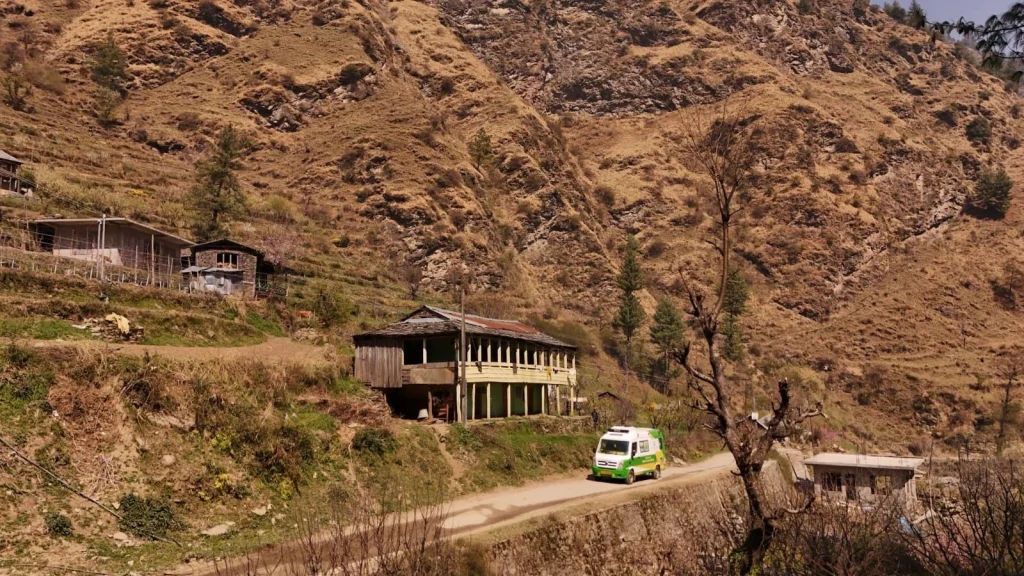
Mobile, decentralised training models offer a corrective. By taking tools, instructors and curricula directly into communities, they reduce barriers to participation and make skilling compatible with real lives.
In Odisha’s Jharsuguda district, an industrial hub surrounded by mining, manufacturing and construction activity, this logic is now being tested through the launch of a mobile plumbing training unit. The Plumber Saathi initiative, supported by Ashirvad by Aliaxis and implemented by Smile Foundation, represents a practical shift in how vocational skills are delivered.
The model is simple but significant. A fully equipped mobile unit travels across localities, offering free, hands-on training in modern plumbing practices under expert mentorship. Trainees learn with contemporary tools, industry-aligned techniques and safety standards, rather than outdated methods passed down informally. Importantly, the training is positioned not as charity, but as workforce preparation for sectors that urgently need skilled labour.
This approach acknowledges a basic truth: skills development works best when it meets workers where they are.
Dignity, Status and the Politics of Skilling Plumbers
Skilling plumbers is also about dignity. Manual trades in India are often burdened by caste, class and social stigma. Plumbing, despite its technical complexity, is frequently associated with “dirty work”, reinforcing exclusion rather than opportunity.
Formal training disrupts this narrative. Certification reframes the plumber as a technician. Industry recognition reframes the trade as expertise. When young people see plumbing as a respected, viable career rather than a fallback, the social composition of the workforce begins to change.
This matters for inclusion. Women, for instance, remain dramatically underrepresented in plumbing and allied trades, not because of lack of ability, but because of entrenched norms. Structured training programmes that emphasise safety, professionalism and equal opportunity can open doors that informal apprenticeships never will.
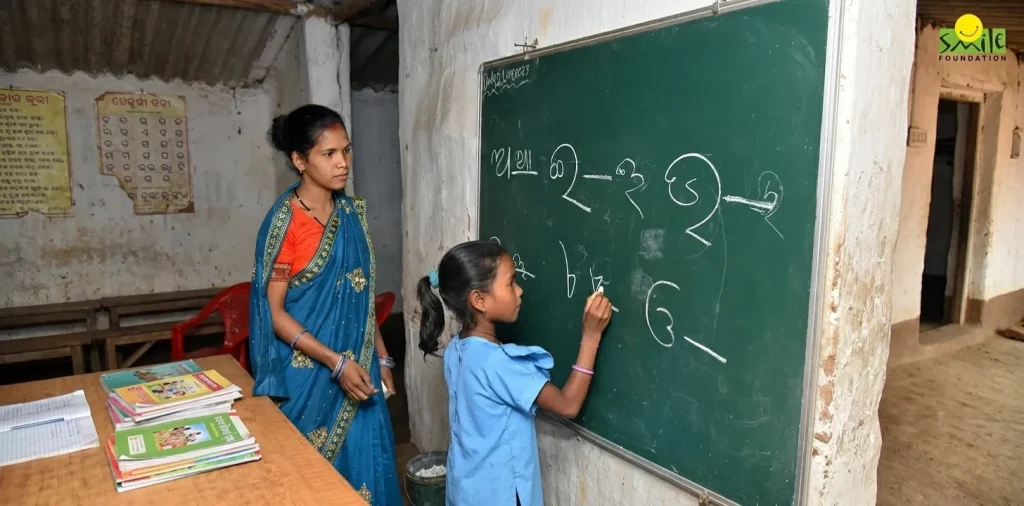
Smile Foundation’s long experience in skilling and education underscores this point. Across its programmes, the organisation has consistently linked vocational training with confidence, agency and self-reliance. In the context of plumbing, this translates into preparing workers not just to earn, but to participate in India’s growth story as skilled contributors rather than invisible labour.
Climate Change Raises the Stakes for Skilling Plumbers
Climate change adds urgency to all of this. As rainfall patterns shift and extreme weather events intensify, water management systems are under unprecedented strain. Floods overwhelm drainage. Droughts expose inefficiencies. Heat stresses pipelines and materials.
Climate-resilient infrastructure is not only about design. It is about maintenance and adaptation. Plumbers trained in rainwater harvesting, greywater reuse, leak detection and efficient fixtures are frontline climate workers, whether or not they are labelled as such.
India’s climate response will fail if it ignores the skills required to implement adaptation on the ground. Training plumbers in water-smart practices is a climate strategy hiding in plain sight.
From CSR to Core Development Strategy
Corporate involvement in skilling is often criticised when it remains peripheral or disconnected from real demand. What distinguishes initiatives like Plumber Saathi is their alignment with industry needs and public systems.
Ashirvad by Aliaxis, as a major player in plumbing and water management solutions, understands the downstream consequences of skill gaps. By supporting training that reflects current materials, standards and technologies, it closes a loop between manufacturing, installation and maintenance. The presence of local government leadership at the Jharsuguda launch signals something equally important: skills development works best when industry, civil society and the state move in coordination.
India’s skilling challenge cannot be solved by government alone, nor by isolated corporate programmes. It requires partnerships that are local, practical and focused on employability rather than enrolment numbers.
Revaluing What Makes Cities Work
For decades, development narratives have privileged white-collar skills, software jobs and formal degrees as markers of progress. Meanwhile, the trades that keep cities functional have been undervalued, underpaid and under-trained.
This imbalance is no longer sustainable. As India urbanises, industrialises and adapts to climate stress, the question is not whether it needs plumbers, but whether it can afford not to invest in them.
Skilling plumbers is about more than pipes. It is about water security, public health, climate resilience and dignified work. It is about recognising that development does not only happen in offices and laboratories, but in homes, streets and systems that must function every day.
The success of cities depends on skills we rarely celebrate. It is time to bring plumbing out of the margins and into the centre of India’s development imagination.