
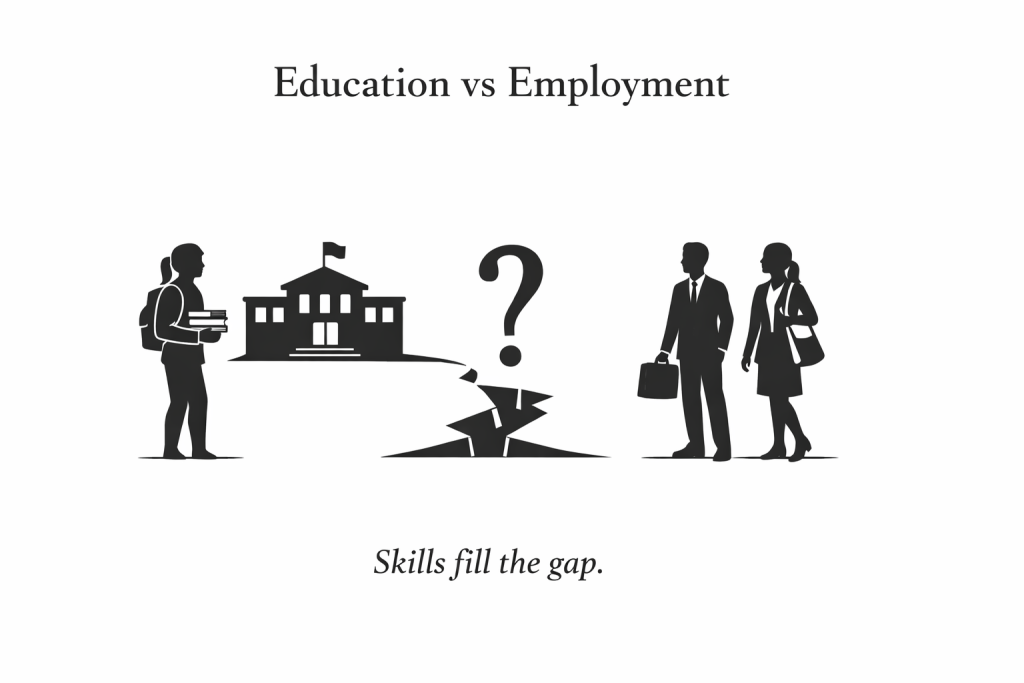
Skill development for youth in India is no longer optional. It is essential. Millions of young people complete school or college each year, yet many struggle to find jobs. The gap is not just about opportunity. It is about readiness.
In simple terms, education gives knowledge. Skills make that knowledge usable. Bridging this gap is what will define India’s workforce in 2026 and beyond.
Why Skill Development for Youth Matters in India
India is one of the youngest countries in the world. Over 65% of the population is under 35. This demographic advantage can become a strength or a missed opportunity.
The difference lies in whether young people are equipped with employable skills.
The Education-Employment Gap in India
Many graduates leave formal education without practical exposure.
They may have degrees, but lack:
- Hands-on experience
- Problem-solving ability
- Communication skills
This creates a visible skill gap India challenge.
Employers often report difficulty finding candidates who are job-ready, even when positions are available.
Youth Unemployment — What the Numbers Say
India continues to face significant youth unemployment India concerns.
According to various labour and global estimates:
- A large share of graduates remain underemployed
- Many youth fall into the NEET category (Not in Education, Employment or Training)
- Informal employment remains high
This is not just a jobs problem. It is a skills alignment problem.
Key Skills Indian Youth Need in 2026
The future of work is changing. Jobs are evolving faster than traditional education systems.
Technical and Vocational Skills
Vocational training India programmes are becoming increasingly important.
These include:
- IT and digital tools
- Electrical and mechanical trades
- Healthcare support roles
- Retail and service sector skills
ITI vocational training India institutions and NSDC training partners play a key role here.
Soft Skills and Digital Literacy
Technical skills alone are not enough.
Employers look for:
- Communication skills
- Teamwork and adaptability
- Time management
- Basic digital literacy youth India
Soft skills youth India training often determines whether someone keeps a job, not just gets one.
Skill Development for Youth in India: Why It Matters More in 2026
In 2026, industries are shifting toward automation, digital platforms, and service-driven roles.
This means:
- Jobs require continuous learning
- Skills need regular updating
- Traditional degrees alone are not sufficient
The India skill gap report trends show that bridging this gap can significantly boost economic growth.
Government Skill Development Schemes in India
India has launched several initiatives to address youth skill development India challenges.
PMKVY — Pradhan Mantri Kaushal Vikas Yojana
The Pradhan Mantri Kaushal Vikas Yojana (PMKVY) is one of the flagship programmes under the Skill India Mission.
It offers:
- Free skill training
- Industry-relevant courses
- Certification aligned with job roles
This scheme targets youth across urban and rural areas.
DDU-GKY and Other Key Programmes
The DDU-GKY scheme India focuses on rural youth from low-income families.
Key features:
- Placement-linked training
- Focus on marginalised communities
- Skill-building for sustainable livelihoods
Other initiatives include:
- Jan Shikshan Sansthan
- Skill India dashboard monitoring
- State-level vocational programmes
These schemes aim to reduce the gap between training and employment.
How NGOs Bridge the Skill Gap for Marginalised Youth
Government programmes provide scale. NGOs provide depth.
Many young people, especially first-generation learners India, need additional support:
- Confidence building
- Career guidance
- Exposure to real-world work environments
NGOs often step in where systems cannot reach fully.
They focus on:
- Holistic development
- Life skills
- Continuous mentoring
This combination improves employability skills India outcomes.
How Smile Foundation’s STeP Programme Transforms Young Lives

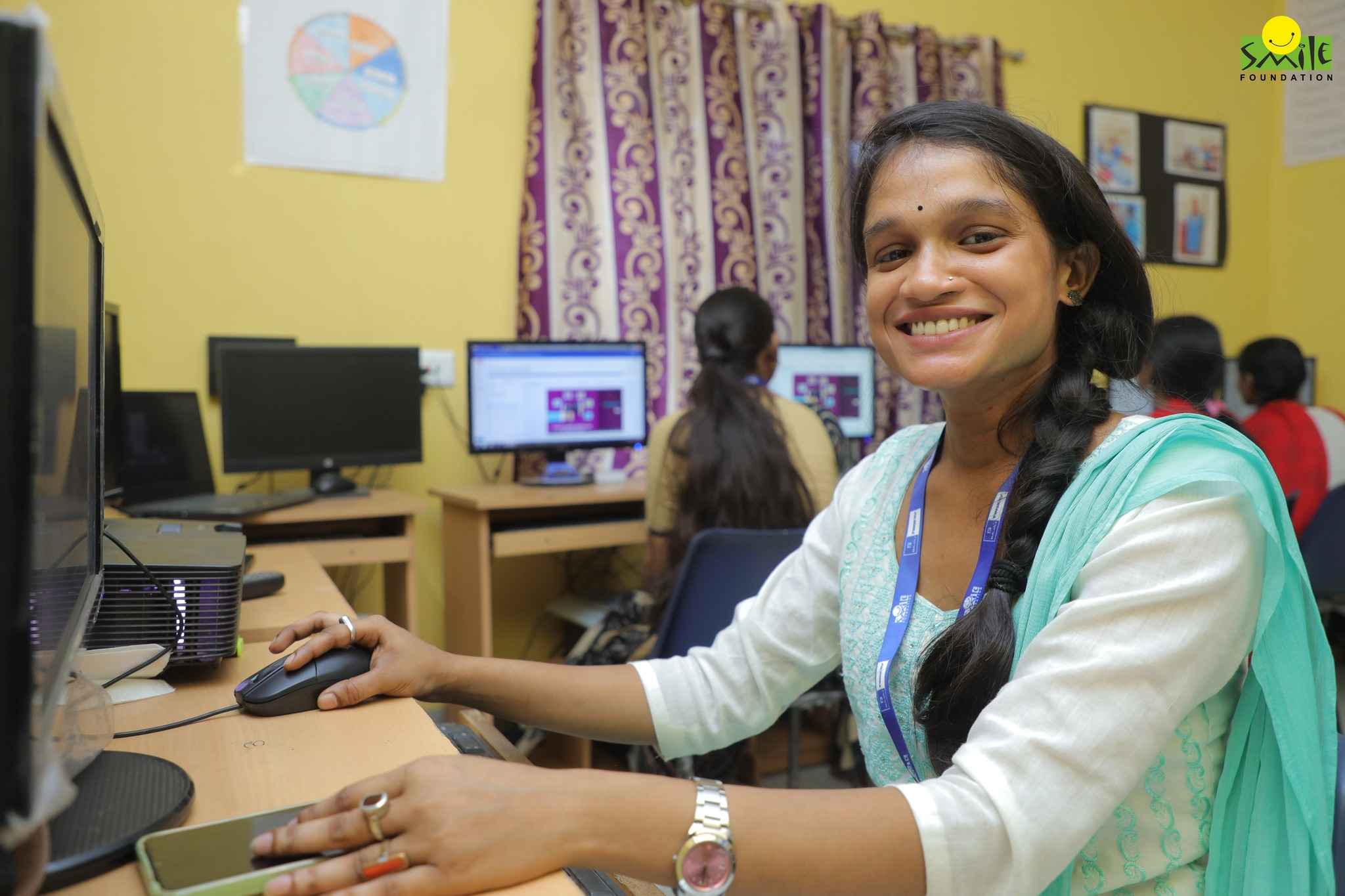
Smile Foundation runs the STeP (Smile Twin e-Learning Programme), focused on empowering underserved youth with job-ready skills.
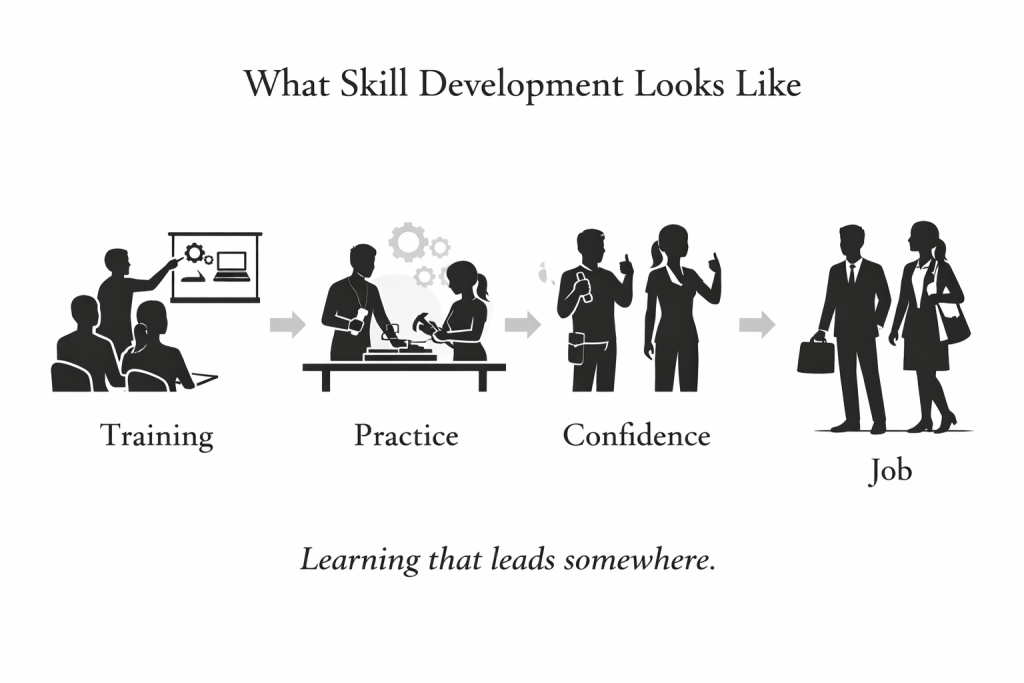
The programme combines:
- English communication training
- Computer literacy
- Personality development
- Industry exposure
Many participants are first-time job seekers from low-income backgrounds.
The goal is not just employment, but confidence.
👉 If you are looking to support skill development initiatives, you can explore Smile Foundation’s STeP programme and its impact across India.
What Makes Skill Development Effective
Not all training leads to employment.
Effective programmes share a few key traits:
- Industry alignment
- Practical learning modules
- Soft skills integration
- Placement support
Without these, training risks becoming theoretical rather than transformative.
How You Can Support Skill Development for Youth
You do not need to be a policymaker to contribute.
You can:
- Support NGOs working in skill development
- Volunteer as a mentor
- Advocate for vocational training India awareness
- Encourage youth to explore skill-based careers
Small actions can create pathways for someone else.
Conclusion
Skill development for youth in India is about unlocking potential.
The country has the talent. What it needs is the right training, the right support, and the right opportunities.
Bridging the gap between education and employment is not a single solution. It is a collective effort.
And every step taken today shapes the workforce of tomorrow.
FAQs — Skill Development for Youth in India
What is skill development and why is it important for Indian youth?
It refers to training that improves employability. It helps youth transition from education to jobs.
What is the skill gap in India and how big is the problem?
It is the mismatch between education and job requirements, affecting millions of young people.
What government programmes support skill development in India?
Schemes include PMKVY, DDU-GKY and Skill India Mission initiatives.
What is PMKVY and who can benefit from it?
It is a government programme offering free skill training for youth across India.
What skills are most in demand in India in 2026?
Digital skills, communication, technical trades and service sector skills are highly valued.
How can rural youth access skill development programmes?
Through government schemes, NGOs and local training centres.
What is the difference between vocational training and formal education?
Vocational training focuses on practical skills, while formal education focuses on theoretical knowledge.
How does skill development help reduce unemployment in India?
It prepares youth for available jobs, improving employability.
What is DDU-GKY and how does it help youth from poor families?
It provides placement-linked training for rural youth from low-income backgrounds.
How does Smile Foundation support skill development for youth?
Through programmes like STeP that combine training, mentoring and placement support.