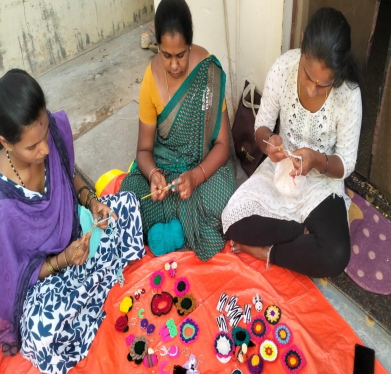
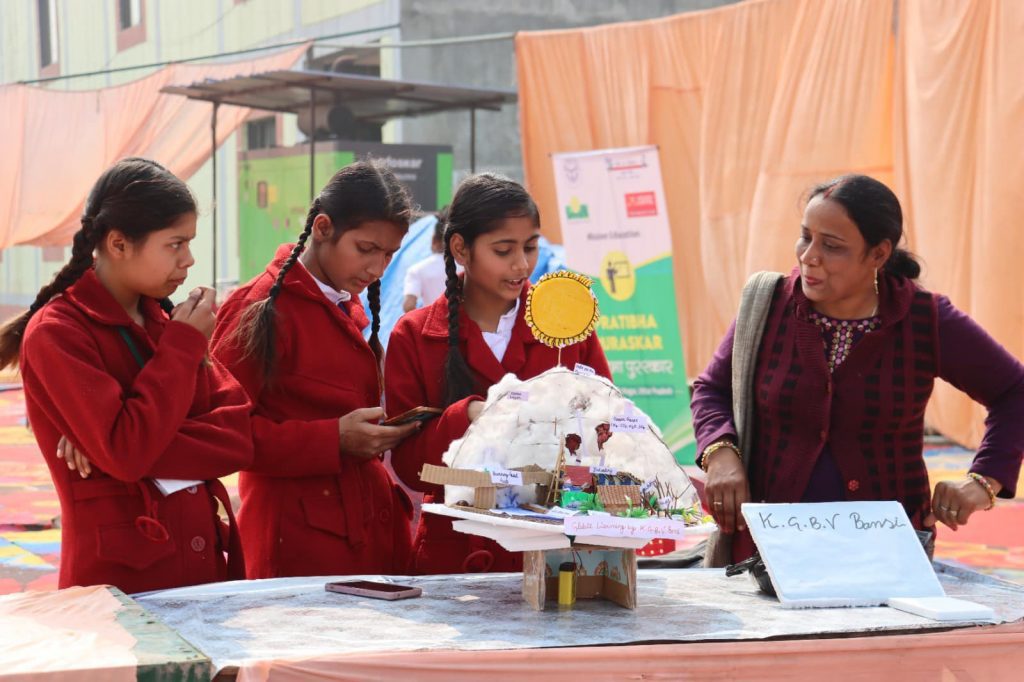
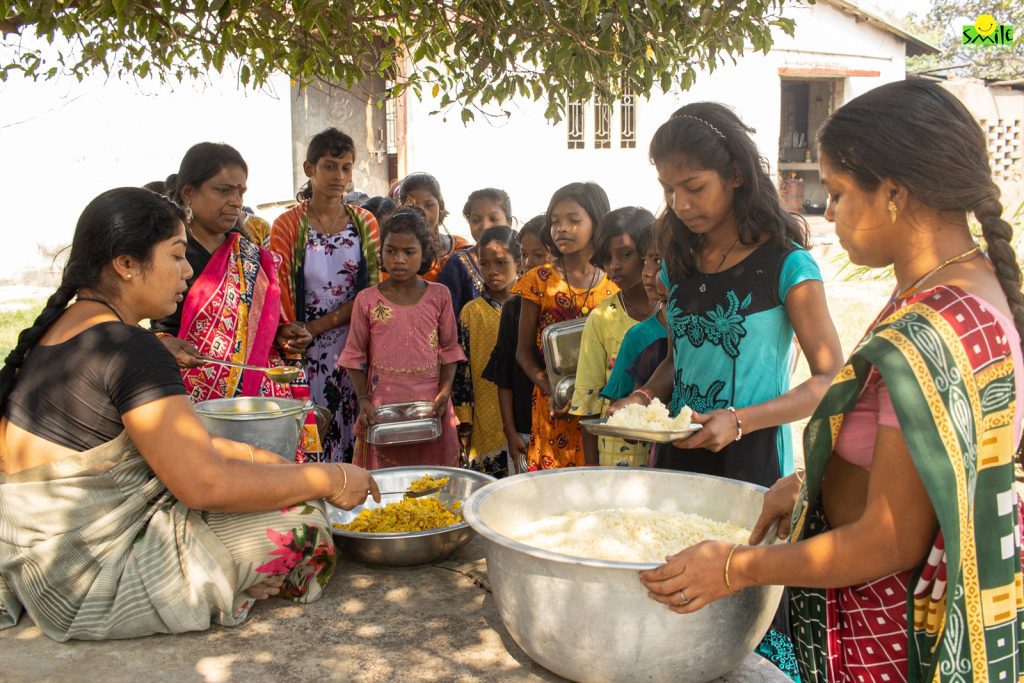
For young Debasmita, continuing her education after the 8th grade was a challenge. Her father, who worked as a tailor, was out of work for about two years during the pandemic. She was on the brink of dropping out when Smile Foundation’s merit-based scholarship allowed her to continue her education. Today, she dreams of helping girls in her community pursue their studies. Like Debasmita, many deserving students lose out on quality education because of limited means. For academically-gifted students who come from low-income homes, the promise of higher education feels like a mirage, until scholarships intervene. Even though there’s a roster of national and local scholarships available for deserving candidates, the impact continues to be limited.
A Look at the Numbers
The National Means-cum-Merit Scholarship Scheme (NMMSS) launched by the Ministry of Education, in order to offer one lakh fresh scholarships every year for students entering Class IX, continuing through to Class XII. As of 2023–24, around 2.50 lakh scholarships were sanctioned, with a budget of approximately Rs. 300 crore. However, while, on paper, the scheme is straightforward (reward talent, retain students and reduce drop-out rates) the reality is more complex.
Data suggests that despite the noble intent, NMMSS has struggled to maintain its scale. Between 2017–18 and 2021–22, the number of scholarships granted under the scheme plunged by 51.9 per cent, according to parliamentary replies. In the same period, among the most marginalised groups — Scheduled Castes (SC) and Scheduled Tribes (ST) — the drop is, in fact, stark. While SC recipients of the scholarship fell from 58,307 in 2020–21 to 48,116 in 2021–22, pointing at a 17 per cent decline, ST recipients dropped from 22,562 to 16,460 which is a 27 per cent fall in that year.
This dramatic decline is tied to broader systemic issues in the country. While the budget for scholarships has positively grown over the last few years, the number of beneficiaries has fallen in several key schemes. For instance, central funding for the Post-Matric Scholarship for SC students nearly doubled, from around Rs. 2,710 crore in 2019–20 to Rs. 5,475 crore in 2023–24, yet the number of SC students receiving the scholarship fell from 54.27 lakh to 47.39 lakh, a drop of 12.7 per cent.
In response to these rather staggering numbers, experts and policy analysts point to several administrative bottlenecks. A major problem has been disbursement delays. The National Scholarship Portal that administers many of these scholarships demands multi-level verifications. Additionally, strict Aadhaar linkage, documentation issues and technical glitches often derail timely payments, causing eligible students to fall off or forfeit the award altogether.
In fact, another problem is the sheer lack of access to information about the scholarships available. Many deserving students from disadvantaged areas never even get to apply. For those who do, maintaining eligibility year after year, especially at times of renewal, poses to be difficult as academic performance must be sustained and the procedural burden (income proofs, verification) can be demanding. Without adequate advisory and material support, families may end up giving up.
The Way Forward
Civil society and NGOs have tried to plug this gap. Smile Foundation, for instance, offers scholarships to students from low income settings through their Mission Education Programme. Under this programme, deserving students, often girls and young people from economically disadvantaged backgrounds, receive merit-cum-need based support to complete their schooling or even pursue higher and technical education. The Foundation also offers engineering scholarships primarily for underserved girls to pursue four-year engineering degrees in cities like Bengaluru, Jaipur, Mumbai and Pune.
From a broader social perspective, these scholarships matter not just for individual students but for social mobility. When high-performing students stay in the system, they become role models and their success can cause a ripple effect across communities.
Looking forward, we need better data infrastructure that not just tracks disbursement of funds but last-mile receipt, student retention as well as outcomes. A real-time dashboard for scholarship delivery, renewal and impact could also potentially flag problem states or districts quickly. Streamlining the process is also vital in order to reduce red tapeism, and to overtly simplify verifications. Most importantly, a strong network between the government and NGOs, along with strong partnerships between NGOs, state education departments and alumni associations can raise awareness and help students with mentorship support.
In the end, scholarships for low-income, high-achieving students are more than just fiscal instruments. Scholarships can be engines of hope. For too many students, they mean the difference between dreams deferred and dreams realised. But without efficient delivery, systemic responsiveness and a commitment to equity, they risk becoming underutilised promises. If India truly wants to harness true potential, we need to ensure that brilliance is not lost simply because someone lacked the means. Only then can education serve as the bridge it is meant to be: for social justice and national progress.