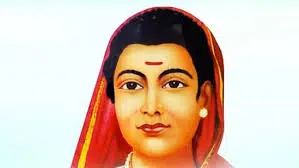

In 1848, when Savitribai Phule opened one of India’s first schools for girls in Pune, she did not describe her work as charity. She called it justice.
The distinction matters. Nearly two centuries later, as India celebrates rising enrolment numbers for girls, the global development community continues to ask why learning outcomes remain fragile, why adolescent girls disappear from classrooms, and why education so often fails to translate into autonomy. Savitribai Phule anticipated these questions long before the language of “human capital” or “gender parity” entered policy vocabulary. She understood that education for girls was not about access alone, but about power, dignity and resistance to inherited inequality.
What she built was not merely a school, but a counter-system.
Education as confrontation, not accommodation
Savitribai Phule’s classrooms were radical spaces because they challenged three structures simultaneously: caste hierarchy, patriarchal control and moral policing of women’s bodies. She taught girls who were considered unteachable, daughters of families told they had nothing worth educating for. She walked to school every day knowing she would be abused, spat on or threatened. She carried an extra sari because she expected it to be soiled.
This was not symbolic activism. It was systemic disruption.
Savitribai insisted that literacy was inseparable from self-respect. In her poems and speeches, education was a weapon against humiliation, not a ladder to social approval. She warned that schooling which merely trained girls to be “better wives” was another form of enclosure. For her, education had to produce moral courage, economic independence, and the ability to question authority, including family authority.
That insight remains unsettlingly relevant.
Why enrolment is not the same as education
Globally, girls’ enrolment has improved dramatically over the past three decades. India is often cited as a success story. However, data repeatedly shows that the real rupture happens during adolescence. Puberty, household labour, safety concerns, early marriage, digital exposure and mental health pressures converge to push girls out of school or reduce learning to survival.
Savitribai Phule would not have been surprised.
She understood that schools fail girls not only when they exclude them, but when they refuse to adapt to their realities. A classroom that ignores menstruation, hunger, language barriers, caste discrimination or domestic labour is not neutral. It is complicit.
Modern education systems still struggle with this truth. Policy frameworks focus on infrastructure and curriculum reform, but often neglect the invisible labour required to keep girls learning: counselling, mentorship, health support, community negotiation and sustained trust with families.
This is where Savitribai’s legacy is most urgent today.
The forgotten architecture of support
Savitribai Phule did not work alone. Her schools were embedded in a broader ecosystem of care. She and Jyotirao Phule ran shelters for widows, supported survivors of sexual violence, and advocated for maternal health. Education, for them, was inseparable from social protection.
That integrated vision is precisely what contemporary systems often fragment.
In many low-income communities, the barriers to girls’ education are rarely academic. They are logistical, emotional, and social. A girl may be enrolled in school, but exhausted from domestic work. She may attend class, but lack confidence in mathematics because no one ever told her she belonged there. She may be present, but silent.
The lesson Savitribai offers is uncomfortable but clear: education systems that do not invest in non-academic support are not incomplete, they are ineffective.
Where civil society steps in
This is where organisations like Smile Foundation play a critical role in contemporary India. Not as substitutes for the state, but as translators between policy intent and lived reality.
Working across urban slums and rural districts, Smile Foundation’s girl child programme focuses explicitly on girls navigating precisely the transitions Savitribai warned about. The interventions go beyond classroom instruction. We integrate remedial learning, digital access, health screening, nutrition support, menstrual hygiene education and sustained engagement with families.
What is notable is not the scale alone, but the philosophy. Girls are not treated as beneficiaries to be retained, but as learners whose confidence, curiosity and agency must be actively rebuilt. Teachers are supported not just with content, but with tools to recognise learning gaps and emotional distress. Communities are engaged as stakeholders, not obstacles.
In this sense, Smile Foundation’s work echoes Savitribai’s insistence that education must be relational. It must respond to context, not abstract targets.
STEM, gender and the confidence gap
One of the not-often-discussed revolutions in girls’ education today is not enrolment, but aspiration. Even when girls remain in school, they are often nudged away from mathematics, science and technology, not by ability, but by expectation.
Savitribai Phule rejected this logic outright. She argued that denying girls access to knowledge was a deliberate political act, not a natural outcome. Today, programmes that use activity-based learning to demystify STEM subjects are rediscovering this insight.
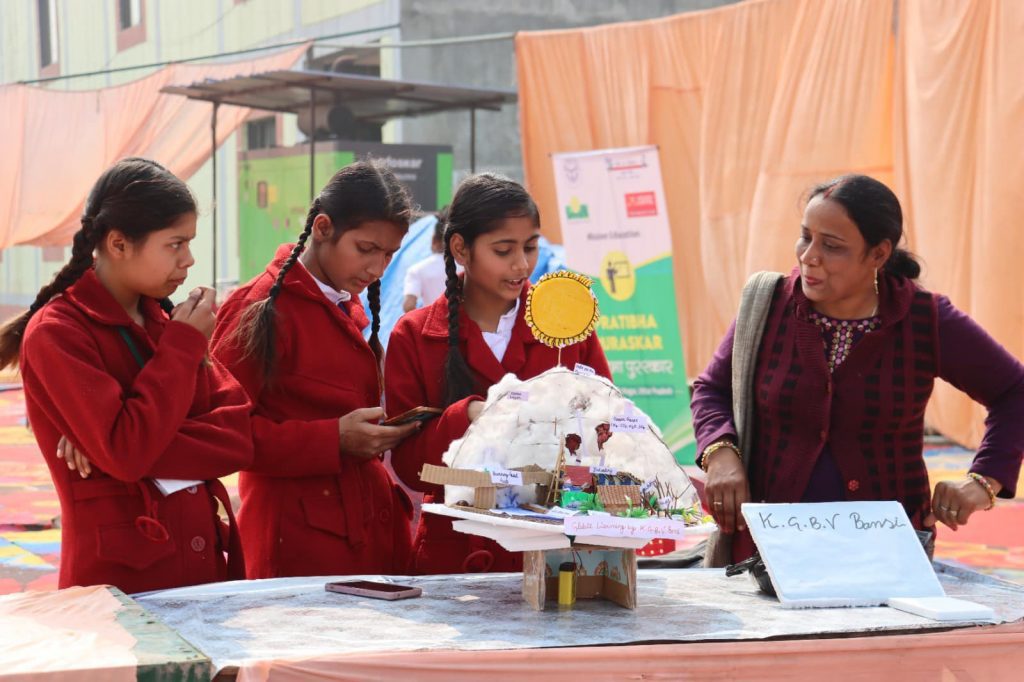
Smile Foundation’s recent work in strengthening STEM education in government schools through hands-on, activity-based models is particularly relevant here. By focusing on problem-solving rather than rote performance, these interventions help girls experience competence early. Confidence, once built, compounds.
This matters because the future of work, climate adaptation and public health will depend on scientific literacy. Excluding girls from these domains is not just unjust. It is economically irrational.
The global relevance of a local radical
Savitribai Phule is often framed as a national icon. That framing is too small.
Her work belongs alongside global histories of feminist education, abolitionist pedagogy, and anti-colonial thought. Like Mary McLeod Bethune or Paulo Freire, she understood education as a site of struggle. She rejected neutrality. She insisted that schools must choose sides.
In an era where education is increasingly instrumentalised as workforce preparation, Savitribai’s vision offers a corrective. She reminds us that learning is not only about employability, but about the capacity to resist injustice, imagine alternatives and act collectively.
Internationally, as countries debate girls’ education in conflict zones, climate-vulnerable regions, and digital economies, her insights resonate deeply. Access without agency is not empowerment. Schooling without safety is not progress.
What it means to honour her legacy
Commemorating Savitribai Phule should not be limited to statues or curriculum mentions. It requires institutional courage.
It means designing education systems that acknowledge care work, health and mental wellbeing as integral to learning. It means funding the unglamorous labour of counselling, mentorship and community mediation. It means trusting girls with complexity, not protecting them into silence.
Organisations like Smile Foundation demonstrate what this looks like in practice. But the responsibility cannot rest with civil society alone. States must invest in these invisible architectures of support or risk repeating the same failures under new slogans.
Savitribai Phule knew that educating a girl was never just about her future. It was about what kind of society dared to imagine her as equal.
Nearly two centuries later, that question remains unresolved.