
In a cramped tailoring shop on the edge of Gurugram, 35-year-old Shalu flips through her phone as her toddler naps beside her. A message blinks on a WhatsApp group called “Digital Futures.” It’s an invitation to a free, government-backed data-entry course. She sighs, half-interested. The training centre is fifteen kilometres away. The classes run from ten to four. Her husband works nights, her in-laws need meals by noon and there’s no one to mind the child. She closes the message.
Across India, women like Shalu are being left out of the country’s much-celebrated reskilling wave. As policymakers, employers and ed-tech companies speak of a “skills-first economy” and “digital transformation,” women’s participation in these very reskilling opportunities remains strikingly low.
The paradox is telling. India has one of the world’s youngest workforces, a booming start-up ecosystem and a government pushing to train millions under the Skill India Mission. But, women — half the population — continue to be spectators in a labour market being remade before their eyes.
The Promise and the Problem
Official data suggests that women’s labour-force participation in India is creeping up to around 41.7% per cent, from the pandemic-era lows. But that modest rise hides a deeper structural problem: women are missing from the very sectors driving the future of work.
A new World Economic Forum report found that 63 per cent of India’s workers will require reskilling by 2030. Yet the bulk of training in artificial intelligence, data analysis, cloud computing and green technologies continues to be dominated by men. Most women who do enter the workforce remain in low-paid, low-security roles stitching garments, cleaning homes, teaching in informal preschools.
Economists warn that unless women gain access to reskilling programmes and the new job categories they unlock, India’s much-touted demographic dividend could turn into a demographic mirage. The country risks building a digital economy that reproduces the same gender hierarchies as the industrial one.
The Invisible Barriers
At the heart of the issue lies the architecture of everyday life. Women’s underrepresentation in reskilling opportunities isn’t simply a question of access to training; it is about the collision between gender, labour and social expectation.
For millions of Indian women, unpaid care remains the first and last shift of the day. Cooking, caregiving and cleaning consume hours that men can spend on commutes or courses. The time poverty is real. A recent analysis found that Indian women devote nearly five hours daily to unpaid domestic work — three times more than men. Training schedules that assume learners are free at midday or can travel to city centres are, by design, exclusionary.
Then there are the subtler forms of exclusion. Many women are unaware of training opportunities. Others hesitate to attend mixed-gender classes or work on computers they’ve never used. Some are discouraged by families who see reskilling as “unnecessary” for women who are expected to marry or stay home.
Even when women do enrol, drop-out rates are high. The courses are rarely structured around their realities. There’s little childcare, no transport allowance and limited digital support. A study by IWWAGE (Initiative for What Works to Advance Women and Girls in the Economy) found that women’s enrolment in STEM and tech-based reskilling remains below 20 per cent nationally.
The Skewed Design of Opportunity
The irony is that many of the jobs emerging from the reskilling boom — data annotation, digital operations, AI testing, online tutoring — could fit women’s needs perfectly. They can be done remotely, often with flexible hours and limited physical strain. But the ecosystem of access remains male-dominated.
“Most reskilling programmes are designed around the assumption that learners are young, urban, and male,” says Priya Nair, who runs a women’s skill centre in Kerala. “Even digital courses often require uninterrupted electricity, high-speed internet, and confidence to ask questions online. That’s where women lose out.”
The problem isn’t just design but the absence of imagination. Few reskilling initiatives consider life-stage transitions — the woman returning to work after maternity, the mid-career worker displaced by automation or the rural graduate aspiring for a digital role.
In India, 80 per cent of women work in the informal economy, where the notion of reskilling barely exists. Domestic workers, factory-line operators and home-based artisans have little access to structured training. When automation or mechanisation arrives, they are simply displaced, not retrained.
A Reskilling Landscape that Excludes
In Delhi, the Skill India Mission operates dozens of centres. But walk through them and the gender divide is palpable. Men cluster around machines, computers and welding stations. Women are funnelled into tailoring, beauty and handicraft courses — training that leads back to traditional gendered labour.
A government official defending the design says: “Women prefer safer, home-based trades.” But the preference is shaped by the structure of opportunity. When there are no pathways into non-traditional trades, choice becomes a mask for exclusion.
This isn’t a uniquely Indian story, but the stakes here are higher. India’s economy is adding jobs in green energy, digital finance and logistics — sectors projected to expand rapidly. Yet, unless women access reskilling in these spaces, their share in future employment will shrink further.
Learning from What Works
Some models offer glimpses of change.
Under the Skill Impact Bond launched by the National Skill Development Corporation and international partners, 72 per cent of the 23,700 youth trained were women. The project tied funding to outcomes, ensuring women not only trained but found jobs and retained them for at least three months. When inclusion is intentional, results follow.
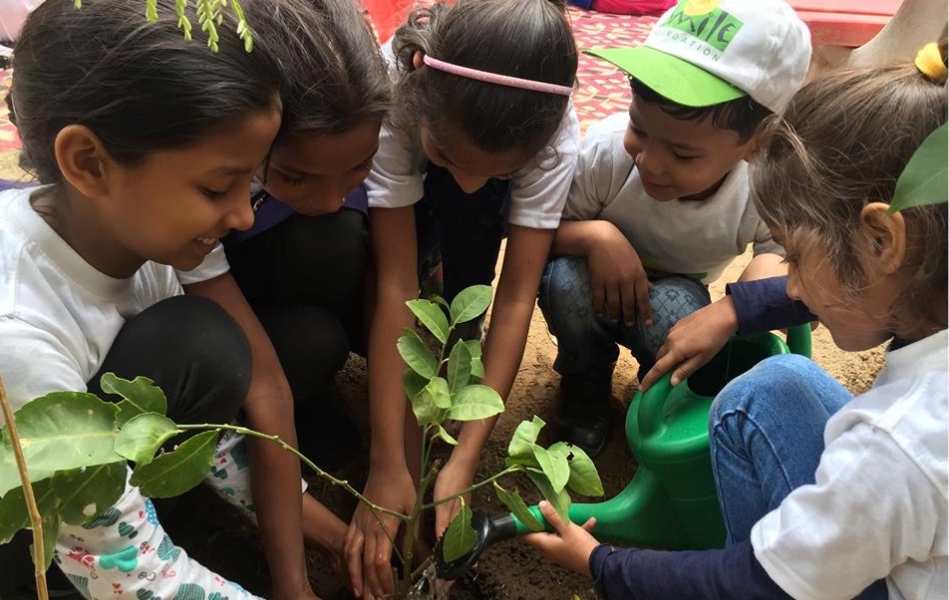
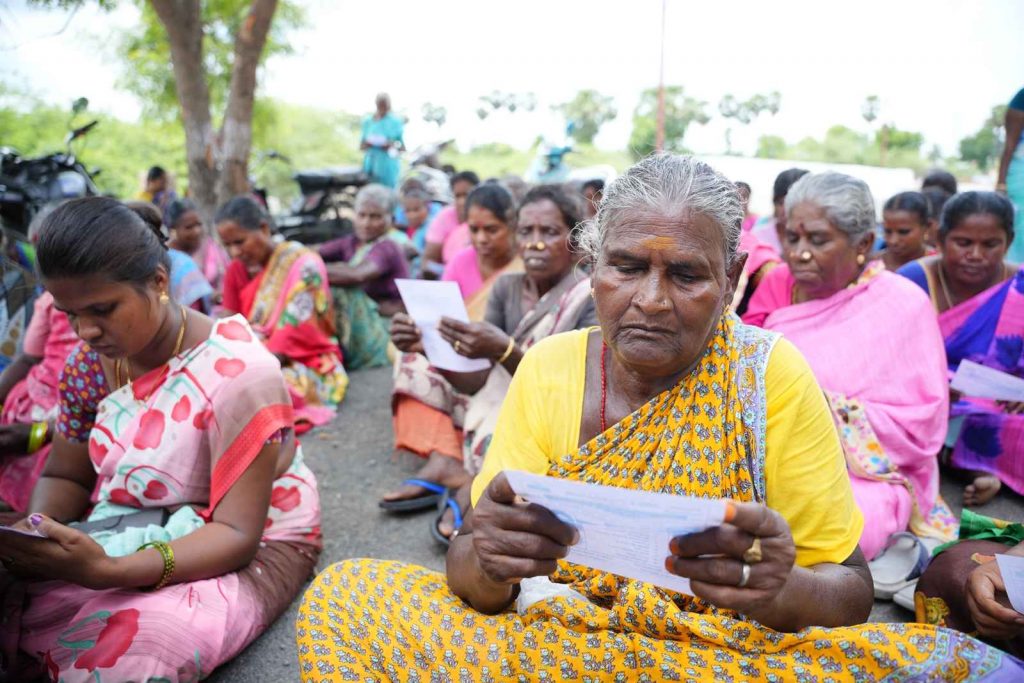
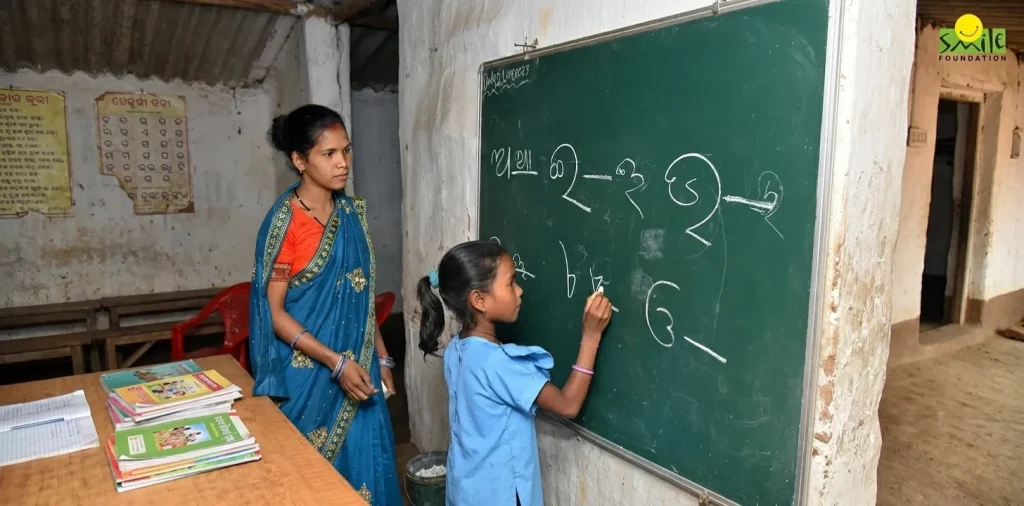
Similarly, non-profits like Smile Foundation have been expanding reskilling and digital literacy among women through their various interventions. By integrating digital and financial education into broader empowerment initiatives, Smile has reached thousands of women who had never touched a smartphone before. Its trainers adapt timing, location and format — sometimes holding sessions in village courtyards or local schools — to make learning accessible.
Smile Foundation’s work in employability and reskilling offers a grounded model of how social-sector initiatives can bridge the gap between aspiration and opportunity for India’s youth—especially young women. Through its Smile Twin e-Learning Programme (STeP) and broader Livelihood Initiative, the organisation provides structured vocational and digital-skills training to young people from low-income backgrounds. The curriculum combines technical training with life skills, communication, financial literacy and industry exposure—an approach that moves to long-term employability. Over the years, Smile has trained more than 75,000 youth, of whom 71 per cent are women and facilitated over 47,000 job placements across retail, healthcare, IT-enabled services and hospitality sectors.
Inclusion: Our Top Priority
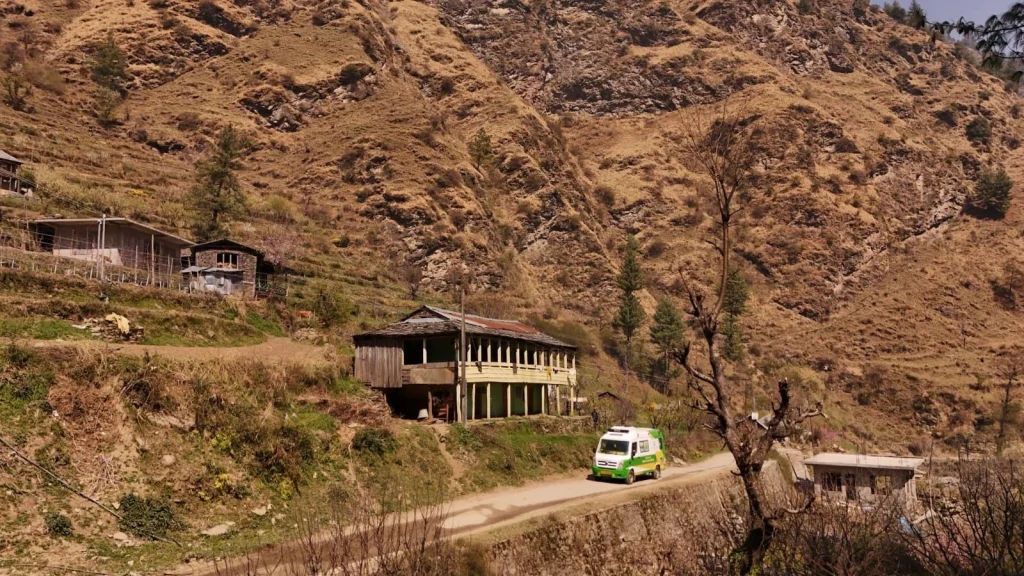
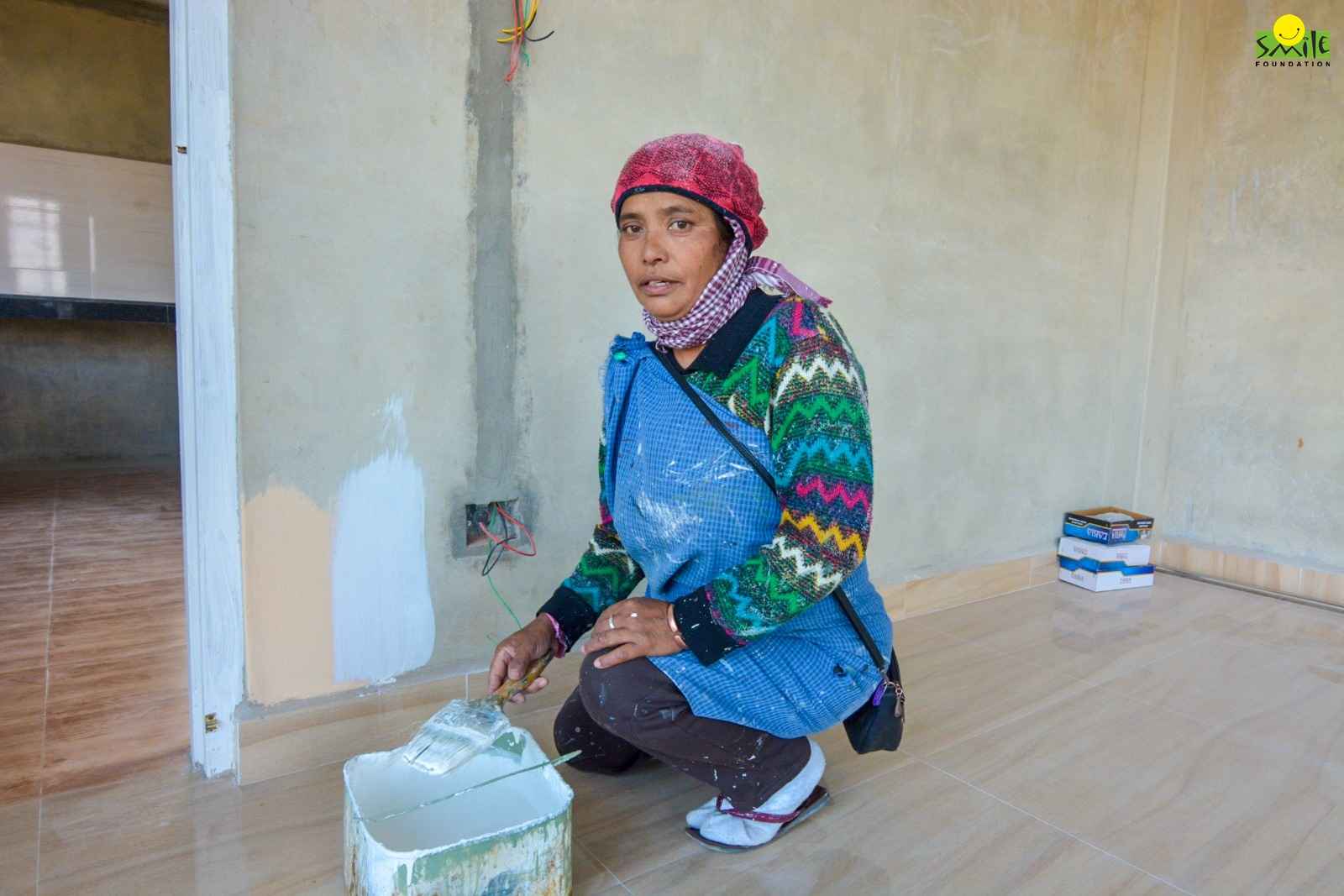
The foundation’s emphasis on women’s inclusion in reskilling stands out. In communities where mobility, childcare responsibilities and social norms restrict participation, Smile centres serve as accessible, trusted spaces for learning and mentorship. Many of its programmes, from digital literacy modules to entrepreneurship training for women in the unorganised sector, are tailored to build confidence and autonomy, not just employable skills. Initiatives like iTrain on Wheels, developed in partnership with industry leaders, have taken mobile training units into underserved neighbourhoods, enabling women painters and technicians to enter trades once considered off-limits.
By connecting reskilling to real employment pathways and sustained mentoring, Smile Foundation challenges the idea that women’s participation in the labour force is simply a matter of choice. Its model demonstrates how design and intent can change outcomes—how flexibility, proximity and life-skills integration can make the difference between training on paper and transformation in practice. In doing so, Smile’s work offers what an inclusive reskilling ecosystem could look like in India’s next decade of growth.
Because women do not lack interest in reskilling. They lack ecosystems that see them.
Policy Promises and Persistent Gaps
Policymakers have recognised the issue, at least rhetorically. The Union Budget of 2024-25 allocated fresh funding to “Skill India Digital,” promising a comprehensive digital reskilling platform with gender inclusion as a key objective. State governments, too, have launched women-focused initiatives, from Karnataka’s “Udyogini” scheme to Maharashtra’s “Tejaswini” project.
But these remain fragmented. The problem isn’t the absence of schemes but the absence of coordination. Ministries run overlapping programmes with different eligibility criteria, little follow-up data and minimal employer integration. Few measure whether women trained actually find sustained employment.
Meanwhile, the private sector’s efforts, though visible, tend to remain urban and English-speaking. The glossy images of women in coding bootcamps tell only a sliver of the story. For most women in India’s tier-two towns or rural belts, the barriers are infrastructural — electricity, internet, language, childcare. Without addressing those, reskilling remains an urban conversation.
The Economics of Exclusion
The cost of exclusion is high. A study by McKinsey estimated that closing the gender gap in India’s workforce could add $770 billion to the GDP by 2025. But economic potential isn’t enough to change behaviour. Gender roles, entrenched over generations, aren’t easily rewritten by a certificate course.
In interviews with women in low-income communities, many say they would like to learn new skills but can’t justify the cost. “My husband says, who will pay for a course that doesn’t guarantee a job?” says Rekha, a 28-year-old homemaker from Madhya Pradesh. “If there was work after, maybe.”
That conditional hope is key. Women’s participation in reskilling is tightly linked to economic incentives. When employers commit to hiring women who complete training, families take the opportunity seriously. When the outcome is uncertain, the effort feels indulgent.
What Inclusion would Take
For India to truly democratise reskilling, it must move beyond rhetoric to design. That means reimagining both what reskilling looks like and who it is for.
Training centres must adapt to women’s schedules and realities — shorter modules, flexible hours, hybrid options, childcare facilities and safe transport. Employers must create roles that absorb women returning to work after long gaps, with mentorship and growth pathways. Digital platforms must design for low literacy, local languages and patchy connectivity.
Above all, policymakers must move from counting seats to tracking outcomes: who enrols, who completes, who finds work and who stays. Disaggregated data — by gender, age, region and income — is the first step towards accountability.
A Question of Imagination
There is no shortage of women who want to learn. In Jharkhand, a pilot AI-training project for women saw triple the expected enrolment once timings were adjusted and travel stipends added. In Kerala, women returning to work after childcare gaps excelled in logistics and warehouse management once given structured re-entry programmes.
The challenge is not capability but design. As long as reskilling remains framed around a male default, women will continue to appear as statistical afterthoughts.
The Future that Includes
India is entering a defining decade. Automation and AI are redrawing the boundaries of work. Entire industries will need reskilling. The question is whether this transformation will include women or deepen existing divides.
If reskilling is to live up to its promise, it must become not just a tool for efficiency but a project of equity. Every course schedule, training centre and hiring policy must begin with one question: who is missing from the room?
For now, women like Shalu remain outside, juggling care, aspiration and exhaustion. The reskilling revolution hums along without them. But the real future of work — inclusive, equitable, sustainable — will only begin when they walk through that door.