
Issues that were once spoken of only in hushed tones are coming into the open. Reproductive health education for women is no longer simply a matter of maternal check-ups or family-planning counselling. It is now intersecting with rights, agency, education and gender equity. But the scale and pace of change remain uneven and without deliberate investment in education, information and infrastructure this shift risks falling short.
Recent developments underscore both the promise and the urgency of this agenda. In August 2024 the UN Human Rights Committee called on India to ensure full access to sexual and reproductive health services including education for women and girls. The committee noted that legal and policy barriers persisted and advised stronger efforts in education and service delivery. That public recommendation reflects that reproductive health education more than a health intervention is a governance and rights-based question.
Another recent piece in the Hindustan Times reframed women’s health as an economic lever, pointing out that over half of women of reproductive age in India are anaemic — a condition linked not only to health but to productivity, economic participation and educational outcomes. When reproductive health issues affect schooling, work, cognitive capacity or life choices, the need for comprehensive education becomes clear.
But
Yet despite this clarity, far too many women still face educational deficits when it comes to their own bodies, fertility, contraception and rights. In rural India especially the taboo around menstruation, sexuality and pregnancy continues to limit both information and options. A commentary in The Times of India emphasised that for rural women and adolescents the combined burden of gender inequality, social stigma and lack of financial independence creates severe barriers to reproductive health education.
These patterns shape lives and outcomes. An adolescent girl who receives little or no information about her menstrual cycle or fertility is far more likely to arrive at early marriage or early pregnancy, to drop out of school and to have fewer life-options. A woman who lacks access to contraceptive information and support is more likely to have unintended pregnancies or to be channelled into sterilisation without full choice. A woman who enters motherhood without adequate information about postpartum health, nutrition or contraception is more vulnerable.
Why Education Matters
Reproductive health education matters for multiple reasons. First it builds agency. Knowledge about one’s body, fertility, contraception and rights allows a woman to make decisions rather than have them made for her. When this knowledge is absent the default is often the most constrained option.
Second, it shapes outcomes. Data show that unmet need for modern contraception remains high in India: in 2019 about 27 % of women who would like to avoid pregnancy did not use a modern method. Without education and access the risk of unintended pregnancies remains high.
Third, it relates to equity and gender justice. Without reproductive health education we continue to assume that women’s reproductive roles are natural, unchanging and unquestionable. But education invites questions, reassessment and choice. It challenges power relations that deny women decision-making in matters of fertility, marriage timing, spacing of children and health.
Fourth, it matters for the economy and society. Anaemia, high fertility, early pregnancy and poor reproductive health aren’t just personal welfare issues, they affect workforce participation, education of children, public-health burdens and long-term social outcomes. Reproductive health education is therefore also a development intervention.
What Stands in the Way
The obstacles are substantial. One major barrier is information gap. In many communities women receive little structured education about reproductive biology, contraception, safe pregnancy, abortion rights or postpartum health. This is especially true in rural settings and among the displaced or marginalised. Social stigma compounds the challenge: discussions about menstruation or sexual health are still confined to secrecy or shame. Rural settings often lack safe spaces for dialogue or language-appropriate and age-appropriate curricula.
Another barrier is service gap. Education is effective only when paired with accessible and quality health services. The UN committee’s review pointed out that even when education exists policy or regulatory bottlenecks in abortion services or sterilisation informed consent undermine impact.
Another challenge is capacity and curriculum. Many teachers and health workers lack training in reproductive health education or feel uncomfortable delivering it. The curricula at school often ignore or gloss over reproductive biology, contraception, menstrual health or rights. Adolescents and women alike may receive fragmented information rather than a comprehensive life-cycle approach.
Further challenges include digital and literacy divides, misinformation, cultural resistance and resource constraints. Accessing digital tools may help but only if women have literacy, connectivity and a supportive environment. A recent academic paper noted how even digital platforms for sexual and reproductive health struggle because of gaps in literacy, contextual design and accessibility for women in underserved settings.
What the Evidence Shows
Several emerging programmes offer clues about what works. In rural India where menstrual hygiene education is coupled with community dialogue, limited stigma reduction has been observed. Campaigns like the one launched in Uttar Pradesh under the heading “Swachh Garima” provided scientific and practical training on menstrual hygiene to girls in residential schools, using teacher training and community outreach.
That suggests the importance of combining education with community norms change. Similarly when reproductive health education is embedded within broader life-skills, vocational or digital literacy programmes the chances of sustainment increase.
It is also clear that reproductive health education cannot be siloed. It must connect schooling, health services, community engagement and rights discourse. When it becomes part of only a one-time session or standalone training, the impact is weak. When it becomes part of the curriculum, the conversation changes. Women and girls then expect more from their bodies, health services and lives.
Smile Foundation’s Swabhiman programme
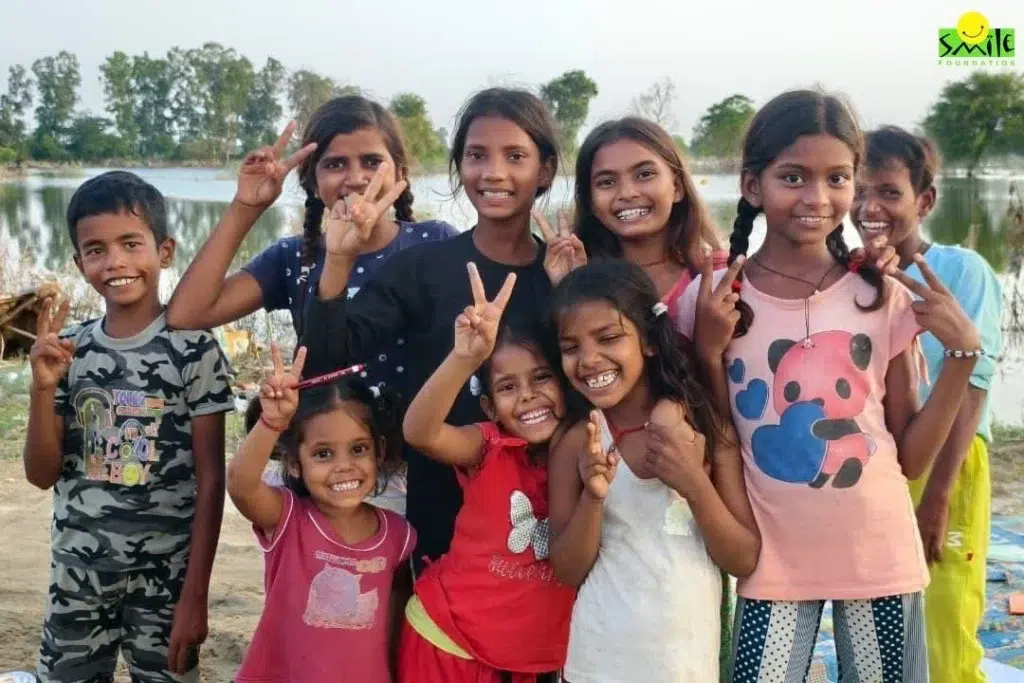
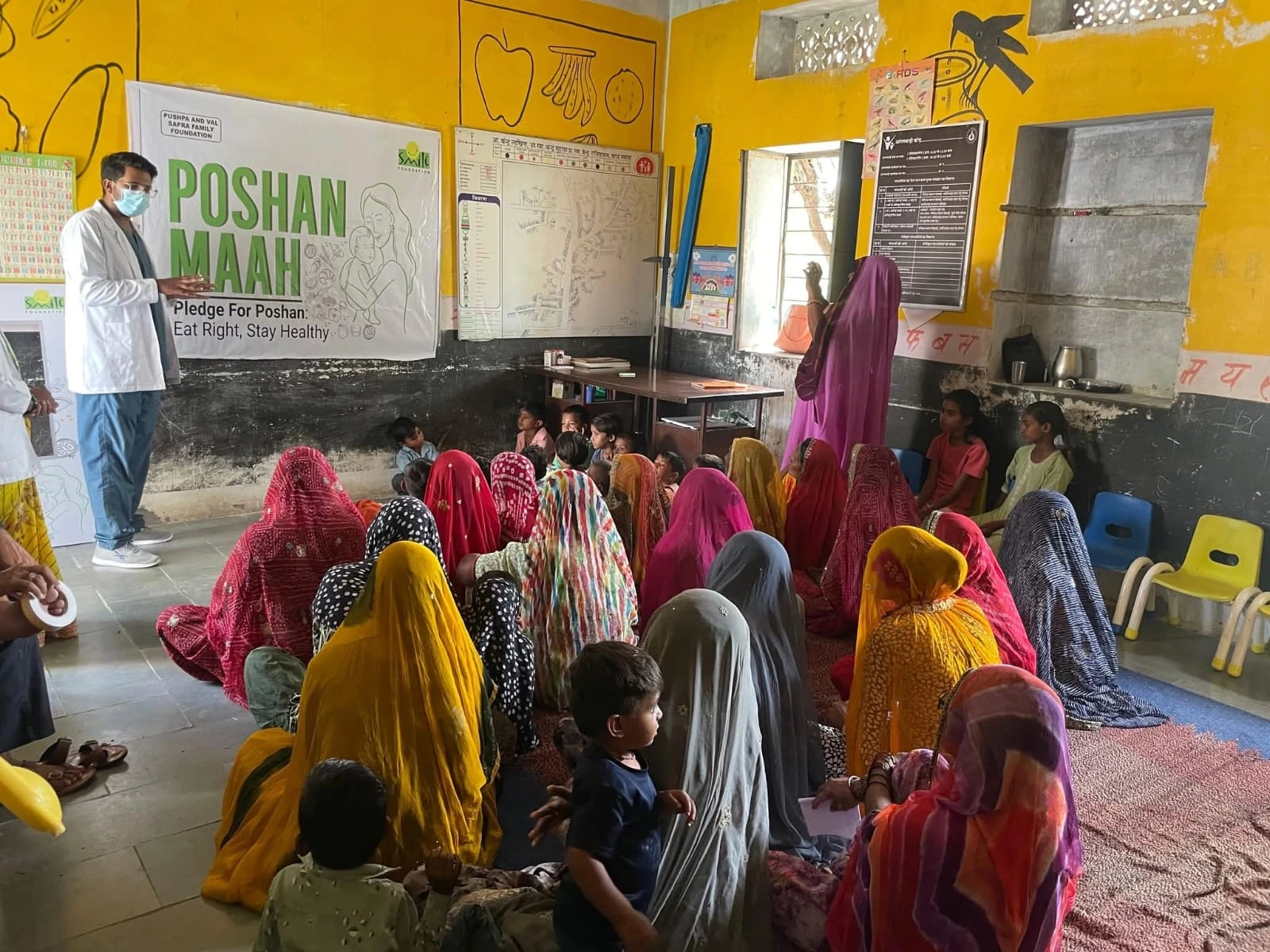
Active since 2005, offers one of the more grounded models of reproductive health education for women in India. Working across both rural and urban low-income communities, the initiative combines awareness on reproductive and child health with livelihood training and social empowerment. Its sessions for women and adolescent girls cover safe motherhood, menstrual hygiene, family planning and nutrition, while also addressing taboos that keep these topics out of public discussion. Through its network of “change agents” or peer educators, Swabhiman has reached more than 80,000 women and girls with health services and education, turning community members themselves into ambassadors for reproductive health.
In districts such as
Palghar in Maharashtra,
the programme demonstrates how education can shift behaviour when paired with access and agency. Health camps, village-level workshops and school-based sessions link reproductive health knowledge to real-life decisions seeking antenatal care, adopting modern contraception or delaying early marriage. The integration of reproductive health education into a broader “life-cycle” model ensures that women encounter these conversations not as one-time lessons but as part of their ongoing social and economic participation. Smile’s approach stands out for treating health not as a silo but as a gateway to empowerment, enabling women to claim ownership over both their bodies and their futures.
Equally significant is Smile Foundation’s work on
menstrual hygiene management
as part of its adolescent health education. By training young women as peer educators, the programme encourages open conversations about menstruation in schools and communities where silence has long prevailed. It provides practical guidance on hygiene, dispels myths and links girls to essential facilities and supplies. The impact translates into reduced absenteeism, improved school participation and greater confidence among adolescent girls. In doing so, Smile Foundation’s work exemplifies how reproductive health education can move from a service-oriented approach to a rights- and dignity-based one, particularly for women and girls who have been excluded from such knowledge for generations.
A 360-degree strategy
For India to move forward on reproductive health education for women a clear-sighted strategy is needed. First teaching of reproductive health must begin early and continue across the life course. Schools must integrate age-appropriate modules on menstruation, fertility, contraception, safe pregnancy and rights. These modules should operate alongside general health and life-skills education.
Second teacher-training and community-engagement must be strengthened. Teachers and health workers need not only the technical knowledge but also the comfort and skills to engage sensitively with girls and women. Community events, mother-group meetings, peer-education networks and digital platforms must bring women into the conversation.
Third services must align with education. It makes little sense to provide knowledge if women cannot act on it because of service-gaps. Health centres with timely contraception, safe abortion rights, antenatal and postnatal care must be accessible. Legal and policy barriers must be dismantled. The UN committee’s recommendations are a reminder of this.
Fourth efforts must reach those on the margins. Rural women, adolescents, women with disabilities, tribal communities, migrants and low income groups often experience the worst deficits in reproductive health education and services. Tailored strategies that consider language, culture, mobility, economic constraints and literacy are essential.
Fifth data, research and accountability matter. We must monitor how education is being delivered and whether knowledge translates into informed decisions and health outcomes. Early evidence of digital platforms or community-based education should be scaled only when there is proof of reach and effectiveness. Emerging research on chatbots for reproductive health in underserved settings shows promise but also highlights the digital divide and the need for culturally-sensitive design.
Why Now Matters
The timing could not be better. India’s demographic dividend is at a crossroads. Women’s health and education remain themes in national policy. The National Education Policy emphasises health and life-skills. The National Health Mission and family-planning programmes are due for revitalisation. And as the Hindustan Times commentary argued reproductive health must be seen as an economic lever, not merely a household burden.
In short, investing in reproductive health education for women is both morally right and pragmatically sound. It fosters agency, reduces unintended pregnancies, improves health outcomes, enables education and work, and strengthens the nation’s human capital. When women know their bodies and rights they make different choices. When societies expect better from their girls and women the entire ecosystem shifts.
Conclusion
Reproductive health education for women in India remains under-prioritised. It sits at the intersection of health, education, gender and rights. Its promise is real but its delivery patchy. The headlines of campaigns and policy pronouncements are encouraging but unless they translate into sustained education-services-community ecosystems we risk leaving millions of women behind. For a woman to be truly empowered in her body she must first be informed. For a society to benefit from that empowerment it must be enabled. Reproductive health education is the bridge between the two.