
India, with a population exceeding 1.41 billion, still has a significant number of impoverished citizens. As a signatory to the United Nations Sustainable Development Goals, India is dedicated to ensuring that “no one is left behind.” Addressing each of these goals, particularly for the rural population, is vital for the nation’s holistic development. In this context, we must acknowledge the current state of the India’s healthcare system.
A vast institution spanning the country, India’s healthcare system has received numerous accolades, particularly during the 2020 pandemic. Serving both urban and rural communities, it is a crucial pillar of the nation. However, despite its efforts to provide quality healthcare to every individual, it faces serious challenges, including manpower shortages and the slow advancement of accessible quality healthcare access in remote areas.
India’s Health Profile
India’s healthcare system has made remarkable improvements, evidenced by better outcomes and numbers in life expectancy, vaccination rates and advancements in cancer research. According to the Ministry of Health and Family Welfare, the country boasts approximately 161,829 sub-medical centres and over 31,000 primary health centres catering to both rural and urban populations.
However, despite these advancements, access to modern healthcare remains challenging in rural India. A survey from the “Bharat Health Index” revealed that only 25% of respondents reported having local access to healthcare. Additionally, 90% of those requiring specialised treatment must travel long distances, while financial barriers persist, with 23% relying on informal loans for medical expenses and 6% selling assets for treatment.
Additionally, the issues of the rising prevalence of four major non-communicable diseases—cancer, heart disease, diabetes, and chronic pulmonary disease—which account for nearly 80% of deaths is also burdening the Indian Healthcare system to cater to every patient.
This situation becomes more alarming, as India’s developed cities are seeing a sudden rise in chronic diseases; Delhi and Kochi are witnessing an uptick in kidney diseases, while Kolkata and Mumbai are facing an increase in cardiovascular issues and heart attacks, particularly among individuals aged 31 to 50.
Given this landscape, one must pause to think: Is our Indian Healthcare System supported enough to address the needs of its growing population and the various medical crises it faces? How can we, as a society, support our healthcare system in delivering quality care across all regions of India?
Government’s efforts towards the Healthcare system in India
The Indian government has been dedicated to transforming the healthcare system into an inclusive institution. Leveraging global insights and technological advancements, it has initiated several programmes aimed at making quality healthcare in India accessible and affordable, even in the most remote areas.
Notable initiatives such as Ayushman Bharat Pradhan Mantri Jan Arogya Yojana (PM-JAY), the National Health Mission, Pradhan Mantri Suraksha Bima Yojana, and Janani Suraksha Yojana have significantly improved accessibility and affordability for underserved communities. These schemes provide individuals with the confidence and hope to seek medical treatment, alleviating the fear of high medical expenses and the lack of treatment facilities.
Digital Revolution of India’s Healthcare
India’s concentration on blending the best of technology within our Indian healthcare system has definitely been a game changer in recent years. The Digital India Revolution has brought significant changes in the healthcare sector with initiatives such as Ayushman Bharat, e-Sanjeevani, e-Hospital, e-blood bank and e-Rakhtkosh– that have allowed India’s medical infrastructure to push its boundaries and to evolve through virtual technologies so that, people living in the remotest corners of the county have the accessibility to get timely medical consultations and treatments as preventive solutions rather than just curative mechanisms.
Quality Healthcare & Smile on Wheels
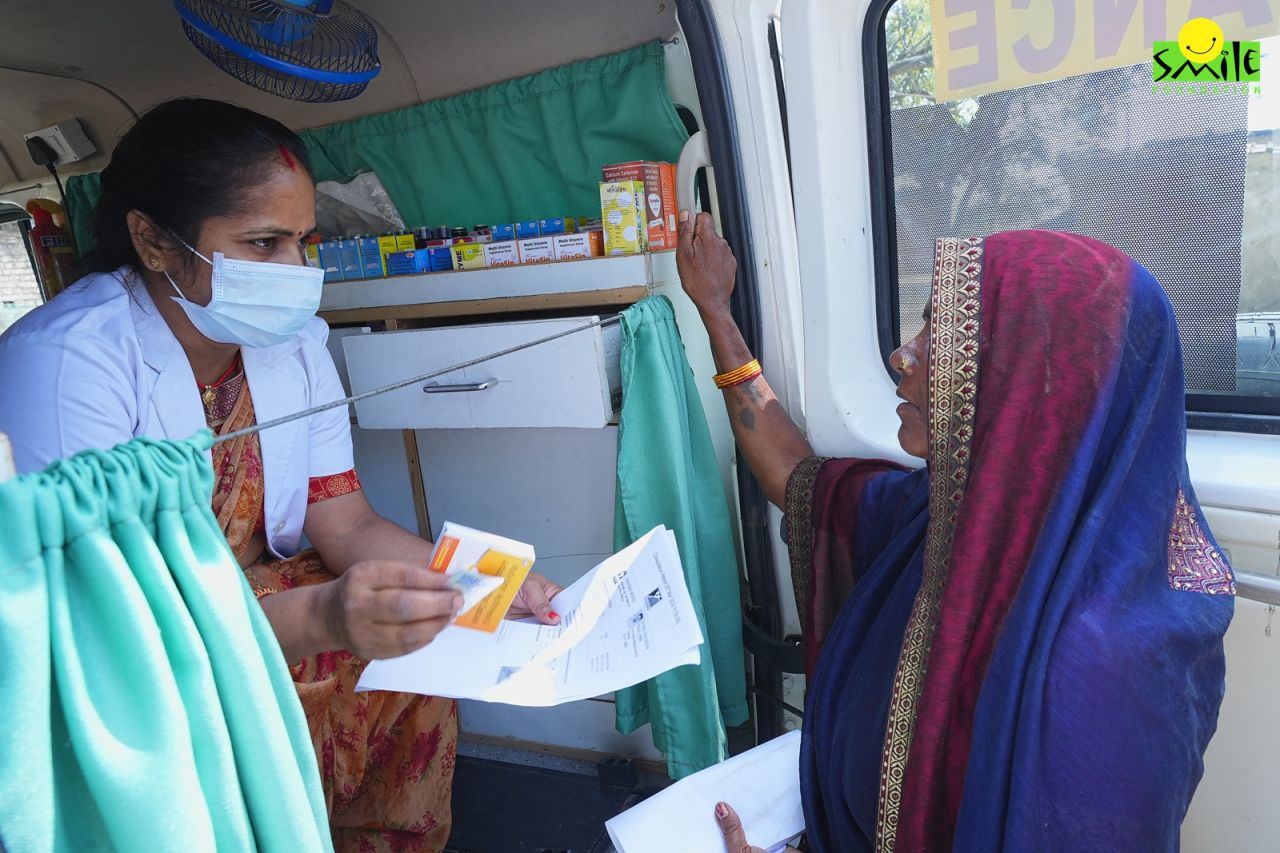
Complimenting the government’s mission, Smile Foundation health intervention, Smile On Wheels, is redefining last-mile healthcare delivery. These technology-enabled mobile medical units, reach communities that lie far beyond the reach of conventional healthcare infrastructure- villages, hilly terrains, flood-prone regions and urban slums.
With over 100 units operational across India, Smile on Wheels provides preventive, promotive and curative healthcare services; supported by doctors, nurses and trained paramedics, each unit is equipped with advanced telemedicine technology, capable of conducting 40+ diagnostic tests remotely enabling real time consultations for conditions ranging from maternal health to chronic illness. This initiative directly contributes to SDG 3- Good Health and Well being, while reinforcing the principle that healthcare should not be a privilege, but a fundamental right.
Building Health Equity Through Collaboration
While government initiatives lay foundation, the role of corporate partnerships with NGOs in India for bridging persistent healthcare gaps is crucial. Strategic CSR partnerships can drive scalable health innovations such
- Strengthen preventive and primary healthcare access for underserved families
- Co-create scalable, tech-enabled healthcare models aligned with SDG targets
- Build a measurable impact narratives that reflect your brand’s commitment to inclusive development and employee-driven purpose
Let’s build a healthier tomorrow to ensure that no child misses school due to illness, no mother is denied care due to distance and no family is pushed into poverty by medical costs. Partner with us to create scalable, sustainable healthcare impact across rural India.
Sources–
Rural Health Statistics, 2021-22
5 health problems responsible for nearly 80% of deaths in India