
In India, public spending on health and education is often stretched thin. Demands are high, resources are scarce, and yet the need for last-mile solutions has never been greater. How do you reach a remote hamlet in Arunachal Pradesh with health services? How do you bring digital classrooms to children in villages where electricity is erratic? The answer, increasingly, lies in frugal innovation — the art of creating scalable, impactful solutions by making the most of what we already have.
Far from being a second-best approach, frugal innovation is about smart design, community trust and radical efficiency. It is also at the heart of Smile Foundation’s journey.
Frugal innovation: From concept to practice
Globally, frugal innovation has come to mean “doing more with less” — not as austerity, but as creativity. In France, abandoned industrial wastelands are being repurposed into new factories. In Boston, underused spaces are densified into modular housing. In India, the Digital Public Infrastructure stack (Aadhaar, UPI, DigiLocker) has become a frugal backbone, enabling secure, low-cost services for 1.4 billion people.
The lesson is that innovation doesn’t always mean cutting-edge labs. It often means rearranging existing resources for maximum value.
Smile Foundation embodies this in its approach — whether through mobile medical vans that double as rural clinics, solar-powered digital classrooms or training frontline health workers with simple yet powerful tools.
Exploiting what already exists
Instead of waiting for perfect infrastructure, Smile Foundation asks: what is already here that can be leveraged?
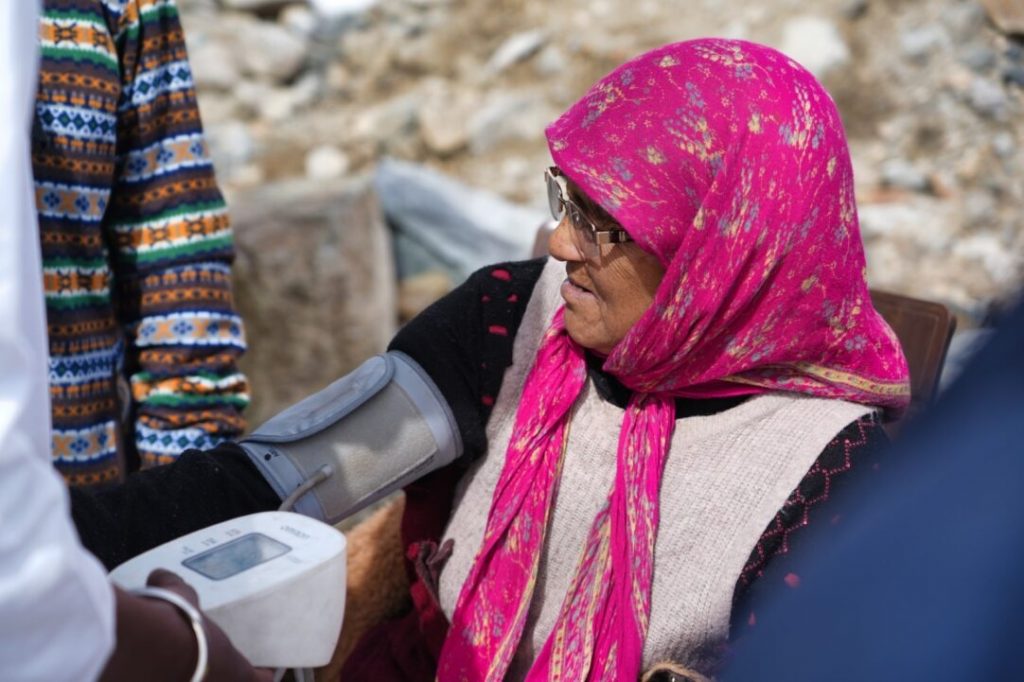
- Smile on Wheels: In villages where building a hospital is unfeasible, Smile deploys mobile health vans staffed with doctors and nurses. One van covers multiple villages, offering preventive and primary care to thousands. The resource is modest, but its value is multiplied through rotation, efficiency and trust.
- E-Arogya Clinics: Small kiosks, sometimes as simple as retrofitted shipping containers, are equipped with diagnostic kits and telemedicine. By reusing affordable spaces and digital platforms, healthcare reaches underserved communities without the costs of full-scale facilities.
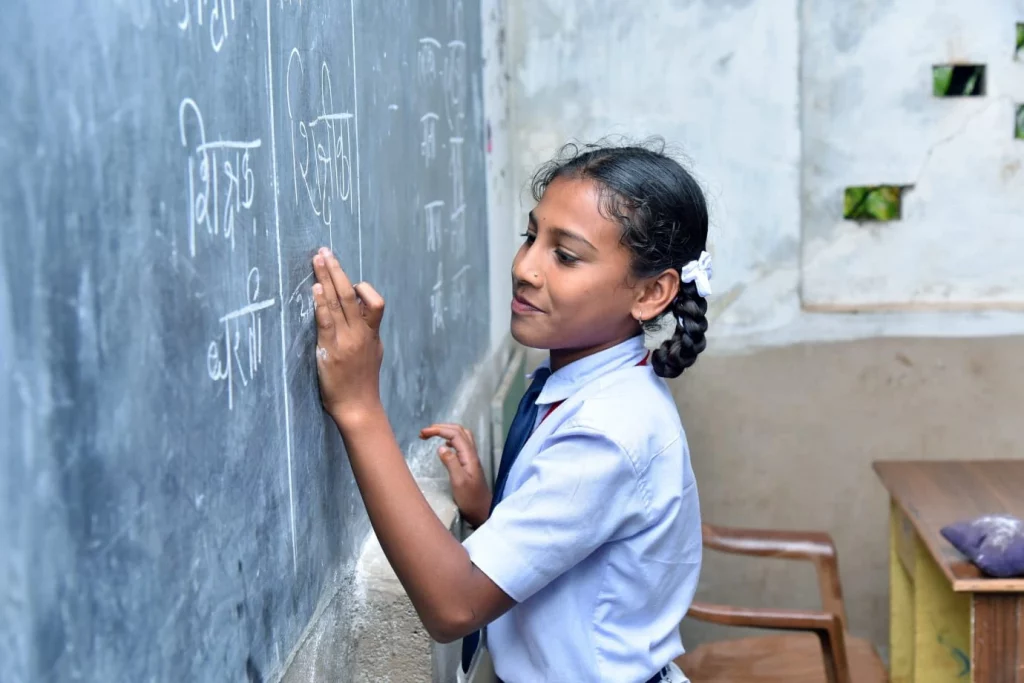
- School Upgrades: Rather than wait for state budgets to trickle in, existing government schools are supported with supplementary classrooms, smart boards or even trained para-teachers. Small additions, but with outsized impact.
This is frugal innovation valorising the underutilised.
Not reinventing the wheel
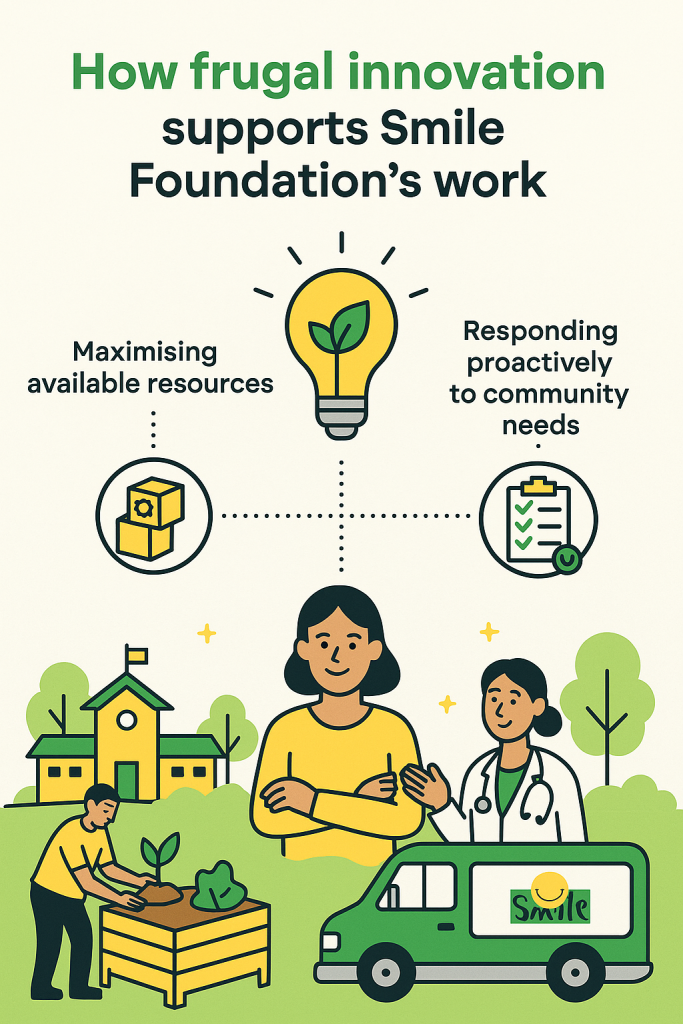
Smile Foundation does not chase shiny, siloed solutions. Instead, it builds on platforms and systems already in place.
- Leveraging India’s DPI: Scholarship disbursements, nutritional allowances and training stipends use direct benefit transfer channels. This reduces leakage, lowers costs and builds trust with communities.
- EdTech Partnerships: Instead of custom-building expensive apps, Smile collaborates with established providers, adapting content into local languages and making it device-friendly.
- Community Health Networks: By working with ASHAs and Anganwadi workers — already embedded in communities — Smile strengthens existing human capital instead of creating parallel systems.
The approach is modular, like Lego blocks: combine existing elements, adapt and scale quickly.
Anticipating needs, not just reacting
Frugal innovation is about prevention and foresight.
- Nutrition Enhancement with PepsiCo Foundation: Kitchen gardens are set up in villages, giving families sustainable access to vegetables and helping prevent malnutrition before it sets in.
- Digital Classrooms: Training children in digital literacy isn’t just about today’s exams. It prepares them for tomorrow’s job market where 85% of jobs in 2030 may not yet exist.
- Disaster Response: Smile Foundation doesn’t only send relief kits after floods in Assam or Himachal Pradesh. It also helps communities prepare with hygiene awareness, resilient learning spaces and healthcare continuity.
As Benjamin Franklin said, “an ounce of prevention is worth a pound of cure.” In Smile’s work, prevention is often low-cost, high-impact — the essence of frugality.
Case Studies of frugality: Smile’s work
1. Pink Smile, Uttar Pradesh
A mobile unit equipped for anaemia screening reached 4,000 women and children in Mathura. Cost: a fraction of building permanent centres. Impact: reduced anaemia, better maternal health and healthier children.
2. Solar-Powered Anganwadis, Maharashtra
Thirteen Anganwadis were upgraded with solar panels, water filters and basic furniture. For the price of one urban health centre, thousands of children gained safe, sustainable spaces for nutrition and early education.
3. Mission Education, Across 26 States
Grouping children by learning levels instead of grades sounds simple — but it’s frugal pedagogy in action. Minimal costs, but it maximises learning outcomes by meeting children where they are.
Why frugality matters for CSR and policymakers
Frugal innovation isn’t just “NGO pragmatism.” It is a serious economic argument:
- High ROI: Like community health workers worldwide, every rupee invested yields multiple rupees in productivity and avoided costs.
- Scalability: Because frugal solutions use modular designs, they can be replicated across states quickly.
- Alignment with ESG: Frugality builds resilience, maximises social outcomes and ensures governance through transparency. For companies mapping CSR to ESG, this is low-cost, high-trust impact.
Smile Foundation offers CSR partners frugal models that deliver results at scale.
The larger narrative: Dignity in simplicity
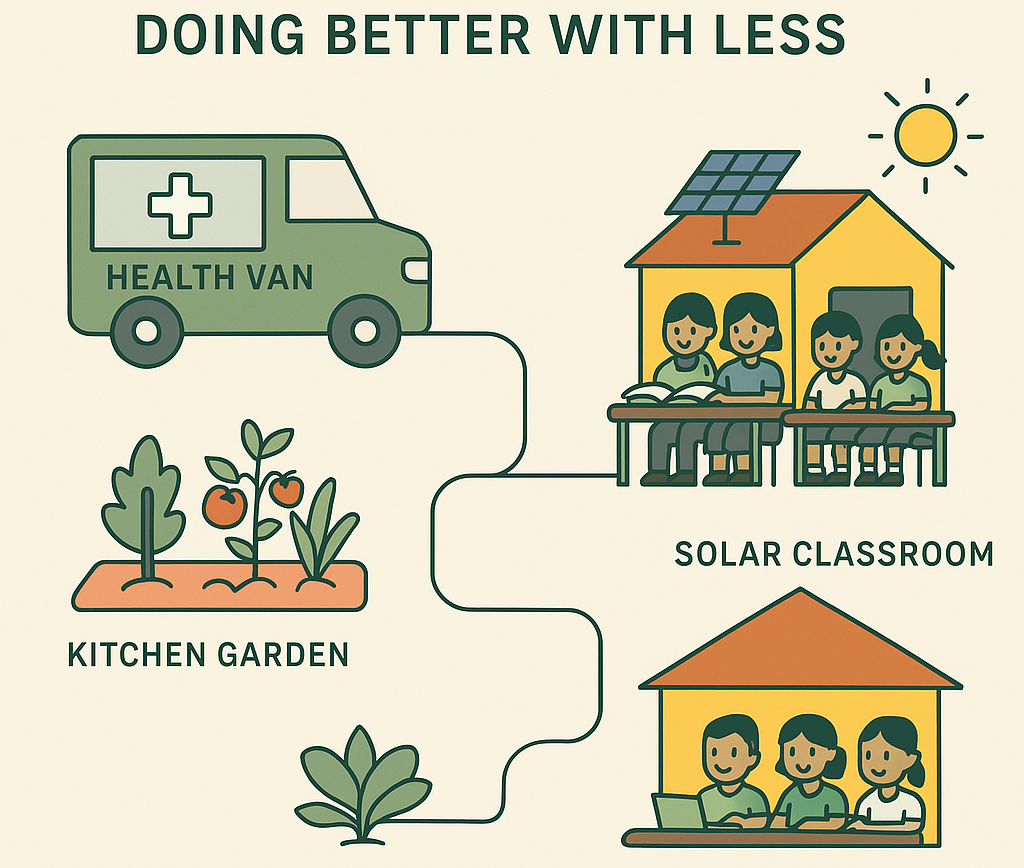
Frugal innovation isn’t about “cheap fixes.” It’s about dignity in design — ensuring communities get services that are affordable, accessible and aspirational. A mobile clinic isn’t second-best to a hospital if it delivers care with respect. A solar classroom isn’t a shortcut — it’s an innovation that works with India’s realities.
As India pushes toward becoming a $5 trillion economy, its development story will be judged not only by glittering urban projects, but also by how frugally and effectively we reach its most remote citizens.
Frugal is the Future
Frugality is often misunderstood as scarcity thinking. In reality, it is abundance thinking: unlocking the full value of what we already have. Governments, CSR partners, and non-profits that embrace frugal innovation will not only stretch their budgets but also deepen their impact.
Smile Foundation’s journey shows that small is scalable, simple is powerful and frugal is the future of social impact in India.