
The year 2013: monsoon did not arrive as expected in Maharashtra. Across almost 7,900 villages, fields cracked under the sun, wells ran dry and crops failed before harvest, leading to the region’s worst drought in 40 years. For thousands of small and marginal farmers, this meant that agriculture would no longer be a source of income but instead a source of debt. In the process, water scarcity deepened in the region weakening food security, eventually leading to disappearing livelihood options for rural poor communities.
The combination of rising heat, shifting rainfall, floods, droughts and other climate-induced shocks now endangers the livelihoods, food security and wellbeing of the poorest in our country and abroad, especially those whose lives remain tethered to climate-sensitive sectors such as agriculture, water and informal labour.
Climate-induced poverty is a massive, multidimensional challenge that disproportionately affects women, children and small farmers because they have fewer resources and limited capacity to adapt to climate shocks. In essence, climate poverty reveals that climate change is not merely an ‘environmental crisis’, but a ‘development and justice issue’, where those least responsible for global emissions bear the greatest economic and social costs.
Evidence from research
A recent district-level study covering 593 districts across 21 Indian states shows a strong statistical association between climate shocks and poverty. The research finds that variability in maximum temperature, flood-prone areas, drought risk in primary-sector-dependent regions, and erratic precipitation all significantly increase the probability of a district falling into a high-poverty bracket.
Another 2025 study that links climate exposure to multidimensional poverty reveals that every 1 °C rise in average temperature corresponds to a substantial increase in poverty incidence. This suggests that climate stressors affect more than just income: they also erode health, access to basic services and overall human development.
Such linkages are not unexpected or new. Households that have been dependent on natural-resource based livelihoods have always been vulnerable to natural variability. But with accelerating climate change, the frequency, intensity and unpredictability of climate hazards are increasing. Moreover, the poorest often have the least capacity to absorb shocks. They lack financial buffers, access to insurance or even alternative livelihoods. When disasters strike repeatedly, say in case of back-to-back droughts or floods, recovery becomes even harder, pushing many households deeper into poverty or making them displaced.
Reversal of poverty reduction
What this mounting evidence suggests is alarming: the decades of progress in reducing poverty and improving living standards, gains achieved through agricultural growth, rural development, welfare schemes, migration and expanding employment opportunities are under threat.
The Global Multidimensional Poverty Index (MPI) Report 2025, released by the United Nations Development Programme (UNDP) in collaboration with the University of Oxford, underscores how the accelerating climate crisis is reshaping the geography of global poverty. While recent decades have witnessed unprecedented progress in reducing poverty, the report warns that these gains are increasingly fragile in the face of intensifying climate hazards. Of the 6.3 billion people assessed across 109 countries, an estimated 1.1 billion (nearly one in five) continue to live in acute multidimensional poverty. Strikingly, almost 79 per cent of them reside in areas exposed to at least one major climate threat, including extreme heat, drought, flooding or air pollution.
South Asia emerges as both a story of significant progress and growing vulnerability. In India, the proportion of people living in poverty declined sharply from 55.1 per cent in 2005 to 16.4 per cent in 2021, lifting an estimated 414 million people out of deprivation. Yet the report cautions that without urgent efforts to embed climate resilience into development planning, recurring climate shocks could erode these hard-won advances and push millions back into poverty.
Extreme heatwaves, for instance, already cost lives and livelihoods. A 2023 report warned that deadly heatwaves could undo progress on poverty, food security and inequality, by affecting crop production, wages and health of small farmers and poor households. In many tribal and drought/flood-prone districts of eastern and central India such as parts of Odisha, Jharkhand, Chhattisgarh, Madhya Pradesh and drought-affected zones in Maharashtra this combination of structural disadvantage and climate stress could aggravate poverty, inequality and social exclusion.
Towards a climate-resilient poverty alleviation strategy
Given these risks, policy responses and development strategies must be strengthened and implemented with urgency. A purely economic growth–centred approach is insufficient to address the deep and intersecting challenges posed by climate change. What is needed instead is a climate-sensitive, resilience-oriented framework that integrates poverty alleviation with climate adaptation and social protection.
This requires increased investment in drought-resistant crops, crop diversification, rainwater harvesting, soil conservation, agro-ecological practices, among others to make agriculture more climate-resilient in contemporary times. It also requires building climate-resilient infrastructure such as reliable water supply systems, irrigation networks, drainage and flood barriers while ensuring proper access to health care, education, and social safety nets that can cushion communities against climate shocks.
In addition, the government needs to introduce or expand climate-linked social protection schemes, including crop and livestock insurance, unemployment support, disaster relief and targeted assistance for vulnerable households such as smallholders, women-headed families and tribal communities. In a nutshell, it is essential to ‘recognise’ that climate hazards disproportionately affect marginalised groups and to design policies that are equitable, participatory and sensitive to local contexts.
Unless poverty-alleviation efforts adapt to climate realities, India risks losing not just economic gains but also human development and overall social stability for its people. Therefore, by recognising the interdependence of climate resilience and social development, we can safeguard the progress made over decades. In effect, tackling climate risks and fighting poverty need to be perceived as two sides of the same mission.
The role of civil society: Translating climate risk into resilience on the ground
While macro-level policies and public investments are essential to climate-resilient poverty alleviation, their effectiveness ultimately depends on how they translate into action at the community level.
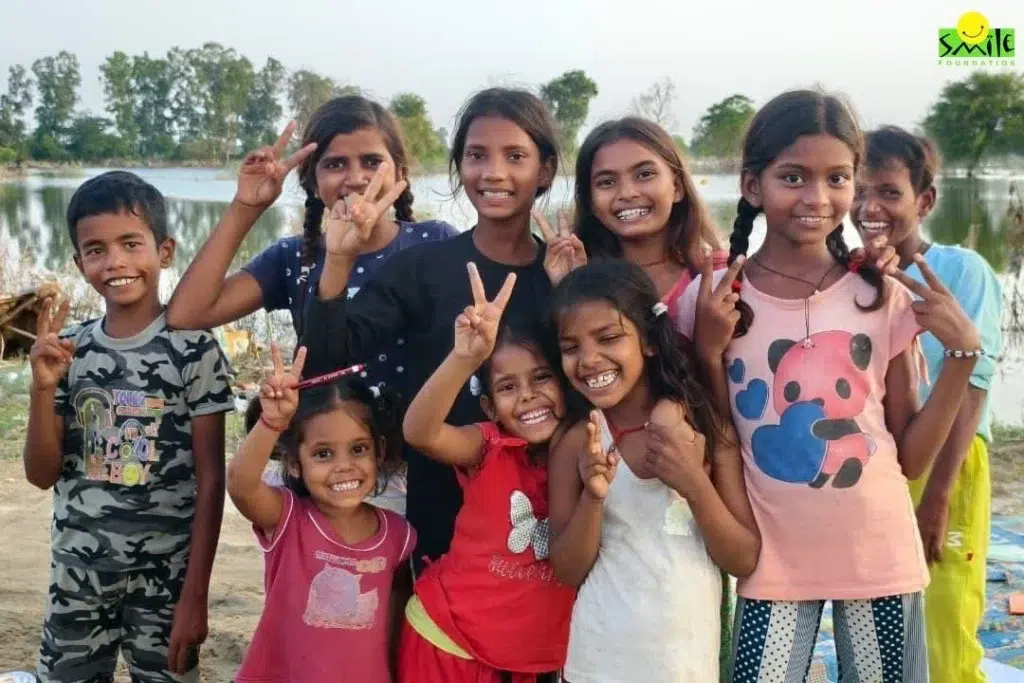
Operating in drought-prone, flood-affected and agrarian regions across states such as Maharashtra, Odisha, Bihar, Jharkhand, Rajasthan and parts of central India, Smile Foundation’s programmes integrate livelihoods, nutrition, health, education and community resilience—recognising that climate poverty is inherently multidimensional.
In agriculture-dependent communities, the Foundation has supported climate-adaptive livelihood strategies by promoting crop diversification, kitchen and nutrition gardens, water conservation practices and skill-based alternatives to rain-fed farming. These interventions help households reduce dependence on a single, climate-sensitive income source and build buffers against income volatility caused by erratic rainfall or heat stress.
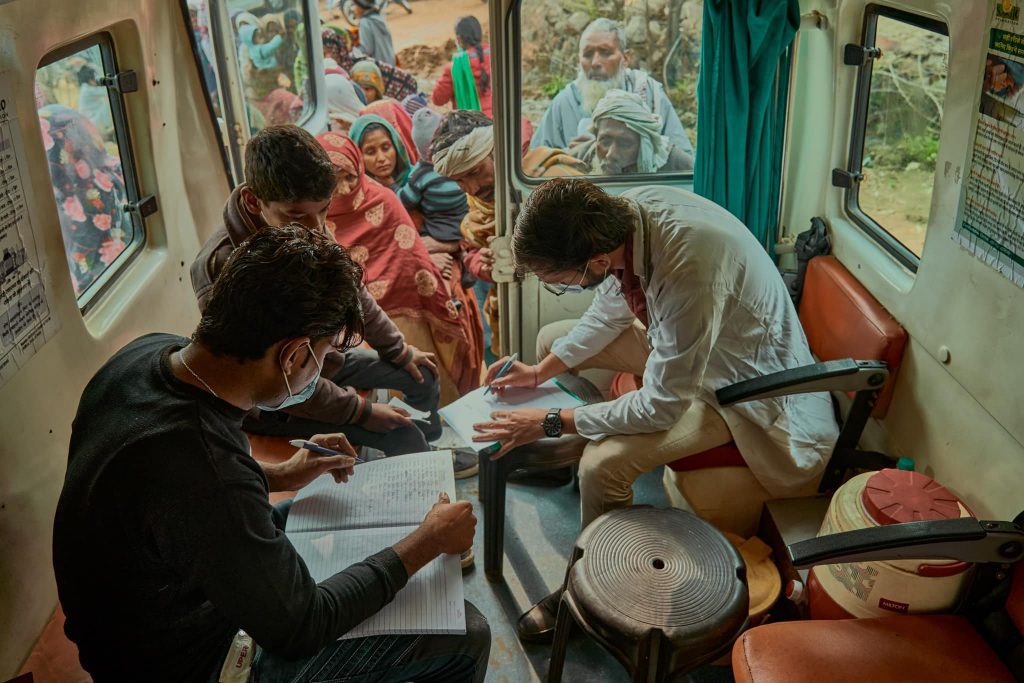
Health and nutrition programmes further address how climate stress exacerbates vulnerability. Extreme heat, water scarcity and food insecurity directly affect maternal health, child nutrition and disease burden. Through mobile health units and community-based nutrition initiatives, Smile Foundation extends preventive care and nutritional support to populations that often lose access during climate-induced disruptions such as droughts or floods. This is particularly relevant for women and children, who are disproportionately affected by climate-related health risks.
Education interventions form another layer of resilience. Climate shocks frequently disrupt schooling through migration, loss of livelihoods or infrastructure damage, increasing the risk of intergenerational poverty. By supporting continuity of learning through remedial education, scholarships and community learning centres, Smile Foundation helps prevent climate-induced dropouts ensuring that environmental shocks do not permanently derail human capital development.
Equally important is the organisation’s focus on community mobilisation and behavioural change. Climate adaptation is not only about infrastructure and technology, but also about awareness, preparedness and local agency. Through sustained engagement with women’s groups, farmers, adolescents and frontline workers, we support communities in understanding climate risks, accessing entitlements and adopting adaptive practices suited to their ecological and socio-economic context.
These ground-level experiences reinforce that climate resilience cannot be delivered through siloed interventions. Poverty alleviation efforts must simultaneously address income security, health, nutrition, education and social protection, especially in climate-exposed regions. Civil society organisations, by virtue of their proximity to communities, are well placed to pilot integrated models that can inform and complement public policy.
Closing bridge
Taken together, this evidence from national datasets to community-level experience underscores that climate change threatens to reverse poverty reduction not through a single shock, but through cumulative, overlapping stresses on livelihoods, health and human development. Safeguarding India’s progress requires that poverty alleviation and climate adaptation be treated not as parallel agendas, but as a unified development imperative.
By aligning public policy, social protection systems and community-led resilience efforts, India can protect its most vulnerable populations from climate-induced impoverishment. Tackling climate risks and fighting poverty are no longer sequential challenges—they are two sides of the same mission, and must be addressed together if development gains are to endure.