

India loves its degrees. From the bustle of Tier-II towns to the lanes of metropolitan coaching hubs, an M.A., M.Com., M.Sc. or MBA is often seen as the ticket to upward mobility. Families make sacrifices, students invest years of their youth and the state pours staggering sums of public money into postgraduate education.
But when you scratch the surface, a troubling paradox emerges. Postgraduate education in India is overfunded but underperforming. Despite heavy subsidies, outcomes remain weak. Graduates struggle with underemployment, universities underdeliver on research and society at large reaps little return on investment.
Meanwhile, India’s schools and undergraduates — where human capital is truly forged — remain underfunded, uneven in quality and riddled with gaps that perpetuate inequality.
The real question is not whether higher education matters. It absolutely does. The question is whether India has put its money in the wrong places — and whether a bold rebalance of priorities is overdue.
Following the money: Where the state spends
According to the Ministry of Education’s Analysis of Budgeted Expenditure on Education (2023), the state spends:
- ~₹22,000 annually per primary student
- ~₹44,000 per senior secondary student
- ~₹2,00,000 per undergraduate
- ~₹2,50,000 per postgraduate
This means that a single PG student consumes resources equivalent to over 10 primary students. The skew becomes sharper when we factor in elite institutions like IITs, IIMs and AIIMS, where subsidies are even higher.
On paper, this might be justifiable. Advanced degrees are expected to generate research, innovation and specialised skills. But does this investment actually deliver?
Outcomes: A sobering mismatch
1. Jobs that don’t need a master’s
Employers from corporate firms to the civil services consistently note that a bachelor’s degree is sufficient for most generalist roles, provided candidates possess relevant skills such as digital literacy, communication and problem-solving.
Lakhs of students pour into PG programmes not because they add value, but because they see no alternative in a saturated job market. The result is a glut of postgraduates with weak employability.
2. Research without impact
Where postgraduate systems should shine — knowledge creation — India underperforms. According to Scopus and Web of Science, India contributes only a modest share to global research output, despite its massive PG enrolment. Quality is an even bigger concern: predatory journals and recycled theses abound.
Fields that India urgently needs like social sciences to design inclusive policies or STEM research to drive innovation remain patchy, underfunded or detached from real-world challenges.
3. Underemployment, overqualification
The paradox manifests on the ground: taxi drivers with MAs, clerks with PhDs, young people trapped in cycles of coaching for the next exam. Degrees multiply, but opportunities don’t.
Why this imbalance persists
- Cultural prestige of higher education: In Indian society, a postgraduate degree is still seen as a badge of respectability. Families often push children toward PGs regardless of labour market demand.
- Policy inertia: Governments continue expanding PG seats, seeing it as a part of election manifesto while difficult investments like school teacher training lag.
- Weak undergrad quality: Since undergraduate programmes are patchy in quality, students see PGs as a way to “make up” for earlier deficits.
- Misaligned subsidies: Blanket funding, instead of targeted research grants, props up quantity over quality.
The opportunity cost: What schools could have done
Imagine redirecting even 20% of PG subsidies toward schools:
- Modern classrooms in rural areas
- Teacher training programmes
- Anganwadis with electricity, water and play spaces
- Foundational literacy and numeracy programmes for children under 10
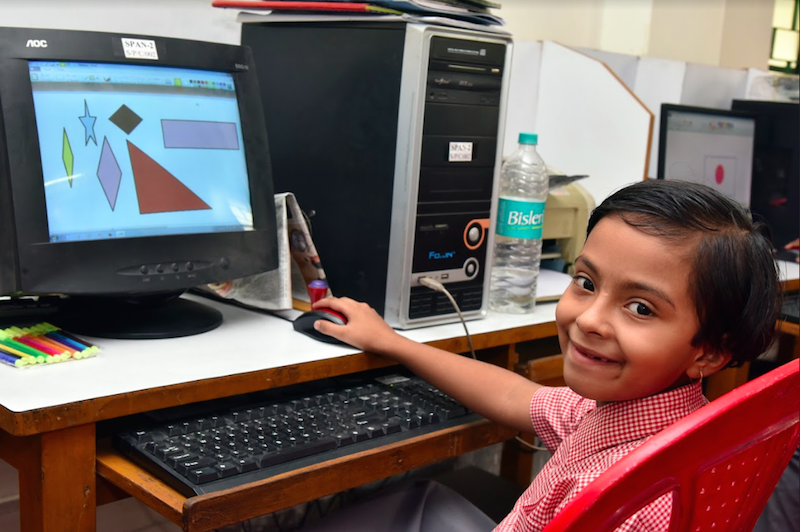
Smile Foundation’s Mission Education initiative provides a glimpse of what this rebalancing looks like in practice. By investing at the school level — whether in tribal Kangra or flood-hit Assam — the foundation demonstrates that the real returns come when children get foundational learning, not when young adults are endlessly recycled through underperforming PG degrees.
Smile Foundation lens: Where the ground shifts
While the state debates postgraduate funding, organisations like Smile Foundation focus on the other end of the spectrum: early and foundational education, skilling and employability.
1. Mission Education
Operating in over 2,000 villages, the programme addresses foundational literacy and numeracy (FLN) ensuring that by age 10, children can read and do basic math. This directly tackles the learning poverty that leaves later graduates ill-prepared for higher education.
2. Shiksha Na Ruke
When the pandemic threatened to derail schooling, Smile stepped in with digital tools, teacher support and parental engagement. The idea was to prevent dropout at the earliest stages, so that children don’t stumble later.
3. Skilling and employability
Rather than waiting for postgraduate degrees to “fix” employability, Smile Foundation equips youth with practical, industry-linked skills — retail, healthcare, IT — ensuring they enter the job market with confidence.
This grassroots, practical approach contrasts sharply with the ivory-tower subsidies of the PG system.
Global lessons
1. China: Invest in undergrad + research, not mass PGs
China reformed its higher education by emphasising world-class undergrad programmes and targeted research funding. It avoided the trap of overproducing master’s students with little employability.
2. Finland: Schools first
Finland became a global education leader not by producing more PhDs but by investing in teachers, schools and equity at the foundational level.
3. Africa: Scholarship targeting
Several African nations are now targeting scholarships to critical research fields rather than funding mass PG enrolments.
Rethinking postgraduate education in India
If India must move beyond being “overfunded but underperforming,” three shifts are needed:
- Undergraduate excellence: Revamp curricula to integrate AI, digital skills and interdisciplinary thinking.
- Targeted PG funding: Restrict subsidies to research, teaching and specialised professions. Encourage cost-sharing elsewhere.
- Research ecosystems: Link funding to impact, originality and contribution to knowledge, not just enrolment.
And most importantly:
4. Rebalance toward schools: Grassroots investments yield exponential returns.
Narrative change: From degrees to dignity
The heart of the matter is narrative. For too long, Indian society has equated “more degrees” with “more respect.” But dignity and opportunity come not from paper credentials but from quality learning, employable skills and research that matters.
Smile Foundation’s work embodies this change. From children in remote tribal villages learning to dream, to youth in skilling programmes walking into jobs with pride, the focus shifts from chasing degrees to building capability and confidence.
A bold rebalancing
India stands at a demographic inflection point. If we continue to pour disproportionate resources into postgraduate expansion, we will produce more degrees than jobs, more research papers than real innovation and more frustration than opportunity.
But if we rebalance toward school education, toward quality undergraduates, toward targeted research, we can truly unlock our demographic dividend.