National Technology Day 2026 (11 May) marks India’s emergence as a technology power – symbolised by the 1998 Pokhran tests and subsequent breakthroughs in space, defence and the digital economy. India now boasts a world-leading digital ecosystem (UPI’s 460 million users), 126 unicorn startups, global space missions (Mangalyaan to Mars, Chandrayaan to the Moon) and defence technology (indigenous missiles, BrahMos cruise missile). Yet deep challenges persist – only ~35% of Indians were online as recently as 2019, rural education and skills gaps abound, and women remain under-represented in STEM (just 20–30% of STEM professionals).
History and Significance of National Technology Day 2026
India’s National Technology Day is observed every 11 May to commemorate a landmark moment: the first successful nuclear tests under “Pokhran-II” in 1998. These tests – conducted on 11 May 1998 – demonstrated India’s scientific prowess and strategic self-reliance. Since then, 11 May has become a date to honour Indian scientists and engineers. However, the meaning of the day has evolved. It now serves as a reminder that technology must translate into tangible benefits for people. It prompts reflection on whether India’s advanced projects in space and defence are matched by inclusive access at home.
Technology must work for everyone, not just experts. The real test of India’s success is whether villages, schools and hospitals benefit from its labs and launch pads. National Technology Day 2026 thus asks: Who is the ultimate user of our innovation, and do all Indians get a fair share of it?
India’s Technology Milestones
Over the past decades, India has achieved globally notable feats in several domains.
- Space Programme (ISRO): India’s space agency (ISRO) has accomplished a string of successes at modest cost. The 2008 Chandrayaan-1 orbiter discovered water on the Moon, and in 2023 Chandrayaan-3 made India the fourth nation to soft-land on the lunar surface. The 2014 Mars Orbiter Mission (Mangalyaan) put India’s name in the history books as the first country to reach Mars orbit on its maiden attempt. Ongoing projects include the Aditya-L1 solar mission (launched 2023) and a future Gaganyaan human spaceflight. These missions underscore India’s growing expertise in satellites, launch vehicles and deep-space research.
- Defence Technology (DRDO): India’s Defence Research and Development Organisation (DRDO) has built indigenous capability in missiles and combat systems. The long-range Agni and Prithvi ballistic missiles provide a credible deterrent. The BrahMos supersonic cruise missile – a joint venture with Russia – has “established itself as a major force multiplier” with all-weather, multi-platform capability. DRDO also develops combat aircraft (Tejas fighter), electronic warfare systems and armoured vehicles. Together, these projects have dramatically cut India’s dependence on foreign arms imports and built an aerospace-industrial base.
- Digital Transformation (Digital India, UPI): In July 2015 India launched Digital India, a flagship programme to expand broadband connectivity, digital services and literacy. Since then, broadband subscriptions have soared from 250 million to 1.03 billion (a 400% jump), mobile towers nearly quadrupled and rural areas are now almost fully covered by 2G/3G/4G networks. Data costs fell 97% (from ₹269 to ₹7.9 per GB), leading to dramatic uptake: by 2026 over 143 crore Aadhaar IDs were issued and UPI (the Unified Payments Interface) boasted 460 million users, handling 81% of India’s digital transactions. Financial inclusion soared via the JAM trinity (Jan Dhan bank accounts, Aadhaar, mobile), transferring nearly ₹50 lakh crore in subsidies directly to citizens.
- Startup Ecosystem: Driven by these infrastructural changes, India’s startup ecosystem exploded. By 2026, India was the third-largest startup hub globally, with over 200,000 DPIIT-recognised startups. A record 126 startups achieved “unicorn” status (valuations >$1 billion). This boom covers everything from e-commerce and fintech (Flipkart, Paytm) to edtech and biotech. Venture funding and homegrown innovation are spurring entrepreneurship nationwide.
| Achievement | Remaining Gaps | Policy Response |
|---|---|---|
| Connectivity & Digital Services – 400% rise in broadband users (25Cr to 103Cr) – Mobile 4G/5G in >6.3 lakh villages – 85.5% households have a smartphone | – Rural-urban digital divide (internet use: 92.7% rural youth vs 95.7% urban) – Gaps in Tribal/remote connectivity and power – Affordability for the poorest – Digital literacy uneven (especially among older, less-educated) | – Infrastructure: BharatNet fibre expansion, PM-WANI Wi-Fi kiosks – Digital Literacy missions (PMGDISHA trained 6.39Cr people) – Subsidised data (PLI for device), Telecom reforms (4G/5G rollout) – Public Wi-Fi in public spaces (villages, gram panchayats) |
| Innovation & Startups – Third-largest startup ecosystem; 126 unicorns (Feb 2026) – Record venture funding; $74B invested in 2021 – Indigenous space/drone, AI, biotech firms emerging | – Urban-centric: most tech jobs in metros; rural entrepreneurship still low – Sectoral skew: many unicorns in fintech/delivery, fewer in heavy tech – Regulation hurdles for emerging tech (data, privacy) | – Startup India scheme; Fund-of-Funds (₹10,000Cr seed fund) – Innovation clusters (T-Hubs, ARISE-Atal incubation) – Regulations for digital economy (Data Protection Bill, AI Task Force) – Incubation support in Tier-2/3 cities |
| Education & Skills – Digital learning portals (DIKSHA, SWAYAM) – 100% curriculum taught online during COVID – Over 6.3Cr rural learners certified digital literate (PMGDISHA) | – Quality gaps: Schools lacking internet/computers, esp. rural – STEM workforce shortages; only ~20-30% of STEM professionals are women – Urban-rural gap in English/tech skills and English-medium content | – Investment: National Education Policy 2020 promotes edtech – Technology in schools: PM eVIDYA (TV/radio classes), graded internet in schools – Scholarships/fellowships for girls in STEM; women in tech initiatives – Skill India: vocational training including IT/computer literacy – Public-Private Partnerships (PPP) for school connectivity |
| Healthcare & Social Impact – eSanjeevani telemedicine reached 200M consultations (by 2024) – Mobile health units (like Smile on Wheels) combining tech+care – Ayushman Bharat Digital Mission (Unified Health ID, e-health records) | – Telehealth limited by Internet in PHCs and patient digital literacy – Urban concentration of hospitals; rural clinics lack specialists – Affordability of devices for poorest households | – Government platforms (Ayushman Bharat Digital Mission, eSanjeevani expansion) – Encouraging NGOs/telemedicine hubs (e.g. tele-ICUs, diagnostic kiosks) – Health workers trained as digital facilitators (e.g. PM Mitra Clinics) |
Current Focus: Responsible, Inclusive Innovation
By 2026 the global conversation on technology has shifted from “What can we build?” to “Who benefits from it?” Indian policymakers echo this. The theme of National Technology Day 2026 is expected to highlight “Responsible Innovation for Inclusive Growth”. In practice, that means asking whether AI, networks and space technology reach every citizen or just elites. India already ranks high in some global measures (third-largest startup base, highest MOOC enrolment), but inclusion is uneven.
A key aim is to use technology for development: bridging gaps in health, education and agriculture. For example, the government sees digital tools as a way to deliver e-governance, but must ensure equity. A recent UNESCO report notes that India’s first-generation online learners are mostly urban and better-off; reaching rural, low-income youth remains a challenge. Meanwhile the World Bank and OECD urge responsible tech policies that protect privacy, security and fairness.
Equity lens: Programmes like Digital India explicitly target villages. The Pradhan Mantri Gramin Digital Saksharta Abhiyan (PMGDISHA) trained over 6.39 crore rural citizens in digital skills. Common Service Centres (CSCs) – thousands of village kiosks – bring services from Aadhaar enrolment to utility payments to the last mile. Private initiatives also align: for instance, Google and Facebook have worked with rural communities on local-language content. Yet many experts warn of a new caste system of connectivity – the digitally connected versus the disconnected – if efforts stall.
Key Challenges to Address
Despite progress, the technology-driven economy faces structural headwinds:
- Digital Divide: In 2019, only ~35% of Indians were internet users (462 million people). Even now, many low-income and remote households lack reliable access. Recent data show about 86% of households have internet, but usage and speed vary widely. Rural areas still contend with intermittent power and slow broadband. Government figures show nearly all young urban Indians are online, but rural older citizens and the poor lag behind.
- Education and Skills Gaps: India’s education system produces many graduates, but quality and relevance are uneven. Rural schools often lack basic IT infrastructure, hindering e-learning. UNESCO highlights that digital lessons were unevenly effective in remote areas during COVID. Moreover, women are under-represented in tech fields: although women make up ≈43% of STEM graduates (second only to China), they account for only 20–30% of STEM professionals. Dropout rates, outdated curricula and teacher shortages also limit India’s ability to create tech-savvy youth.
- Affordability and Infrastructure: Although data costs are very low, device affordability can be a barrier. The recent Telecom survey notes that ~85% of households own a smartphone, but multi-phone families and shared devices mean some users have limited access. Many villages still wait for high-speed fiber; even radio link connections can falter during monsoon. On the demand side, language and literacy barriers prevent some Indians from using digital services (official content is mostly in Hindi/English).
- Gender Gap: Cultural norms and safety issues hinder women’s tech access. Only ~75% of rural women (15+) own a mobile, versus ~79% of rural men. Digital literacy programmes have tried to target women, but progress is slow. Beyond devices, societal barriers restrict women’s careers in innovation: PLOS Medicine notes that despite high female graduation rates, just a minority become tech professionals.
- Governance and Institutional Constraints: Policy and regulation have sometimes lagged technological change. For example, India’s R&D spending is under 1% of GDP, limiting research output. Academic institutions lack funding and faculty (56% vacancy in university professor posts). Regulatory ambiguity around data protection, AI and cross-border data flow persists, potentially slowing investment. Implementation gaps also exist: a 2025 report on CSCs noted that only 5.34 lakh of the target 6 lakh kiosks are operational, and many lack high-speed internet or trained operators.
Collectively, these gaps mean that technology often delivers excellence in labs and offices – but the benefits do not automatically trickle down. National Technology Day 2026 should highlight this paradox: India can send missions to Mars, yet rural health clinics may still lack a paediatrician; India can print billions of digital cashless transactions, yet many farmers negotiate crop sales in cash at village markets.
Case Studies: Technology at the Grassroots
Concrete examples help illustrate progress and limits:
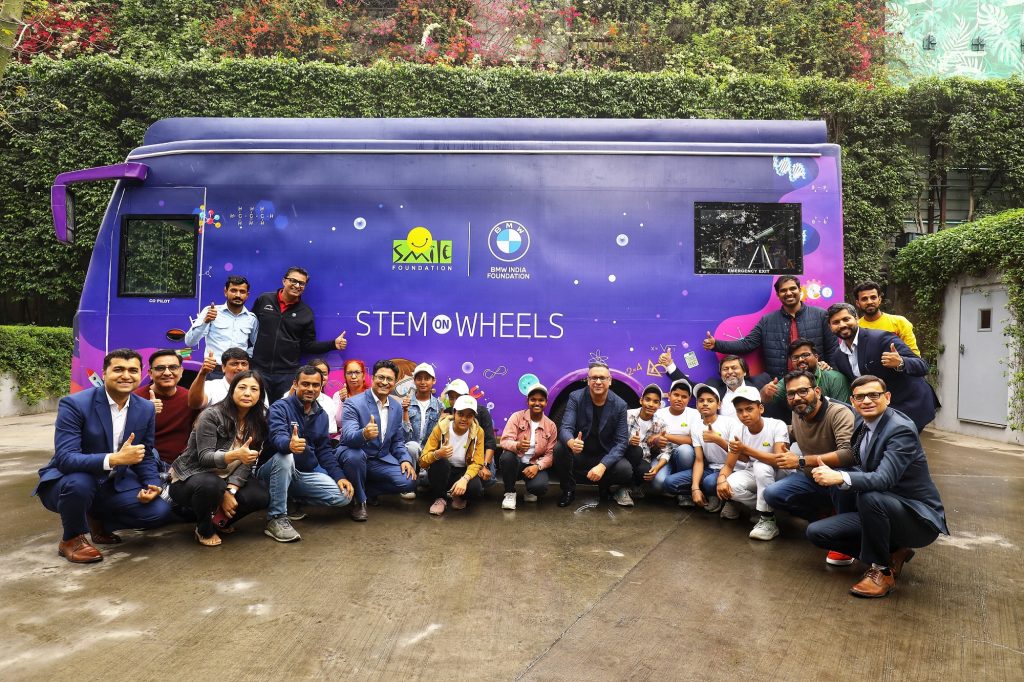
- Digital Classrooms in Villages (Smile Foundation): Smile Foundation runs the “Shiksha Na Ruke” campaign, which uses local volunteers (Shikshamitras) to deliver virtual classes via basic mobile phones. In Bihar and Uttar Pradesh villages, community volunteers facilitate clusters of students who join live classes on WhatsApp using even 2G connections. Smile reports that “all the students can be a part of [interactive] virtual class through their basic phones”, giving remote children access to curriculum when schools are closed. The success of this low-tech approach shows that even simple tech (audio calls, SMS) can boost learning if community infrastructure and trust exist. However, limitations remain: without smartphones or stable internet, content is restricted to audio/text and dropout rates still climb. This case underscores that contextual innovation (adapting to local constraints) is vital.
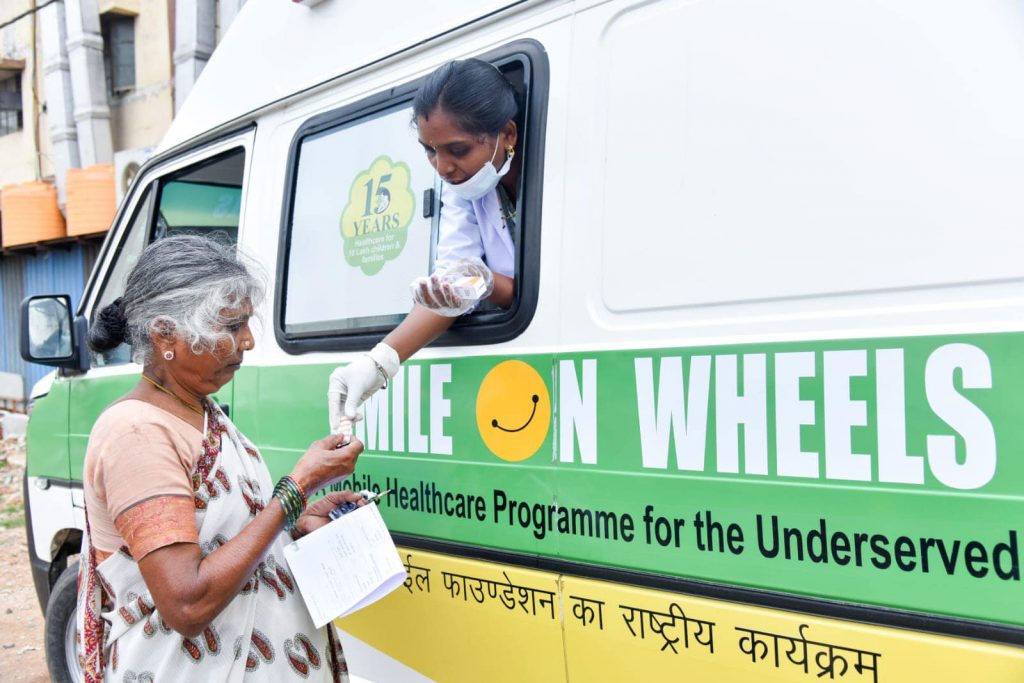
- Telemedicine via Mobile Clinics (Smile Foundation): Smile’s “Smile on Wheels” programme equips mobile health vans with telemedicine kits. Doctors in base hospitals can remotely consult patients in villages via video links, guiding on-site paramedics. As of 2024, India’s national telehealth platform eSanjeevani reported over 200 million tele-consults, mostly from non-urban areas. Smile’s field staff note that telemedicine “has become less about convenience and more about access”, often serving as a first point of contact. Yet challenges persist: connectivity in remote areas is patchy, and many patients need help from community workers to navigate apps. The Smile case demonstrates that hybrid models (tech plus human facilitation) can extend care, but also that simply deploying gadgets is insufficient without training and trust.
- Agritech – Market Access (ITC’s e-Choupal): Long before smartphones were common, ITC’s e-Choupal network (launched 2000) set up solar-powered Internet kiosks in villages to connect farmers directly to markets. Farmers at e-Choupals access real-time commodity prices and weather data, enabling them to sell crops at fair value rather than accepting local “mandi” middlemen rates. By 2020, e-Choupal covered over 40,000 villages and served 4 million farmers. This model transformed parts of the rural supply chain: “Farmers… gained access to fair market prices” and could command better margins. On the flip side, such programmes require sustained investment and local management – e-Choupal relied on agripreneurs (sanchalaks) to run each kiosk. In modern times, smartphone apps (e.g. Kisan Suvidha) attempt similar outreach. The e-Choupal story shows that private-sector tech for rural livelihood can work at scale, but also underscores the need for ongoing support and infrastructure.
Three-Pillar Policy Framework for Inclusive Innovation
To make technology work for all Indians, a multi-pronged reform strategy is needed. We suggest three pillars of action:
- Infrastructure for Inclusion: Continue expanding physical and digital infrastructure into underserved areas. Short term, finish BharatNet to deliver high-speed fiber to all Gram Panchayats. Subsidise telecom tower deployment in sparsely populated zones. Increase funding for electricity and backup solutions (e.g. solar) in remote clinics/schools. Medium-term metrics: 100% of villages with <50 Mbps broadband; average rural download speeds ≥20 Mbps; reduce rural-urban connectivity gap to <5%. Crucially, integrate digital infrastructure with services: each new CSC or PHC built in a village must have broadband.
- Digital Literacy and Educational Equity: Bridge the human-capital divide. Scale up digital literacy (beyond PMGDISHA’s 6.3Cr) with a second wave focused on women and older citizens. Embed coding and computational thinking in school curricula nationwide (as per NEP 2020). Launch targeted scholarships/mentoring for girls and under-represented groups in STEM fields. Upgrade rural school infrastructure through schemes like E-School (smart classrooms) – for example, target one smart-classroom per primary school by 2028. Track progress by metrics: narrowing gender gap in STEM enrollments and jobs; raising rural students’ digital-skills test scores to parity with urban peers.
- Innovation Ecosystem and Governance: Ensure the regulatory and funding environment rewards inclusive tech. This means expanding R&D investment from sub-1% of GDP to at least 2% over the decade, especially in green tech, health-tech and education-tech (areas linked to social benefit). Strengthen public-private collaboration – for instance, task departments like MeitY and DBT to co-fund solutions in rural education or agri-tech. Reform data and IP laws to protect users and incentivise startups. The government can anchor demand by adopting emerging tech in its own schemes (e.g. AI in crop forecasting for farmers under Digital Agriculture mission). Key metrics: increase R&D patents/licences in social-tech; percent of startups with operations in Tier-3/4 towns; and improved rankings on the Global Innovation Index (currently India is ~40th).
These pillars should be coordinated through an empowered committee (for example, a revamped National Council on Science & Technology) to ensure that “development tech” (like online learning platforms, telehealth and agritech) is prioritised alongside cutting-edge research. Funding allocations and performance targets must be set and published to drive accountability.
Timeline of Key Milestones in India’s Tech Journey

Conclusion: Measuring Progress, Taking Action
National Technology Day should not be mere pageantry. Its legacy depends on bridging the “last mile” of innovation. India’s global standing will increasingly be judged not by how fast its GDP grows, but by how sustainably and equitably it grows. The achievements – landers on the Moon, satellites in space, digital payments revolution – are remarkable in isolation. But they become truly transformative only when every village school, local clinic and small farmer is brought into the fold.
Technology itself is neutral; policy shapes its impact. As one UN report warned, without deliberate equity measures even beneficial tech (like telemedicine) “could widen existing gaps”. India has all the tools to avoid this: a vast digital base, entrepreneurial talent and experience in mass programmes. The missing ingredient is political will to prioritise inclusion.
Call to Action for National Technology Day 2026: Governments, businesses and citizens must act in concert. Support NGOs and social enterprises like ours extending tech to villages. Invest in skills for tomorrow’s jobs. Advocate for policies that mandate digital access (e.g. Right to Broadband). National Technology Day 2026 can be a stepping-stone: not just a celebration of our rocket launches, but a reminder to launch outreach to every citizen.
FAQs
Q1: What is National Technology Day and why is it on 11 May?
It commemorates India’s 1998 Pokhran-II tests (on 11 May) which showcased India’s scientific capability. The day honours scientists and highlights India’s tech progress and goals.
Q2: What are India’s major achievements in science & tech?
India has a world-class space program (Chandrayaan moon missions, Mars orbiter), advanced missiles and defence systems (Agni, BrahMos), and a booming digital economy (Aadhaar identity system, UPI payments with >460 m users). It ranks among the top three global startup ecosystems.
Q3: What is the focus or theme of National Technology Day 2026?
The emphasis of National Technology Day 2026 is on responsible, inclusive innovation. That means using technology to benefit all regions and communities, not just urban or elite segments. It stresses affordable access, digital literacy and equitable growth (for example, bridging the rural-urban internet gap).
Q4: What are the key challenges hindering India’s tech inclusion?
Major issues include the digital divide (still millions without reliable internet), education and skill gaps (rural schools lack equipment, STEM gender gaps), affordability of devices, and institutional hurdles (low R&D spending, regulatory issues). These must be tackled alongside celebrating high-tech advances.
Q5: How can India move forward on these technology goals?
A structured approach is needed: build infrastructure (connect every village), boost digital literacy (special programmes for women/youth), and strengthen innovation systems (more R&D funding, startup support). Examples like telemedicine and digital classrooms (case studies above) show what works. Progress will come from coordinated policy, public-private partnerships and community-driven solutions.