
Every year on January 24, National Girl Child Day invites India to reflect on a question: What does it take for a girl to grow up with dignity, choice and opportunity?
The answer has evolved over time. Two decades ago, it was about survival. Then it became about enrolment. Today, the challenge is more complex, and more revealing. Girls are entering schools in greater numbers, health services are more accessible and legal protections are stronger than before. But too many girls still struggle to stay in school, continue learning through adolescence and translate opportunity into agency.
National Girl Child Day 2026 is therefore not only a moment to celebrate progress, but to examine what sustains it.
Progress that Matters, and What it Hides
India has made measurable gains. Nearly 97.5 percent of schools now have girls’ toilet facilities, reducing one of the most persistent barriers to attendance. The Gross Enrolment Ratio for girls at the secondary level has reached 80.2 percent, reflecting steady improvement over the last decade. Investments under Mission Shakti, which received an allocation of ₹3,150 crore in the Union Budget 2025–26, signal continued commitment to safety, empowerment and convergence across the life cycle.
These numbers matter. They represent millions of girls who are now visible in systems that once excluded them.
But numbers alone do not tell us whether girls are able to remain in those systems when pressure mounts during adolescence, at moments of household stress or when social expectations tighten. Retention, transition and confidence remain fragile, particularly for girls from low-income households, migrant families and underserved regions.
This is where the next phase of empowerment must focus.
Why Continuity Matters More than Access
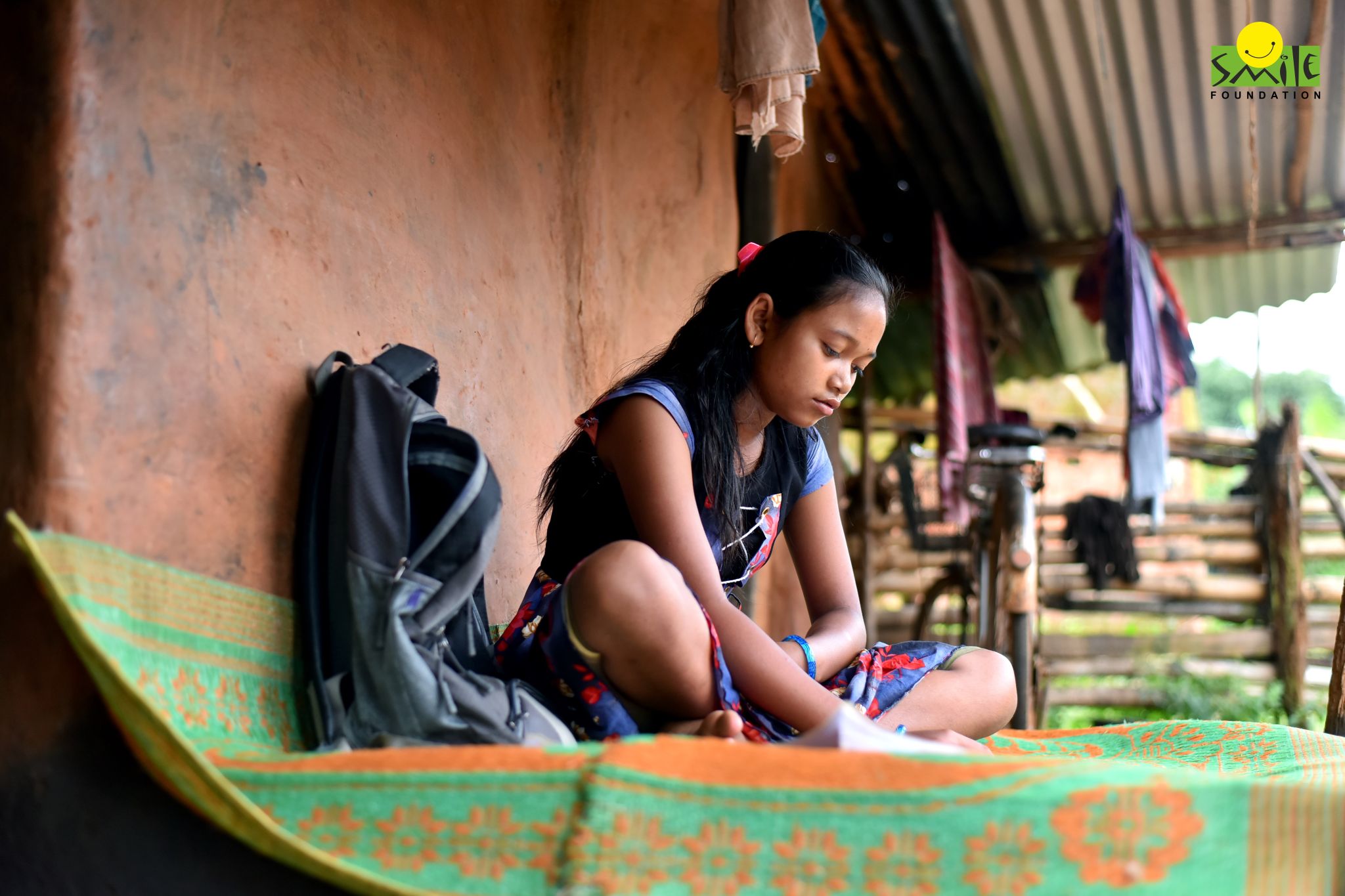
Girls rarely drop out of school because of a single reason. More often, it is an accumulation of pressures—distance, safety concerns, caregiving responsibilities, financial stress, early marriage or the erosion of confidence when learning gaps widen.
Policies have begun to respond to this complexity. Schemes under Samagra Shiksha, Kasturba Gandhi Balika Vidyalayas and Beti Bachao Beti Padhao recognize that education must be supported across stages. Programmes like UDAAN, Vigyan Jyoti and NAVYA signal a growing emphasis on STEM exposure, skills and non-traditional pathways for adolescent girls.
What these initiatives acknowledge implicitly is that empowerment is not a single outcome. It is a process that must hold through transition points.
Where Community Work becomes Decisive
This understanding shapes the work of and at Smile Foundation.
Across its girl child programme, Smile Foundation works with the premise that a girl’s education cannot be separated from her health, safety, family context or sense of self. Supporting enrolment is only the first step. What matters is whether a girl can continue learning when circumstances become uncertain.
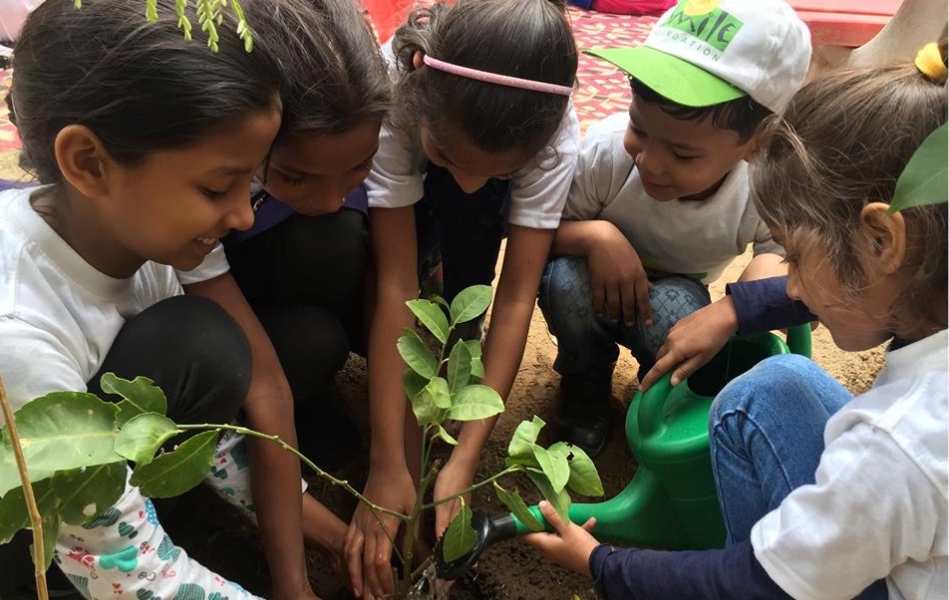
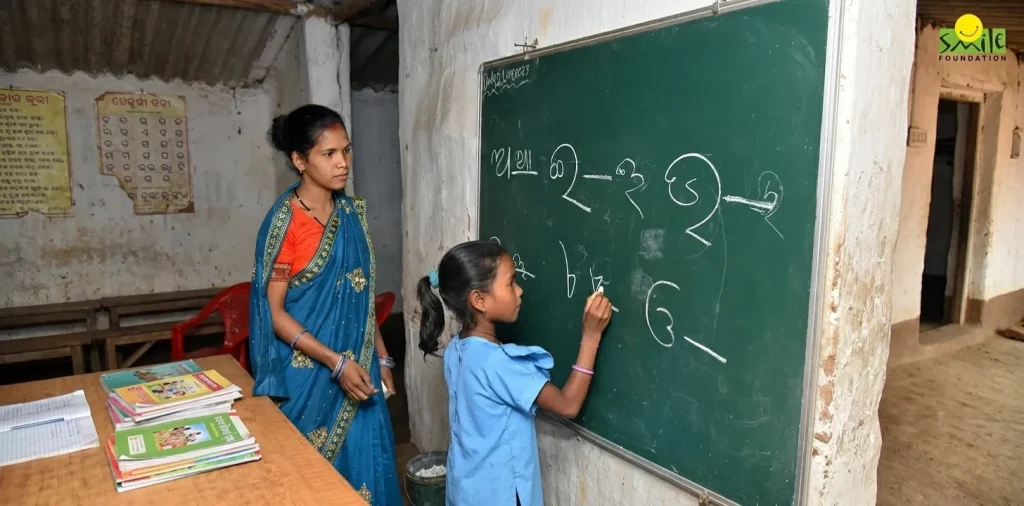
In 2025, Smile Foundation’s education, women empowerment and health initiatives increasingly converged around adolescent girls. Foundational learning support helped address early gaps that often widen in later years. Teacher engagement created classrooms where girls felt encouraged to participate rather than withdraw. School infrastructure improvements—safe spaces, sanitation and learning environments—helped stabilise attendance.
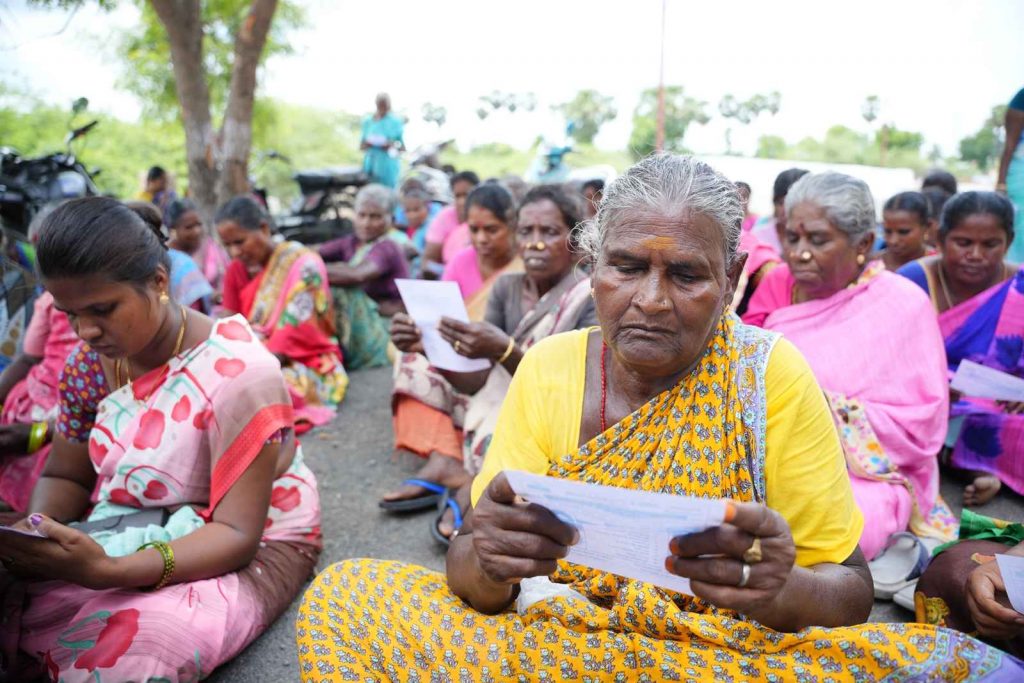
Beyond classrooms, community engagement played a crucial role. Conversations with parents, caregivers and local leaders addressed norms that quietly shape girls’ choices: when education is negotiable, when marriage is considered inevitable and when silence is mistaken for consent.
Empowerment, in this sense, was not delivered. It was negotiated—patiently, locally and repeatedly.
Health, Dignity and the Everyday Realities of Adolescence
Adolescence is often where gains begin to slip. Health challenges like anaemia, poor nutrition, menstrual hygiene and mental stress intersect with social expectations and limited access to reliable information.
Government efforts such as the Scheme for Adolescent Girls, the Menstrual Hygiene Scheme, and POSHAN Abhiyaan reflect growing recognition that health and nutrition are central to girls’ ability to remain in school and participate fully.
Smile Foundation’s maternal and adolescent health work complements this approach by bringing care closer to communities. Through mobile healthcare units and school-based outreach, girls receive not only services, but conversations about nutrition, hygiene, bodily changes and self-worth.
These conversations matter. Dignity is built as much through understanding as through infrastructure.
Safety, Protection and the Right to Delay Adulthood
Legal frameworks—from the Prohibition of Child Marriage Act to POCSO and the Bal Vivah Mukt Bharat campaign—have strengthened protection for girls. Thousands of child marriages have been prevented in recent years, signalling what is possible when enforcement, awareness and community vigilance align.
But protection also has a dimension. It is about creating conditions where girls are not rushed into adulthood because options feel narrow. Where education remains a viable path. Where families see daughters not as liabilities to be settled early, but as individuals with futures worth investing in.
Smile Foundation’s girl child programme works within this space—supporting education continuity, engaging families and reinforcing the idea that delay can be empowering.
From Schemes to Systems that Girls can Trust
India today has no shortage of schemes for girls. What it needs are systems that girls can rely on across years.
Empowerment endures when:
- schooling continues through adolescence,
- health care is accessible and respectful,
- skills lead to real pathways,
- and families feel supported rather than judged.
National Girl Child Day 2026 is an opportunity to shift the conversation from celebration to commitment. The progress is real. But the work ahead lies in ensuring that gains do not unravel when girls reach the most vulnerable stages of their lives.
What it means to Invest in a Girl: National Girl Child Day 2026
At Smile Foundation, the lesson from years of work is clear: when support is consistent, girls stay. They stay in school longer, participate more confidently and imagine futures that extend beyond constraint.
Empowering a girl is not about a single intervention. It is about holding space through education, health, safety and community until she is able to claim that space herself.
On this National Girl Child Day, that is the promise worth renewing: not only that girls will enter systems, but that they will be supported long enough to shape them.