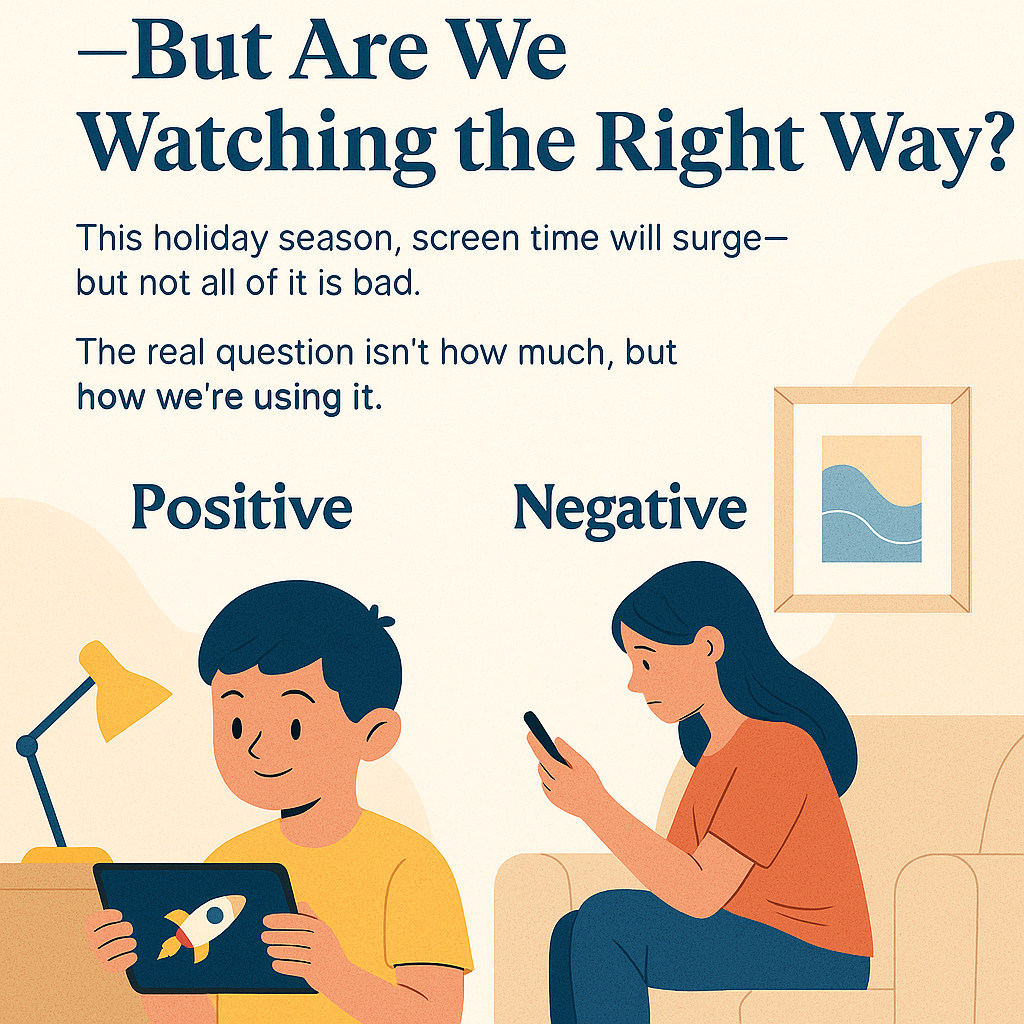
By now, the question of screen time feels like white noise. We all know it’s a problem. We all know it’s not going away. But maybe we’re asking the wrong question. Instead of “how much is too much?”, perhaps we need to ask: how are we using our screens and why?
Let’s be honest: we live in a digital world. Demonising screens is not only unrealistic, it’s unhelpful. Technology can open doors. It can teach, connect, and even heal. But like most things, it’s the balance that makes or breaks us and our kids.
With the holidays rolling in and routines going out the window, screen time tends to skyrocket. So this break, how about we rethink the way we engage with technology—not just for our children, but for ourselves?
Not all screen time is created equal
The word “screen time” lumps everything from watching cat videos to learning astrophysics under one vague umbrella. That’s part of the problem. The quality of screen time matters more than the quantity.
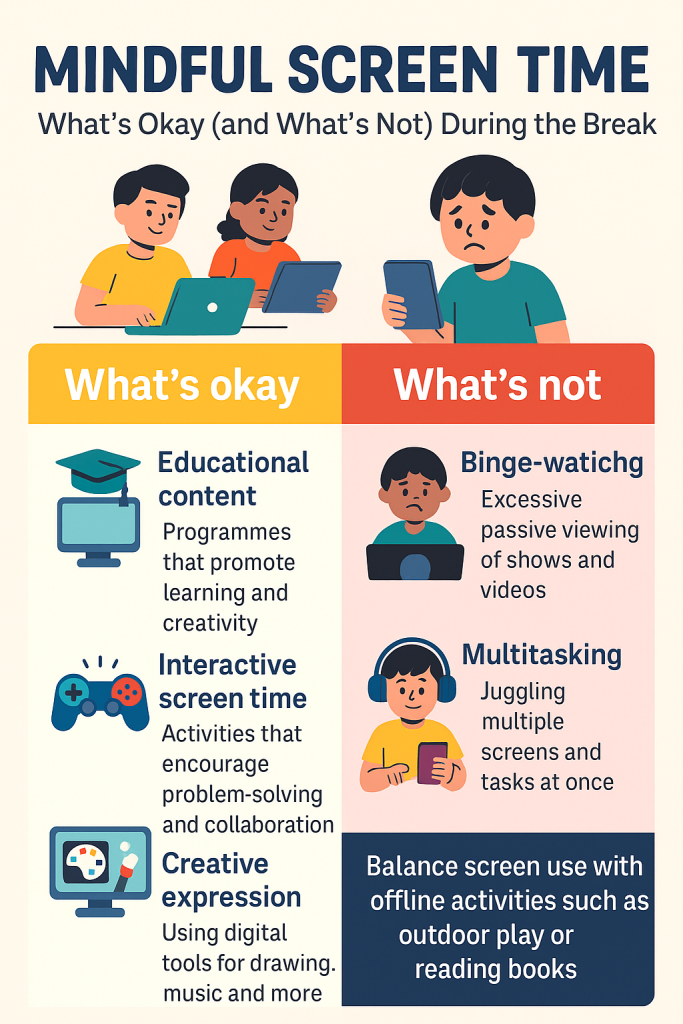
Take learning platforms like Khan Academy, Duolingo, or interactive coding tools. When used right, these digital tools don’t just pass the time—they fuel curiosity. Children can explore new skills, express creativity, or even bond with grandparents over video calls. Some games encourage strategy, teamwork, and problem-solving. Others leave kids wide-eyed and wired at 2 a.m., scrolling endlessly without purpose.
It’s this difference—between active engagement and passive consumption—that’s crucial. Watching an hour-long documentary together? Valuable. Losing three hours to auto-played cartoons and “shorts”? Not so much.
When screens start to take over
Let’s talk about the warning signs. Binge-watching, aimless scrolling, gaming marathons—sound familiar? Most kids (and adults) don’t set out to waste time. It just happens. Because tech is designed that way—to grab our attention, keep us watching, keep us clicking.
We all fall into the multitasking trap too—texting while watching, watching while eating, eating while scrolling. Studies show this kind of fragmented attention isn’t helping anyone. We’re not learning faster or relaxing better—we’re just training our brains to never sit still.
And the consequences show up quietly: poor sleep, anxiety, restlessness, and a resistance to anything that isn’t instantly gratifying.
So what can we do about screen time?
Start with the basics. Talk to your kids. Not in lecture-mode, but as a fellow screen user. Set simple, shared rules—no devices at meals, no phones in bedrooms, no YouTube until chores are done. Use screens in visible places, not behind closed doors. Choose content together. Reflect on how it makes them feel.
And yes, set limits—but with purpose. It’s not about punishing them for watching; it’s about protecting what they’re missing when they do.
Most importantly: model it. If your phone is your constant companion, your kids will assume that’s normal. If you can put it down, go outside, read a book, or just sit quietly—they’ll learn that’s normal too.
The offline world still matters
One of the simplest antidotes to screen overuse is movement. Kick a ball, ride a bike, dance in the kitchen, join a clean-up drive. Anything that gets the blood flowing and the brain breathing. Balance doesn’t come from banning screens—it comes from building better habits beside them.
And here’s something we often forget: kids don’t always know how to process what they see online. We need to help them reflect. Ask: What did you learn? What did you feel? Would you want to watch or do that again? Why?
That’s not nagging—it’s parenting.
Smile Foundation: Building screen-resilient spaces
At the same time, the responsibility doesn’t just lie with parents. Schools and community spaces have to help children unplug in healthy, meaningful ways.
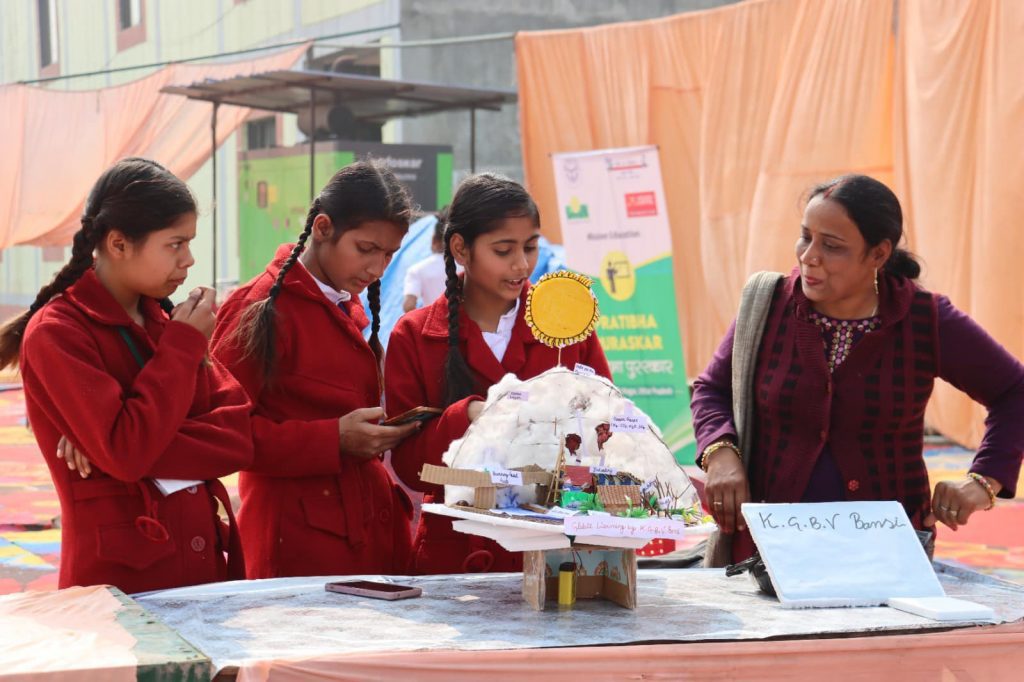
Across 18 locations, Smile Foundation is creating vibrant, screen-free classrooms that make learning interactive and joyful—no phones required. From sports kits and musical instruments to upgraded teaching methods and teacher training sessions, our focus is clear: if classrooms are fun, children won’t miss the screens.
By integrating movement, music, storytelling, and games into everyday lessons, Smile Foundation is showing that engagement doesn’t need a backlit screen. It just needs intention.
In the end, It’s about awareness, not alarm
Screens aren’t going anywhere. And that’s okay. But in this always-on world, the challenge is staying aware—of how we feel, how we behave, and how our children respond to what they consume.
Let’s not aim for perfection. Let’s aim for presence. The goal isn’t zero screen time. The goal is meaningful screen time and enough space around it for everything else that makes us feel alive.
This holiday, let’s unplug with purpose. Even if it’s just for an hour a day.
Your kids will thank you. And maybe, your brain will too.