In 2023, a landmark judgment by the Supreme Court of India brought renewed attention to menstrual hygiene as a matter of dignity, health, and equality. The Court underscored a simple but powerful idea: access to menstrual hygiene is not a privilege — it is a right.
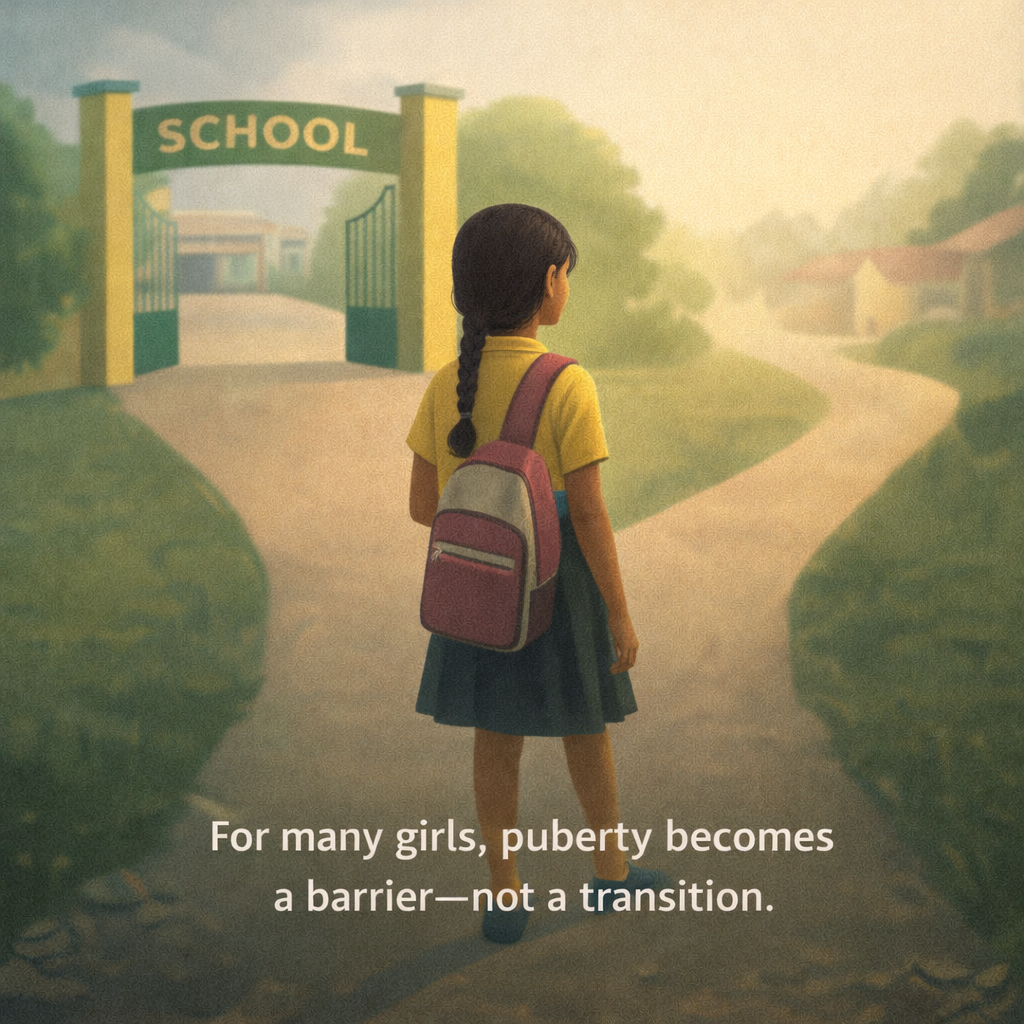
Yet, for millions of girls across India, this right remains unevenly realised.
Menstruation continues to shape not just health outcomes, but also education, mobility and life trajectories. For many, it is the point at which childhood begins to narrow — marked by silence, stigma and structural barriers that quietly push girls out of classrooms and into early adulthood.
The weight of silence: Traditions and taboos
For generations, menstruation has been surrounded by deeply embedded cultural beliefs. In many communities, it is still treated as something impure — something to be hidden.
Girls are told:
- not to enter kitchens
- not to visit places of worship
- not to speak about their bodies
These practices do more than enforce silence. They shape how girls perceive themselves — often associating a natural biological process with shame.
This silence also means that many girls enter puberty without basic information. The first experience of menstruation can be confusing, even frightening. Without guidance, myths replace facts and hesitation replaces confidence.
The education gap: When periods lead to dropouts
One of the most visible consequences of poor menstrual hygiene access is its impact on education.
According to estimates from UNICEF, a significant proportion of girls in India miss school during their periods, and many eventually drop out altogether after reaching puberty.
The reasons are layered:
- Lack of access to sanitary products
- Absence of functional, private toilets in schools
- Fear of leakage or embarrassment
- Lack of disposal facilities
For a girl without access to sanitary pads, attending school during menstruation can mean navigating discomfort, anxiety and social stigma simultaneously.
Over time, absenteeism becomes disengagement. And disengagement often becomes dropout.
From classrooms to early marriages
The consequences of dropout extend far beyond education.
In many cases, when girls leave school after puberty, they become more vulnerable to early marriage. The transition is subtle but consequential:
- Education stops
- Mobility reduces
- Domestic responsibilities increase
- Marriage becomes the next expected step
Menstrual health, in this context, is not just a health issue. It is closely tied to child marriage, economic participation and gender equality.
The evolution of menstrual hygiene products — and the access gap
Over the years, India has seen significant progress in the availability of menstrual hygiene products.
From cloth-based practices to:
- disposable sanitary pads
- low-cost pad initiatives
- biodegradable alternatives
- menstrual cups
there has been a visible shift in both innovation and awareness.
Government programmes and social enterprises have played a role in expanding access. Yet, affordability and availability remain uneven — especially in rural and underserved regions.
For many girls:
- pads are still considered expensive
- supply is inconsistent
- choices are limited
As a result, unsafe or unhygienic alternatives continue to be used, increasing the risk of infections and long-term health issues.
The infrastructure challenge: Toilets, water and dignity
Access to menstrual products is only one part of the equation. Equally critical is the infrastructure that supports their safe and dignified use.
Across many parts of India:
- school toilets are non-functional or poorly maintained
- lack of water makes hygiene difficult
- disposal systems are absent
For adolescent girls, this creates a daily negotiation between discomfort and dignity.
The challenge extends beyond schools.
Public spaces and travel
Women and girls travelling long distances, by bus or train, often face a different but equally pressing issue: the absence of clean, accessible public toilets.
Changing a sanitary napkin in:
- an unclean restroom
- a crowded public facility
- or not at all
is not just inconvenient. It poses serious health risks and reinforces the idea that women’s needs are secondary in public infrastructure design.
Health implications: Beyond discomfort
Poor menstrual hygiene is often discussed in terms of inconvenience. But its health implications are far more serious.
Inadequate menstrual hygiene can lead to:
- reproductive tract infections
- urinary tract infections
- skin irritation and discomfort
More importantly, it can delay care-seeking behaviour. When menstruation is stigmatised, symptoms are often ignored or normalised, preventing timely medical intervention.
The mental and emotional toll
Less visible, but equally significant, is the psychological impact.
For many girls, menstruation brings:
- anxiety about leakage or staining
- fear of being teased or isolated
- reluctance to participate in school or social activities
This can affect:
- confidence
- self-esteem
- participation in public life
Over time, these experiences shape how girls see their place in the world.
The role of awareness and education
Addressing menstrual hygiene requires more than products and infrastructure. It requires shifting conversations.
This means:
- integrating menstrual education into school curricula
- engaging boys and men to reduce stigma
- creating safe spaces for open dialogue
When menstruation is normalised, girls are more likely to seek information, support and care.
Smile Foundation’s approach: Bridging gaps on the ground
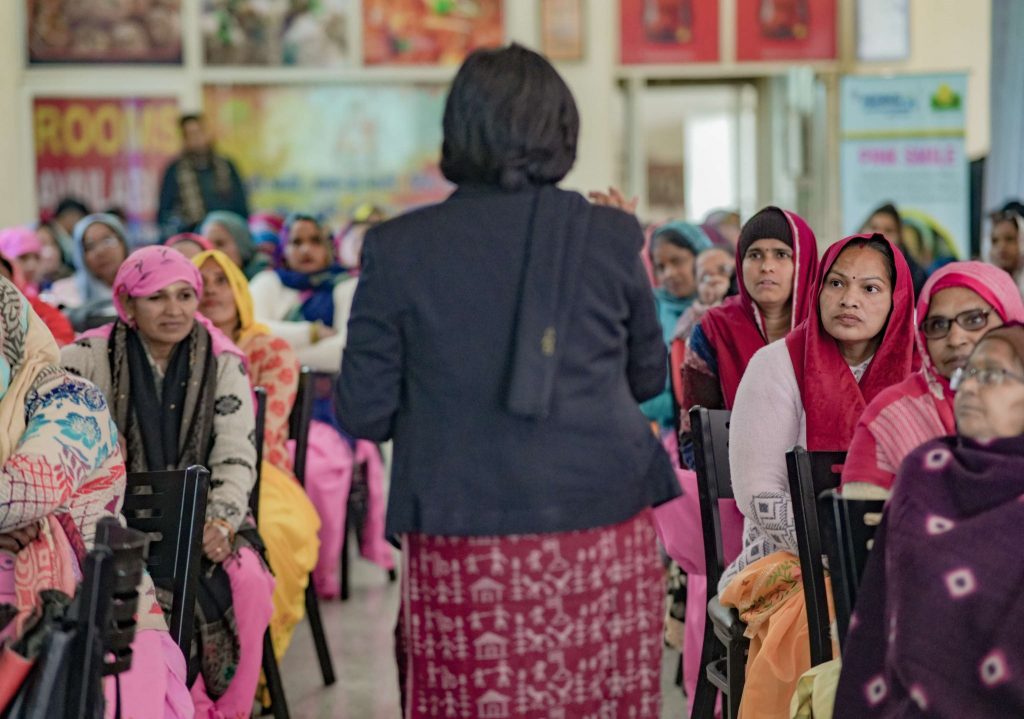
Organisations like Smile Foundation have been working at the intersection of education, health and community engagement — recognising that menstrual hygiene is central to all three.
1. Awareness and education
Through its programmes, Smile Foundation works with adolescents to:
- build awareness around menstrual health
- dispel myths and misconceptions
- encourage open conversations
2. Access to sanitary products
Efforts are made to improve access to affordable menstrual hygiene products, particularly in underserved communities.
3. School-based interventions
By strengthening school environments, the organisation helps create:
- safer, more inclusive spaces for girls
- systems that support continued education during menstruation
4. Community engagement
Working with parents and community leaders is critical to:
- shift long-held beliefs
- build supportive ecosystems for girls
A systems issue, not a singular problem
Menstrual hygiene is often approached as a standalone issue. But in reality, it intersects with:
- education systems
- public health infrastructure
- gender norms
- economic access
Addressing it requires coordinated action across these domains.
What needs to change
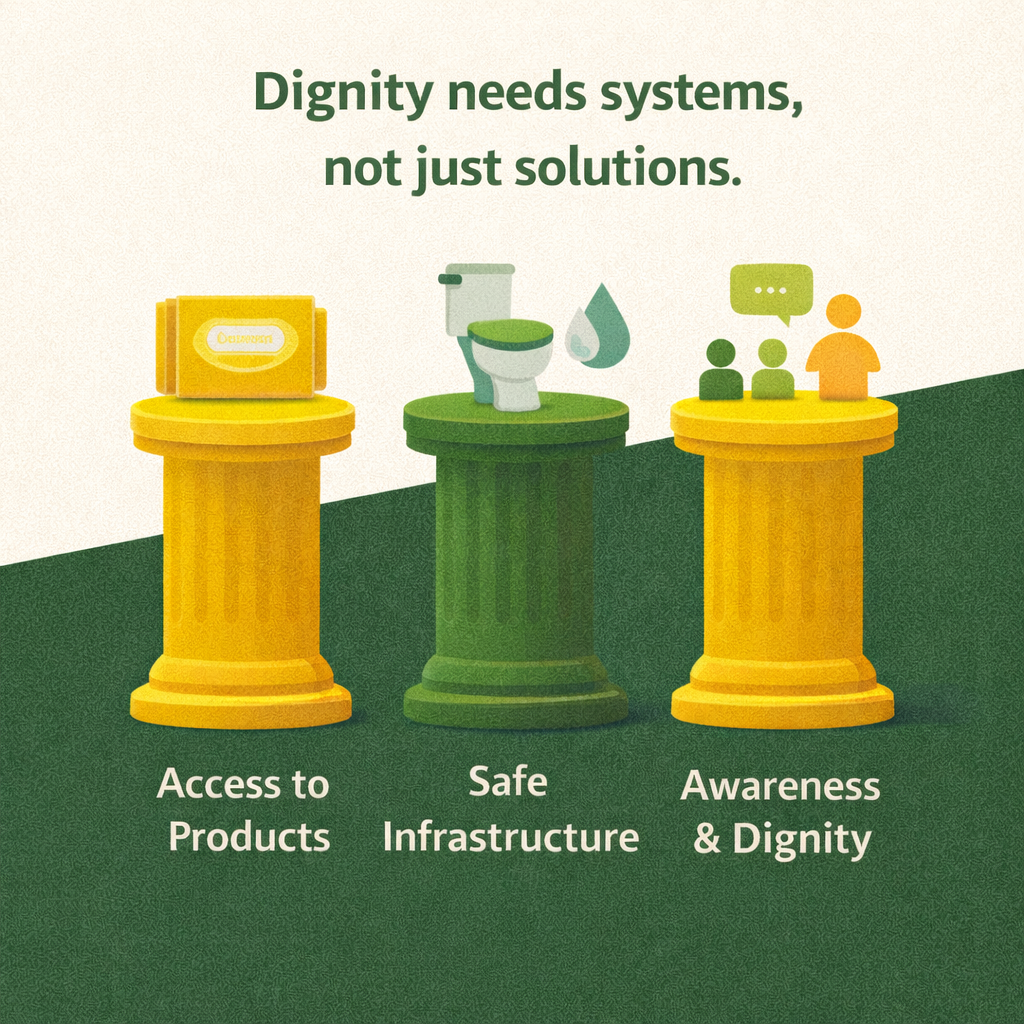
1. Policy to practice
While policies and legal recognition — such as the recent Supreme Court judgment — are important, implementation remains uneven.
2. Infrastructure investment
Clean, functional toilets with water and disposal systems must become non-negotiable in:
- schools
- public spaces
- transport hubs
3. Affordable access
Sustainable models are needed to ensure that menstrual products are:
- affordable
- consistently available
- environmentally responsible
4. Normalising conversations
Breaking stigma requires sustained engagement.
Reimagining dignity
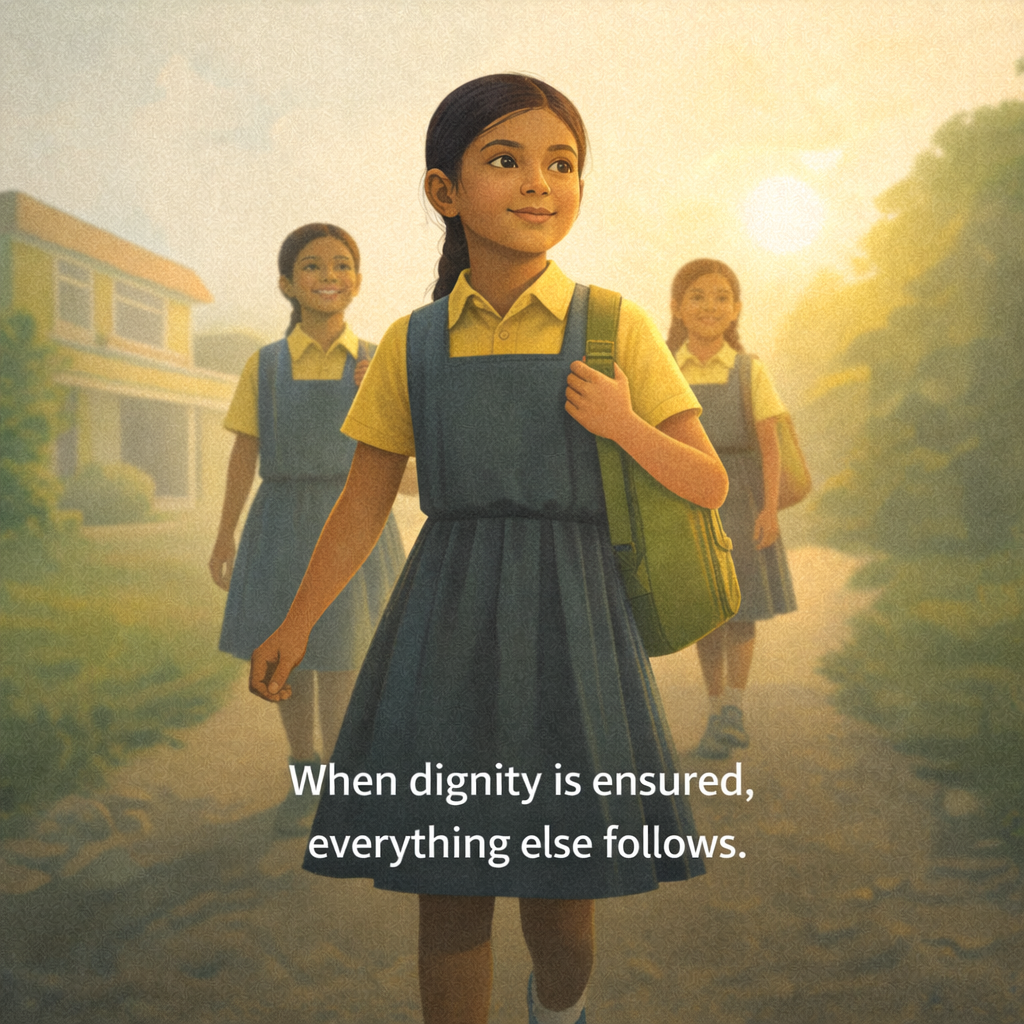
At its core, menstrual hygiene is about dignity.
It is about ensuring that no girl has to:
- miss school
- compromise her health
- or feel ashamed of her body
simply because she does not have access to basic resources.
The Supreme Court’s recognition of menstrual hygiene as a right is an important step. But rights must translate into everyday realities.
For millions of girls in India, that journey is still ongoing.
The way forward
Creating a future where menstrual hygiene is no longer a barrier requires:
- stronger systems
- inclusive infrastructure
- sustained community engagement
- and a commitment to listening to girls’ lived experiences
Because when girls are able to manage menstruation safely and with dignity, the impact extends far beyond health.
It keeps them in school, expands their choices and strengthens their agency.
And ultimately, it brings us closer to a more equitable society — one where something as natural as menstruation no longer limits what a girl can become.