Malnutrition in India remains one of the most pressing yet under-discussed public health challenges today. Despite decades of economic growth and policy efforts, millions of children continue to grow up without the nutrition they need to survive, learn and thrive. The consequences are not always visible immediately, but they are deeply embedded in the country’s health, education and economic outcomes.
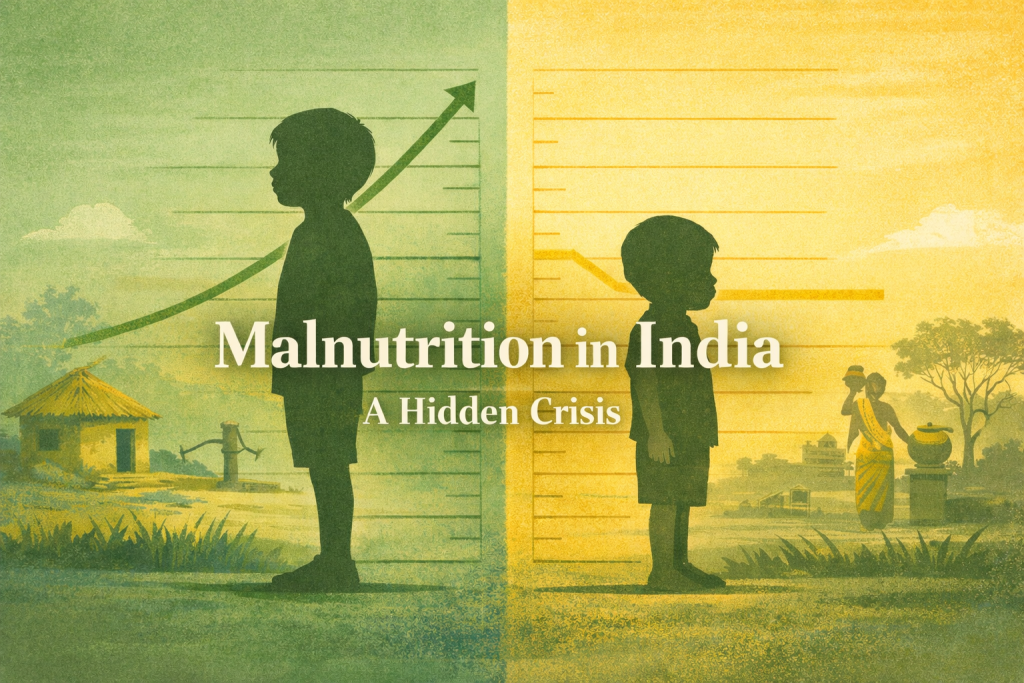
At its core, malnutrition is not just about hunger. It is about what children eat, what their bodies absorb, and what they are denied during the most critical years of development. If India’s demographic dividend is to translate into real progress, addressing child malnutrition must become central to the development agenda.
What Is Malnutrition and Why Is It a Crisis in India?
Malnutrition refers to deficiencies, excesses or imbalances in energy and nutrient intake. In the Indian context, the dominant concern continues to be undernutrition, particularly among children under five and women.
What makes this a crisis is not only the scale but also the persistence of the problem across generations. Malnutrition is often invisible in policy conversations because it unfolds slowly. A child who is stunted today may not show immediate signs of illness, but the long-term effects on cognitive ability, immunity and productivity are profound.
India’s nutrition challenge is also layered. It is shaped by poverty, gender inequality, food systems and access to healthcare. This means that solutions cannot be limited to food distribution alone.
Types of Malnutrition — Stunting, Wasting and Underweight
Understanding the types of malnutrition helps clarify the scale and nature of the issue.
- Stunting
Stunting reflects chronic undernutrition. Children who are stunted are shorter for their age, but more importantly, their brain development is affected. This has lifelong implications. - Wasting
Wasting indicates acute malnutrition. It often results from sudden food shortages or illness. Children with wasting are at a much higher risk of mortality. - Underweight
Underweight is a composite indicator that reflects both chronic and acute malnutrition.
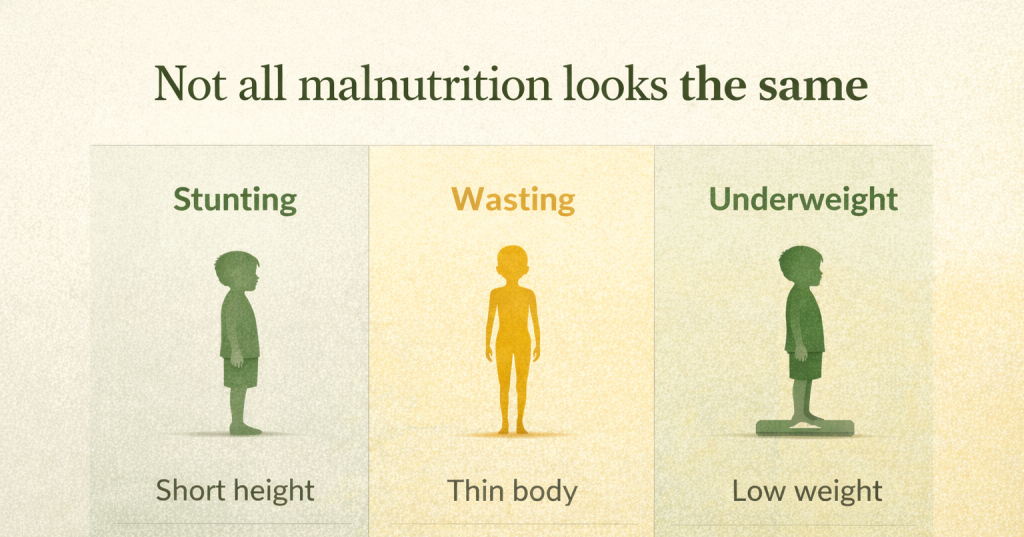
Together, these indicators provide a comprehensive picture of child malnutrition in India. They also highlight the need for both preventive and emergency responses.
Hidden Hunger — Micronutrient Deficiency
Beyond visible forms of undernutrition lies a more silent challenge: hidden hunger.
Children may consume enough calories but still lack essential vitamins and minerals. This includes deficiencies in iron, vitamin A, iodine and zinc.
The effects are serious:
- Anaemia reduces energy and concentration
- Vitamin deficiencies weaken immunity
- Cognitive development is impaired
Hidden hunger is particularly widespread in India because diets are often cereal-heavy and lack diversity. This makes micronutrient deficiency a systemic issue rather than an individual one.
Malnutrition in India — Key Statistics from NFHS 5
Data from NFHS 5 offers a clear picture of the scale of undernutrition in India.
- 35.5% of children under five are stunted
- 19.3% are wasted
- 32.1% are underweight
- More than two-thirds of children are anaemic
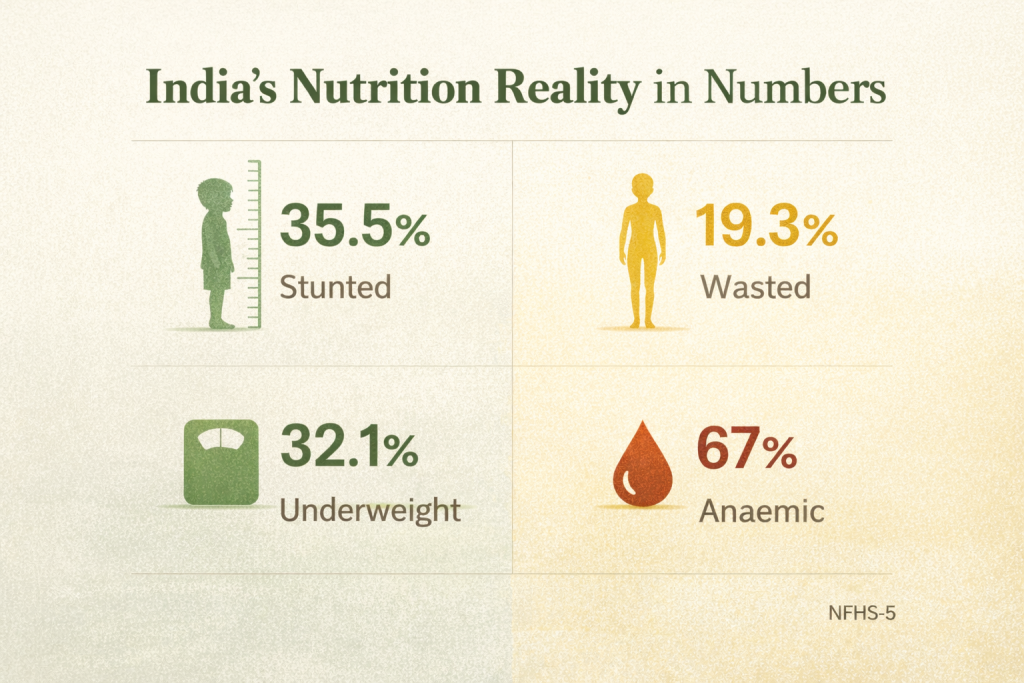
These numbers point to a persistent and widespread problem. While there have been improvements over time, the pace of change is slow compared to the scale of need.
What is equally concerning is that progress is uneven. Some districts have seen improvements, while others continue to lag significantly.
States With the Highest Malnutrition Rates
Geography plays a critical role in shaping nutrition outcomes.
States with higher levels of malnutrition often share common characteristics:
- High poverty levels
- Limited healthcare infrastructure
- Lower female literacy
- High population density
Bihar, Jharkhand, Uttar Pradesh and Madhya Pradesh continue to report higher rates of stunting and underweight children.
At the same time, states like Kerala and Tamil Nadu demonstrate that targeted investments in health and education can lead to better outcomes.
Impact on Children Under 5
The early years of a child’s life are a window of opportunity. Malnutrition during this period can have irreversible consequences.
Children affected by undernutrition often experience:
- Delayed physical growth
- Reduced cognitive ability
- Frequent infections
- Lower school readiness
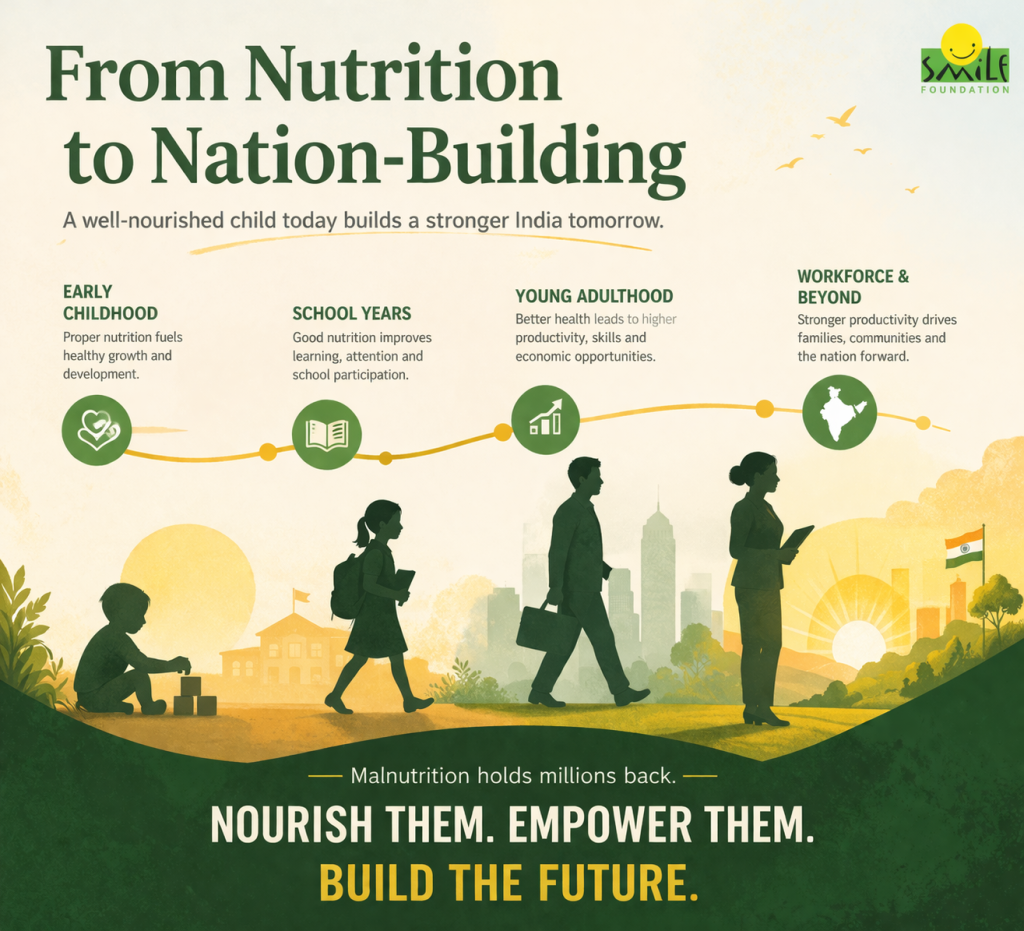
These effects do not end in childhood. They carry forward into adulthood, affecting earning potential and overall well-being.
In this sense, malnutrition is not just a health issue but a development one with long-term economic implications.
Root Causes of Malnutrition in India
Malnutrition is a complex problem with multiple, interlinked causes. Addressing it requires moving beyond surface-level explanations.
Poverty and Food Insecurity
Poverty remains one of the most significant drivers of undernutrition in India.
For many families:
- Food consumption is driven by affordability, not nutrition
- Diets are dominated by rice or wheat
- Protein and micronutrient-rich foods are often inaccessible
Seasonal employment and income instability further worsen food insecurity. During lean periods, households reduce both the quantity and quality of food intake.
Lack of Maternal Health and Awareness
Maternal health is central to child nutrition.
When mothers are undernourished:
- Babies are more likely to be born with low birth weight
- Breastfeeding practices may be suboptimal
- Children face higher risks of growth faltering
Early marriage and early pregnancy compound these risks. Many young mothers lack access to proper antenatal care and nutrition counselling.
Awareness also plays a role. Feeding practices, hygiene and childcare behaviours significantly influence nutrition outcomes.
Government Programmes Addressing Malnutrition
India has built a strong policy framework to address malnutrition. However, the challenge lies in effective implementation.
POSHAN Abhiyaan
POSHAN Abhiyaan aims to improve nutritional outcomes through a coordinated approach.
Key features include:
- Convergence across ministries
- Real-time monitoring through POSHAN Tracker
- Focus on behaviour change communication
The programme recognises that nutrition is not just about food. It is about awareness, service delivery and accountability.
ICDS and Mid-Day Meal Scheme
Two long-standing programmes continue to play a critical role.
Integrated Child Development Services (ICDS):
- Provides supplementary nutrition through Anganwadi centres
- Offers early childhood care and education
- Supports pregnant and lactating women
Mid-Day Meal Scheme:
- Provides nutritious meals to school children
- Improves attendance and retention
- Addresses classroom hunger
While these programmes have wide reach, issues such as infrastructure gaps, quality of food and monitoring need attention.
How Smile Foundation Fights Malnutrition at the Grassroots
Large-scale programmes are essential, but real change often happens at the community level.
Smile Foundation works to bridge last-mile gaps through:
- Community-based health interventions
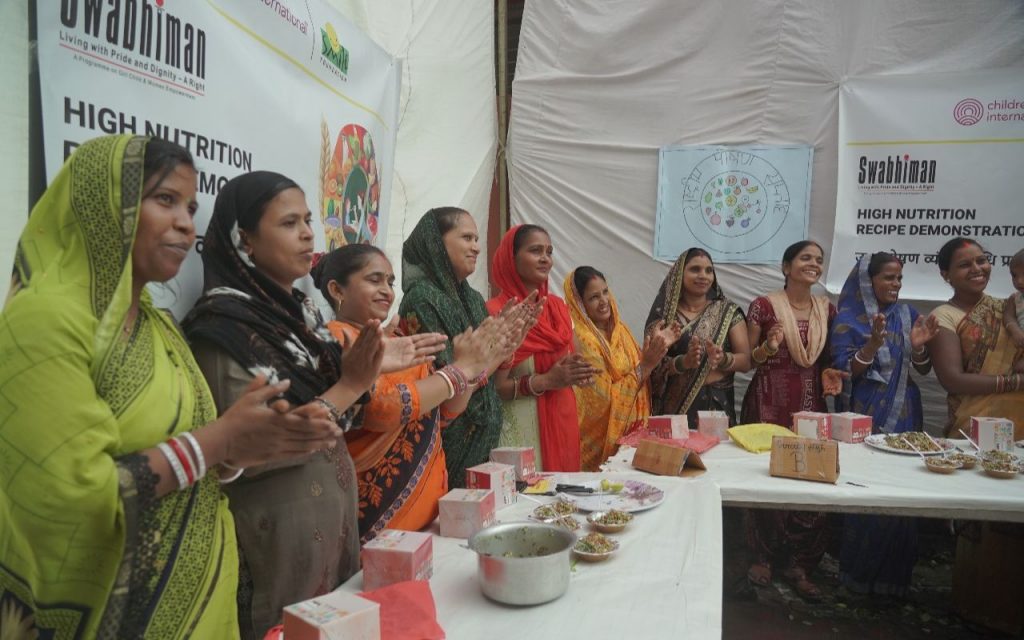
- Nutrition awareness sessions for mothers
- Regular health check-ups for children
- School health and nutrition programmes
Our approach integrates healthcare, education and community engagement. This ensures that solutions are not only accessible but also sustainable.
Importantly, the focus is on prevention. By identifying at-risk children early and working closely with families, long-term impacts can be reduced.
For organisations looking to invest in meaningful CSR initiatives, partnering with Smile Foundation offers an opportunity to strengthen grassroots nutrition systems and create measurable impact.
Why This Crisis Needs Urgent Attention
Malnutrition has far-reaching consequences beyond health.
It affects:
- Educational outcomes
- Workforce productivity
- Economic growth
A malnourished child is more likely to struggle in school and less likely to reach their full potential as an adult.
From a policy perspective, this translates into:
- Higher healthcare costs
- Lower economic productivity
- Increased inequality
India’s aspirations for growth and global leadership cannot be realised without addressing this foundational challenge.
What Can Be Done: Practical Solutions
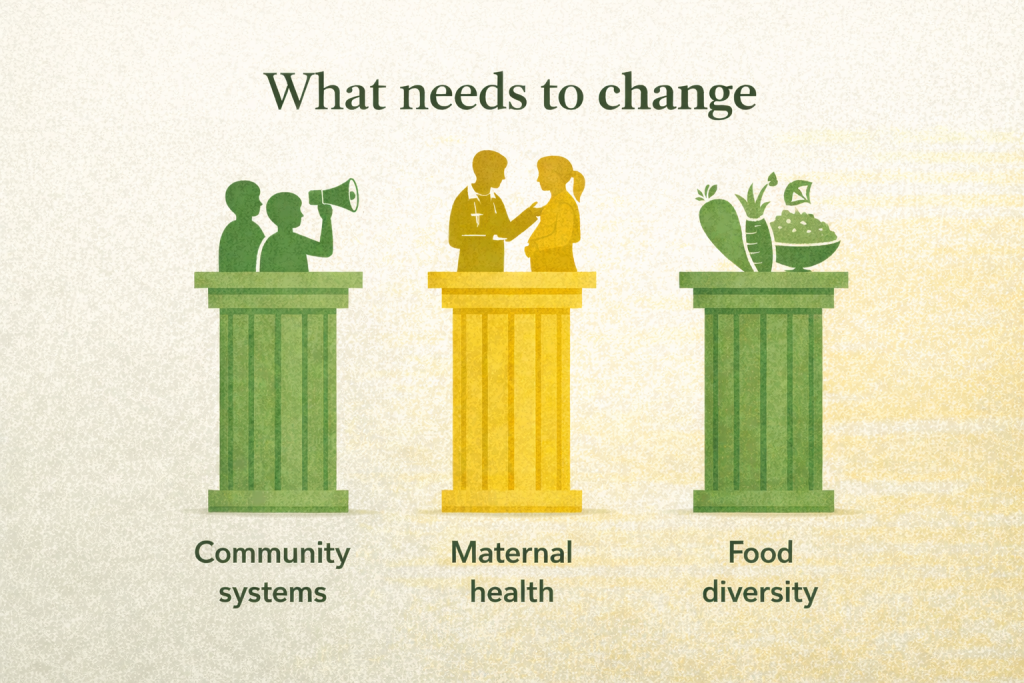
Addressing malnutrition requires a coordinated, multi-sectoral approach.
Strengthening Community Nutrition Systems
- Improve infrastructure at Anganwadi centres
- Equip frontline workers with better training
- Ensure regular growth monitoring
Improving Dietary Diversity
- Promote locally available nutritious foods
- Encourage inclusion of pulses, fruits and vegetables
- Support community kitchens and kitchen gardens
Investing in Maternal and Child Health
- Improve access to antenatal and postnatal care
- Promote exclusive breastfeeding
- Delay age of marriage and first pregnancy
Leveraging Data and Technology
- Use digital tools for real-time monitoring
- Identify high-burden districts
- Enable targeted interventions
Strengthening Behaviour Change Communication
- Build awareness around nutrition and hygiene
- Engage communities through local leaders
- Use simple, culturally relevant messaging
The Way Forward
India has the knowledge, resources and institutional frameworks needed to address malnutrition. What is required now is consistent execution and accountability.
Addressing malnutrition in India demands:
- Political commitment
- Community participation
- Private sector engagement
It also requires recognising that nutrition is not a standalone issue. It is linked to health systems, food systems, and social protection.
Every child deserves the opportunity to grow to their full potential. Ensuring this is not just a policy priority but a moral imperative.
FAQs — Malnutrition in India
What is malnutrition and what are its types?
Malnutrition refers to deficiencies or imbalances in nutrient intake. Common types include stunting, wasting and underweight, along with micronutrient deficiencies.
How many children in India suffer from malnutrition?
According to NFHS 5, over one-third of children under five are stunted, and nearly one-fifth are wasted.
What are the main causes of malnutrition in India?
Poverty, food insecurity, poor maternal health, lack of awareness and limited access to healthcare are key drivers.
What is stunting and how does it affect children?
Stunting is low height for age caused by chronic undernutrition. It impacts brain development and long-term productivity.
Which states in India have the highest malnutrition rates?
Bihar, Jharkhand, Uttar Pradesh and Madhya Pradesh report higher levels of child malnutrition.
What is POSHAN Abhiyaan and how does it work?
POSHAN Abhiyaan is a national mission that improves nutrition through convergence, monitoring and behaviour change strategies.
What is the difference between undernutrition and overnutrition?
Undernutrition refers to lack of nutrients, while overnutrition refers to excess intake leading to obesity.
How does malnutrition affect a child’s future?
It affects education, health and earning potential, creating long-term socio-economic challenges.
What can communities do to address malnutrition?
Communities can promote awareness, support maternal health and improve access to nutritious food.
How does Smile Foundation address malnutrition in India?
Smile Foundation works through community programmes, awareness campaigns and healthcare interventions to improve child nutrition.