In many of India’s smaller districts, development is a question of whether things work when it comes to last-mile governance.
Is there a doctor at the nearest health centre?
Does the school have a teacher today?
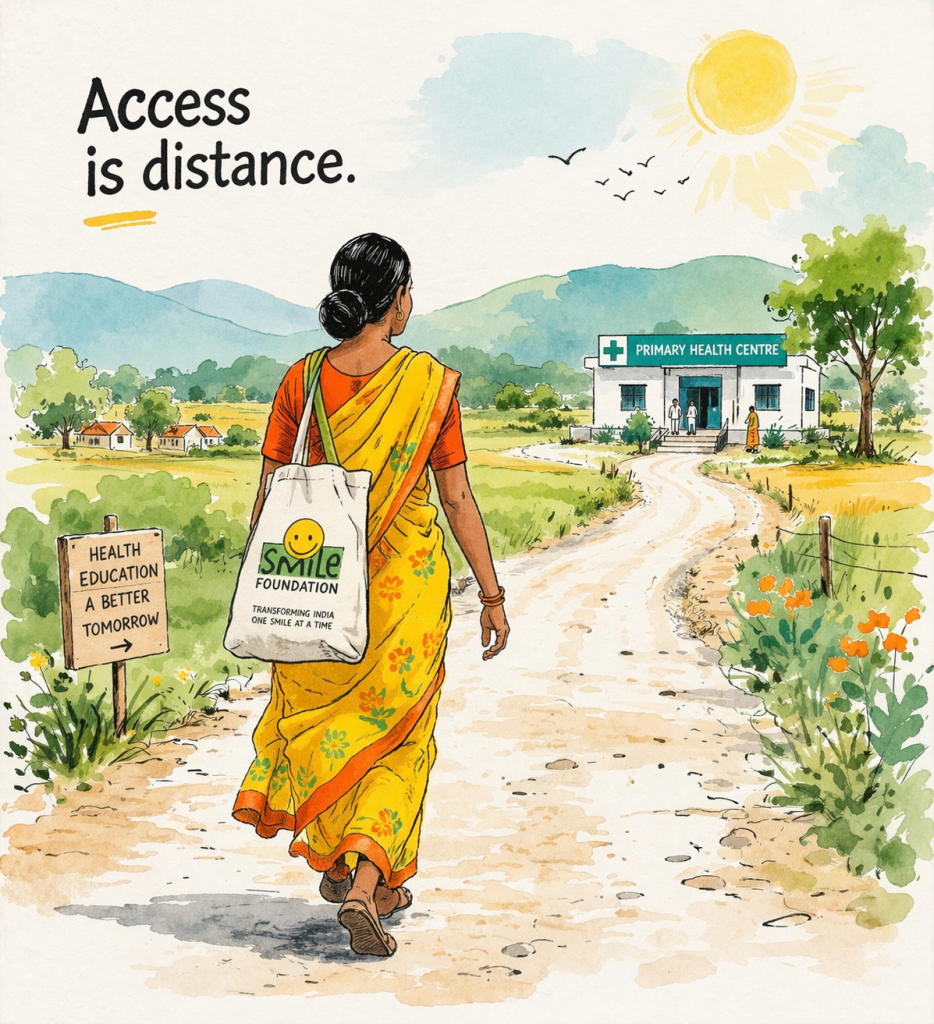
Can you reach a market without spending half a day on the road?
For millions of people, this is what governance feels like. Just the everyday reliability of systems.
And that is why districts matter far more than we tend to admit.
India does not lack ambition or schemes.
Over the years, governments have built an extensive architecture of welfare and development programmes. Health, nutrition, education, livelihoods — there is a scheme for almost everything. On paper, the system is dense, layered, and in many ways impressive.
Look closer, and the variation is hard to ignore. Some districts perform remarkably well on health indicators. Others struggle with the basics. In one region, institutional deliveries are the norm. In another, they remain uncertain. Learning levels, nutrition outcomes, access to services — all of these shift dramatically within the same state.
The gap, then, is not in intent. It is in delivery.
And delivery lives in the district.
Where Things Begin to Fray in Last-Mile Governance
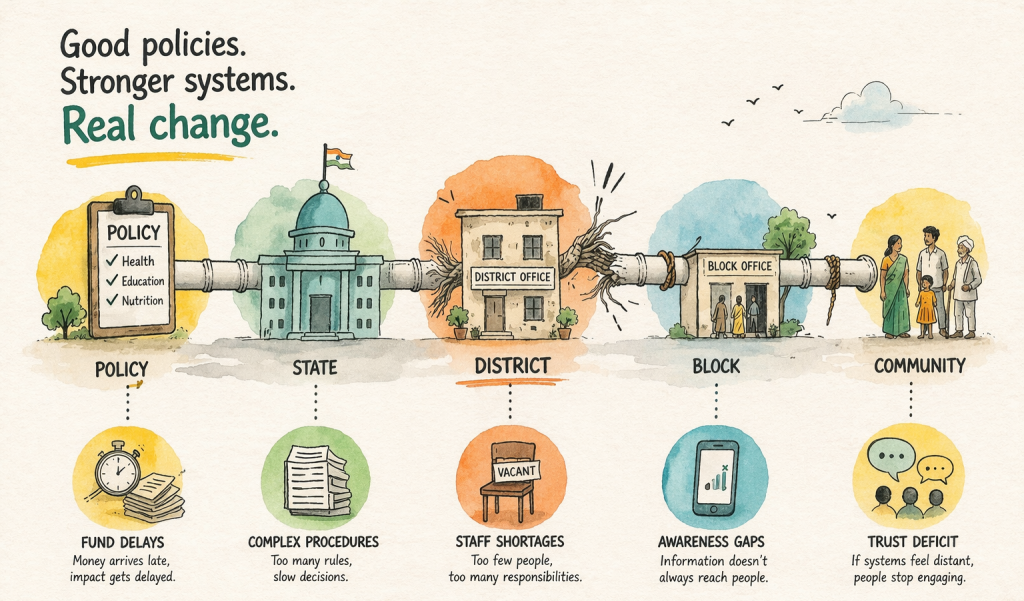
The district is where policy leaves the file and meets the field. It is also where the system starts to strain.
Start with planning.
Most district administrations are not really planning in the true sense. They are implementing. Programmes designed elsewhere arrive with guidelines, targets and timelines already fixed. There is little room to ask a simple question: does this actually fit here?
Because “here” is not uniform. A tribal district does not resemble a peri-urban one. A flood-prone belt has little in common with a drought-affected region. However, the template often remains the same.
Over time, this creates a mismatch between what is needed and what is delivered.
Then there is money.
Funds do come. But not always on time. And not always in ways that are easy to use.
Much of the financing flows through tightly structured schemes. Allocations are tied, categories are fixed and flexibility is limited. District officials often find themselves navigating rules rather than responding to needs. In some cases, money sits unused — not because there is no demand, but because the system cannot move fast enough.
People, too, are stretched.
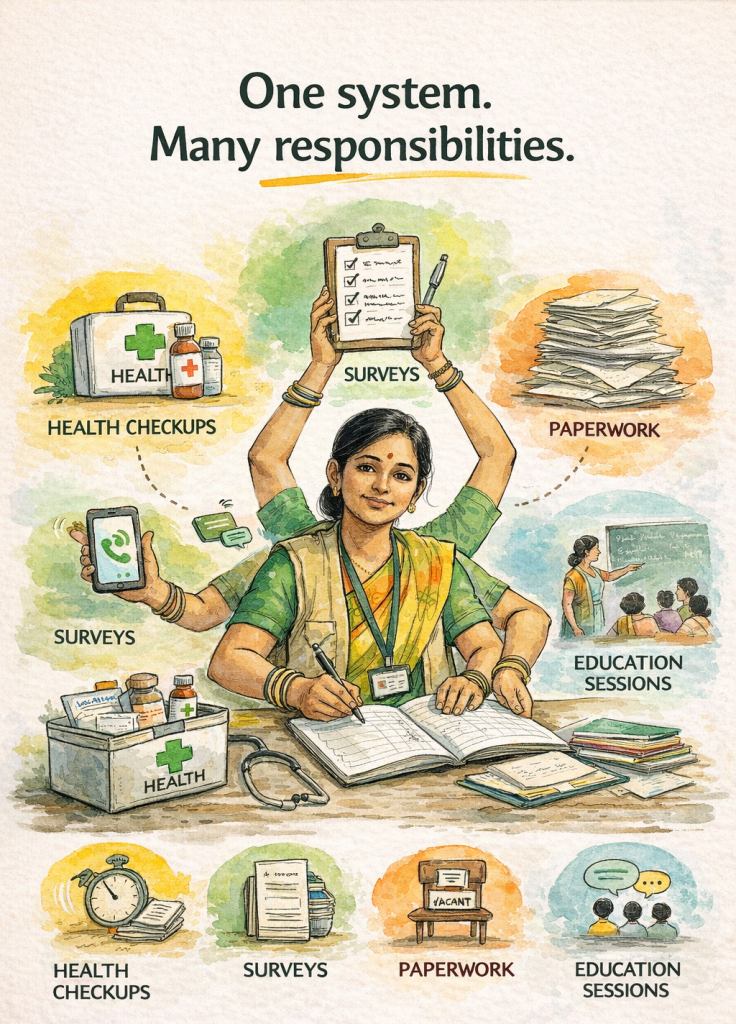
Frontline workers carry the system on their shoulders. ASHAs, Anganwadi workers, nurses, local staff — they are everywhere, doing everything. And often, doing too much.
Vacancies remain unfilled. Roles overlap. Responsibilities pile up. Over time, what you get is not failure, but fatigue. A system that continues to function, but just barely.
And then there is the question of information.
For many citizens, schemes exist somewhere in the background, half-known and poorly understood. Awareness campaigns happen, but they are often sporadic. Instructions are unclear. Processes feel complicated.
Access, in theory, is universal. In practice, it depends on who knows what — and who can navigate the system.

Technology was meant to change this.
In some ways, it has. Direct Benefit Transfers, digital records, online systems — they have improved efficiency and reduced leakages in several areas.
But technology also assumes a certain kind of user. Someone with a phone, a stable connection, the ability to read, understand and troubleshoot. That is not always the case.
Without local support, digital systems can exclude the very people they are meant to include.
And beneath all of this sits something less visible, but just as important: trust.
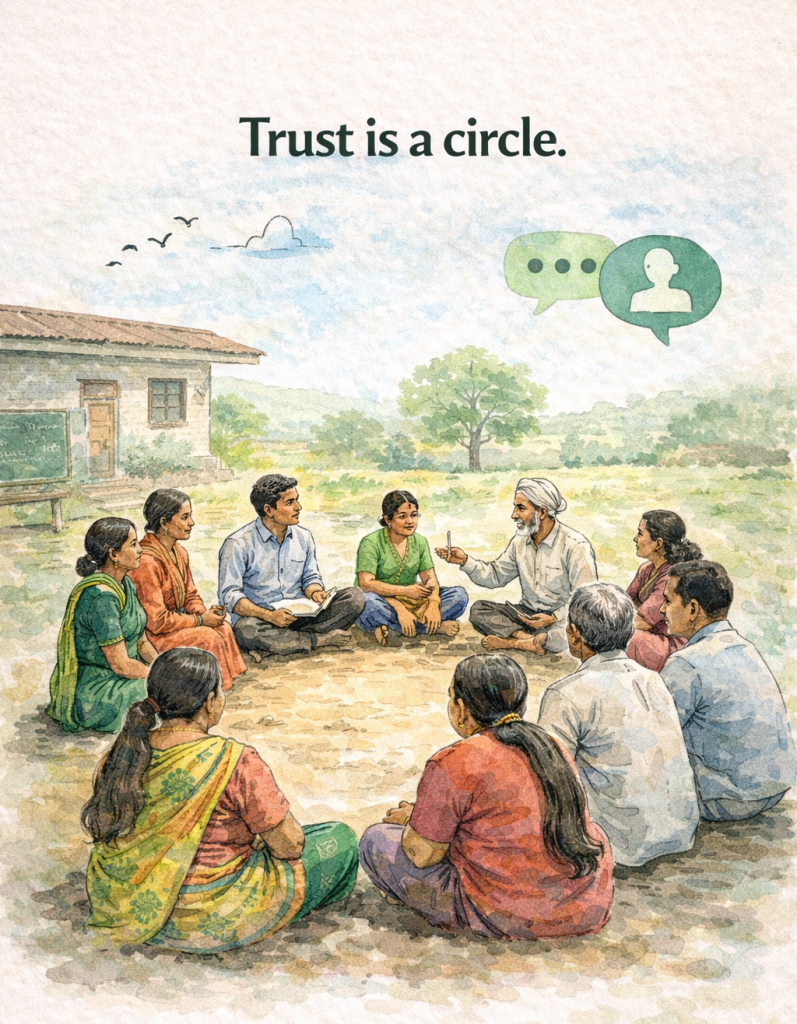
People engage with systems based on experience. If the system feels distant, unpredictable or unresponsive, participation drops. Not suddenly, but gradually. And once that happens, even well-designed programmes struggle to gain traction.
It’s Not Just Capacity. It’s Incentives.
It is tempting to see this as a capacity problem. And capacity does matter.
But that is only part of the picture.
District governance is shaped by incentives just as much as by resources.
Officials are frequently transferred. Continuity is rare. Long-term thinking becomes difficult when tenures are short. The focus shifts, almost inevitably, to what can be achieved quickly and visibly.
Political cycles add another layer. Priorities change. Attention shifts. Some programmes move faster than others — not always because they are more important, but because they are more visible.
And then there are local dynamics. Informal networks, social hierarchies, access to influence — these shape who benefits, and how.
In other words, governance at the district level is not just administrative. It is negotiated, layered and deeply contextual.
What Happens When Districts Work towards Last-Mile Governance
And yet, when districts are enabled, things can move differently.
India’s Aspirational Districts Programme is one example. By introducing real-time data, ranking systems and a degree of competition, it shifted attention to outcomes. Districts that had long been overlooked suddenly became visible. Progress, in many cases, followed.
There are state-level examples too. Kerala’s decentralised planning approach has, over time, shown what local decision-making can achieve when backed by resources and participation.
Globally, similar patterns emerge. In Brazil, local governments play a central role in delivering health services. In Indonesia, decentralisation has given districts more control over development decisions.
The lesson is not that decentralisation is a cure-all. It isn’t.
But when local systems are trusted, supported and held accountable, they tend to respond better.
Rethinking the District
If districts are where development is won or lost, then they cannot remain the weakest link in last-mile governance.
They need room to act.
That starts with flexibility. Programmes should allow for adaptation. Not everything needs to be standardised. In fact, some of the most effective interventions are those that respond to very specific local conditions.
It also requires fixing how money moves. Timely disbursement matters, but so does giving districts some discretion in how funds are used. Without that, responsiveness will always be limited.
Capacity building cannot be an afterthought. It has to be central. Not just more people, but better support, better training and systems that reduce overload rather than add to it.
Accountability needs to be clearer. Who is responsible when delivery fails? How is performance measured? These questions cannot remain abstract. Public dashboards, social audits and grievance systems can help, but only if they are taken seriously.
And finally, communities need to be part of the process. Not occasionally, but consistently. When people feel heard, participation improves. When participation improves, outcomes tend to follow.
Where Last-Mile Models Step In
At the edges of the system, where constraints are sharpest, alternative models often reveal what is possible.
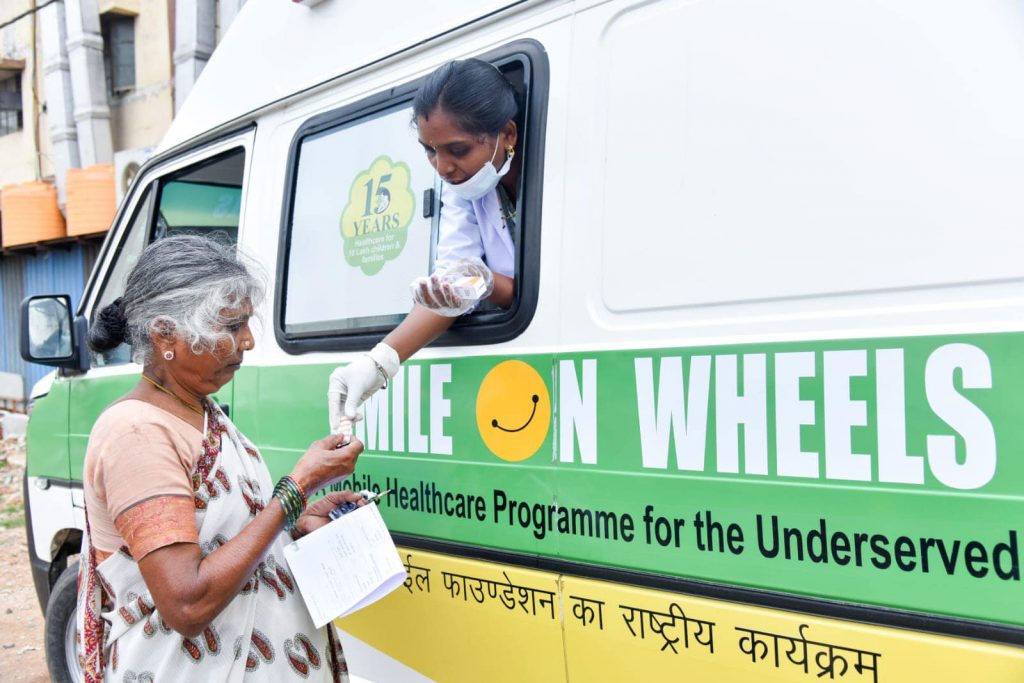
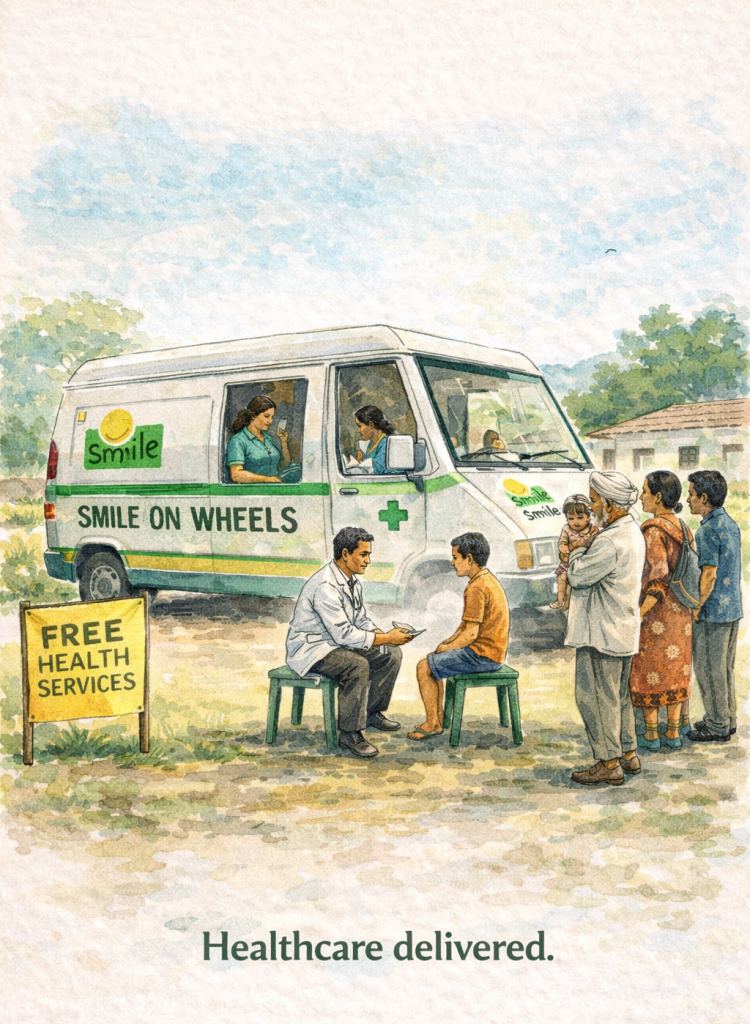
Smile Foundation’s Smile on Wheels programme works in precisely these spaces.
Instead of waiting for people to reach healthcare, it brings healthcare to them. Mobile medical units travel to underserved areas, offering consultations, diagnostics and medicines. The model is simple, but effective. It reduces distance, lowers cost and, perhaps most importantly, shows up consistently.
Over time, that consistency builds trust.
The programme has also expanded into dental care through partnerships, with mobile units visiting schools and communities. The School Oral Health Programme focuses not just on treatment, but on awareness helping children build habits early, before problems become severe.
What makes such models work is not just mobility or efficiency. It is their ability to adapt. To listen. To operate within the rhythm of local life rather than imposing a rigid structure on it.
In many ways, they offer a glimpse of what district systems could look like — if they were designed around people.
The Reality of Development
India’s development story is often told at scale. It unfolds in district offices, in block-level meetings, in conversations between frontline workers and families. It is shaped by small decisions, daily constraints and the slow work of making systems function.
That is where progress actually happens.
Or doesn’t.
Because in the end, development is not decided in state capitals.
It is decided in districts.