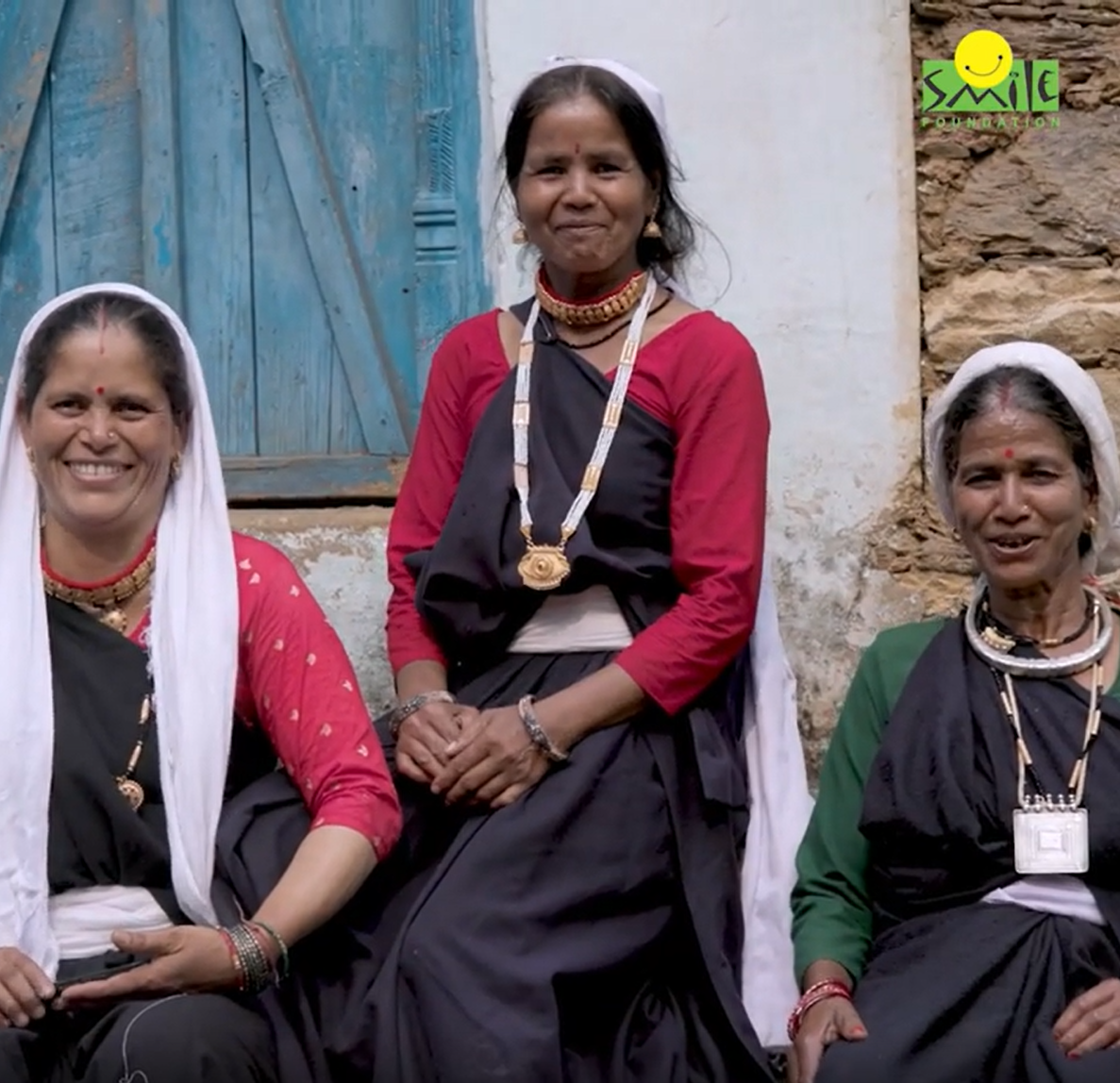

“The Hills Know How to Lead Themselves”
A Conversation with Raghu Tewari, Founder of AMAN, Almora
As told to Smile Foundation’s team
High up in the Kumaon hills of Uttarakhand, communities have long survived through collective wisdom, sustainable farming, and close-knit social bonds. But over time, migration, climate changes, and policy neglect have threatened their traditional way of life. In Almora district, one organisation—AMAN—has stepped in not as a provider, but as an enabler.
We sat down with Raghu Tewari, founder of AMAN, to learn more about how his grassroots efforts are helping mountain communities rediscover their own strengths.
AMAN is also a participant in Smile Foundation’s Empowering Grassroots programme, conducted in partnership with Change the Game Academy, which supports community-led organisations through capacity building in leadership, local fundraising, governance, and programme development.
Q: What inspired you to start AMAN? What kind of work does AMAN focus on?
Raghu Tewari: I come from this land. Over the years, I saw how hill communities, especially in and around Almora, were rich in knowledge but lacked access to systems that respected or supported them. Many government schemes don’t reach here, and even when they do, people don’t always know how to access them. I believed that the community should be equipped to speak for itself, to solve its own problems. That’s how AMAN was born, not to do things for people, but with them.
The Empowering Grassroots training helped us understand how to build credibility—how to report our impact, how to engage local stakeholders, and how to speak the language of funders.

We work in areas like sustainable agriculture, preservation of indigenous knowledge, education, and community advocacy. We support women-led collectives, revive traditional farming methods, and help children, especially girls, stay in school. A big part of our work is also connecting people to entitlements like ration cards, pensions, and government schemes they were unaware of or unable to apply for.
Unfortunately, development organisations from the south do not play a significant decision-making role in global conversations, thereby limiting their access to donors and funds. Not only does it make scaling our solutions more challenging, it also delays reaching a common ground between the global south and north. For example, donors from the north often say that capacity must be built, but fail to understand that capacity cannot be built when very limited funding is available. As a result, development organisations from the south become subcontractors for development organisations of the north. These subcontractors have no authority and often have to operate with margins that barely cover their costs – not to mention capacity building.
Development should focus on long-term solutions rather than short-term projects, and these solutions need funding for them to be scalable and sustainable. However, many donors believe that organisations in the global south are risky business partners, creating a self-reinforcing chicken-and-egg situation. Donors from the north do not provide funds because partners from the south lack capacity that cannot be built due to a lack of funds. Although there has been talk of local anchoring for a long time, little progress has been made with this very paradox.
Q: How did Empowering Grassroots support your work?
Raghu Tewari: Before the training, our work was good but scattered. The Empowering Grassroots programme helped us become more structured and focused. We learned how to write stronger proposals, plan sustainable programmes, and even raise funds locally. One of the best parts was learning how to tell our own story better. That boosted our confidence.
Now, we’ve improved our documentation, and we’re able to reach more families with fewer resources because our systems are stronger. That’s a big leap for a small organisation like ours.
After the training, we conducted a local fundraising drive, our first ever. We didn’t raise huge sums, but what mattered was that it came from the community itself. That changed the relationship between us and the people we serve. They began to see AMAN as their own platform. It built trust, accountability, and pride.
Q: Why is preserving indigenous knowledge so important to your mission?
Raghu Tewari: Because it’s being lost. Young people today often see traditional farming or local crafts as outdated or inferior. But these are practices that sustained generations, farming without chemicals, water management without machines, conflict resolution through community dialogue.
We’re working to document this knowledge, involve elders in sharing it, and encourage youth to respect and revive it. Whether it’s using native seeds or practicing traditional medicine, this is resilience. It’s sustainable, affordable, and rooted in the environment.
We want to expand our work to more villages and build local leadership. If we can train young people from within these communities to take charge, whether in farming, education, or governance, we won’t need external help in the long run. The goal is to create self-sustaining communities.