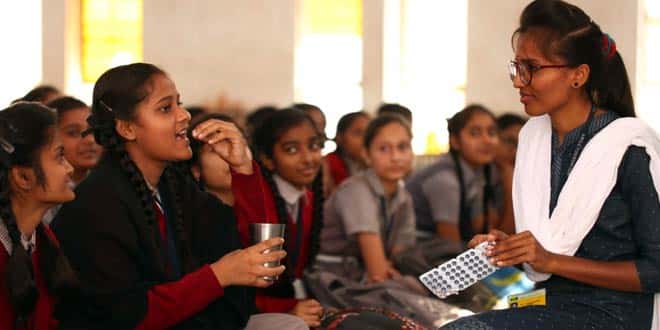

For decades, India has treated anaemia as a problem of supply. More iron tablets. More fortified food and more schemes layered onto an already crowded nutrition architecture. But the numbers have barely budged. According to NFHS-5, over 57 per cent of Indian women and nearly 60 per cent of adolescent girls are anaemic — figures that have remained stubbornly high despite years of programme expansion.
What has been missing is not intent, but design.
A recent cluster-randomised trial conducted by the Indian Council of Medical Research–National Institute of Nutrition (ICMR-NIN) in Telangana may finally offer the clearest empirical signal yet that India’s anaemia response needs a structural reset. Published in BMJ Global Health, the study evaluates a population-wide Screen and Treat for Anaemia Reduction (STAR) strategy — and its implications go well beyond supplementation.
What the STAR trial changes
The STAR model departs from India’s prevailing approach in one critical way: it assumes that anaemia cannot be addressed effectively without first being identified, at scale, and in real time.
Conducted across 14 villages in Telangana, the study compared routine care under existing national programmes with a proactive, community-level screening and doorstep treatment strategy. Over 6,100 individuals aged six months to 50 years were screened using portable point-of-care haemoglobin analysers. Treatment was tailored: therapeutic iron–folic acid (IFA) doses for those with anaemia, and prophylactic doses for those without, aligned with national guidelines.
The results are difficult to ignore.
Among adolescent girls aged 10–19 years, anaemia prevalence declined by 15.3 percentage points, with mean haemoglobin levels increasing by 0.73 g/dL. Women of reproductive age also saw measurable gains, with a 4.4 percentage point reduction in anaemia prevalence. Overall anaemia prevalence in intervention clusters fell to 29.6 per cent, compared to 32.5 per cent in control areas.
In a policy landscape often dominated by modelling and assumptions, this is rare: direct, population-level evidence that proactive screening outperforms opportunistic, facility-based care.
Why current programmes plateau
India’s flagship Anaemia Mukt Bharat strategy has expanded coverage across age groups, but its architecture remains largely prophylactic and episodic. Screening is often limited to pregnant women or conducted opportunistically when individuals access health facilities. This approach misses precisely those groups most at risk: adolescents, out-of-school girls and women whose daily labour leaves little time for clinic visits.
High-impact global research has long warned against this gap. Analyses in The Lancet Global Health and BMJ show that iron deficiency explains only about half of anaemia cases among women in low- and middle-income countries. Chronic inflammation, repeated infections, micronutrient interactions and cumulative dietary inadequacy account for the rest. Without systematic detection, these cases remain invisible.
The STAR trial demonstrates that anaemia is not failing to respond because interventions are ineffective, but because they are poorly targeted.
The compliance paradox
The study also surfaces a crucial constraint. Despite doorstep delivery and behaviour change communication, adherence to IFA remained modest — 32 per cent for therapeutic doses and 47.5 per cent for prophylactic doses.
This finding aligns with a growing body of evidence in Public Health Nutrition and Social Science & Medicine that supplementation alone cannot overcome social, sensory, and behavioural barriers. Side effects, misconceptions, gender norms and competing priorities all shape adherence. Screening identifies anaemia; sustained engagement determines whether treatment works.
In other words, testing is necessary but not sufficient.
Anaemia as a life-course condition
What the STAR model implicitly recognises — and what policy has been slow to accept — is that anaemia is a life-course condition, not a pregnancy-specific one.
By adolescence, many Indian girls have already accumulated years of nutritional deficit. Menstrual blood loss, growth spurts, early marriage and closely spaced pregnancies further deplete iron stores. Research in Nature Reviews Disease Primers underscores that late intervention cannot fully reverse the neurocognitive and metabolic effects of early deficiency.
This is why upstream platforms matter. Schools, community centres and mobile health units offer continuity that antenatal clinics cannot. They also allow anaemia to be addressed alongside nutrition literacy, menstrual health, and dietary diversity — factors that shape long-term outcomes.
Where civil society fits in
The policy implication of STAR is not merely to scale screening, but to embed it within trusted delivery platforms. This is where civil society organisations become system enablers rather than parallel providers.
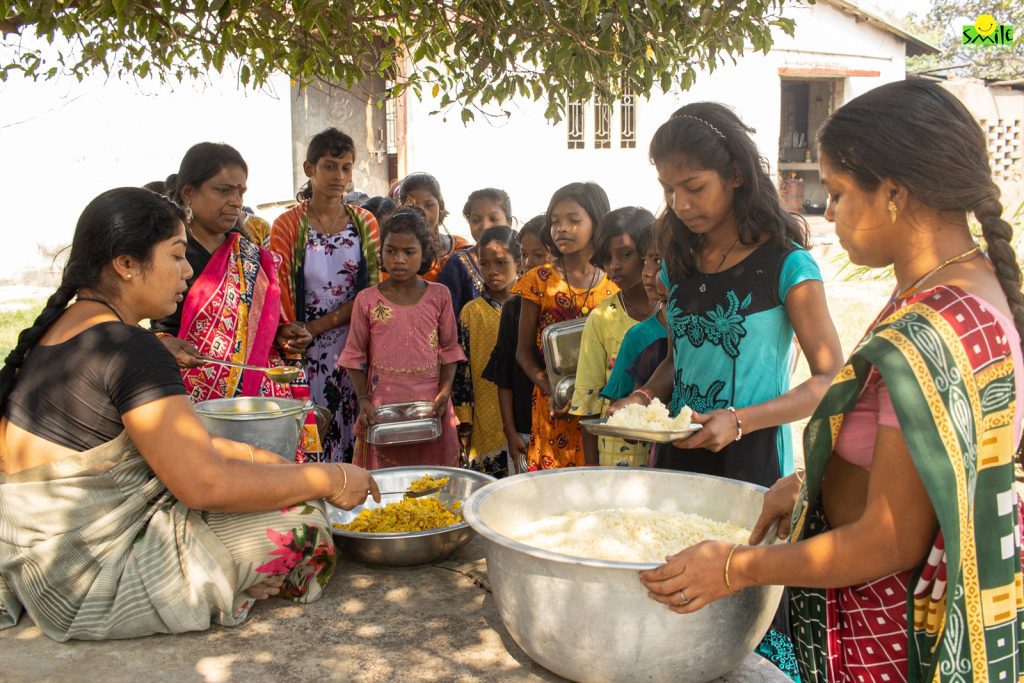
Smile Foundation, for instance, operates at precisely this intersection. Across its health programme, the Foundation integrates regular haemoglobin screening with counselling, dietary diversification and menstrual health education, particularly for adolescent girls.
Through initiatives such as Project Poshan and Swabhiman, Smile Foundation follows girls longitudinally, recognising that anaemia prevention requires repeated engagement across life stages. Its mobile health units extend screening and counselling to tribal and peri-urban areas where laboratory access is limited, operationalising a “screen and treat” approach in contexts the public system struggles to reach.
Equally important is the Foundation’s emphasis on food-based solutions. Nutri-gardens, locally sourced meals and promotion of iron-rich traditional foods complement fortified products rather than replacing them. This mirrors findings from The American Journal of Clinical Nutrition and Food Policy, which caution against over-reliance on ultra-processed fortified foods without broader dietary diversity.
Anaemia as an economic constraint
The persistence of anaemia is a productivity constraint.
Economic analyses published in The Review of Economics and Statistics link anaemia to reduced cognitive performance, lower educational attainment, and diminished lifetime earnings. The World Bank estimates that anaemia can cost high-burden countries up to 4 per cent of GDP annually through lost productivity and increased healthcare expenditure.
For adolescents, the consequences are immediate: poor concentration, fatigue and higher dropout risk. For women, anaemia reduces work capacity and increases vulnerability to economic shocks. Addressing anaemia, therefore, is not only a nutritional imperative but a macroeconomic one.
What scaling STAR would require
The STAR trial offers proof of concept, not a turnkey solution. Scaling it nationally would require:
- Integration with existing platforms, including schools, Anganwadi centres and digital health systems under Ayushman Bharat.
- Frontline capacity building, so screening and counselling are not reduced to mechanical tasks.
- Data continuity, enabling haemoglobin tracking across life stages rather than one-time measurements.
- Behavioural investment, recognising that adherence depends as much on trust and norms as on access.
Most importantly, it would require a shift in how success is measured. Tablets distributed are not outcomes. Functional gains are.
A decisive moment
India has reached a point where the evidence is no longer ambiguous. The STAR trial confirms what researchers have argued for years: anaemia cannot be reduced at scale without proactive identification and continuous engagement.
The choice now is whether to treat this finding as another pilot success, or as a mandate to redesign national strategy. If India opts for the latter, the gains will extend far beyond haemoglobin levels. They will be felt in classrooms where girls can concentrate, in workplaces where women can perform at full capacity, and in households where health is no longer silently traded for survival.
Anaemia has endured not because it is intractable, but because it has been approached too narrowly. STAR shows what is possible when policy finally aligns with physiology, behaviour and systems.