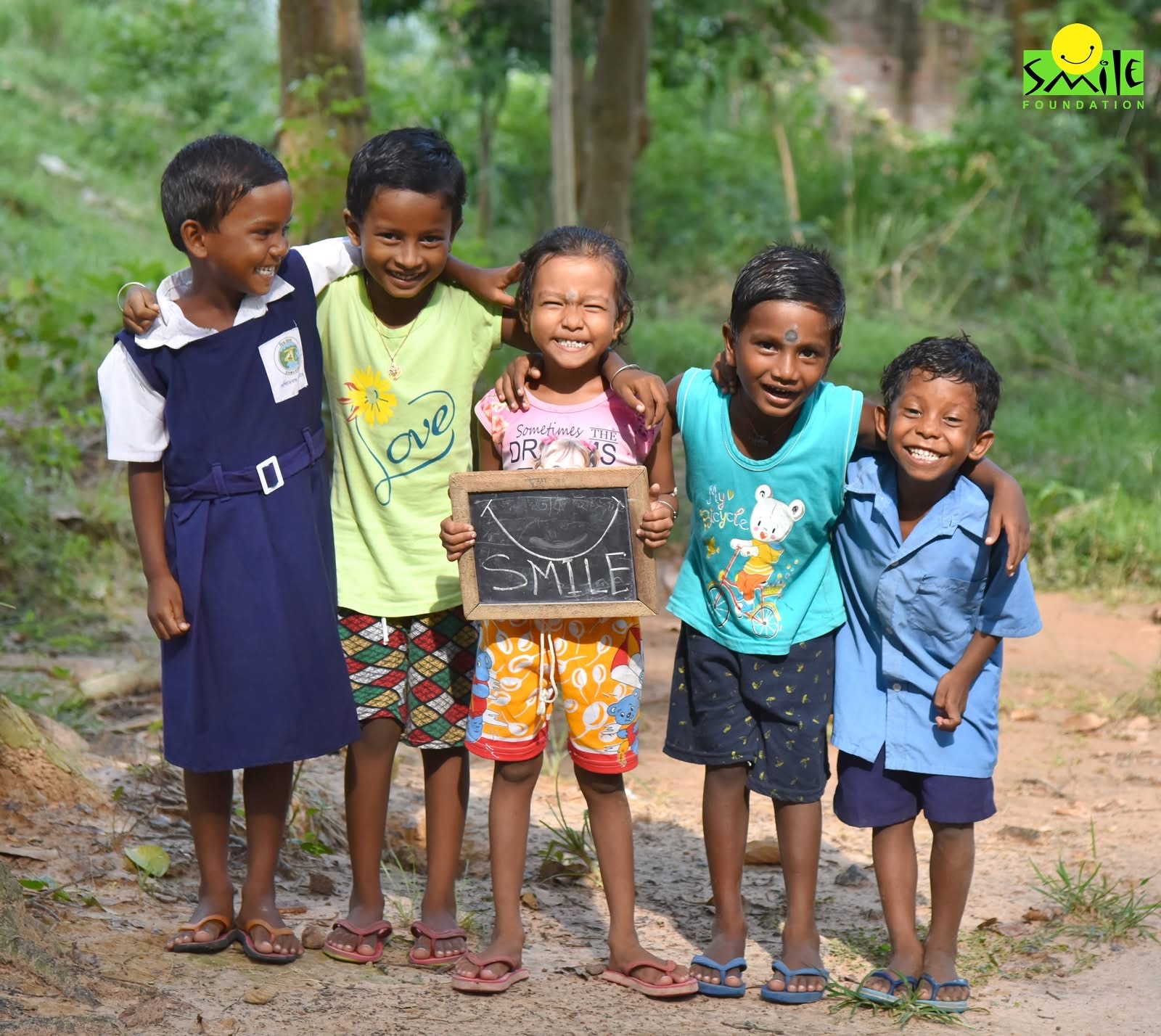

Why Narratives Matter in Development
Every organisation has a story. But for non-profits, that story is not just about identity — it shapes impact, funding and public trust.
When Smile Foundation was established in 2002, India’s development sector was still framed in a language of charity. Campaigns featured images of malnourished children, appeals to “help the needy” and stories that positioned donors as rescuers.
Two decades later, Smile Foundation’s communication looks dramatically different. Today, the organisation speaks in the language of system strengthening, empowerment and partnerships. Children are framed as learners and future leaders, women as agents of change and frontline workers as pillars of India’s health and education systems.
This evolution in narrative is not cosmetic — it reflects deeper changes in India’s development sector, global priorities like the SDGs and Smile Foundation’s own growth as a professional, impact-driven institution.
The early years: A charity lens
At its inception, Smile Foundation’s work was heartfelt and immediate: enrolling children in schools, organising medical camps in underserved areas and providing relief during natural disasters.
The language of its campaigns reflected that era. Mission Education, Smile’s flagship programme, initially communicated in simple terms: “Help a child go to school.” Visuals showed children holding books or sitting in classrooms, the message being that donors could directly “give” them a future.
Healthcare too was narrated in numbers treated — the success of medical camps was reported by tallying how many patients received consultations or medicines.
This was effective in mobilising early support, but it carried a limitation: it cast communities as recipients of aid rather than participants in change.
The first shift: From pity to participation
By the mid-2000s, Smile Foundation began noticing the gaps in this approach. A child might be enrolled in school, but if her mother fell ill or the family needed her to work, she would drop out. A patient might receive medicine at a camp, but without follow-up care, the illness returned.
Smile realised that sustainable change required participation, not just pity.
The narrative began to shift:
- Children were no longer depicted as helpless, but as eager learners with potential.
- Mothers appeared not only as caregivers but as advocates for their children’s education.
- Donors were framed as partners in progress, not just benefactors.
Case study: Smile Twin e-Learning Programme (STeP)
This vocational training initiative epitomised the narrative change. Instead of charity for unemployed youth, the story became one of opportunity and agency. Communication stressed that training in retail, IT and soft skills could help youth “step” into jobs and independence.
The tone shifted from “help them survive” to “equip them to thrive.”
Education: From sponsorship to systemic change
Smile Foundation’s Mission Education grew into one of India’s largest non-formal education initiatives, reaching thousands of children across urban slums and remote villages.
As the Right to Education Act (2009) reframed schooling as a right, not a privilege, Smile adapted its communication accordingly.
- Then: “Sponsor a child’s education.”
- Now: “Education is every child’s right — together, we can make it real.”
Case study: Shiksha Na Ruke
During the COVID-19 pandemic, when millions of children were at risk of dropping out, Smile launched Shiksha Na Ruke (Let Education Not Stop).
This campaign captured the essence of Smile’s evolved narrative. It was no longer about children in need but about a systemic crisis in continuity of learning. Smile’s solution — digital classrooms, community learning pods, parental engagement — positioned the organisation as a problem-solver at scale, not just a service provider.
Healthcare: From camps to systems strengthening
Health has been one of the most visible areas of Smile’s narrative change.
In the 2000s, healthcare meant temporary medical camps. Impact was measured by “patients seen” and “medicines distributed.”
With the launch of Smile on Wheels, mobile healthcare vans, the story expanded. Now, Smile spoke of last-mile healthcare access, taking doctors and diagnostics to where none existed.
By the 2020s, Smile’s healthcare narrative had matured into system strengthening:
- E-Arogya Clinics integrated technology and medicine vending machines for sustainable delivery.
- Campaigns emphasised preventive care, not just treatment.
- ASHA workers were highlighted as partners, not just local assistants.
Case Study: Health Cannot Wait (COVID-19 Response)
This campaign reflected Smile’s evolved language. Instead of “we are distributing relief,” the message was: “We are ensuring system readiness and resilience for future crises.”
The focus was on preventive healthcare, capacity building and partnerships with frontline workers — aligning Smile with global public health priorities.
Women’s empowerment: From beneficiaries to leaders
In the early years, women appeared in Smile’s campaigns primarily as mothers — feeding children, attending health check-ups, receiving nutrition kits.
By the late 2010s, Smile’s gender narrative had transformed. Women were now leaders, earners and decision-makers.
Case study: Swabhiman
Initially a programme for reproductive health and nutrition, Swabhiman evolved into a holistic women’s empowerment platform.
Communication began highlighting:
- Women leading self-help groups
- Adolescent girls completing education
- Mothers running small businesses
The storytelling shifted from “help women” to “invest in women.” This aligned Smile with the global development community’s push to frame gender equality as smart economics.
Disaster Response: From relief to resilience
Smile has responded to nearly every major disaster in India over the last two decades — earthquakes, floods, cyclones.
- Early years: Stories focused on immediate relief — rations, clothes, medicines.
- Later years: The emphasis shifted to resilience and recovery — rebuilding schools, psychosocial support, safe spaces for women and children.
Case study: Kerala floods (2018)
Instead of reporting “tons of food distributed,” Smile’s communication highlighted restoring schools, setting up safe spaces and enabling communities to recover stronger.
This reframing mirrored global frameworks like the Sendai Framework for Disaster Risk Reduction, which stresses long-term resilience over short-term relief.
CSR partnerships: From Donor appeals to co-Investment
The Companies Act, 2013, mandating CSR, forced NGOs to professionalise communication. Corporates wanted ROI, impact metrics and scalable models.
Smile adapted swiftly:
- Reports highlighted learning outcomes, nutrition indicators and cost-effectiveness.
- Campaigns spoke of “partnerships for nation-building,” not “donations.”
Case Studies:
- PepsiCo Nutrition Enhancement Programme: Reached 60,000+ beneficiaries with kitchen gardens, health camps and worker training.
- Mars Wrigley & Smile: Improved Anganwadi infrastructure in Maharashtra with solar lighting, toilets and water filters.
- Microsoft Digital Classrooms: Framed as pilots for scalable ed-tech models, aligning with CSR interest in innovation.
This pivot ensured Smile remained relevant to CSR boards and corporate philanthropy.
Storytelling platforms: The medium is the message
Smile’s communication has also mirrored broader media shifts:
- 2000s: Posters, donation appeals, newsletters.
- 2010s: Short films, donor reports, case study booklets.
- 2020s: LinkedIn carousels, infographics, blogs with policy-angled storytelling.
Today, Smile speaks to multiple audiences simultaneously:
- General public: Through human-centered stories of children and women.
- CSR leaders and policymakers: Through data, policy alignment and SDG framing.
Today’s narrative: System strengthening
Three elements define Smile Foundation’s present-day storytelling:
- Agency over pity: Communities are portrayed as capable agents of change.
- Systems over charity: Focus on continuity in education, healthcare resilience and women’s leadership.
- Partnerships over giving: Corporates, governments and individuals are invited to co-create solutions.
The next frontier: Dignity and advocacy
If the early 2000s were about need, and the 2010s about empowerment, the 2020s are about dignity.
The future of Smile’s narrative will likely emphasise:
- System strengthening at scale: Training frontline workers, upgrading infrastructure, building resilient institutions.
- Intersectionality: Connecting health, education, climate and livelihoods.
- Digital storytelling: Data dashboards, interactive case studies, podcasts.
- Policy advocacy: Moving beyond service delivery to shaping policy conversations in health, education and gender.
A story still being written
From charity appeals in the early 2000s to system-strengthening partnerships today, Smile Foundation’s narrative evolution mirrors India’s own development journey.
The heart of the story remains the same: a belief that every child, every woman and every frontline worker deserves not just survival but dignity, opportunity and the chance to thrive.
But the telling of that story has matured. It now reflects confidence, scale and a systems approach — positioning Smile Foundation not only as a service provider but as a strategic partner in nation-building.
And perhaps the biggest lesson is this: when narratives evolve, so does impact. A story well told is not just communication. It is transformation.