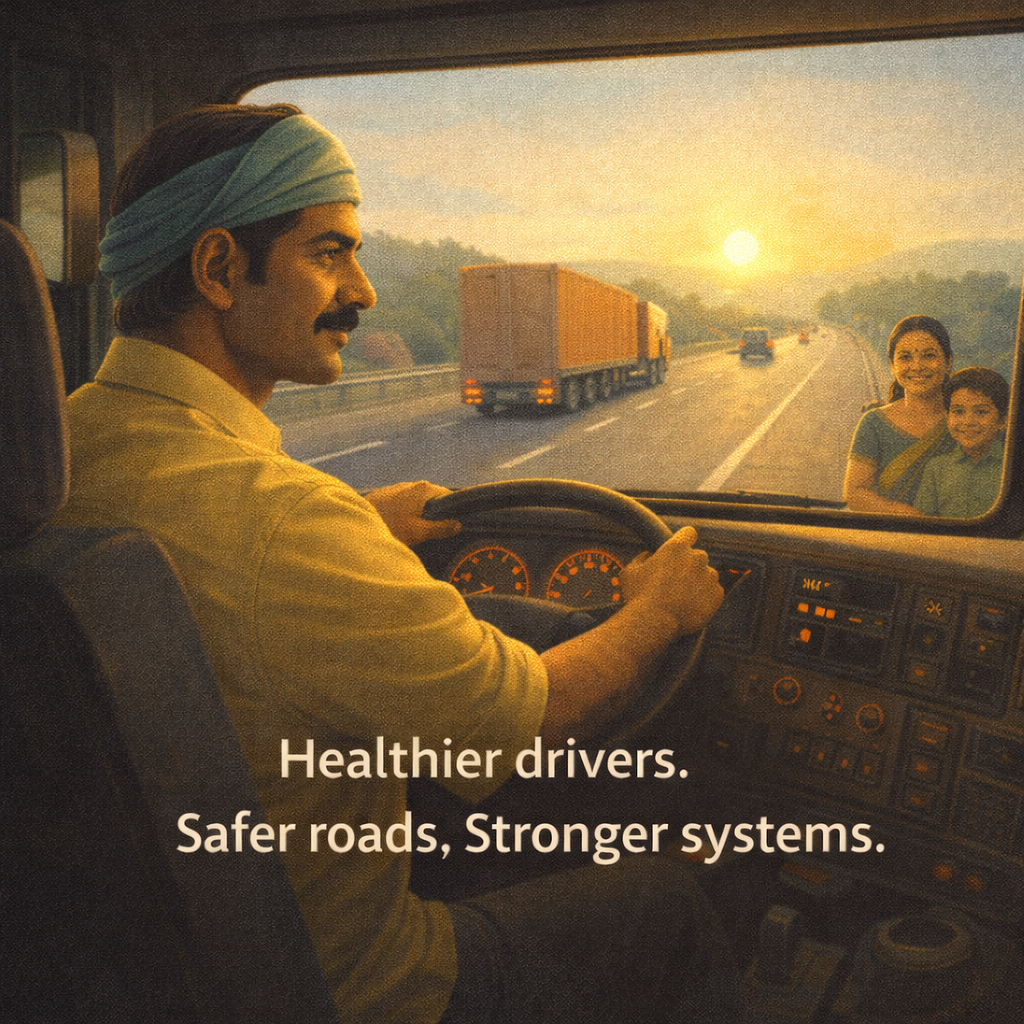

India’s highways never sleep. But those who make it happen, what about their health? Healthcare for truckers hasn’t received the spotlight it deserves.
Every day, millions of trucks move across the country carrying food, medicines, raw materials and essential goods that keep the economy running. At the centre of this vast, invisible network is a workforce that is both indispensable and overlooked: truck drivers and the transport community.
They ensure continuity, ensure supply and are the workhorses that make cities function.
Yet, when it comes to healthcare, they are often left behind.
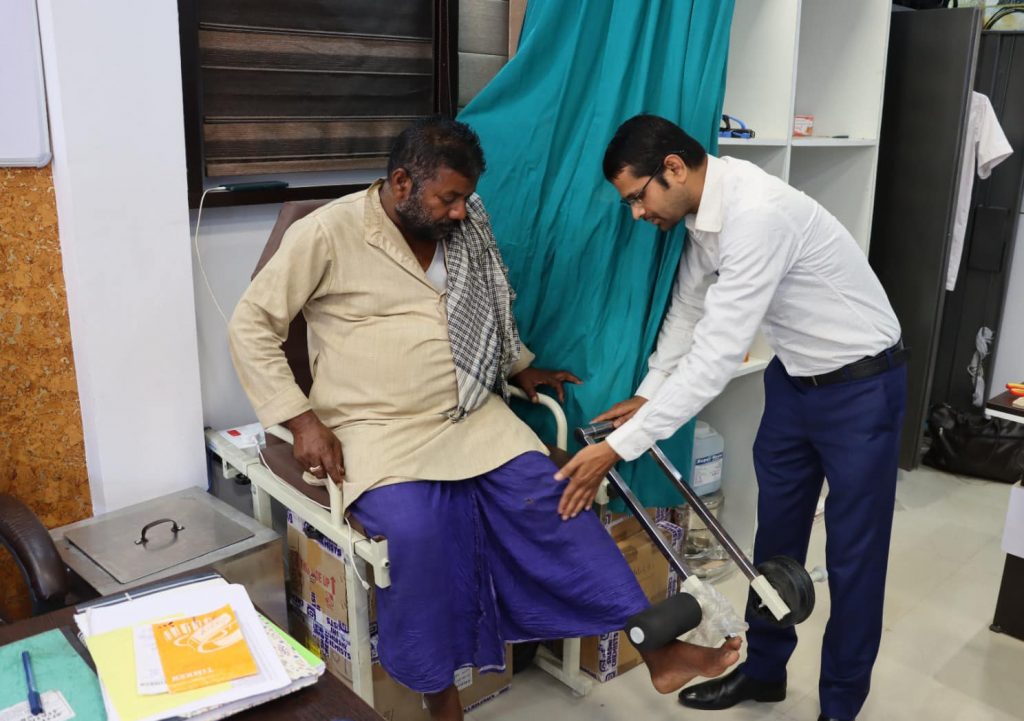
Recognising this gap, Smile Foundation, along with its CSR partners, has been working to bring physiotherapy services closer to transport hubs creating accessible, consistent care for those who spend most of their lives on the road.
But this intervention is not just about healthcare delivery. It reflects a deeper understanding of the structural challenges truckers face, and why targeted, sustained investment in this sector is long overdue.
Life on the road: A profession defined by endurance
To understand why healthcare access is critical, it is important to first understand the nature of a trucker’s life.

Truck drivers in India often spend:
- 10–14 hours a day driving
- Days, sometimes weeks, away from home
- Sleeping in their vehicles or roadside stops
Their work is physically and mentally demanding:
- Continuous sitting leads to chronic back and joint pain
- Irregular meals affect digestion and overall health
- Sleep deprivation impacts both physical and cognitive functioning
Add to this the pressure of delivery timelines, traffic conditions, and long-distance travel, and it becomes clear that this is not just a job. It is a high-risk, high-strain occupation.
The hidden health burden
Despite these challenges, healthcare-seeking behaviour among truckers remains low.
This is not due to lack of need, but lack of access.
1. Delayed diagnosis
Truckers often ignore early symptoms:
- persistent pain
- vision issues
- fatigue
These are seen as part of the job rather than indicators of underlying conditions.
By the time they seek care, issues may have progressed significantly.
2. Musculoskeletal disorders
One of the most common health concerns among truckers is:
- back pain
- neck stiffness
- joint problems
These are directly linked to prolonged sitting, poor posture and lack of movement.
Without physiotherapy or early intervention, these conditions can become chronic, affecting both quality of life and ability to work.
3. Limited access to primary care
Unlike urban populations, truckers cannot rely on:
- fixed healthcare providers
- regular check-ups
- continuous treatment
Their mobility becomes a barrier.
Healthcare systems, designed for stationary populations, often fail to accommodate mobile workers.
4. Vision and fatigue-related risks
Long hours of driving make:
- eye strain
- vision problems
- delayed reaction times
a serious concern, not just for truckers, but for road safety overall.
Why traditional healthcare models fall short
The challenge is not just availability, it is alignment.
Conventional healthcare systems assume:
- proximity
- routine
- time flexibility
Truckers have none of these.
A driver cannot:
- take a day off easily
- travel long distances to a clinic
- commit to follow-up appointments
This mismatch means that even when services exist, they remain inaccessible in practice.
Bringing healthcare to the highways
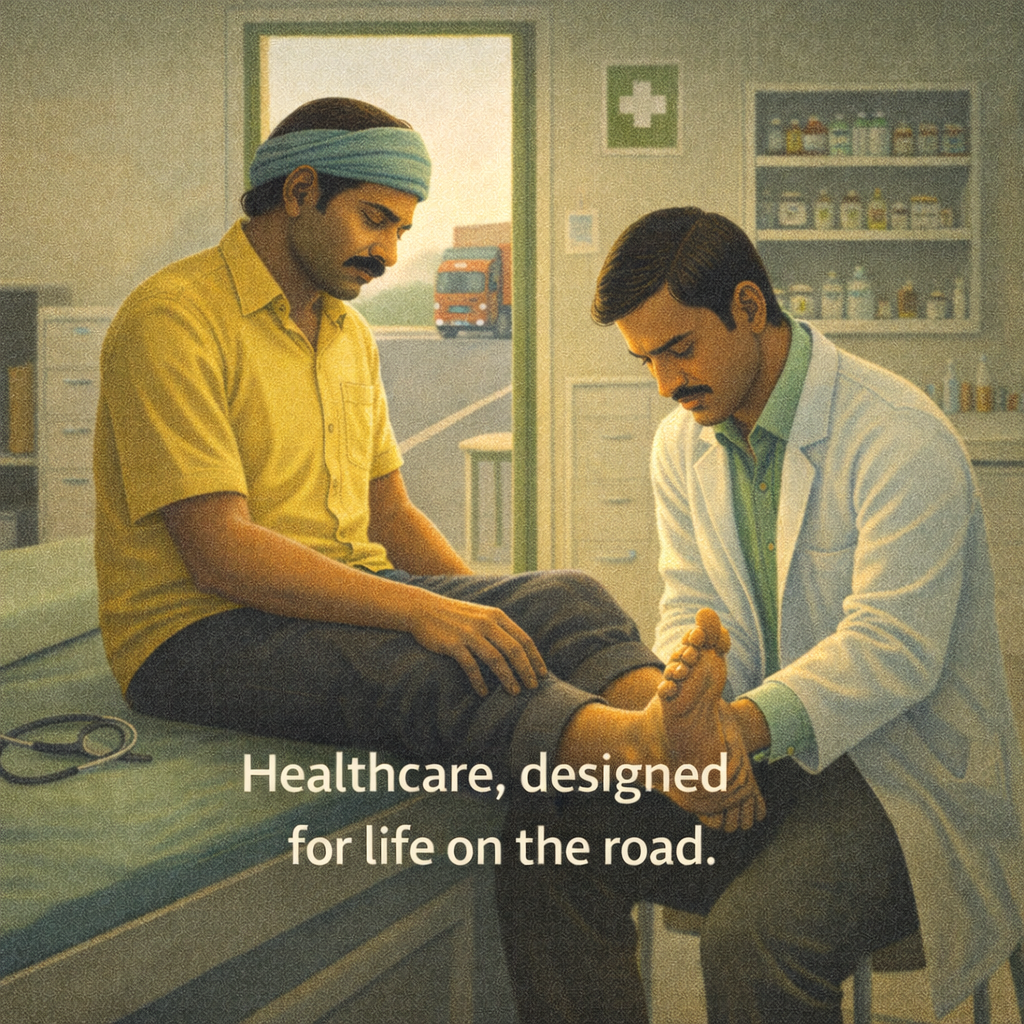
This is where targeted interventions, like the Physiotherapy and Primary Healthcare Clinics supported by Smile Foundation, become critical.
Instead of expecting truckers to adapt to the system, these models adapt the system to truckers’ realities.
Key features of such interventions:
1. Location-based access
Clinics are set up near:
- transport hubs
- highways
- logistics points
This reduces the time and effort required to seek care.
2. Integrated services
Rather than fragmented care, these centres offer:
- physiotherapy for pain and mobility
- consultations with general physicians
- ophthalmology services
- access to essential medicines
This ensures that multiple needs are addressed in a single visit.
3. Focus on preventive care
By enabling:
- early diagnosis
- timely intervention
these clinics shift the focus from reactive to preventive healthcare.
4. Continuity within mobility
Even within a mobile profession, consistent touchpoints create a sense of continuity — encouraging repeat visits and better adherence to treatment.
The impact: Beyond individual health
While the immediate benefit is improved health outcomes for truckers, the ripple effects are far wider.
1. Economic stability
Healthier drivers are able to:
- work more consistently
- reduce downtime due to illness
- maintain productivity
This has direct implications for supply chains and the broader economy.
2. Road safety
Better physical and visual health contributes to:
- improved alertness
- reduced accident risk
Making roads safer for everyone.
3. Family well-being
Truckers’ health affects entire households.
When health improves:
- financial stability increases
- caregiving burdens reduce
- overall quality of life improves
4. Dignity and recognition
Perhaps most importantly, such initiatives acknowledge that truckers’ health matters — that their well-being is not secondary to the services they provide.
The role of CSR: Bridging systemic gaps in healthcare for truckers
The transport community sits at the intersection of multiple systems:
- labour
- health
- infrastructure
- logistics
Yet, it often falls through the cracks of each.
This is where CSR-led partnerships play a crucial role.
By supporting:
- infrastructure creation
- service delivery
- outreach programmes
CSR initiatives can address gaps that are not fully covered by public systems.
More importantly, they can:
- pilot innovative models
- demonstrate impact
- create scalable solutions
Why more investment and research is needed
Despite growing recognition, the transport sector remains under-researched in terms of health.
1. Lack of comprehensive data
There is limited large-scale data on:
- prevalence of chronic conditions among truckers
- mental health challenges
- long-term occupational health impacts
Without data, interventions remain fragmented.
2. Need for longitudinal studies
Understanding how:
- work patterns
- lifestyle
- healthcare access
affect long-term outcomes requires sustained research.
3. Designing for mobility
Research is needed to answer key questions:
- What models of care work best for mobile populations?
- How can technology support continuity of care?
- What incentives improve healthcare-seeking behaviour?
4. Policy integration
Evidence from research can inform:
- labour policies
- health system design
- transport regulations
ensuring that truckers are not treated as an afterthought.
A broader shift: From invisibility to inclusion
Truckers are often described as the backbone of the economy. But recognition must go beyond rhetoric.
It must translate into:
- access
- infrastructure
- investment
Healthcare is a critical starting point.
Initiatives like those led by Smile Foundation demonstrate that targeted, context-aware interventions can make a tangible difference. But scaling this impact requires:
- stronger partnerships
- sustained funding
- deeper research
The way forward in healthcare for truckers
Ensuring healthcare for truckers is not just a welfare measure — it is a strategic imperative.
As India continues to expand its logistics and infrastructure networks, the well-being of those who sustain them must be prioritised.
This means:
- embedding healthcare into transport ecosystems
- designing services around mobility
- recognising truckers as a critical workforce deserving of consistent care
Because when those who keep the country moving are supported, the benefits extend far beyond highways.
They reach homes, markets and communities across India.
And they remind us that development is not just about movement of goods but about the well-being of the people who make that movement possible.