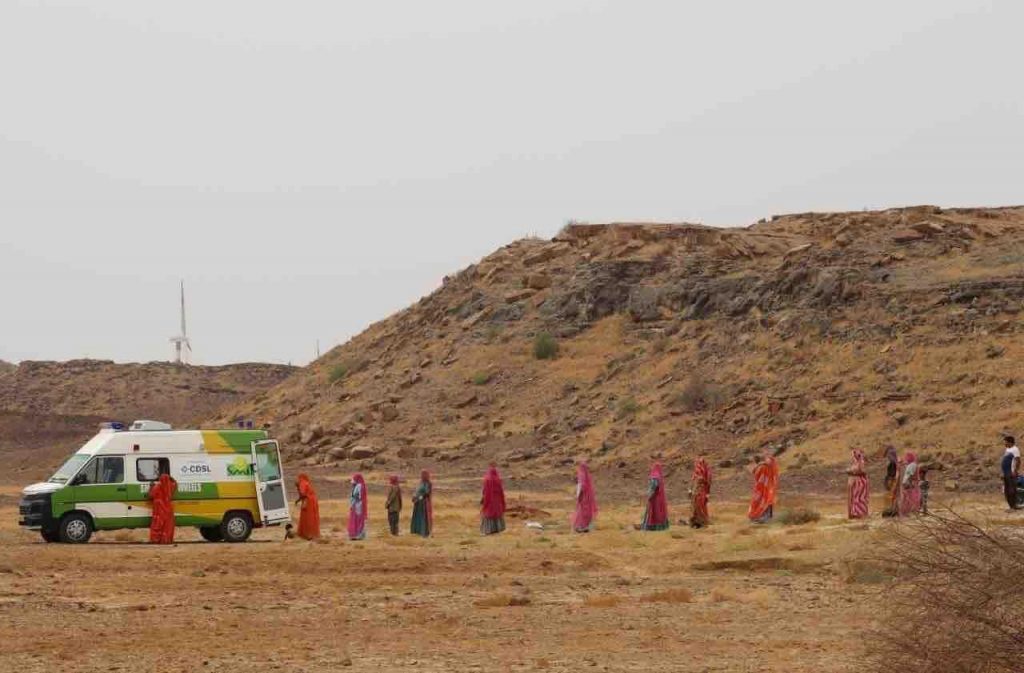
In the summer of 2024, as record-breaking heatwaves swept across northern India, schools in several States shut down for weeks at a time. For policymakers, these closures were framed as temporary disruptions. For children, they were something else entirely: lessons learned not from textbooks, but from lived experience. Heat, water scarcity and air pollution were no longer abstract environmental concepts; they were the conditions shaping daily life.
This gap between lived experience and formal education lies at the heart of India’s climate challenge. While children are increasingly exposed to the effects of climate change, the education system has struggled to equip them with the tools to understand, articulate and respond to these realities. Environmental education remains largely instructional, focused on definitions and diagrams, even as climate change unfolds outside classroom windows.
Treating children merely as recipients of climate knowledge misses a critical opportunity. Children are not passive witnesses to environmental change. They observe it closely, interpret it intuitively and communicate it vividly. When education enables them to articulate these observations, children become climate storytellers, translating environmental change into narratives that resonate within families, schools and communities. At a moment when climate discourse is dominated by targets, projections and global negotiations, these local narratives are not incidental. They are essential.
Climate change as a childhood condition
India ranks among the most climate-vulnerable countries in the world. According to UNICEF’s Children’s Climate Risk Index, India stands 26th out of 163 countries, with over a billion children exposed to at least one major climate hazard — heatwaves, floods, cyclones or air pollution. These risks are not evenly distributed. Children from low-income households, informal settlements and climate-sensitive regions experience the most frequent and severe disruptions.
Yet climate education in India has not kept pace with this reality. For many students, climate change remains a chapter at the back of a science textbook — something to be memorised for examinations rather than understood as a shaping force in their lives. This disconnect has consequences. When children experience climate change as disruption but learn it as theory, education loses relevance and credibility.
Environmental education, to be meaningful, must begin from where children are — not from where syllabi assume them to be.
Why storytelling matters in environmental education
Storytelling is often dismissed as a soft skill, secondary to scientific rigour. In climate education, the opposite is true. Storytelling is how children connect data to experience, cause to consequence, and local observation to global phenomenon.
Educational research consistently shows that narrative-based learning strengthens comprehension and retention, particularly for complex systems such as climate science. More importantly, it allows children to situate themselves within the problem without being overwhelmed by it. A child who documents a drying water source or changing monsoon patterns is not merely learning about climate change; they are learning how to observe, analyse and communicate evidence.
This is not anecdotal pedagogy. UNESCO’s 2023 review on climate change education highlights that participatory, student-led approaches — including storytelling — lead to stronger environmental literacy and greater civic engagement. When children narrate environmental change, they also begin to imagine response.
Policy intent, pedagogical hesitation
India’s National Education Policy (NEP) 2020 recognises the need for environmental awareness, scientific temper and experiential learning across stages of schooling. It encourages interdisciplinary approaches and contextual learning. On paper, the intent is sound.
In practice, implementation remains hesitant. Environmental education is still treated as an adjunct, rather than a core civic competency. Teachers often lack training or curricular flexibility to engage with climate issues beyond prescribed content. In under-resourced schools, experiential learning is constrained by infrastructure and time pressures.
There is also a deeper discomfort at play. Climate change, when taught seriously, raises questions about development choices, governance failures and inequality. Allowing children to articulate climate experiences risks unsettling comfortable narratives. As a result, education systems default to safer ground: facts without context, science without story.
Whose stories are heard
The inequities in climate education mirror broader educational divides. Children in private, urban schools are more likely to encounter project-based learning, digital tools and environmental clubs. Students in government schools, particularly in rural, tribal and peri-urban areas, often experience climate impacts more directly but have fewer opportunities to articulate them.
This imbalance risks producing a narrow class of climate-aware citizens — fluent in global discourse but disconnected from local realities — while marginalised children remain invisible in climate conversations despite bearing the brunt of environmental change.
If environmental education is to serve democratic ends, it must prioritise voice as much as knowledge. Storytelling offers one of the few pedagogical tools capable of bridging this divide, because it does not depend on expensive infrastructure. It depends on attention.
Children as communicators, not symbols
Children’s voices are often invoked symbolically in climate discourse — as victims to be protected or as moral reminders of future generations. Far less attention is paid to their role as communicators in the present.
When children describe climate change in their own words — through essays, drawings, plays or digital media — they often communicate urgency with a clarity that expert reports struggle to achieve. Their narratives are specific, grounded and relational. They speak of schoolyards without shade, water taps that run dry, homes flooded during monsoons.
These stories travel. Research shows that children’s environmental learning frequently influences household behaviour, shaping decisions around water use, waste management and energy consumption. In this sense, children function not just as learners but as conduits of social change.
The role of civil society in environmental education
Where formal systems move slowly, civil society organisations often experiment with pedagogical innovation. Their role is not to replace state responsibility, but to demonstrate what is possible.
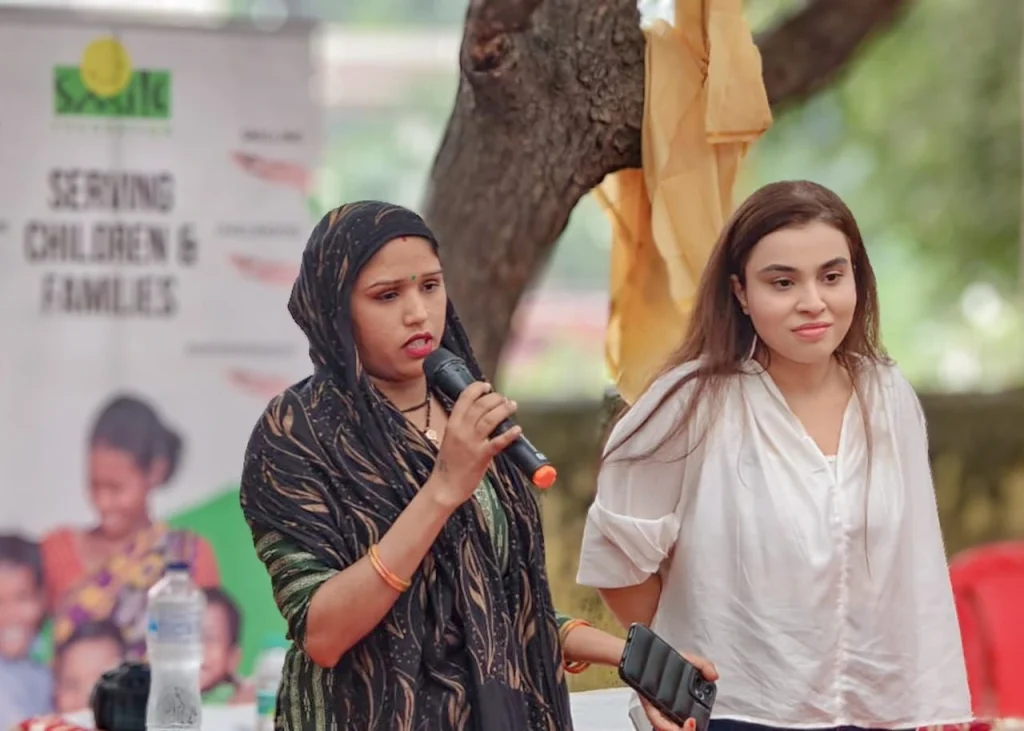
Smile Foundation’s education programmes offer one such example. Through its flagship Mission Education initiative, environmental awareness is embedded within broader learning for children from underserved communities. Climate concepts are introduced through observation-based activities — tracking water use, understanding waste flows, exploring local biodiversity — rather than abstract instruction.
Storytelling is central to this approach. Children are encouraged to document environmental challenges in their neighbourhoods through writing, art and group discussion. These narratives are then shared within classrooms and communities, reinforcing the idea that children’s experiences are valid sources of knowledge.
Importantly, these initiatives do not position children as climate activists burdened with responsibility. They position them as observers and communicators, capable of describing their environment with accuracy and empathy. In communities where climate change is often discussed only after disasters, this shift matters.
From climate anxiety to climate literacy
One of the unspoken challenges of climate education is anxiety. Children exposed to climate change narratives framed solely around catastrophe may feel helpless. Storytelling, when grounded in local experience, can counter this by restoring a sense of agency.
Climate literacy is not about producing solutions; it is about understanding systems, recognising interdependence and articulating concern. Children who can narrate environmental change are better equipped to engage with it emotionally and intellectually.
This distinction matters in India, where climate change is often experienced as instability rather than spectacle. Education that helps children name what they are experiencing is a form of resilience.
Why this matters now
As climate disruptions intensify, schooling itself is becoming more precarious. Heatwaves, floods and pollution-related closures are likely to increase. Education systems that fail to address climate realities risk becoming increasingly disconnected from students’ lives.
Environmental education that foregrounds storytelling offers a way forward. It does not require rewriting curricula overnight. It requires recognising that children’s observations are not distractions from learning, but its starting point.
If India is serious about preparing future generations for a climate-altered world, it must move beyond treating environmental education as enrichment. It must recognise it as a civic necessity.
Children are already living with climate change. The question is whether education systems will allow them to understand and articulate that experience meaningfully. Environmental education that treats children as storytellers — not just students — does more than impart knowledge. It cultivates attention, responsibility and voice.
In a climate-vulnerable country, these are not soft skills. They are democratic ones. By listening to children’s stories of environmental change, India may find not only better climate education, but a clearer understanding of what is at stake.
References:
- UNICEF, Children’s Climate Risk Index
- UNESCO, Climate Change Education Review (2023)
- National Education Policy 2020
- Ministry of Earth Sciences, India