“An investment in knowledge pays the best interest.” Benjamin Franklin may have said it centuries ago, but every young Indian sitting with an entrance exam admit card in one hand and a bank loan brochure in the other knows — it’s true and also complicated.
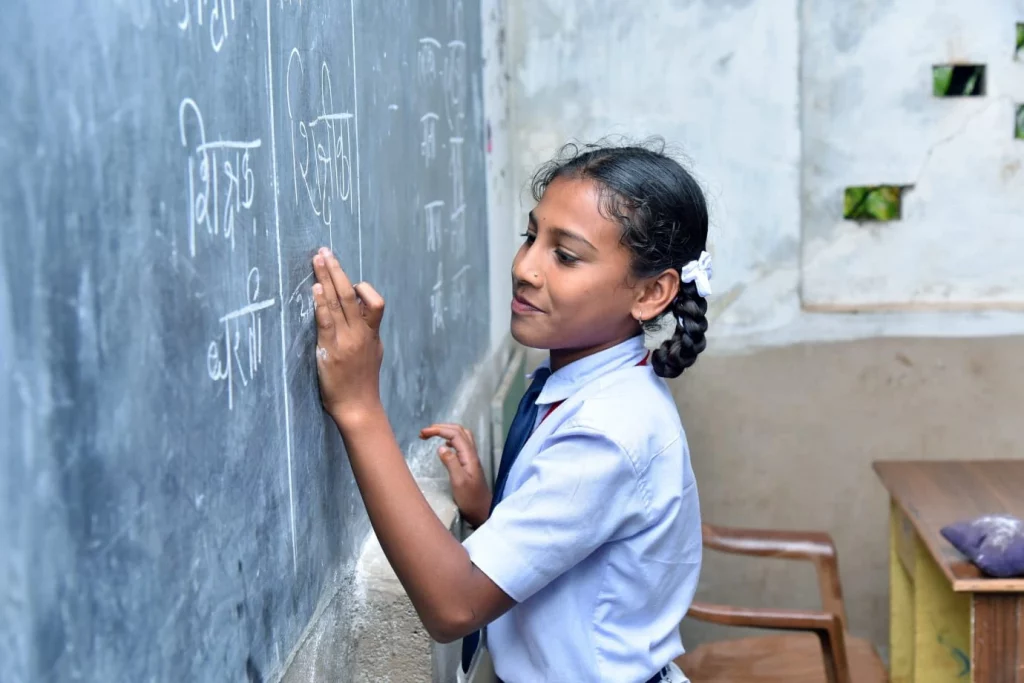
Let us tell you about Sidhi Lonkar, a spirited young woman from Pune. She was still reeling from her father’s loss when she sat for her 10th-grade exams. The idea of pursuing engineering seemed distant, perhaps even indulgent, in those shadowed days. But her mother, who had shelved her own educational dreams years ago, whispered insistently: Go ahead, do what I could not.
With Smile Foundation’s scholarship programme, the dream that had looked unreachable was not only closer, but tangible. Sidhi not only secured admission to a reputable engineering college but was handed a laptop, study materials and, most importantly, the quiet dignity of studying without that gnawing worry about where the next semester’s fees would come from.
Her story is not rare. It is one of thousands. But it neatly frames the paradox of higher education, that is of, its promise of liberation and its punishing financial chains.
Effect of Scholarships: Liberation Tied With Debt
Across India, education is still sold as the golden key. Crack JEE, ace NEET, land that B-school seat — the rewards are enormous. But the cost? Enormous too.
In recent years, the rising tide of education loans has swept across both developed and developing economies. In the US, student debt has ballooned into a trillion-dollar beast. Closer home, in India, education loans between 2019 and 2025 rose by a staggering 95.8%. What that means is that degrees increasingly come wrapped in EMIs.
And debt, as anyone who has carried it knows, is never just financial. It’s emotional.
A 2024 survey by Student Loan Planner revealed that 79% of students with loans felt anxious, 43.5% felt hopeless and 41.5% reported depression linked to their debt. That’s not just a balance sheet problem but a mental health crisis too.
Life Lived in Instalments
Educational debt creeps into every choice.
Graduates with loans don’t often take the jobs they love — they take the jobs that pay. Research, teaching, public service, social development, the arts — fields India badly needs talent in — get abandoned for the safer shores of IT packages and multinational offers.
It also delays life milestones. Should I marry? Should I buy a house? Can I afford to take a break, switch careers, study further? Every decision is measured against the invisible ledger of EMIs.
Debt makes you live life in instalments, long after the degree is framed on the wall.
The Other Path: Effect of Scholarships
Now, picture a young woman sitting at her desk, books open, ambitions swirling. But instead of the constant background hum of “loan repayment, loan repayment,” she hears something more pleasant like silence or freedom.
That’s what a scholarship does.
It isn’t just money. It is recognition. The gold effect of scholarships.
The economic relief is obvious with tuition fees covered, tools provided, stress lifted. But the psychological impact is profound. Scholarships bestow dignity. They validate not just need, but effort, merit, resilience.
And they motivate. Students with scholarships often feel compelled not by fear of debt but by faith placed in them. That faith can be transformative.
Take rural Rajasthan, where Smile Foundation’s Project Manzil scholarships have allowed girls to continue schooling instead of being nudged into early marriages. Or young engineers in Odisha who, instead of dropping out midway, finished their courses with laptops and stipends provided through Smile’s support.
One scholarship can alter not just one life, but a family’s trajectory. A mother rests easier, knowing she doesn’t need to mortgage land. A younger sibling dreams bolder, because they’ve seen what’s possible. A community gains role models — educated daughters who return as teachers, health workers, entrepreneurs.
This is the ripple effect debt can never create — but scholarships do, effortlessly.
Smile Foundation: Beyond Financial Aid
At Smile Foundation, scholarships are not just cheques. They’re carefully crafted bridges.
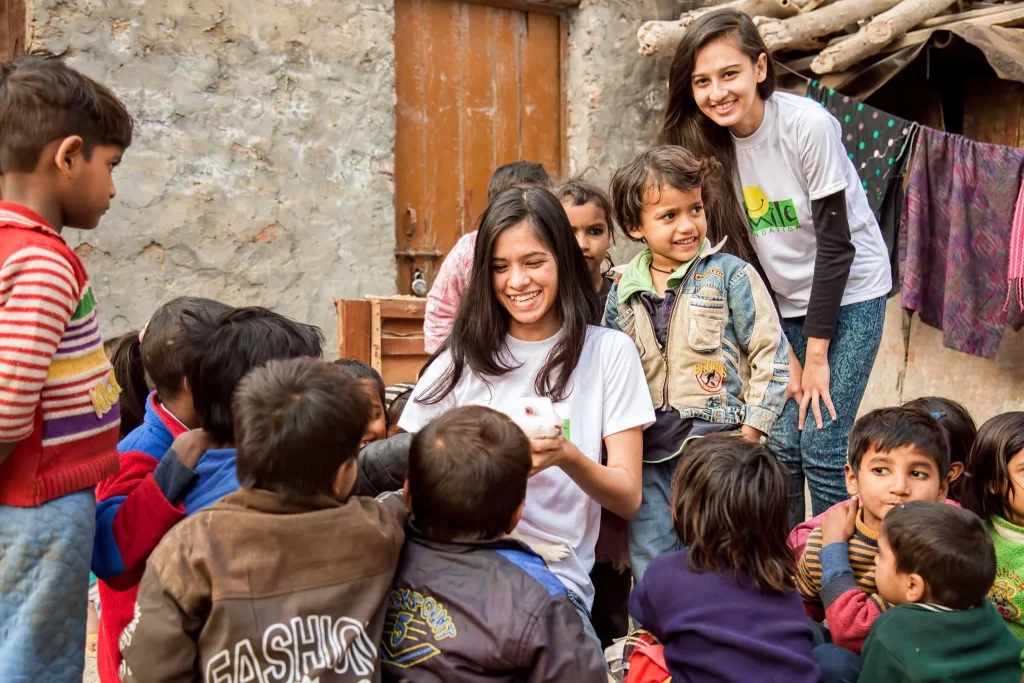
Through Mission Education, Smile has supported over 20,000 girls in continuing their education. That means tuition, yes, but also digital tools, inclusive infrastructure and mentorship. It means fighting dropout rates not by scolding but by supporting. It means seeing each student not as a statistic but as a story.
For Sidhi Lonkar, it meant not having to choose between her grief and her goals. For others, it means laptops in villages where even electricity is uncertain or vocational training that makes employability real.
And there’s a crucial difference here: where loans weigh down, scholarships lift up. Where debt narrows choices, scholarships expand them. Where EMIs eat into courage, scholarships feed it.
Why Scholarships Matter Now More Than Ever
We live in a time when education has never been more expensive or more necessary. India dreams of being a knowledge economy, a land of innovation and ideas. But how will we get there if half our young minds are bent under the weight of debt?
Scholarships are investments. They invest in ambition, in dignity, in possibility. They let education return to its true purpose — not to create earners chained to EMIs, but thinkers, builders, dreamers who can give back to society in ways money can’t always measure.
A Final Reflection
We’ve often thought that education should feel like walking into sunlight — not like walking with stones in your pockets.
Sidhi’s story is proof of that. Without the burden of loans, she could smile into her textbooks, not cry into bank slips. Her scholarship didn’t just buy her notebooks and a laptop — it bought her time, peace, dignity and the right to dream.
That’s what Smile Foundation is trying to do: remove the mask of debt and reveals the face of possibility.
And that’s the choice before us, as a society: will we let our youth live in debt or will we gift them dignity? Will we power their dreams with the effect of scholarships?
Because freedom, after all, doesn’t always wear a flag. Sometimes it looks like a scholarship letter, slipped into a young one’s hands.