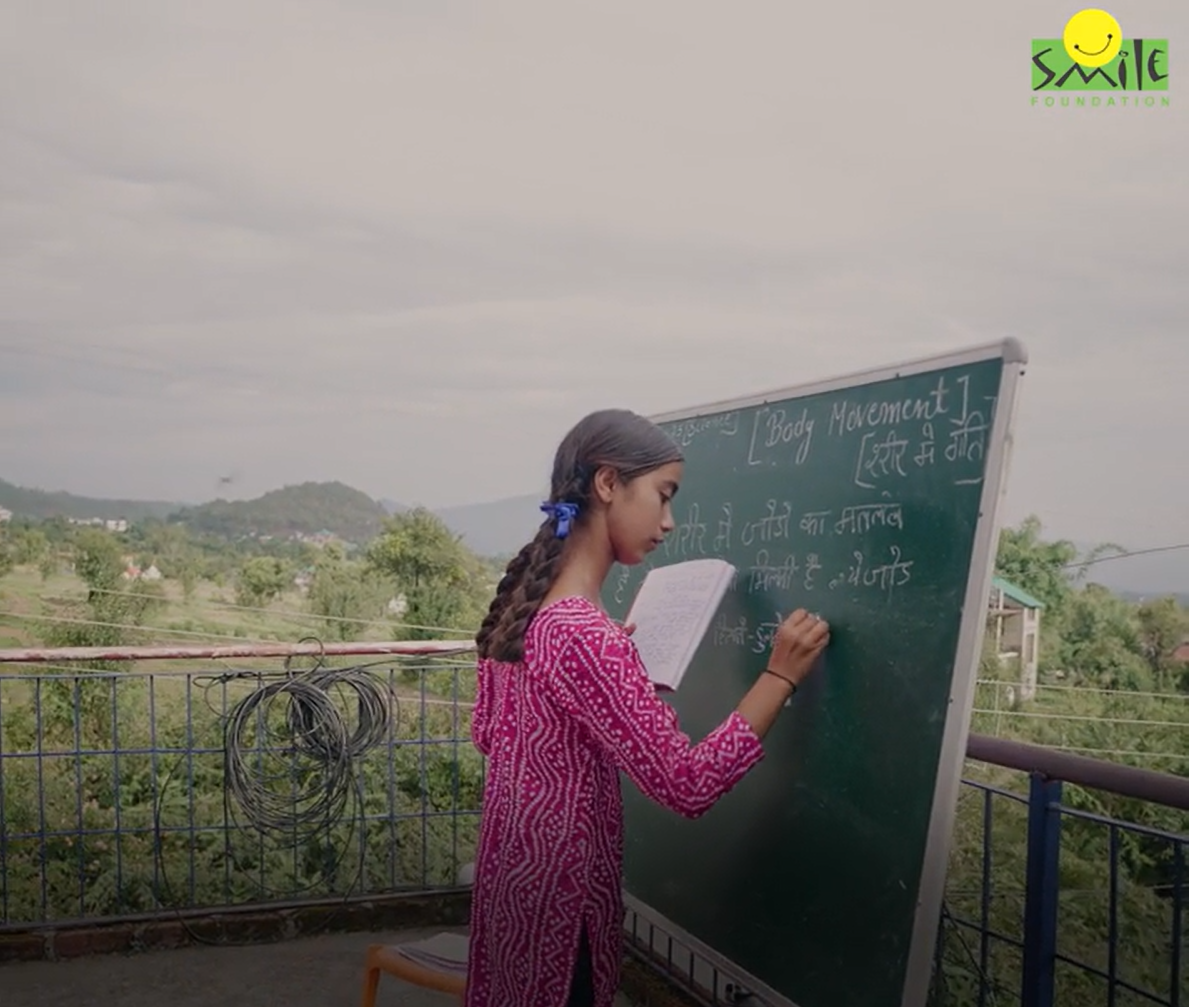

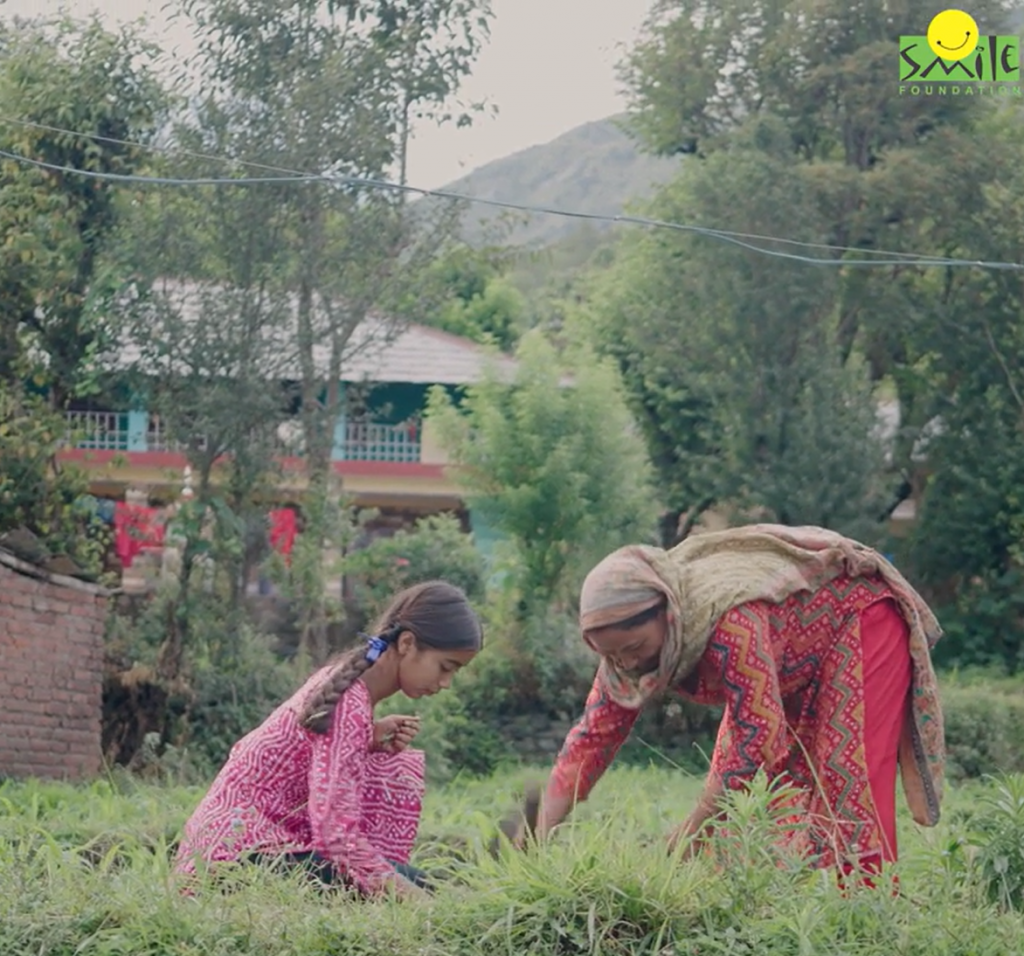
At Smile Foundation’s residential Mission Education Centre in Kangra, children from the pastoral Gaddi tribe are beginning to dream beyond the mountain pastures their families have roamed for generations. Among them is Shreya, a bright, soft-spoken girl whose childhood was shaped by the rhythms of grazing sheep, helping her mother tend to the home, and watching her father leave for distant towns in search of work.
Today, Shreya walks into a classroom instead of trudging across mountain slopes. With the support of Smile Foundation’s educators, she now studies with the goal to ease her parents’ burden one day. “I want to be there for them the way they’ve always been there for me,” she says, her voice steady with determination.
The Gaddi Tribe: Culture, geography, and exclusion
The Gaddi tribe is one of the prominent Scheduled Tribes (STs) of Himachal Pradesh. Traditionally semi-nomadic, Gaddis have for centuries migrated seasonally with their flocks of sheep and goats, navigating the high-altitude pastures of the Dhauladhar range in summer and descending to lower altitudes during the harsh winters.
While this lifestyle has given them deep ecological knowledge and cultural resilience, it has also historically excluded them from consistent access to formal education, healthcare, and infrastructure. Many Gaddi settlements are located in remote and hilly regions, such as the interiors of Kangra, Chamba, and parts of Lahaul-Spiti, where schools and roads are either scarce or seasonally inaccessible.
Census 2011 places the literacy rate among Scheduled Tribes in Himachal Pradesh at 73%, slightly above the national ST average of 59%. However, this figure masks wide disparities. In the remotest Gaddi villages, literacy among girls often dips well below 50%. Language barriers, lack of mobility, economic hardships, and deep-rooted gender norms continue to keep tribal children, especially girls, out of school.
Why tribal education needs targeted investment
Education is more than a right. It is the most powerful tool for breaking the intergenerational cycle of poverty. This is especially true for tribal communities, who often face multiple layers of exclusion like geographical isolation, social marginalisation, and lack of culturally relevant pedagogy.
1. India’s ST education landscape
According to the Ministry of Education’s UDISE+ 2022-23 data:
- The dropout rate at the elementary level among ST children remains significantly higher than the national average.
- Only 26% of ST students complete secondary education.
- Female literacy among STs remains the lowest among all social groups.
These numbers represent millions of children who will miss out on economic opportunities, social mobility, and the chance to live lives of dignity and self-determination.
2. Barriers to access in tribal areas
Infrastructure is a key challenge. In many tribal belts, schools are located several kilometres away, often requiring students to walk across hilly terrain or through forests. Seasonal weather conditions, especially in mountain regions, further disrupt attendance.
Additionally, many tribal families cannot afford uniforms, transport, or stationery. Girls face greater hurdles. They are often expected to assist with household chores, and concerns about safety or lack of female teachers often deter their continued education.
Smile Foundation’s work for children of Gaddi tribe
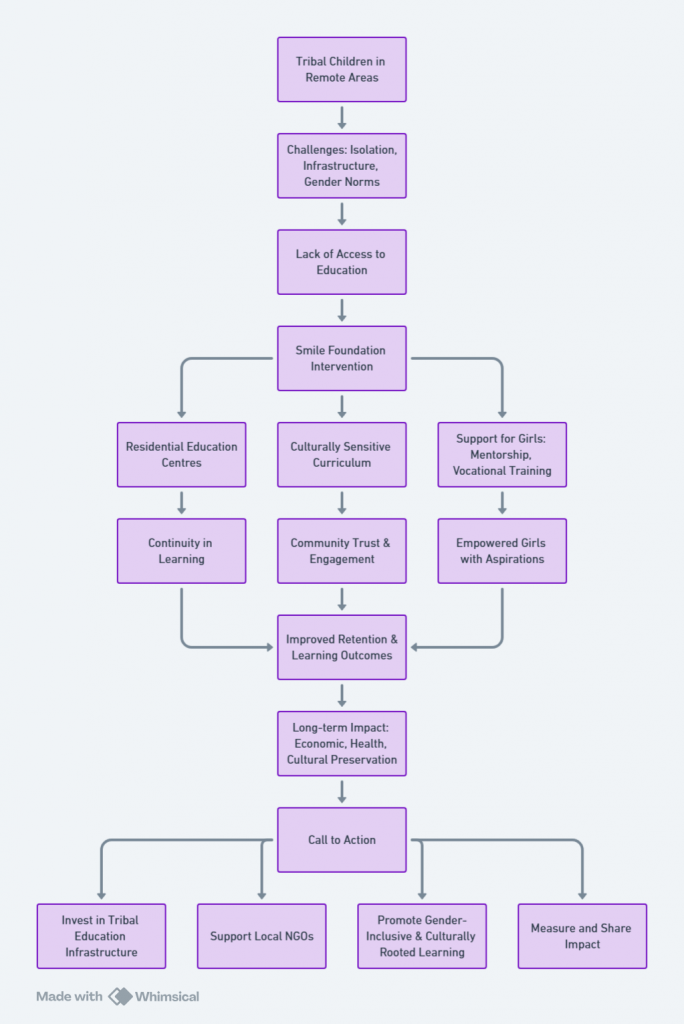
Smile Foundation’s Mission Education programme is designed to address precisely these challenges. With a focus on first-generation learners, the programme supports children from underserved communities by providing access to quality education, nutrition, and a supportive learning environment.
1. Residential support for continuity
In tribal areas like Kangra, Smile Foundation’s residential Mission Education Centre ensures that children like Shreya have a safe, nurturing space to live and learn. This continuity is critical for children from migratory families or those in fragile home situations. At the Kangra centre, students are just taught academic subjects, life skills, nutrition support, and mentorship.
2. Culturally sensitive education
The educators are trained to be sensitive to the local context. This includes respecting tribal dialects, celebrating local festivals, and incorporating traditional knowledge into learning, whether it’s folk stories, nature-based learning, or community values. Such an approach fosters trust and bridges the gap between home and school cultures.
3. Focus on girls’ education
Recognising the unique barriers faced by tribal girls, Smile Foundation places special emphasis on gender inclusion. Girls at the Kangra centre receive mentorship, healthcare, and vocational training, helping them build confidence and aspire to careers and leadership roles previously considered out of reach.
The ripple effect of educating tribal children
The benefits of educating tribal children extend beyond the individual. They transform families, uplift communities, and contribute to national development in multiple ways.
1. Economic Empowerment
An educated child contributes to household income, delays early marriage (especially for girls), and becomes more likely to participate in the formal workforce. They are also better equipped to access government schemes and resources meant for tribal welfare.
2. Health and social development
Educated children grow into informed adults who understand healthcare, nutrition, sanitation, and child-rearing practices. This leads to healthier families and reduced maternal and infant mortality in tribal regions.
3. Preserving and promoting tribal identity
Education does not have to mean cultural erasure. On the contrary, when children are taught to take pride in their roots, they become custodians of their language, crafts, and traditions. Smile Foundation actively encourages tribal children to explore their heritage while building the skills they need for modern life.
4. Strengthening social equity
By investing in tribal education, India takes a firm step toward reducing historical inequalities. It signals that every child, regardless of geography or background, deserves an equal opportunity to learn, grow, and succeed.

Shreya’s dream, our shared responsibility
Back in Kangra, Shreya’s eyes light up when she talks about her future. She dreams of becoming a teacher, so she can return to her village and help more children find the courage to study. “When I become a teacher, I’ll tell every girl she can do anything,” she says.
Her dream is not just hers to carry. It is ours to support.
Smile Foundation’s work with the Gaddi tribe and other indigenous communities showcases what is possible when grassroots education is backed with vision, resources, and compassion. But to scale this impact, we need collective action.
How to create long-term interventions
- Invest in community-based education
- Build or support residential and day-learning centres in tribal regions.
- Ensure that infrastructure includes sanitation, digital learning tools, libraries, and playgrounds.
- Support NGOs with local trust and experience
- Organisations like Smile Foundation have deep roots in the communities they serve. CSR funds can go farther when deployed through experienced partners.
- Focus on girls
- Provide scholarships, transport, menstrual hygiene support, and career counselling for tribal girls.
- Incorporate local culture
- Design curricula that reflect tribal worldviews, languages, and livelihoods. This makes education meaningful and rooted in identity.
- Measure and share impact
- Funders should prioritise data collection on enrolment, retention, and learning outcomes, and share these publicly to inspire more action.
The mountain path forward
When we invest in children like Shreya, we do more than educate a child. We honour the legacy of a tribe, strengthen a nation, and build a future where no child is too remote, too poor, or too forgotten to matter.
Let us walk with her on this mountain path. Let us build more classrooms in the clouds.