

India has reached an important inflection point in its development journey. In education and health—two pillars of human capital—the question is no longer whether systems exist. It is whether they hold, especially for those closest to uncertainty.
Over the last two decades, India has built scale at an extraordinary pace. Schools, hospitals, schemes and platforms now reach millions. But as recent policy thinking makes clear, scale alone does not guarantee outcomes. The next phase of progress depends on quality, continuity and trust—and on whether systems can absorb everyday shocks without losing people along the way.
For organizations working at the last mile, this shift is what reflects what communities experience every day.
Education: When Enrolment is No Longer the Problem
India today operates one of the largest school systems in the world, serving 24.69 crore students across 14.71 lakh schools, supported by over 1 crore teachers. Nearly 27 percent of India’s population is in the school-going age group. This demographic advantage will persist well into the next two decades.
And yet, learning outcomes and educational continuity tell a more complicated story.
While enrolment remains high through the middle grades, the system begins to leak at precisely the moment when education becomes most consequential. At the secondary level, the Gross Enrolment Ratio drops to 68.5 percent, with sharp declines after Grade 8. Grade-wise data show a steady thinning of the cohort as students move toward higher grades.
The implication is clear: access has expanded faster than assurance.
Many students enter school. Fewer complete it. And even fewer transition smoothly into higher education, skills or stable work. Financial stress, household responsibilities, health shocks, migration and lack of local support combine to push adolescents, especially girls, out of the system.
This is why India’s Expected Years of Schooling stands at 13, well below global peers, despite near-universal enrolment in early years. It is not aspiration that is missing but system resilience.
What Improves Learning and What Doesn’t
Encouragingly, recent learning assessments show that progress is possible when systems focus on foundations. The PARAKH Rashtriya Sarvekshan 2024, covering over 21 lakh students across 74,000 schools, shows a strong recovery in foundational learning post-pandemic. Sixty-five percent of Grade III students are now proficient in mathematics, up sharply from 2021 levels.
Perhaps more tellingly, state government schools and rural students performed as well as, or better than, their urban peers. This challenges the assumption that learning outcomes are determined primarily by school type or geography. Instead, it points to the importance of teacher support, consistent engagement and community participation.
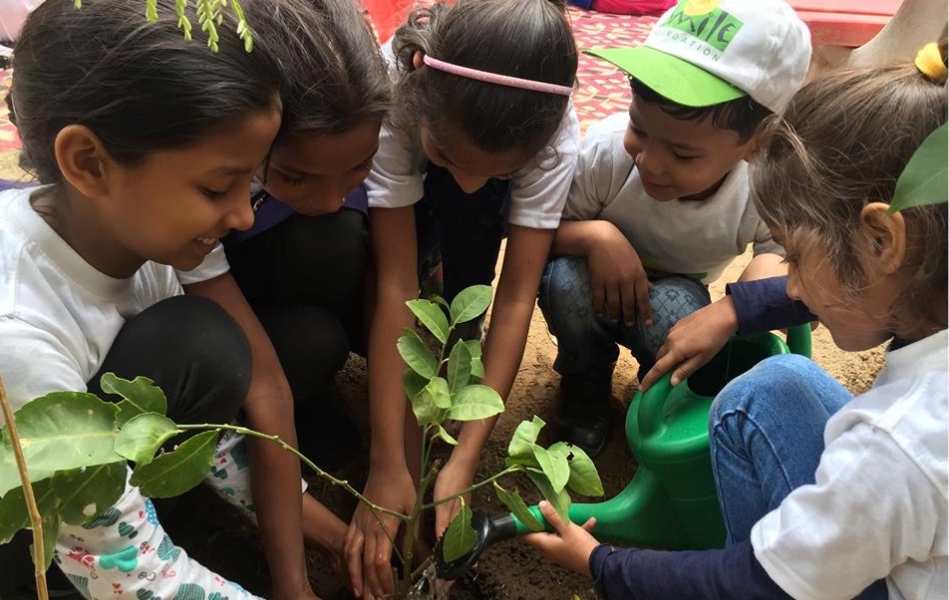
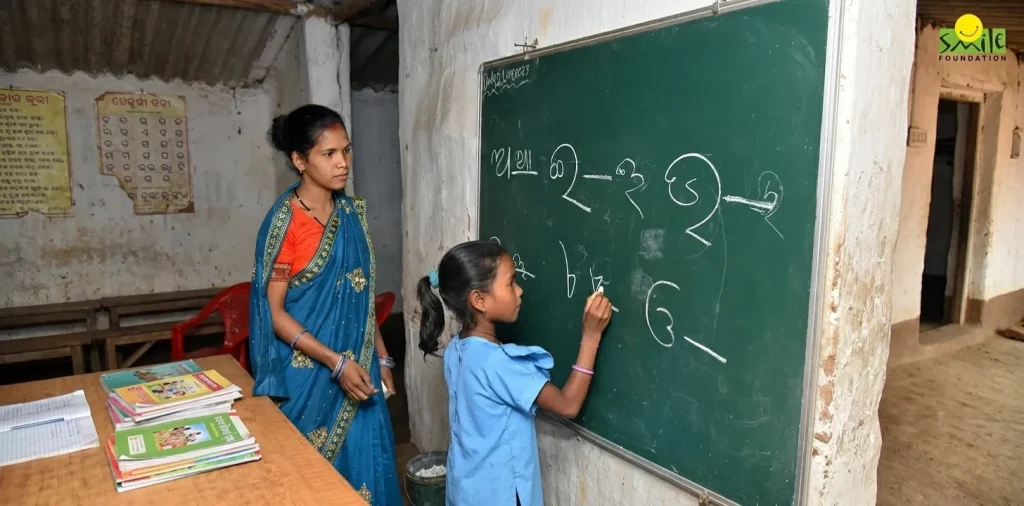
At Smile Foundation, this insight resonates deeply. Our education programmes work with the understanding that learning does not happen in isolation. It is shaped by nutrition, health, safety, household stability and parental confidence. A child who is unwell, hungry or anxious about school costs cannot learn consistently—no matter how good the curriculum.
Education systems work best when they are designed around the child’s full reality, not just the classroom.
Health: From Treatment to Prevention, from Episodes to Relationships
India’s health system has also made undeniable gains. Infant and maternal mortality have declined and immunization coverage has expanded. Primary care infrastructure has grown. Yet new challenges are emerging—particularly non-communicable diseases, lifestyle-related conditions and mental health risks among young people.
Health costs are rising faster than incomes for many families. In FY25 alone, health-related insurance claims contributed to nearly ₹1.9 lakh crore in non-life claims, reflecting both increased access and increasing financial strain. At the same time, insurance penetration remains uneven, leaving large sections of the population exposed to health shocks.
But the deeper challenge is not only financial but behavioural and relational.
Clinical advice does not automatically translate into healthy practices. Preventive care depends on what happens after the doctor leaves—inside homes, kitchens and family conversations. Delayed care-seeking, misinformation, social norms and fear often undermine the best-designed health services.
This is why public and preventive healthcare must be community-centred.
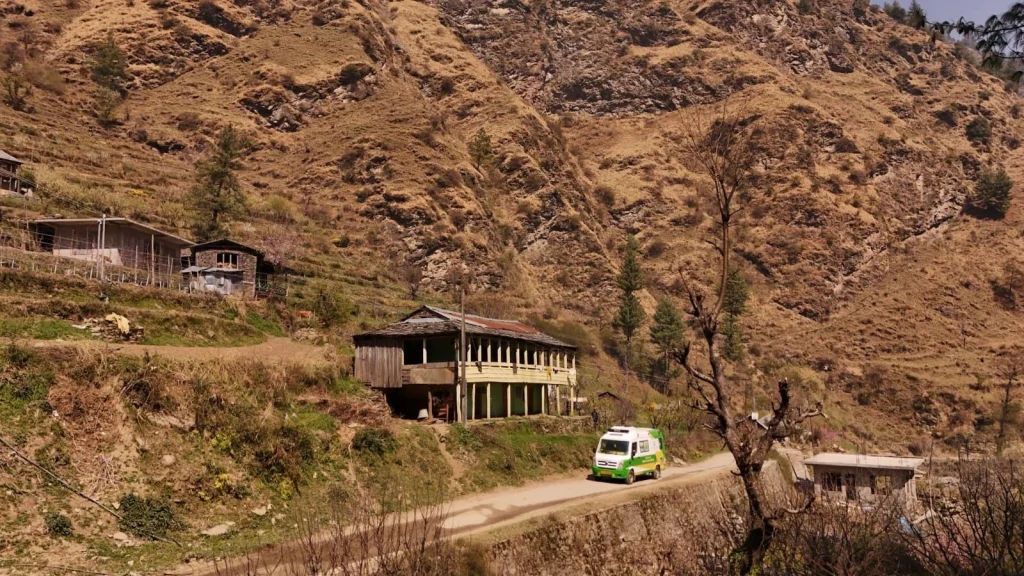
Through programmes like Smile on Wheels, Smile Foundation’s mobile medical units bring doctors, diagnostics, medicines and counselling directly into underserved communities. But equally important is what accompanies the clinical service: repeated conversations on nutrition, hygiene, chronic disease management and maternal and child care. Trust is built not in one visit, but over time.
Health outcomes improve when care is predictable, proximate and personal.
Employment, Skills and the Cost of Discontinuity
The transition from education to employment reveals how deeply interconnected these systems are.
India’s labour market has shown improvement, but quality and security remain uneven. Over the last decade, employment growth has been stronger in larger factories, which pay higher wages and show greater productivity. But a majority of workers remain in informal arrangements.
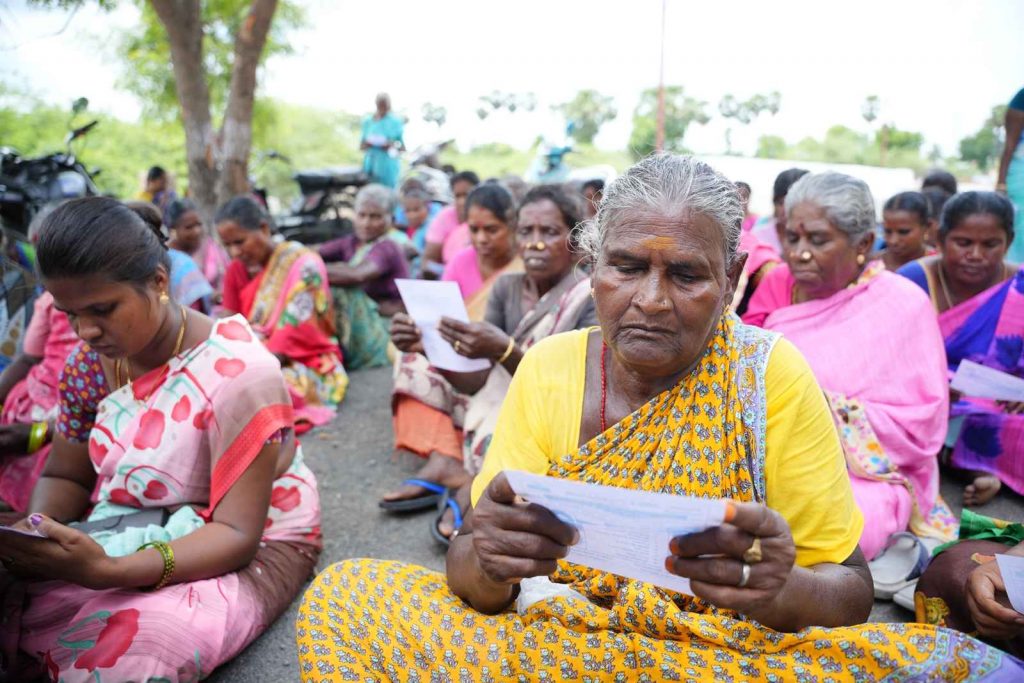
The e-Shram portal, which has registered over 31 crore unorganized workers, reflects both progress and precarity. More than half of these registrants are women. Their livelihoods are mobile, uncertain and highly sensitive to disruption.
Here again, continuity matters. Skill training that is episodic or disconnected from real work pathways does little to improve long-term outcomes. The future of work increasingly rewards adaptability, judgement and foundational skills—not just certificates.
This reinforces a critical lesson: education and skilling must be treated as social protection, not one-time interventions. When learning is interrupted, the consequences compound across health, income and dignity.
From Access to Assurance: What the Next Phase Demands
Across education, health and employment, a common thread emerges. India’s systems perform best when they reduce uncertainty for individuals.
Children stay in school when families can rely on consistent support. Mothers follow health advice when systems respect their realities. Young people build skills when pathways are clear and protected from sudden shocks.
For Smile Foundation, this is not a new insight. Our integrated approach—spanning education, healthcare, nutrition and livelihoods—rests on the belief that human development is cumulative. Gaps at one stage weaken outcomes at the next.
What’s needed now is a broader shift in thinking:
- From enrolment to retention
- From treatment to prevention
- From information to behaviour
- From schemes to systems that people can trust
India’s development challenge today is not a lack of ambition. It is ensuring that progress holds for those living closest to risk.
As the country looks toward a future shaped by demographic change, technological disruption and climate uncertainty, the measure of success will lie not only in how many are reached, but in how many are carried forward, without falling through the cracks.
That is the work that remains.