

India’s enthusiasm for STEM education has grown rapidly over the past decade. Coding classes for young children, robotics kits for primary schools and corporate-funded innovation labs have become familiar features of the education landscape. In policy circles and classrooms alike, STEM is increasingly presented as a shortcut to future readiness — a way to equip children early for an economy shaped by technology and automation.
This momentum is not without merit. Scientific thinking, problem-solving and numeracy are essential skills in a knowledge-driven economy. But the question confronting India’s education system is not whether STEM belongs in early education. It is whether the form and pace of early STEM, as it is currently being implemented, align with how children actually learn.
The evidence suggests a clear answer: early STEM needs restraint, not rollback. The danger lies not in introducing children to scientific thinking, but in doing so prematurely, abstractly or inequitably — in ways that risk undermining foundational learning rather than strengthening it.
What early STEM was meant to achieve
At its core, early STEM education is not about producing engineers at the age of eight. It is about cultivating habits of mind: curiosity, observation, reasoning and comfort with uncertainty. When approached thoughtfully, early exposure to scientific and mathematical ideas can support cognitive development and foster confidence in learning.
International research has consistently shown that young children are capable of engaging with scientific concepts when these are presented through exploration and play. Studies by the OECD and the U.S. National Academies of Sciences emphasise that inquiry-based, play-led STEM experiences can improve problem-solving skills and long-term engagement with learning.
India’s National Education Policy (NEP) 2020 reflects this understanding. It explicitly calls for experiential, play-based learning in the early years, and cautions against content-heavy instruction before children have developed strong foundational literacy and numeracy. The policy’s emphasis is on learning how to think, not on mastering technical skills prematurely.
Where the current enthusiasm goes wrong with early STEM education
Despite this policy intent, the implementation of early STEM in India often departs from these principles. In many settings, STEM is interpreted narrowly as exposure to technology — coding platforms, robotics kits and digital tools — rather than as a way of thinking.
This has led to three recurring problems.
First, adultisation of learning. Concepts designed for older students are pushed down into primary classrooms, often without adaptation. Coding is introduced as syntax rather than logic; science becomes vocabulary rather than inquiry. For children who are still developing basic reading and comprehension skills, this can create confusion rather than clarity.
Second, equipment-driven approaches. STEM initiatives are frequently built around kits and devices rather than pedagogy. While tools can enhance learning, they cannot substitute for trained teachers or thoughtful curriculum design. In under-resourced schools, these kits often remain unused once initial training ends.
Third, performance pressure. Competitive STEM models — hackathons, contests and assessments — seep into early grades, turning exploration into evaluation. This risks discouraging precisely the qualities early STEM is meant to nurture: experimentation, failure and play.
The foundational learning gap
India’s foundational learning challenge adds urgency to the need for restraint. Data from the Annual Status of Education Report (ASER) consistently shows that a large proportion of children in primary school struggle with basic reading and arithmetic. Introducing advanced STEM content into classrooms where foundational skills are weak risks widening learning gaps.
The World Bank’s concept of “learning poverty” — children unable to read and understand a simple text by age 10 — is particularly relevant here. When early STEM is layered on top of unresolved foundational deficits, it benefits children who already have support at home while leaving others further behind.
This is not a theoretical concern. In practice, early STEM initiatives are more easily absorbed by children from urban, middle-class families with access to devices, parental guidance and supplementary learning. For first-generation learners, the same initiatives can feel alienating and inaccessible.
Equity as the central concern in early STEM
The most compelling argument for restraint in early STEM is not pedagogical but ethical. Education policy must ask not only what works, but for whom.
If early STEM becomes synonymous with technology-heavy instruction, it risks entrenching inequality. Children in private schools may experience STEM as creative exploration, while those in government schools encounter it as unfamiliar jargon delivered without context or support.
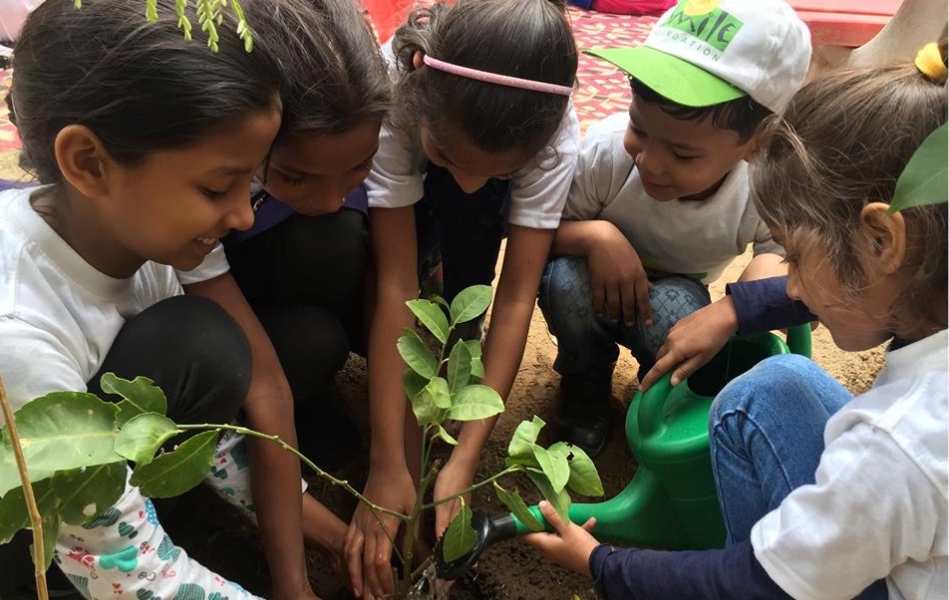
True early STEM must be low-cost, context-sensitive and grounded in everyday experience. Measuring rainfall, observing plant growth, experimenting with balance and structure — these are STEM activities that require no screens or kits. They rely instead on attentive teaching and curricular flexibility.
In this sense, restraint is not resistance to innovation. It is a commitment to inclusion.
What restraint actually looks like
Restraint does not mean delaying exposure to scientific thinking. It means aligning learning with developmental readiness.
In practice, this involves:
- prioritising play-based exploration over formal instruction
- embedding STEM concepts in local, familiar contexts
- focusing on questions and processes, not correct answers
- avoiding early assessment and competition
- investing in teacher capacity, not just materials
This approach is consistent with cognitive science, which shows that young children learn best when concepts are concrete, social and connected to their lived environment.
CSR and the temptation of scale
Corporate involvement in education has accelerated the spread of early STEM initiatives in India. While CSR funding has brought resources into schools that need them, it has also introduced pressures to demonstrate scale and visibility.
The temptation to deploy standardised kits or digital platforms across diverse contexts is understandable, but risky. Education does not scale like software. What works in one classroom may fail in another if it does not account for language, culture and teacher preparedness.
CSR in education must therefore exercise caution. Funding should prioritise teacher training, curriculum development and long-term support rather than short-term visibility. Restraint here is a mark of responsibility, not hesitancy.
Civil society and grounded practice
Some education organisations have demonstrated how early STEM can be introduced with restraint and sensitivity. Smile Foundation’s education programmes offer a relevant example from the field.
Through its Mission Education initiative, STEM concepts are integrated into primary learning through activity-based methods rather than formal technical instruction. Children engage with basic scientific ideas through observation, hands-on tasks and problem-solving linked to their immediate environment — water use, sanitation, energy and health.
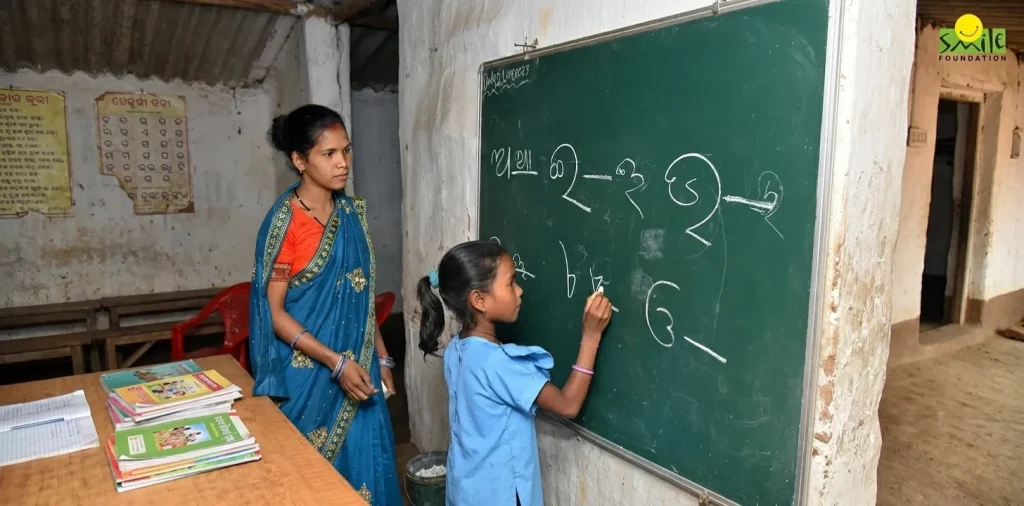
Importantly, these activities are embedded within a broader framework that prioritises foundational literacy and numeracy. STEM is not treated as a standalone track, but as a way of reinforcing core learning skills. Teachers are supported to adapt activities to local contexts, ensuring that exploration remains inclusive rather than intimidating.
This approach reflects the principle that early STEM should deepen understanding, not displace fundamentals.
Aligning with intent
The NEP 2020 offers a clear roadmap for early education in India. Its emphasis on foundational learning, play-based pedagogy and reduced curricular load is well-aligned with the case for restraint in early STEM.
What is needed now is coherence between policy and practice. States, school systems and funders must resist the urge to interpret STEM narrowly or accelerate it prematurely. Instead, they should focus on creating learning environments where curiosity is protected and foundational skills are secure.
This requires patience — an undervalued virtue in education reform.
The long view
The goal of early education is not to predict labour markets two decades in advance. It is to equip children with the capacity to learn, adapt and think critically across domains. STEM, done well, contributes to this goal. Done poorly, it risks becoming another layer of pressure in an already crowded curriculum.
India does not need to retreat from STEM in primary schools. It needs to slow down, simplify and refocus. Restraint, in this context, is not caution for its own sake. It is an evidence-based strategy to ensure that early STEM strengthens learning rather than distorting it.
As India debates the future of its education system, the question is not whether children should learn science and mathematics early. They should. The real question is whether we are willing to respect how children learn — and to design systems that serve all of them, not just the most advantaged.
References and further reading:
- National Education Policy 2020, Ministry of Education
- ASER Centre, Annual Status of Education Report
- OECD, Early Learning Matters
- World Bank, Learning Poverty
- UNESCO, STEM and Equity in Education