
| Summary
Dr. Kalam rose from selling newspapers as a child in Rameswaram to heading ISRO’s SLV-III project, driving the Pokhran-II nuclear tests, and serving as President from 2002 to 2007. After leaving office, he gave up conventional retirement to visit schools, colleges, and institutions across India, meeting millions of young people to fuel their ambitions. His autobiography Wings of Fire, his ‘What Can I Give’ movement against corruption, and his tireless advocacy for science-led nation-building continue to shape India’s youth in 2026, more than a decade after his death. |
There is a particular kind of influence that no state honour, award, or formal position can create. It is the influence that grows in the silence between a teacher and a student, in the moment a young person sees, for the first time, that the life they dream of is actually possible.
Dr. Avul Pakir Jainulabdeen Abdul Kalam had that influence in abundance. He had it as a scientist who helped place India in an exclusive global club of space-capable nations. He had it as the 11th President who opened the gates of Rashtrapati Bhavan to thousands of schoolchildren. And he had it most powerfully as a teacher who never retired, who spent his final years on stages, in classrooms, and in canteen corridors talking to young people about their dreams.
A decade after his death, the conventional wisdom is that Dr. Kalam was a great man who is fondly remembered. That framing sells him short. His legacy is not memory. It is active. It is present in every student who reads Wings of Fire and decides that background is not destiny. It is present in every educator who treats teaching not as a job but as a mission. It is present in every institution in India that still asks: what would Kalam have thought of this?
This article makes the case that Dr. Kalam’s most important contribution was not the Agni missile or the Pokhran tests. It was the idea, lived and demonstrated over nine decades, that a person from the most ordinary circumstances can choose to serve others with everything they have and in doing so become extraordinary.
Key Takeaway: Dr. Kalam’s lasting power comes not from his titles or scientific output alone, but from his demonstrated belief that greatness belongs to anyone willing to work for it.
What Most People Know About Dr. Kalam (And Why It Is Only Half the Story)
Ask most Indians to describe Dr. Kalam and you will hear the same phrases: Missile Man of India, People’s President, author of Wings of Fire. These are accurate. They are also incomplete.
The standard biography runs like this. He was born on 15 October 1931 in Rameswaram, Tamil Nadu, to a Tamil Muslim family of modest means. His father, Jainulabdeen Marakayar, owned a boat used to ferry pilgrims. Young Kalam sold newspapers to supplement the family income before earning a degree in physics from St. Joseph’s College, Tiruchirappalli, and later a degree in aeronautical engineering from the Madras Institute of Technology.
He joined the Defence Research and Development Organisation (DRDO) in 1960 and later moved to the Indian Space Research Organisation (ISRO), where he served as Project Director of the SLV-III, India’s first indigenous satellite launch vehicle. According to the official record of the President of India, the SLV-III successfully placed the Rohini satellite into near-Earth orbit in July 1980, making India a member of an exclusive global space club.
He led the Integrated Guided Missile Development Programme (IGMDP) at DRDO, overseeing the development of the Agni and Prithvi missiles. His role in the May 1998 Pokhran-II nuclear tests, India’s second nuclear test series, earned him national hero status, according to Encyclopaedia Britannica. He received the Padma Bhushan in 1981, the Padma Vibhushan in 1990, and India’s highest civilian award, the Bharat Ratna, in 1997. In 2002 he became the 11th President of India, a position he held until 2007.
This is where most summaries end. The record stops at the presidency, or at his death on 27 July 2015, when he collapsed from a cardiac arrest while delivering a lecture at IIM Shillong.
But the part of his life that matters most to India’s future happened in the years between the presidency and that final lecture: the years when Dr. Kalam could have rested, lectured abroad for large fees, or accepted the comfortable irrelevance of elder statehood. He chose none of it.
Key Takeaway: The familiar story of Dr. Kalam as scientist and president understates the decade-long grassroots teaching mission that defined the last chapter of his life.
Why Dr. Kalam’s Real Contribution Was Pedagogical, Not Political
The standard framing treats Dr. Kalam’s political career as the apex of his life. His presidency was indeed significant, but there is a stronger case for something else: that his most consequential work was the 14 years between the end of his presidency in 2007 and his death in 2015, years spent entirely in classrooms, auditoriums, and school corridors.
After leaving Rashtrapati Bhavan, Dr. Kalam did not retire. He took up positions as a visiting professor at multiple branches of the Indian Institute of Management and became an honorary fellow at the Indian Institute of Science, Bengaluru. He continued to write, producing books on science, governance, and youth. He traveled relentlessly across India specifically to meet children and young people.
By his own count, as recorded in a 2010 address at IIT Madras, he had met eleven million young people across India and abroad in a single decade. He described going through their hopes, experiencing their frustrations, and listening to their aspirations. That figure, eleven million personal interactions, is not the output of a politician or a ceremonial figurehead. It is the output of a person who understood that the only way to change a country is to change the people who will run it next.
In 2012, he launched ‘What Can I Give,’ a youth programme built on the philosophy that corruption is defeated not by law enforcement alone but by a generation that simply refuses to participate in it. He asked students across the country to commit to giving their best to India, framing national development as a personal responsibility rather than a political one.
His post-presidential teaching style was also deliberately intimate. There is a well-documented story of Dr. Kalam surprising a staff member by personally taking the employee’s children to a science exhibition when the parent could not attend due to work commitments. Another account describes him making a surprise late-night visit to the students organising a college event the day before, staying for hours and talking with them as equals. These were not staged photo opportunities. They were the natural behaviour of a person who genuinely preferred the company of young people to almost any other.
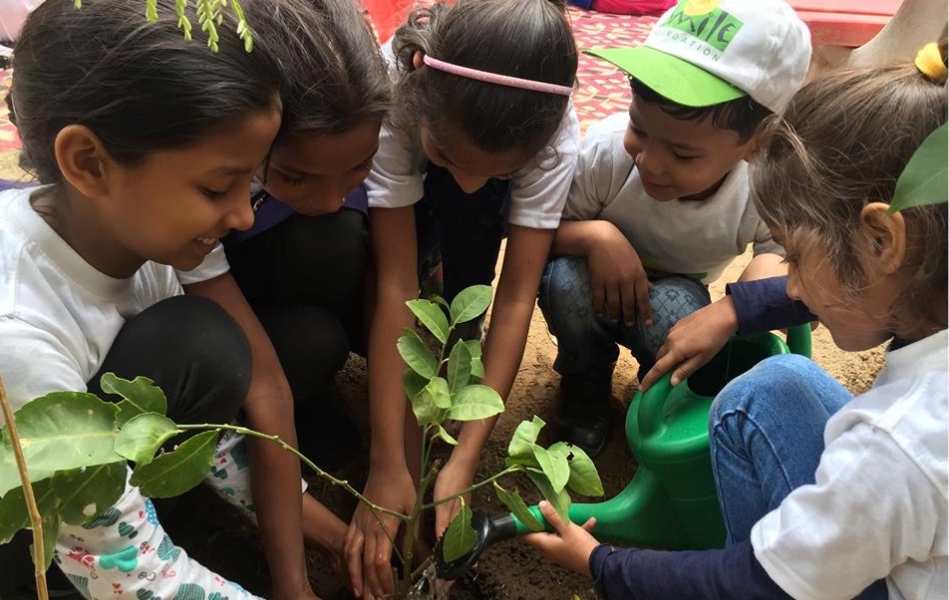
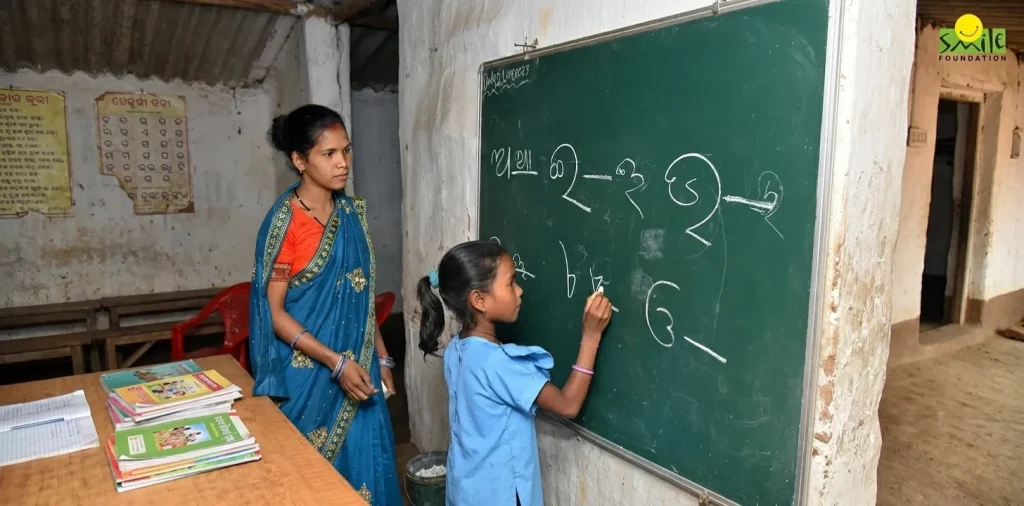
As the organisation behind the children’s film ‘I Am Kalam,’ Smile Foundation has seen directly how Dr. Kalam’s philosophy about children’s potential translates into real-world impact. The film, which won multiple awards, grew directly from his belief that every child deserves a chance at the life they dream of, regardless of where they were born.
Key Takeaway: The eleven million young people Dr. Kalam personally interacted with after his presidency represent a scale of direct educational influence rarely achieved by any public figure in modern India.
The Scientific Humanist: Why Kalam Believed Technology Served People, Not the Other Way Around
One aspect of Dr. Kalam’s thinking that receives less attention than it deserves is his insistence that science and technology are tools for human welfare, not ends in themselves.
This was not abstract. In the mid-1990s, he collaborated with cardiologist Dr. Somaraju Bhupathiraju to develop India’s first indigenous low-cost cardiac stent, known as the Kalam-Raju stent, which reduced the cost of cardiac stents to roughly one-quarter of the prevailing market rate. The same collaboration later produced the Kalam-Raju Tablet, a low-cost device designed for rural healthcare delivery. He also worked on lightweight carbon-polymer calipers for children affected by polio, reducing their weight to a tenth of the original design.
His Technology Vision 2020, proposed in 1998, was not primarily a defence document. According to Britannica, it called for increasing agricultural productivity, expanding access to healthcare and education, and treating technology as the engine of economic growth rather than as a geopolitical asset. He wanted India to transform from a developing nation to a developed one within twenty years, using science as the mechanism.
This framing, science in service of people, animated his interactions with young students. He did not encourage students to pursue science for prestige or personal gain. He consistently framed scientific careers as acts of national service. He told students at IIT Madras that the challenge was to become a unique individual in a world that constantly tried to make everyone ordinary. He told audiences at schools and colleges that the youth needed to become job creators rather than job seekers, a statement that was economic vision as much as personal advice.
His autobiographical work Wings of Fire, published in 1999, has been translated into 13 languages including French and Chinese, according to published records. The book’s enduring international appeal is partly because it frames a scientific career not as technical mastery but as a search for meaning, which is a story that translates across cultures.
Key Takeaway: Dr. Kalam’s scientific career was always oriented toward human welfare: affordable healthcare technology, rural development, and a vision of India where every citizen benefits from scientific progress.
The Counterargument: Was His Legacy Mostly Symbolic?
It is fair to ask whether Dr. Kalam’s enormous popularity was primarily symbolic. Critics have noted that his presidency was largely ceremonial by design, as the Indian President holds limited executive power. His most controversial decision, signing the Office of Profit Bill in 2006 before returning it for reconsideration, attracted criticism from those who felt a stronger Presidential intervention was warranted.
Some observers have also pointed out that while his personal charisma and public presence were extraordinary, the systemic changes he advocated, in education, rural development, and youth empowerment, remain incomplete. India’s public education system still struggles with quality at scale. Corruption, the central target of his ‘What Can I Give’ movement, has not been eliminated. Vision 2020 arrived and departed without India reaching the fully developed nation status he had projected.
These are legitimate observations. No individual, however inspirational, can substitute for institutional reform, sustained policy, and adequate funding over decades. Dr. Kalam himself would not have disputed this.
But the counterargument misunderstands what kind of contribution he was making. He was not a policymaker in the executive sense during his post-presidential years. He was functioning as a teacher and a symbol, and the evidence suggests he was unusually effective at both.
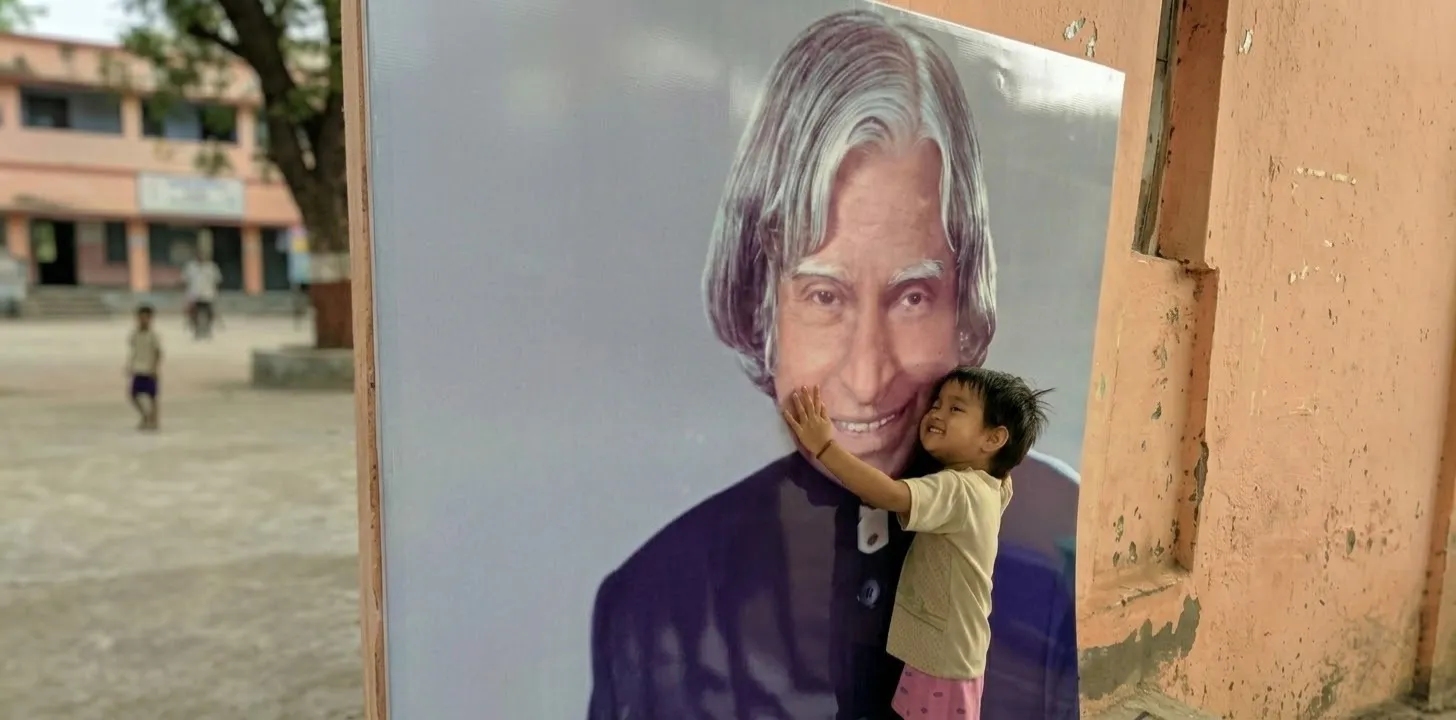
Symbols matter in large countries. When a child from a fishing village in coastal Tamil Nadu sees that the President of India grew up selling newspapers to help his family and still chose to spend his final years talking to children rather than collecting honorary positions, something shifts in how that child understands what is available to them. That shift cannot be easily measured, but it is real.
Key Takeaway: The symbolic power of Dr. Kalam’s life story should not be dismissed as merely inspirational. For millions of young Indians from non-privileged backgrounds, his biography is direct evidence that their circumstances are not their ceiling.
Why the Symbolic Legacy Is Not a Consolation Prize
The rebuttal to the criticism is this: the gap between inspiration and outcome is not a flaw in Dr. Kalam’s approach. It is a gap that every generation must close for itself, using the raw material he provided.
His approach to youth was not passive. He set out to meet eleven million young people in a decade. He opened Rashtrapati Bhavan to schoolchildren during his presidency, not just for tours but to actually listen to their ideas, provide feedback, and follow up on whether they had acted on them. These are not the habits of a person content with symbolic presence.
His ‘What Can I Give’ initiative, launched in 2012, was structured around the belief that civic corruption is fundamentally a values problem before it is a law enforcement problem. Rather than lecturing young people about government failure, he asked them to take personal responsibility for the kind of country they wanted to live in. That is a sophisticated pedagogical position. It places agency with the individual while situating that individual within a civic and national context.
He also demonstrated, through his own choices, that wealth and status are not measures of a life well-lived. According to published accounts, he donated a significant portion of his presidential salary and savings to a charitable trust called PURA (Providing Urban Amenities to Rural Areas), a project aimed at bringing infrastructure access to India’s villages. He lived simply throughout his life, and there is no record of him seeking financial accumulation after leaving public office.
In 2015, the Tamil Nadu government announced that his birthday, 15 October, would be observed as Youth Renaissance Day. His birthday has also been observed as World Students’ Day since 2010. These are not arbitrary designations. They reflect the specific and enduring nature of his connection to the next generation.
Key Takeaway: Dr. Kalam’s symbolic legacy is backed by a decade of concrete action: millions of personal interactions, civic movements, healthcare innovations, and the daily choice to spend his time with young people rather than with power.
What Dr. Kalam’s Life Means Practically for India’s Young People in 2026
In 2026, India has the world’s largest youth population. According to the United Nations Population Fund, nearly 600 million Indians are under 25. The pressure on that generation to create livelihoods, navigate a competitive global economy, and hold together the civic fabric of a large democracy is enormous.
Dr. Kalam’s life speaks directly to that pressure in three ways.
First, it demonstrates that the starting point does not determine the ending point. He sold newspapers as a child and went on to lead India’s space programme. The specific mechanism he used, education pursued with single-minded focus on contribution rather than on personal advancement, is replicable. It does not require privilege, connections, or a prestigious family name.
Second, his career shows that technical excellence and human values are not in tension. He was a scientist who wrote poetry, played the veena, and spent his final years talking to children about their dreams. He held both with equal seriousness. In an era when professional identity and personal values are often treated as separate domains, that integration is instructive.
Third, and perhaps most relevant to 2026, his ‘What Can I Give’ framework offers a mental model for civic participation that goes beyond voting or protest. It asks young people to identify the specific contribution they are uniquely positioned to make, and then to make it. That is both a motivational stance and a practical one.
Organisations working directly with India’s youth, such as Smile Foundation, which runs programmes in education, healthcare, and livelihood across underserved communities, operate from a similar premise: that the potential of a child is not defined by poverty but by the opportunities made available to them. The film I Am Kalam, produced by Smile Foundation and named in tribute to his legacy, reached audiences across India with exactly that message.
Key Takeaway: Dr. Kalam’s life offers India’s youth in 2026 a framework that is as practical as it is inspirational: start from where you are, focus your effort on contribution, and treat every interaction as an opportunity to pass something forward.
Frequently Asked Questions About Dr. A.P.J. Abdul Kalam
1. Who was Dr. A.P.J. Abdul Kalam and why is he remembered as a national icon?
Dr. Avul Pakir Jainulabdeen Abdul Kalam (15 October 1931 – 27 July 2015) was an aerospace scientist, statesman, author, and educator who served as the 11th President of India from 2002 to 2007. He is remembered as a national icon for three distinct reasons. First, he led India’s defence and space programmes at their most critical junctures, including the development of the Agni and Prithvi missiles and the Pokhran-II nuclear tests of 1998, which established India as a nuclear power. Second, as President, he broke with the tradition of ceremonial distance and opened Rashtrapati Bhavan to ordinary citizens, especially schoolchildren, earning the title People’s President. Third, and perhaps most enduringly, he spent the final decade of his life as a visiting professor at IIMs across India, personally meeting an estimated 11 million young people to encourage them toward science, self-reliance, and national contribution. He is the only Indian President whose post-presidential years were spent more in classrooms than in boardrooms.
2. What was Dr. Kalam’s role in India’s missile development programme?
Dr. Kalam served as Chief Executive of the Integrated Guided Missile Development Programme (IGMDP) at the Defence Research and Development Organisation (DRDO). Under his leadership, India developed five strategic missile systems: Agni (inter-continental ballistic missile), Prithvi (surface-to-surface), Akash (surface-to-air), Trishul (low-level), and Nag (anti-tank). The IGMDP, launched in 1983, was the most ambitious indigenous defence technology programme India had undertaken at that time. His success in building these systems without dependence on foreign technology gave India genuine strategic autonomy and earned him the widely used title Missile Man of India. The Agni missile in particular, capable of carrying nuclear warheads over long ranges, was considered his defining technical achievement in the defence domain.
3. What was Dr. Kalam’s contribution to India’s space programme at ISRO?
Dr. Kalam joined ISRO in 1969 after a stint at DRDO and served as Project Director of the SLV-III, India’s first satellite launch vehicle designed and produced entirely within the country. In July 1980, the SLV-III successfully placed the Rohini satellite into near-Earth orbit, making India the sixth nation in the world to achieve an indigenous satellite launch capability. He also contributed to the foundational design philosophy of the Polar Satellite Launch Vehicle (PSLV), the same rocket family that would later carry India’s Mars Orbiter Mission in 2013. His colleagues at VSSC have described the SLV-III as the technical ancestor of every launch vehicle India has flown since. He left ISRO in 1982 to lead the missile programme at DRDO, but his conceptual influence on ISRO’s launch vehicle engineering continued well beyond his departure.
4. What was Dr. Kalam’s role in the Pokhran-II nuclear tests of 1998?
Dr. Kalam served as the Chief Scientific Adviser to the Defence Minister and head of DRDO at the time of the Pokhran-II tests, known as Operation Shakti. Along with Dr. R. Chidambaram of the Atomic Energy Commission, he was one of the two chief coordinators of the entire operation. Five nuclear devices were detonated in two phases: three on 11 May 1998 and two on 13 May 1998. The operation required extraordinary secrecy because US spy satellites were actively monitoring Indian test sites. Under Dr. Kalam’s guidance, scientists wore army uniforms to avoid detection, worked on test sites only at night, and used code words such as ‘Taj Mahal’ and ‘White House’ instead of technical terms. The tests made India a declared nuclear weapons state and triggered international sanctions, but consolidated Dr. Kalam’s status as a national hero. He was awarded the Bharat Ratna the year before the tests, in 1997.
5. What was Dr. Kalam’s presidency like and why was he called the People’s President?
Dr. Kalam was elected President in 2002 with support from both the ruling National Democratic Alliance and the opposition Indian National Congress, an unusually broad political consensus reflecting his non-partisan public stature. He was the first scientist and the first bachelor to hold the office. His presidency stood apart from those of his predecessors in one specific way: he insisted on accessibility. He regularly opened the lawns and halls of Rashtrapati Bhavan to school groups, listened to children’s ideas, and followed up on what they had proposed. He responded personally to letters from young people. He reduced the ceremonial distance between the President’s office and ordinary citizens to a degree not seen before or since. He also used his position to actively promote science, technology, and youth development as national priorities. His single most controversial decision as President was returning the Office of Profit Bill for reconsideration in 2006, which created brief political friction but was widely seen as a principled stand.
6. What was the What Can I Give movement and is it still active?
Dr. Kalam launched What Can I Give in May 2012, targeting the youth of India with a single central idea: that corruption is defeated primarily through a generation that refuses to participate in it, not merely through enforcement alone. The movement asked students and young professionals to take a personal pledge of integrity and to contribute their skills and time to national development. It was structured around the belief that national progress is not the government’s responsibility alone but a shared civic obligation. Dr. Kalam framed giving, in terms of effort, honesty, and skills, as the highest form of patriotism. The movement’s website and affiliated chapters at educational institutions continued to operate after his death, and the core philosophy is referenced in civics and values education curricula at several Indian institutions. It remains one of the clearest articulations of his view that character and contribution, not position or wealth, define a life’s worth.
7. What books did Dr. Kalam write and which one should a student read first?
Dr. Kalam authored approximately 18 books across science, governance, and personal development. His most widely read works are Wings of Fire (1999), his autobiography, which traces his journey from Rameswaram to the space programme and has been translated into 13 languages including French, Chinese, and Korean; India 2020 (1998), his development roadmap for the country; Ignited Minds (2002), which addresses the potential of Indian youth specifically; and My Journey (2013), a more personal reflection on the values that shaped his life. For a student reading Dr. Kalam for the first time, Wings of Fire is the natural starting point. It is written in plain, accessible language, follows a clear narrative arc, and deals directly with the experience of growing up without privilege and choosing science as a path. It has introduced lakhs of Indian students to the idea that curiosity and persistence are more important than circumstance.
8. What was Dr. Kalam’s vision for India’s youth and why does it matter in 2026?
Dr. Kalam’s vision for India’s youth rested on three beliefs that he repeated consistently across books, lectures, and personal interactions throughout his life. First, he believed that every young Indian, regardless of background, family income, or region, carries the potential to contribute something meaningful to the country. He did not treat this as motivational rhetoric. He treated it as a factual statement that required structural support: better schools, wider access to science education, and opportunities for rural youth that did not require migration to cities. Second, he believed that the correct question for a young person is not “what can I get” but “what can I give.” This inversion of the standard career-planning mindset was the philosophical core of his What Can I Give movement and the consistent message of books like Ignited Minds and Wings of Fire. Third, he believed that India’s strength in the 21st century would come not from political leadership or natural resources but from the quality and ambition of its young people, whom he consistently called “ignited minds.” In 2026, with India holding the world’s largest youth population of nearly 600 million people under 25, this vision is more practically relevant than ever. The core challenge Dr. Kalam identified, converting the energy of a young population into purposeful contribution rather than frustration, remains the defining national question of this generation.
The Argument Restated: A Teacher Above All
Dr. A.P.J. Abdul Kalam lived a life that disproves several common assumptions: that where you come from sets a ceiling on where you can go, that scientific achievement and humanistic values belong in different careers, and that the most powerful public figures are those who hold the most formal power.
He held significant formal power, as a missile programme chief, as Principal Scientific Adviser to the Government of India, and as President. But the years he spent after power, visiting schools with no title except Visiting Professor, meeting children not as a celebrity but as a teacher who genuinely wanted to hear what they thought, are the years that will be studied most carefully by future generations.
He left a question for every young person in India. Not a rhetorical question but a practical one, the same question he built a movement around: What can I give? It is a question that does not require privilege or position to answer. It only requires the willingness to begin.
Dr. Kalam began by selling newspapers in Rameswaram. He ended by teaching at IIM Shillong. The line between those two points is not a story of exceptional luck or rare genius. It is a story of direction, sustained over nine decades, always pointed toward what he could contribute rather than what he could accumulate.
That direction is the legacy. Not the missiles, not the presidency, not even the books, though all of those matter. The legacy is the orientation itself: outward, purposeful, and built for the people who come after.
Sources and References
- President of India Official Profile, Dr. APJ Abdul Kalam: presidentofindia.nic.in
- Wikipedia: A. P. J. Abdul Kalam: en.wikipedia.org
- Encyclopaedia Britannica, A.P.J. Abdul Kalam: britannica.com
- PMC / National Institutes of Health, Dr. A.P.J. Abdul Kalam: A Man Beyond Science: pmc.ncbi.nlm.nih.gov
- Speakola: Dr. Kalam’s 2010 IIT Madras Address: speakola.com
- NEXT IAS: Contributions of Dr. A.P.J. Abdul Kalam to the Nation: nextias.com
- Biography.com: A.P.J. Abdul Kalam: biography.com