When the Prime Minister entrusted his social media platform to remarkable women achievers Vaishali Rameshbabu (chess grandmaster), Elina Mishra (nuclear scientist) Shilpi Soni (space scientist), Anita Devi (farmer-entrepreneur) and Ajaita Shah (CEO of Frontier Markets), it was a celebration of women empowerment in its truest sense. Each of these women, through dedicated training and skill development, harnessed the potential of digital tools for learning, innovation and market access—transforming personal expertise into national impact, and inspiring countless others to reimagine what is possible.
But these stories, as powerful as they are, risk masking a harder truth. India’s digital revolution has not yet reached most women. The National Family Health Survey reveals that just over half of urban women use the internet (51.8% of urban women to be precise), and in rural areas the figure drops to one in four.
For women in rural areas, this gap translates into slower economic advancement, as limited access to digital tools shut them out of markets, innovations and opportunities that could drive both individual mobility and collective growth.
Women empowerment rests on economic stability
Anchored in the promise of the Sustainable Development Goals — and reinforced by India’s own CSR mandate — lies a simple truth that women’s empowerment in the 21st century cannot be achieved without digital inclusion. Technology is a gateway to opportunity, dignity and independence. It is the bridge that allows women to shape not only their own futures, but also that of their communities.
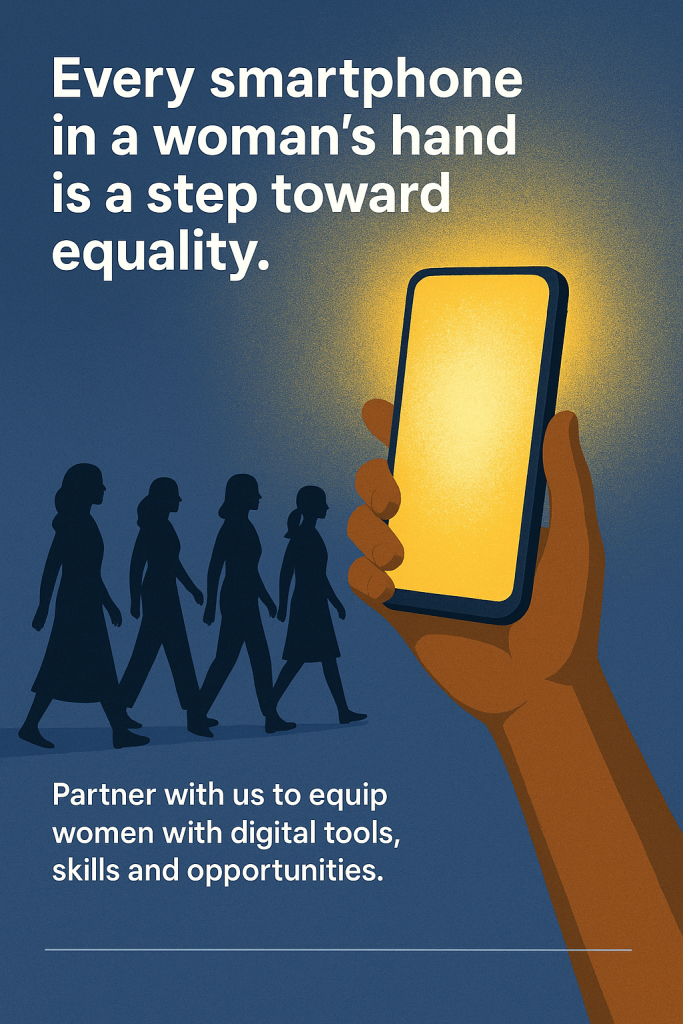
Yet India continues to stumble on the most basic step of putting a smartphone in every woman’s hand. In low-income families, device ownership for women remains elusive. In rural areas, affordability, low literacy, restrictive social norms and safety concerns layer barriers upon barriers. The result is stark digital exclusion — and with it, a narrowing of women’s choices.
This exclusion is not abstract and it directly impacts women empowerment, as it limits-
- Participation in markets
- Access to finance
- Engagement in governance processes
It also shows up in entrepreneurship. Women-owned enterprises make up barely one-fifth of India’s registered MSMEs (only 20.5%), according to the Udyam portal. The digital divide compounds this inequity, making it harder for women to scale ideas, connect with customers or tap into supply chains.
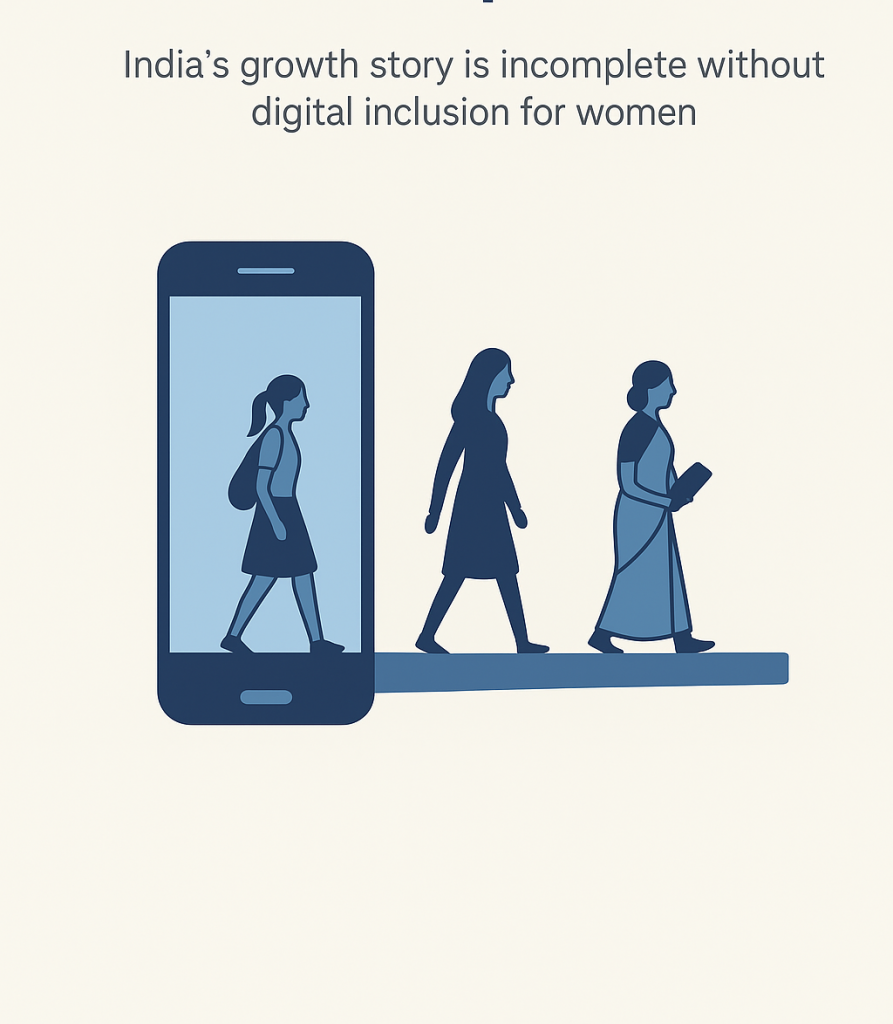
If left unaddressed, this gap will calcify. It risks creating two parallel economies — one where men ride the momentum of digital growth, and another where women remain on the margins. Digital empowerment is not an add-on to gender equity — it is its backbone. Without it, India’s growth story will remain half-written.
Government-led digital pathways for women
Over the years, India has taken important steps to bridge the digital divide for women, especially in rural areas. From digital literacy drives and online marketplaces to financial inclusion through mobile-linked bank accounts, these initiatives reflect a growing recognition of technology being not just a tool, but one of the digital pathways to empowerment.
By giving women the skills to navigate digital platforms, access markets and manage their own finances, these efforts open doors to opportunity and independence. But while the framework exists, the real challenge lies in ensuring that every woman can actually benefit from it.
Collective efforts for consolidated solution
While the government may lay the groundwork for women’s empowerment, the story cannot end there. Real change in rural India depends on whether women are given the skills, tools and confidence to use those opportunities. This is where social stakeholders come in.
CSR–NGO partnerships have the power to turn good intentions into lasting impact. By complementing government initiatives with targeted training and digital access, they can help women move from the margins to the marketplace. They can ensure that empowerment is about women building livelihoods that last, communities that thrive and futures they can shape on their own terms.
While the Government of India is spearheading the women empowerment movement creating pathways for rural women to achieve financial independence and stability, the role of social stakeholders remains critical. CSR–NGO partnerships carry an equal responsibility to ensure these initiatives realise their full potential. By complementing governmental efforts with targeted support, they can equip women in rural India with essential skills and digital tools, enabling them to build sustainable livelihoods and stand confidently on their own feet.
Outcome-driven CSR model for women’s empowerment under Schedule VII
India has no shortage of well-intentioned programmes for women. But the question is no longer if we should empower women — it’s how. And increasingly, the answer lies in what happens when corporations and NGOs come together with purpose, not just compliance.
An outcome-driven approach, when aligned with Schedule VII of the Companies Act, can push CSR spending beyond tokenism. It can deliver real, measurable change if partnerships are designed to pool expertise, networks and resources.

Education and skills: The first lever of change
The story of empowerment often begins in the classroom — or these days, on a screen. Investment in vernacular digital and financial literacy, accredited training and mentorship networks arms women with market-ready skills. It also gives them the confidence to step into India’s rapidly shifting economic landscape.
Breaking barriers to equality
CSR funds directed towards safety technologies and leadership pipelines do more than tick boxes on gender equality. They chip away at systemic barriers, creating pathways for women to participate fully in digital, corporate and entrepreneurial ecosystems that have long excluded them.
Building livelihoods, not just incomes
When women in rural India are connected to e-commerce platforms, supported with logistics solutions and integrated into local markets, the result is not just higher earnings. It is the transformation of livelihoods — whole families and communities stand taller when women producers gain access to profitable markets.
Seeding women-led innovation
Perhaps the most exciting frontier is incubation. Co-funded CSR–NGO interventions can back women-led startups in agritech, fintech or edtech — areas that directly touch the challenges rural women face daily. With the right support, these businesses change how communities live, learn and work.

Real faces of empowerment

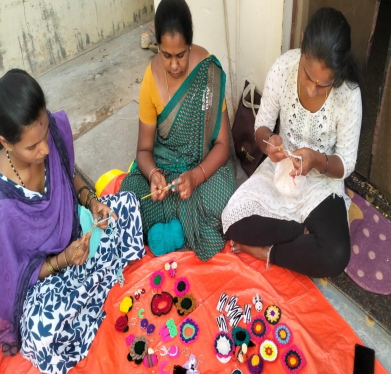
Yashodha, once a learner herself, now trains rural women in Aari work through Smile Foundation’s programme, blending embroidery, business skills and digital know-how — empowering them to earn, support their families and inspire others toward self-reliance.
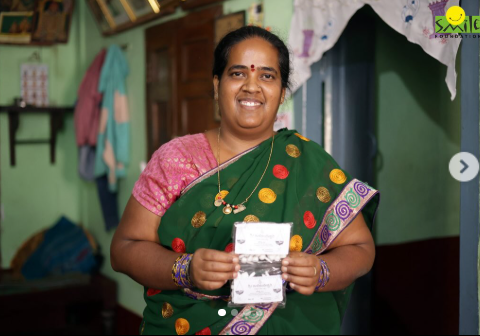
Through Smile Foundation’s training, Sowmya turned cotton wick-making into a steady income stream. Learning business planning, cost tracking, navigating digital payment platforms and local market outreach gave her financial stability, family support and the pride of shaping her own economic independence.
Women’s empowerment in action with Swabhiman
In villages where opportunity once felt distant, Smile Foundation’s Swabhiman programme is helping women embrace digital tools — running businesses on smartphones, selling through online marketplaces and taking control of their economic future.
Core Empowerment Pillars:
- Entrepreneurship & Skill Development – Tailored training for women from rural and urban low-income areas, enabling them to start, manage and grow small-scale enterprises.
- Financial Literacy – Guidance on budgeting, profit calculation, savings and reinvestment, ensuring sustainable business growth.
- Market Linkages – Support in connecting with local, regional and digital buyers, expanding customer reach.
- Digital Inclusion – Vernacular training in e-commerce onboarding and technology adoption.
With mentorship from industry experts and in-house trainers, participants master business planning, marketing and customer engagement. This knowledge has already led to the creation of 68 women-led businesses and micro-enterprises in FY 24, breaking traditional gender barriers and driving community progress.
For these women, empowerment is the confidence to lead, the resilience to adapt and the ability to inspire the next generation.
Power change, together!
Digital empowerment is the foundation for women’s economic participation in India’s growth story. While government schemes have set the stage, the journey from awareness to adoption demands the collective strength of CSR, NGOs and local communities. By bridging the digital divide, Smile Foundation enables women to scale businesses, lead change and inspire generations.
Sources: