
Digital healthcare did not begin with artificial intelligence or mobile apps. Its earliest forms were far more modest: electronic registers replacing paper files, SMS reminders for appointments and basic teleconsultations bridging distance. Over time, these tools evolved into integrated systems capable of tracking patients, analyzing disease trends and strengthening accountability across health programmes.
For developing countries, this evolution has been neither linear nor optional but shaped by necessity.
In contexts where healthcare systems must serve large populations with limited infrastructure, uneven workforce distribution and persistent access gaps, digital health has emerged not as a luxury, but as a structural response to constraint.
The early phase: Digitisation as record-keeping
The first wave of digital healthcare focused on replacing paper-based systems. Electronic health records, digital registers and basic reporting tools helped standardise data and reduce loss of information. While these systems improved documentation, they did little to change how care was delivered on the ground.
In many low-resource settings, healthcare remained episodic — defined by camps, visits and one-time interventions. Records existed, but continuity did not.
This gap revealed a critical insight: digitisation without delivery integration does not transform health outcomes.
The shift toward integrated delivery
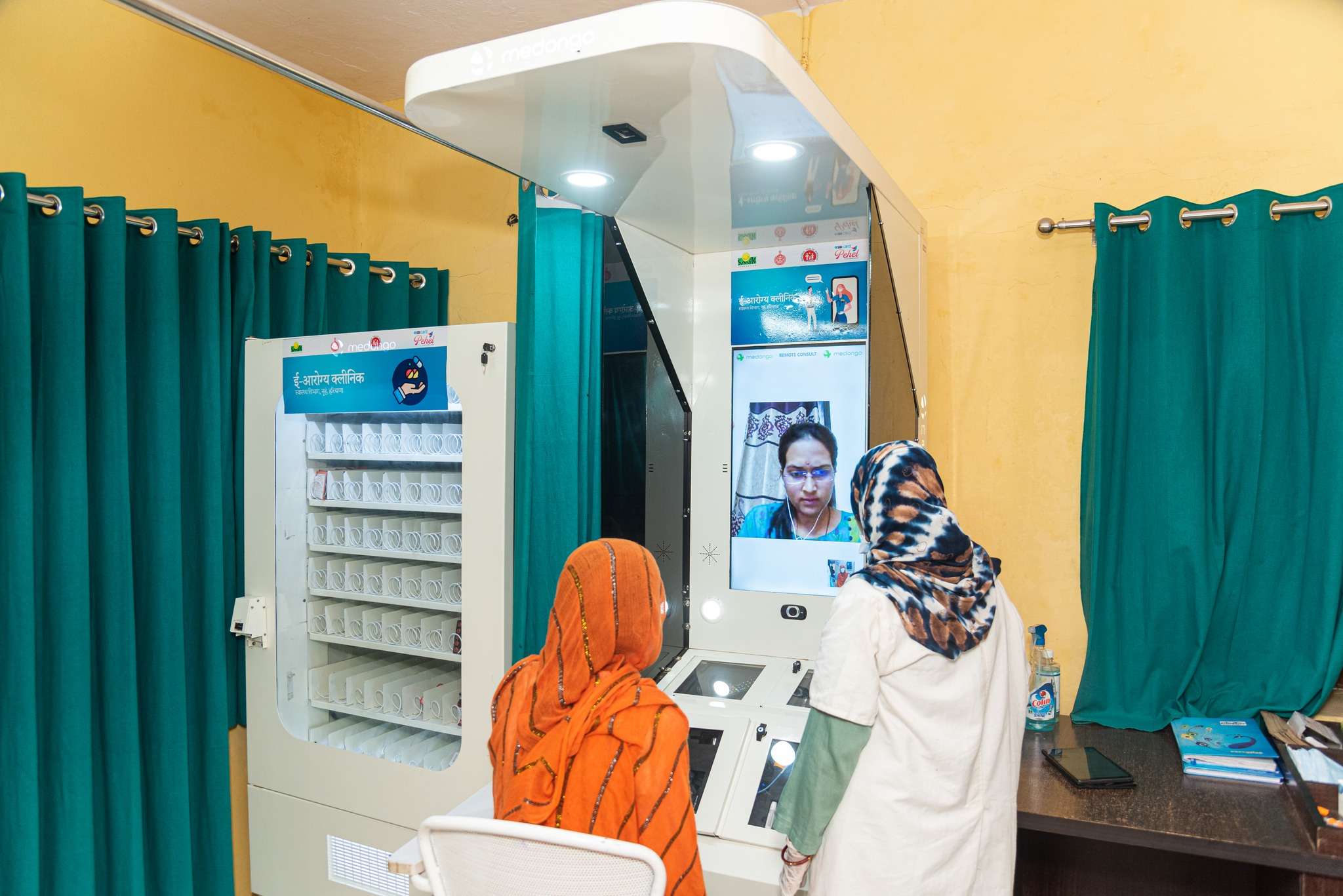
The second phase of digital healthcare marked a turning point. Technology began to move closer to patients into clinics, mobile units and community settings. Diagnostics became portable. Telemedicine connected frontline workers with doctors. Data began to flow in real time rather than months later.
This is where programme-led digital health models started to matter.
Organizations such as Smile Foundation demonstrate this evolution clearly. Its healthcare programme did not begin with technology adoption but with the need to deliver care consistently to underserved populations. Digital tools were introduced to strengthen continuity, coordination and accountability, not to replace human interaction.
Digital health, in the context of Smile Foundation’s healthcare work, is not positioned as a pilot project or an innovation layer added on top of existing services. Instead, it is treated as core infrastructure — the underlying system that enables scale, accountability and continuity of care. The healthcare model is designed as a digitally enabled last-mile system that integrates mobile service delivery, telemedicine, point-of-care diagnostics, electronic health records, GPS and attendance verification, and real-time disease surveillance. This integrated architecture is most clearly visible in the Smile on Wheels model, where physical mobility is combined with a robust digital backbone to ensure that care is not only delivered, but sustained.
Mobile units as connected health nodes
Within this system, mobile healthcare units are not standalone vans offering episodic services. Mobile Medical Units, Mobile Telemedicine Units, Mobile Dental Units, and Boat Clinics function as connected health nodes within a wider network. Every patient interaction is recorded through e-health records, with live capture of outpatient visits, diagnostics and prescriptions. Referrals to secondary and tertiary facilities are digitally tracked and disease trends are mapped across geographies. This transforms doorstep care from one-time outreach into longitudinal primary healthcare, a shift that remains uncommon in last-mile NGO health models.
Telemedicine as clinical backbone, not stopgap
Telemedicine plays a central role in maintaining this continuity. The programme uses ReMeDi, developed by NeuroSynaptic, as its clinical telemedicine backbone. ReMeDi enables real-time video consultations with doctors while automatically integrating more than 30 point-of-care diagnostic results into electronic medical records. Clinicians can review historical patient data during consultations, issue digital prescriptions and plan structured follow-ups. Importantly, telemedicine here is not limited to addressing doctor shortages; it supports specialist access, chronic disease management and continuity of care in aspirational and underserved districts.
Point-of-care diagnostics as field-level data engines
Diagnostics are another foundational element of the system. HealthCube, a portable point-of-care diagnostic hub, shifts testing closer to patients and reduces delays that often undermine treatment outcomes in rural health systems. HealthCube generates standardized, digitised diagnostic outputs within 3 to 15 minutes, covering vital parameters, biochemistry, infectious diseases and cardiac markers. These results are automatically fed into digital records, reducing repeat testing and enabling evidence-based decision-making. At a systems level, HealthCube functions as a field-level data engine, strengthening both individual care and population health analysis.
Governance, monitoring and accountability by design
Operational transparency and governance are built into the programme through digital monitoring systems. GPS and fleet-tracking tools provide real-time visibility into vehicle movement, geo-fenced service areas and trip summaries. Attendance verification through tools such as AngleCam captures time-stamped, location-based staff presence. Electronic health record dashboards offer HIPAA-compliant patient data, inventory management, donor-level access and live reporting. Together, these systems turn healthcare delivery into a verifiable and auditable operation, strengthening trust with donors, partners and government stakeholders.
The digital model also aligns closely with India’s national health architecture. While not branded as explicitly ABDM-centric, it supports ABHA ID facilitation, promotes awareness and enrolment under Ayushman Bharat and aligns referrals with public health facilities. This positions Smile Foundation as a complementary digital actor within India’s Universal Health Coverage framework rather than a parallel system operating in isolation.
One of the most significant strengths of this approach lies in its ability to close the loop between data and programme design. Field-level diagnostics generate structured data, which is analysed to identify disease patterns such as non-communicable diseases, tuberculosis, maternal and child health gaps and musculoskeletal disorders. Information, education and behaviour-change communication are then tailored to these patterns and preventive programmes are redesigned accordingly. This feedback loop is visible in expanded NCD screening, physiotherapy services driven by MSK disease prevalence and prioritization of oral health based on national and field-level gaps. Digital infrastructure thus informs programmatic decision-making.
Stress tests: Routine systems under crisis
The same digital backbone also supports emergency response. During disasters and the COVID-19 pandemic, digital systems enabled asset tracking for oxygen concentrators and medical kits, beneficiary mapping, coordination across more than 14 states and rapid reporting to donors and authorities. This demonstrates that the infrastructure supporting routine healthcare can also provide surge capacity during crises, a critical requirement in fragile and shock-prone settings.
Structurally, these elements show that Smile Foundation is not conducting health camps supported by technology. It is building a distributed digital health delivery system composed of modular service nodes, interoperable diagnostics, verifiable operations and population-level data intelligence. In infrastructure terms, this resembles a field-ready primary healthcare platform — one designed to deliver continuity, accountability and resilience at the last mile — rather than a conventional NGO health programme.
The future of last-mile healthcare
The future of healthcare in countries like India will not be decided solely by tertiary hospitals or national platforms. It will be shaped by how effectively care reaches people where they live, and whether it stays long enough to make a difference.
As countries invest in digital health, a shift in mindset is required. The question is no longer whether technology can improve care. It is whether digital systems are being designed as public goods — inclusive, interoperable, accountable and resilient.
Smile Foundation’s healthcare programme demonstrates that when delivery is prioritized and technology is thoughtfully integrated, last-mile healthcare can toward system-building. It shows that digital tools, when grounded in human-centred programmes, can transform access into continuity and presence into permanence.
In the end, the measure of digital health is not how advanced the technology is but whether it helps people live healthier lives, closer to home, with dignity and care that endures.