In Ramanathapuram, Tamil Nadu’s southern edge where the land narrows towards the Palk Strait, villages stretch far from the nearest town and healthcare is often a distant promise. Here, the difference between early diagnosis and delayed treatment can decide the course of a life.
For decades, healthcare in India’s rural and remote regions has been shaped by geography as much as by policy. Even as India’s health system makes notable improvements in expanding infrastructure and insurance coverage, large swathes of the population, particularly in hard-to-reach coastal and interior areas, remain beyond the easy reach of hospitals and clinics. The reasons are not quite abstract: the nearest health centre may be 15 kilometres away, transport is expensive or unreliable and for a daily-wage labourer, a day spent seeking care can mean a day’s earnings lost.
In these landscapes, the promise of accessible healthcare for all hinges on bringing consultations and diagnostic services closer to where people actually live.
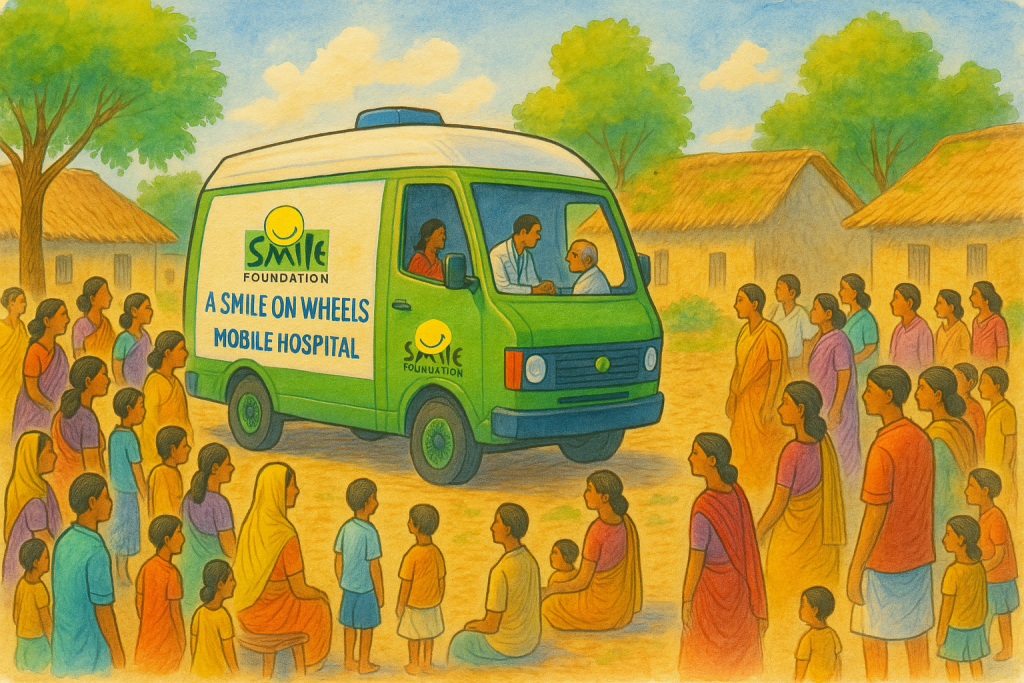
That is what Smile Foundation’s Smile on Wheels project has been doing across India, and in Ramanathapuram, through its partnership with Healthium Medtech Limited, it’s proving how proximity can transform public health.
The Distance Between Illness and Care
For people in rural India, the journey to medical attention often begins late. Most families wait until symptoms become unbearable before seeking a doctor. In a region like Ramanathapuram, where small hamlets are scattered across salt pans and arid stretches, that delay can be fatal.
A majority of rural Indians depend on private clinics or informal practitioners for their first medical consultation, largely because public facilities are too far or poorly equipped. Many of these consultations end without any diagnostic test. A fever might be treated with an antibiotic, a chronic cough dismissed as seasonal allergy. Hypertension, anaemia or diabetes, conditions that require testing and monitoring, often go undetected until complications arise.
The problem is not ignorance but inaccessibility. People know when they’re unwell. What they lack is access to doctors, diagnostic tools and affordable medicines.
The Missing Middle of Rural Healthcare
For decades, India’s health reforms have focused at two ends of the spectrum: expanding tertiary hospitals in cities and building sub-centres in villages. Yet, the missing middle that connects these two levels remains fragile.
Diagnostic testing is one of its weakest links. The World Health Organization estimates that 70% of medical decisions depend on laboratory results. But in rural India, diagnostic testing remains largely inaccessible. Most Primary Health Centres (PHCs) lack basic equipment for blood, urine or imaging tests. Even when equipment exists, trained technicians and regular supplies are in short supply.
This means that diseases like anaemia, malaria, tuberculosis and diabetes, common in rural areas, are often underdiagnosed or misdiagnosed. A patient might receive temporary relief from a generic prescription but lose precious time before the root cause is identified.
This is where mobile healthcare units like Smile on Wheels become game-changers. They fill this gap as a structured extension of the healthcare system itself.
Taking Healthcare to the Doorstep
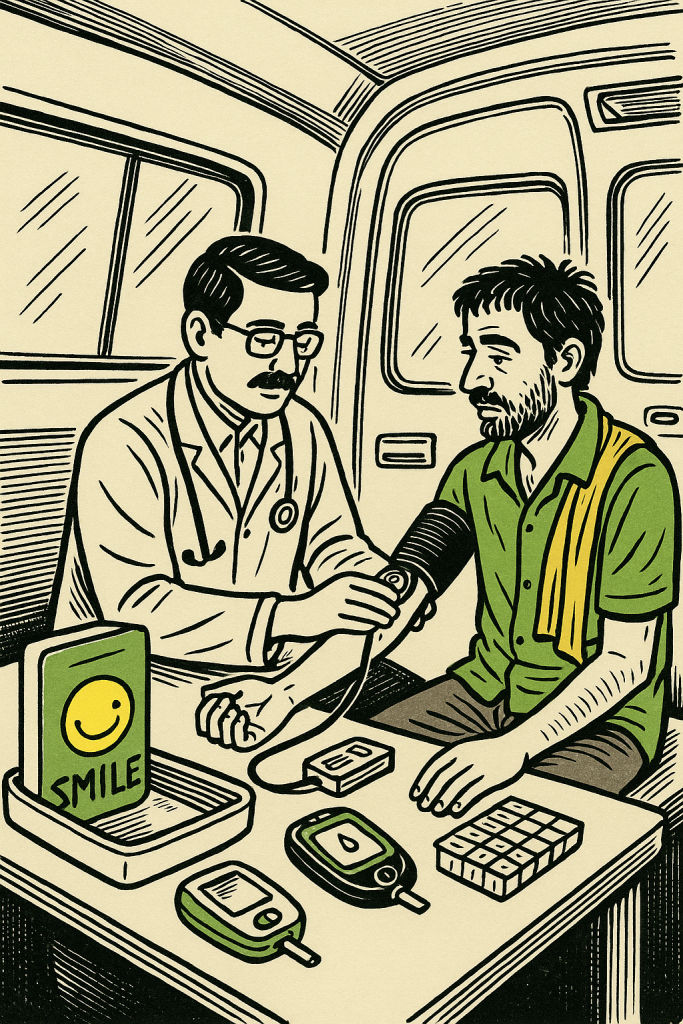
In Ramanathapuram, with support from Healthium Medtech Limited, this idea takes the form of a mobile hospital equipped with doctors, nurses, lab technicians and essential diagnostic tools. It travels from village to village, parking near schools, community halls or panchayat buildings.
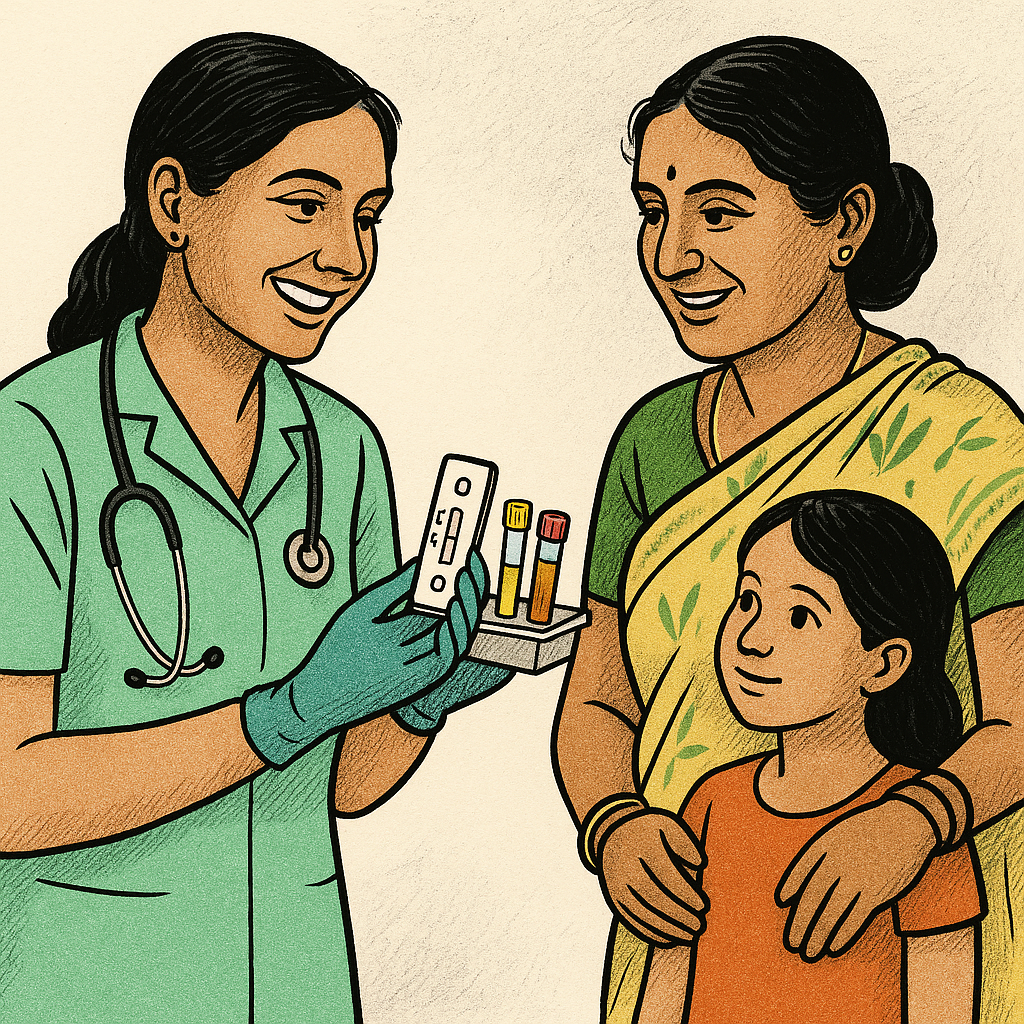
Residents gather early, carrying their medical records (if any), or simply recounting their symptoms. A doctor consults them, a nurse takes vitals, and tests are conducted, right there, in the van. From blood sugar and haemoglobin to pregnancy tests and basic cardiac screening, these diagnostics provide clarity that was previously absent.
For many patients, this is their first-ever medical check-up. For others, it’s the first time a doctor has come to them instead of the other way around.
One of the van’s doctors describes the impact vividly: “When we test a woman’s haemoglobin and show her she’s anaemic, she finally understands why she feels tired all the time. We give her iron tablets, yes, but we also give her knowledge.”
Why Diagnostics Tests are a Development Issue
It is tempting to view diagnostic testing as a technical service, one more box to tick in healthcare delivery. But in remote communities, it is fundamentally a development issue.
The absence of timely diagnosis keeps people trapped in a cycle of ill health and economic vulnerability. A labourer who doesn’t know he has diabetes keeps working until fatigue and complications make him unable to earn. A woman with untreated anaemia passes on nutritional deficiencies to her child. Families spend their limited savings on late-stage treatment instead of prevention.
A study in The Lancet found that non-communicable diseases accounted for approximately 60% of all deaths in India in 2019, up from 37% in 1990. The reasons could very well have been lack of nearby testing, transportation costs and long waiting times.
By contrast, when diagnostic testing is local, the benefits ripple outward. It builds community awareness, reduces long-term treatment costs and strengthens trust in public health systems.
The Smile on Wheels programme in Ramanathapuram demonstrates this ripple effect daily. In one coastal village, a series of blood sugar tests revealed that nearly a quarter of adults had undiagnosed diabetes. Today, these individuals receive follow-up consultations, dietary advice and free medicines. In another, regular maternal health check-ups have helped detect high-risk pregnancies early, reducing complications at childbirth.
The Power of Partnerships
Behind every successful health intervention lies an ecosystem of partnerships. The collaboration between Smile Foundation and Healthium Medtech Limited exemplifies how private sector support can amplify public good.
Healthium Medtech, a global medical devices company, brought not just financial support but also an understanding of what quality healthcare infrastructure entails. Its partnership with Smile Foundation enables sustained outreach covering thousands of individuals who might otherwise remain invisible to the formal health system.
This partnership reflects a broader shift in India’s development landscape: corporate social responsibility (CSR) is no longer about one-time donations but about strategic, long-term engagement with communities. By focusing on healthcare access and diagnostics, Healthium Medtech and Smile Foundation are addressing one of the most persistent inequities in India’s health landscape, the rural-urban divide.
Data, Diagnosis and Dignity
The numbers tell part of the story. Each Smile on Wheels van serves between 20000 to 25000 people a year. The Ramanathapuram project alone covers dozens of villages, providing consultations, tests, medicines and health education sessions.
But the deeper transformation lies in what this data represents: dignity through diagnosis.
In remote areas, people are often resigned to their health conditions as fate. Access to a medical consultation and a diagnostic test shifts that narrative. It gives people control over their health and choices.
An elderly farmer from a fishing hamlet near Mandapam said it best after receiving his first ECG test: “All my life I worked by the sea and thought breathlessness was just age. Now I know it’s my heart, and that it can be treated.”
The Role of Preventive Care
While treatment remains vital, the future of rural healthcare will depend on prevention, and prevention begins with early detection.
Regular diagnostic screening for blood pressure, glucose and anaemia can avert complications from chronic diseases. Maternal health check-ups can prevent high-risk pregnancies from turning tragic. Periodic consultations can ensure minor infections don’t escalate into emergencies.
In Ramanathapuram, the Smile on Wheels teams are also conducting community awareness sessions teaching families about hygiene, nutrition and when to seek medical help. Over time, this builds a culture of preventive care, which is cheaper, more sustainable and far less painful than crisis care.
Beyond the Van: A Vision for Systemic Change
The success of mobile healthcare models like Smile on Wheels offers important lessons for India’s broader public health policy.
First, mobility can be a legitimate model of primary care. In areas where it is impractical to build and staff permanent facilities, mobile units can ensure consistent, quality access.
Second, diagnostics should be viewed not as an add-on but as an essential public good integrated into every level of care. From village health camps to telemedicine platforms, early detection must become the centrepiece of public health strategy.
Third, partnerships between NGOs, corporates and government agencies can create a multiplier effect. The private sector can bring innovation and logistics; NGOs like Smile Foundation bring grassroots credibility; and the government brings scale. Together, they can bridge the healthcare divide faster than any one entity can alone.
Towards a Healthier Tomorrow
As India moves towards its goal of universal health coverage, reaching the “last mile” remains its greatest challenge, and greatest opportunity.
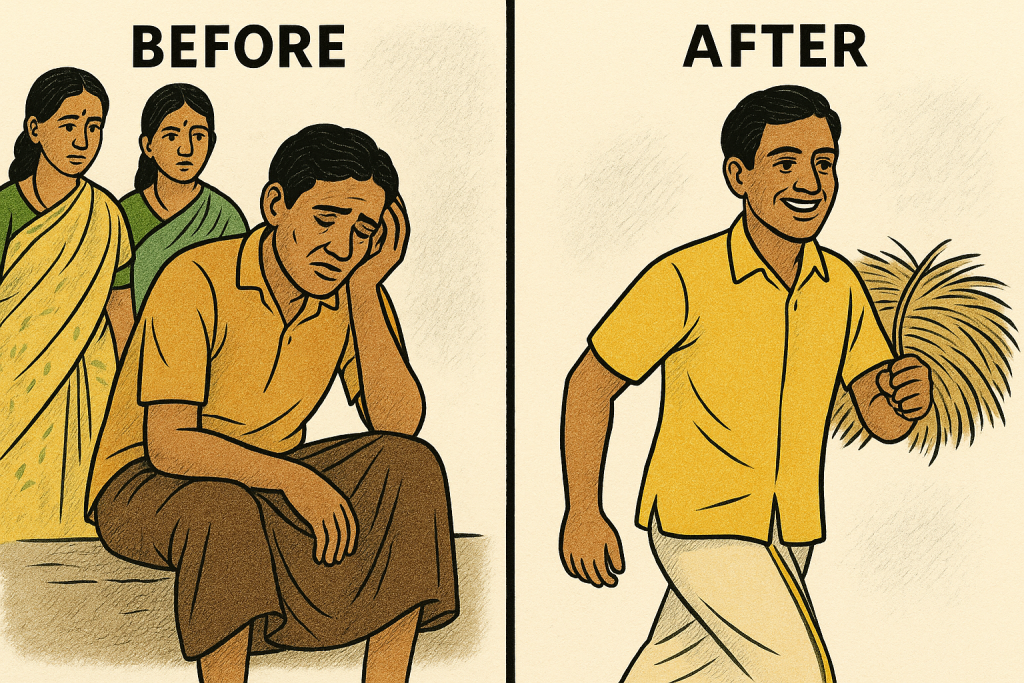
The people of Ramanathapuram are not statistics; they are reminders that access is the foundation of equity. When a child’s fever is diagnosed early, when a mother’s blood pressure is monitored regularly, when a diabetic worker receives free insulin at his doorstep, those are victories that add up to national progress.
The programme, powered by partnerships like that with Healthium Medtech Limited, proves that healthcare doesn’t need to be confined to buildings. It can move, it can adapt, it can reach the unreached.
Every consultation, every test, every diagnosis brings not just relief, but recognition of people who deserve care, of communities that matter and of a country still striving to make “health for all” a lived reality.
Because ultimately, as Smile Foundation reminds us, smiles begin with good health, and good health begins with access.