A decade ago, conversations about children and safety focused largely on physical spaces — roads, schools, playgrounds. Today, another space demands equal attention: the digital world.
Children are going online earlier than ever before. Smartphones, online classes, gaming platforms and social media are part of daily life. But while access has expanded rapidly, digital safety education has not kept pace.
For organisations working in education and child development, this gap is increasingly urgent.
Cyber security education for children is no longer an optional add-on. It is foundational to safe learning in the 21st century.
The Digital Reality Children Face
According to UN global research on children in digital environments, a significant proportion of young people are online before the age of 15. Exposure includes learning platforms, entertainment and social networking — but also risks such as cyberbullying, exploitation, misinformation and identity theft.
The International Telecommunication Union (ITU) has repeatedly emphasized that digital inclusion must be paired with child online protection frameworks. Access without protection increases vulnerability.
In India, the digital expansion has been particularly rapid. Post-pandemic hybrid learning models, affordable data plans and government-led digital initiatives have accelerated connectivity. At the same time, National Crime Records Bureau reports indicate rising cybercrime cases, including those affecting minors.
Children are not just users of technology. They are participants in digital ecosystems that shape identity, behaviour and opportunity.
What the Research Says
Recent studies published in journals such as Computers & Education and Journal of Cybersecurity Education highlight important findings:
- Early digital safety education (ages 8–12) significantly improves risk recognition.
- Gamified cyber safety learning increases retention compared to lecture-based sessions.
- Structured curriculum-based interventions outperform one-time awareness workshops.
- Parental engagement strengthens safe online behaviour outcomes.
The OECD’s research on educating 21st-century children further reinforces that digital literacy must include critical thinking skills. Students trained to question sources are less susceptible to misinformation.
Cyber safety is not just about passwords. It is about digital judgement.
The Gendered Dimension of Online Risk
Research from Child Abuse & Neglect and EU Kids Online shows that girls face disproportionately high levels of online harassment, image-based abuse and coercion.
In many contexts, online bullying silences participation. Girls withdraw from digital spaces that should empower them.
For organisations working toward gender equity, cyber security education becomes part of protection against digital gender-based violence.
Teaching girls about privacy settings, reporting mechanisms and digital confidence is not only about safety. It is about participation.
The Indian Education Context
India’s National Education Policy 2020 emphasises digital literacy and 21st-century skills. CBSE has issued cyber safety manuals. CERT-In regularly publishes cyber hygiene advisories.
Yet implementation remains uneven, especially in rural and government schools.
Digital classrooms are expanding. Tablets and smartphones are entering homes. But structured cyber security education for children is not consistently embedded into school curricula.
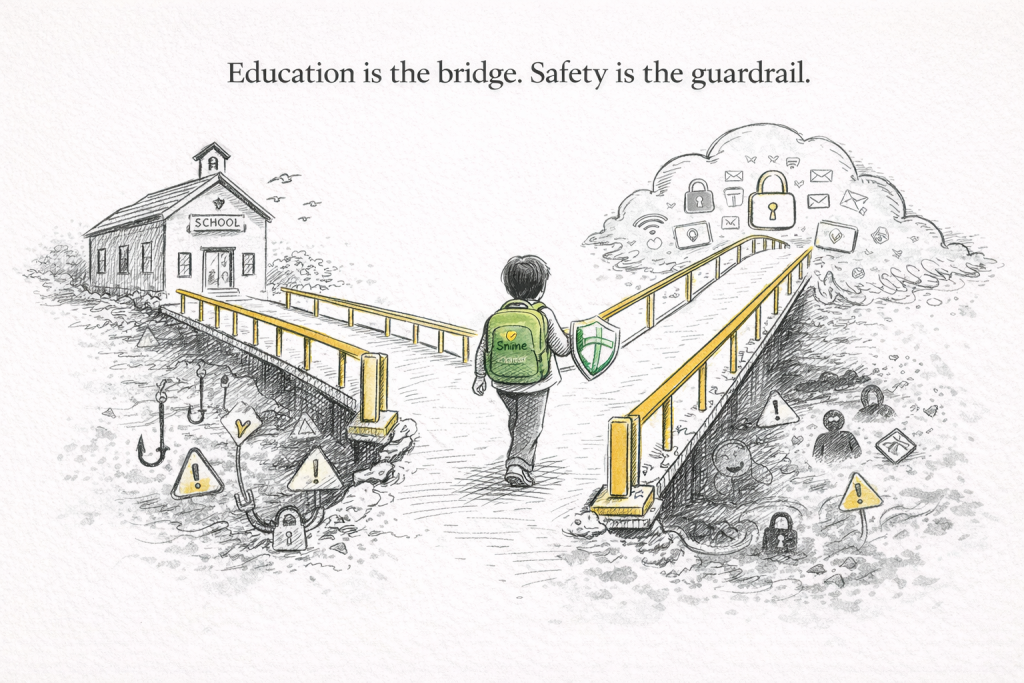
The risk is clear: expanding digital access without expanding digital protection.
A Case for Integrated Digital Safety Education
The global evidence converges on one conclusion: cyber security education works best when it is integrated into broader educational programming.
It should include:
- Personal data protection (password hygiene, OTP awareness)
- Recognising phishing and online scams
- Understanding digital footprints
- Cyberbullying prevention and response
- Responsible gaming behaviour
- Critical thinking and misinformation detection
But beyond content, it requires delivery through trained educators.
Teacher capacity building is essential. Research shows that when teachers are confident in digital safety topics, students report higher awareness and safer behaviours.
Cyber Security Education as a Development Issue
Digital safety is often framed as a technical issue. It is not.
It is a development issue.
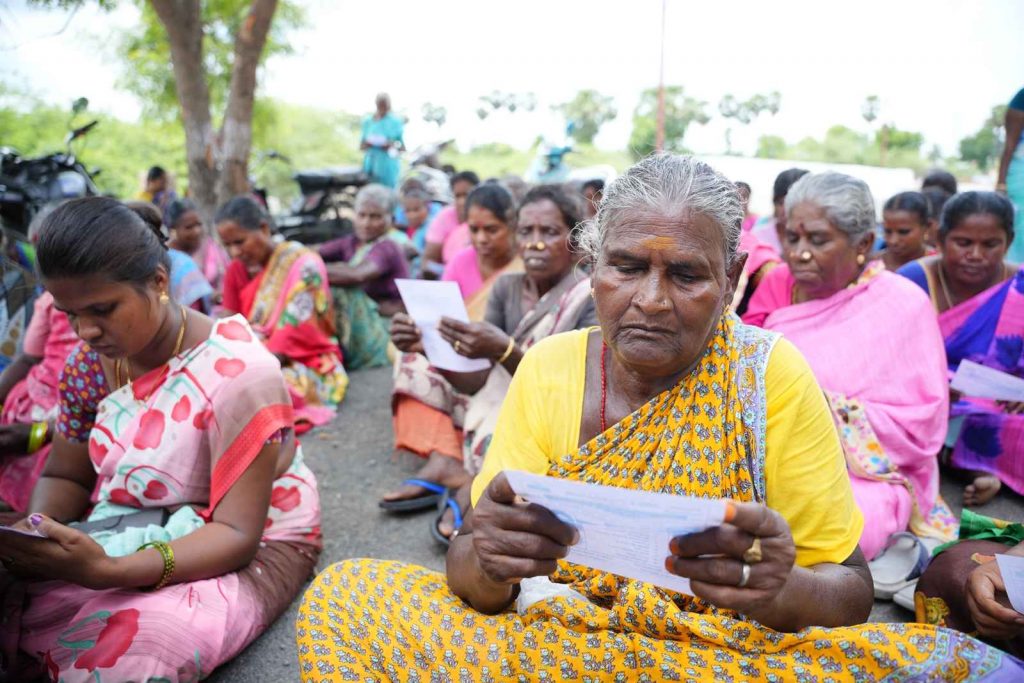
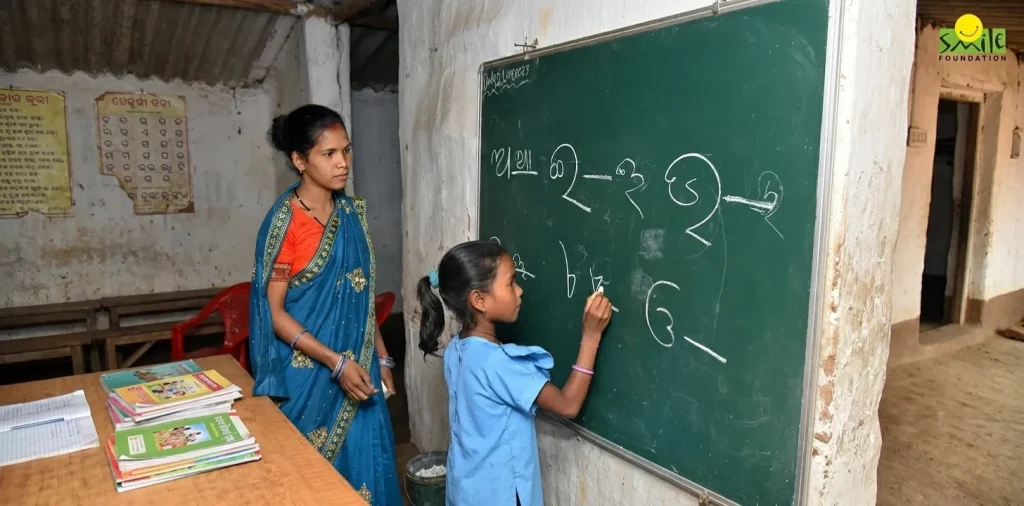
Children from low-income households may have less parental supervision online due to digital literacy gaps among caregivers. Rural students may access shared devices with limited guidance. First-generation learners navigating online platforms may not recognise fraud attempts.
Without structured training, the digital divide becomes a digital risk divide.
Cyber security education for children must therefore be viewed through an equity lens.
Safe access strengthens educational continuity.
Unsafe access disrupts it.
What an Integrated Model Could Look Like
For organisations like Smile Foundation working in underserved communities, cyber security education can be embedded within digital learning initiatives.
A structured model could include:
- Age-Specific Modules
Primary students learn basic safety and privacy.
Adolescents learn about misinformation, consent and reporting mechanisms. - Teacher Training Workshops
Equip educators with tools to guide safe digital behaviour. - Parent Engagement Sessions
Help caregivers understand online risks and support safe usage at home. - Peer-Led Safety Clubs
Encourage student ambassadors to promote digital citizenship. - Monitoring and Feedback Systems
Track behaviour changes and adapt modules accordingly.
This multi-layered approach aligns with international best practices from UNICEF and ITU frameworks.
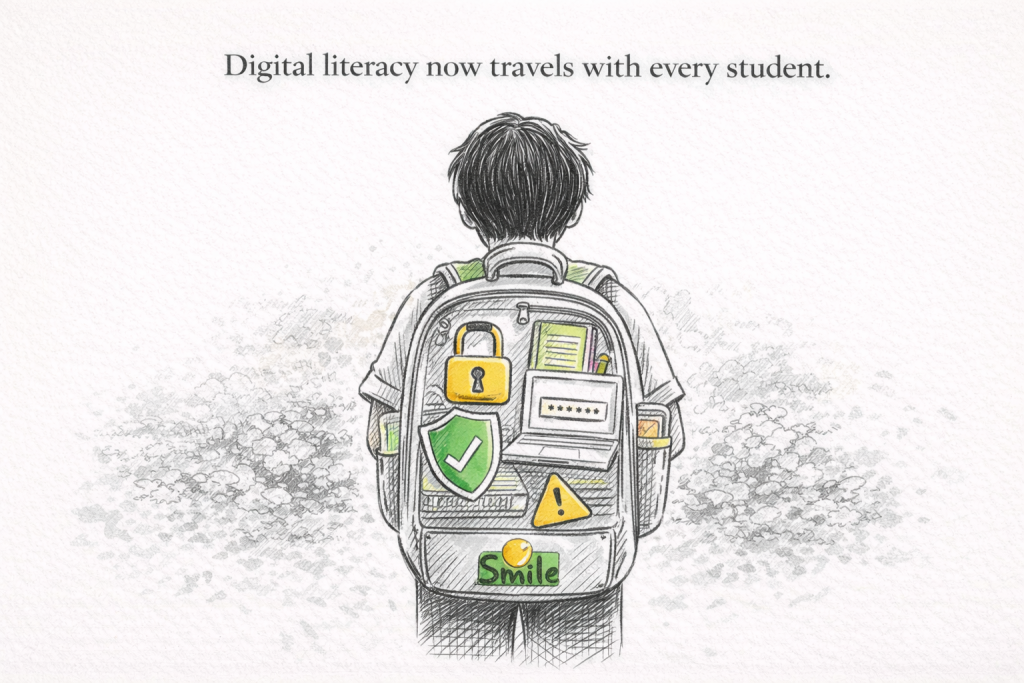
Digital Resilience Over Digital Fear: Cyber Security Education
The goal is not to make children afraid of the internet.
It is to make them resilient.
Digital resilience includes:
- Knowing when to pause before clicking.
- Understanding how to report harmful content.
- Recognising manipulation.
- Protecting personal identity.
- Supporting peers facing cyberbullying.
Education builds confidence. Confidence reduces harm.
Why the Moment Is Now
India is one of the world’s youngest nations. It is also one of the fastest-growing digital markets.
The Microsoft Digital Civility Index and other global surveys have consistently shown that online civility challenges persist. Exposure to harassment and misinformation is widespread.
If digital literacy education does not evolve to include structured cyber safety components, we risk creating digitally connected yet digitally vulnerable generations.
The window for preventive education is narrow.
Early intervention yields stronger outcomes.
A Call for Collaborative Action
The responsibility does not lie with schools alone.
Governments, NGOs, private sector partners and parents must collaborate.
Public-private partnerships can scale curriculum integration. CSR initiatives can fund digital safety modules alongside device distribution. Teacher training institutions can embed cyber security in pedagogy.
For organisations committed to child development and education, integrating cyber security education into existing programmes is both timely and necessary.
The digital world is not separate from children’s lives. It is woven into them.
If we are to raise informed, confident digital citizens, we must ensure that protection grows alongside access.
Because in today’s world, safeguarding a child’s future includes safeguarding their digital presence.
From Access to Agency
Digital education is often celebrated as empowerment. But empowerment requires protection.
When children understand cyber risks, they engage more confidently in online learning. When girls feel safe, they participate. When adolescents develop critical thinking skills, they resist misinformation.
Cyber security education for children strengthens agency.
It protects learning, safeguards mental health and supports long-term employability in an increasingly digital workforce.
But beyond frameworks and policy discussions, what does this look like in practice?
For many young students, digital access is growing faster than digital awareness. As online spaces become part of everyday learning and communication, gaps in understanding cyber safety, privacy and responsible behaviour can leave students vulnerable. Timely guidance plays an important role in helping them navigate the digital world with confidence and care.
Under the Sodexo-supported scholarship programme, Smile Foundation works with scholars from migrant and underserved communities to support their continued education alongside essential life skills. As part of this effort, a Cyber Safety and Security training was conducted, focusing on safe internet use, protecting personal information, identifying online risks and responding to cyber threats.
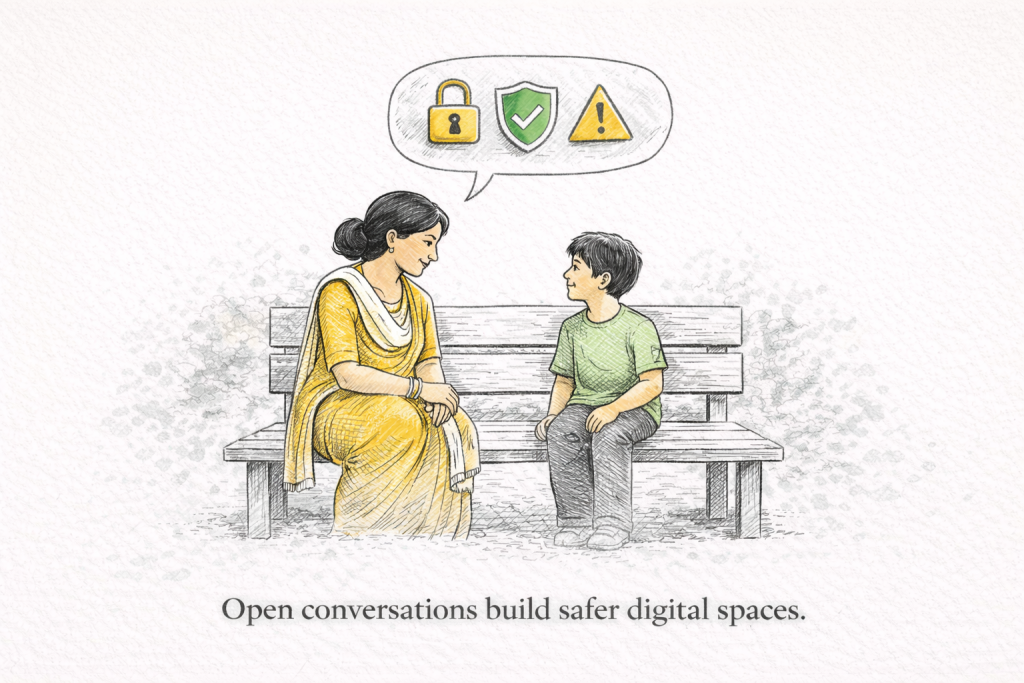
The session encouraged open conversations around digital boundaries, online behaviour and informed decision-making. Students discussed real-life scenarios, reflected on peer experiences and explored practical steps to stay safe online.
By integrating cyber safety into its education support, the programme aims to help scholars engage with technology safely, responsibly and with greater awareness.
This is what digital resilience looks like at the grassroots level. Not abstract policy. Not one-time awareness. But embedded, contextual guidance that grows alongside access.
The digital world is not separate from children’s lives. It is woven into them.
If we are to raise informed, confident digital citizens, protection must expand with connectivity.
Because in today’s world, safeguarding a child’s future includes safeguarding their digital presence.