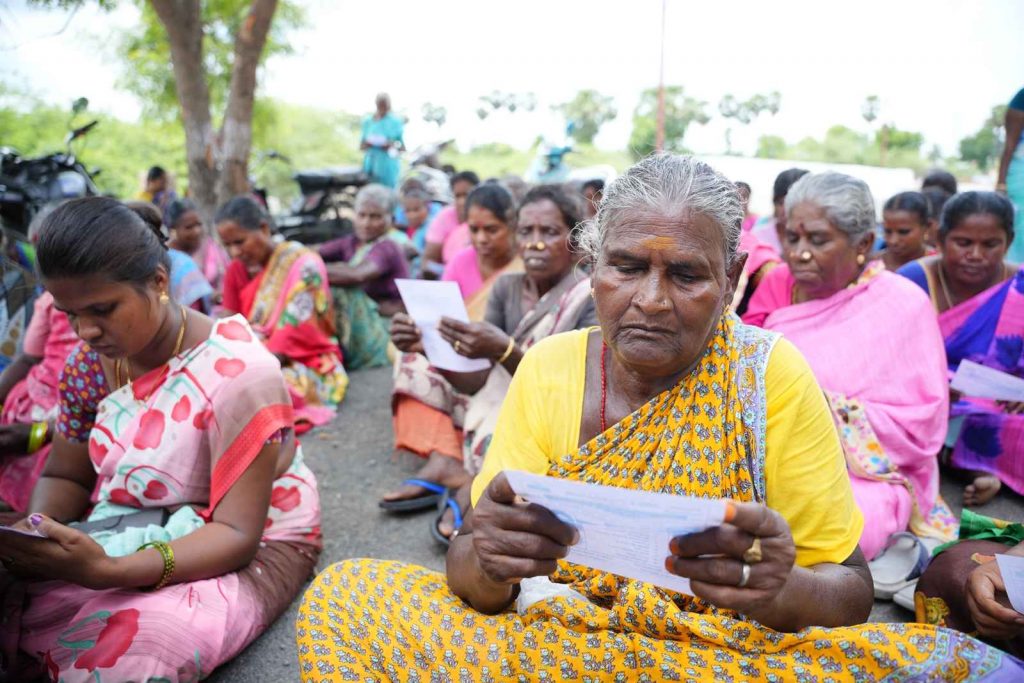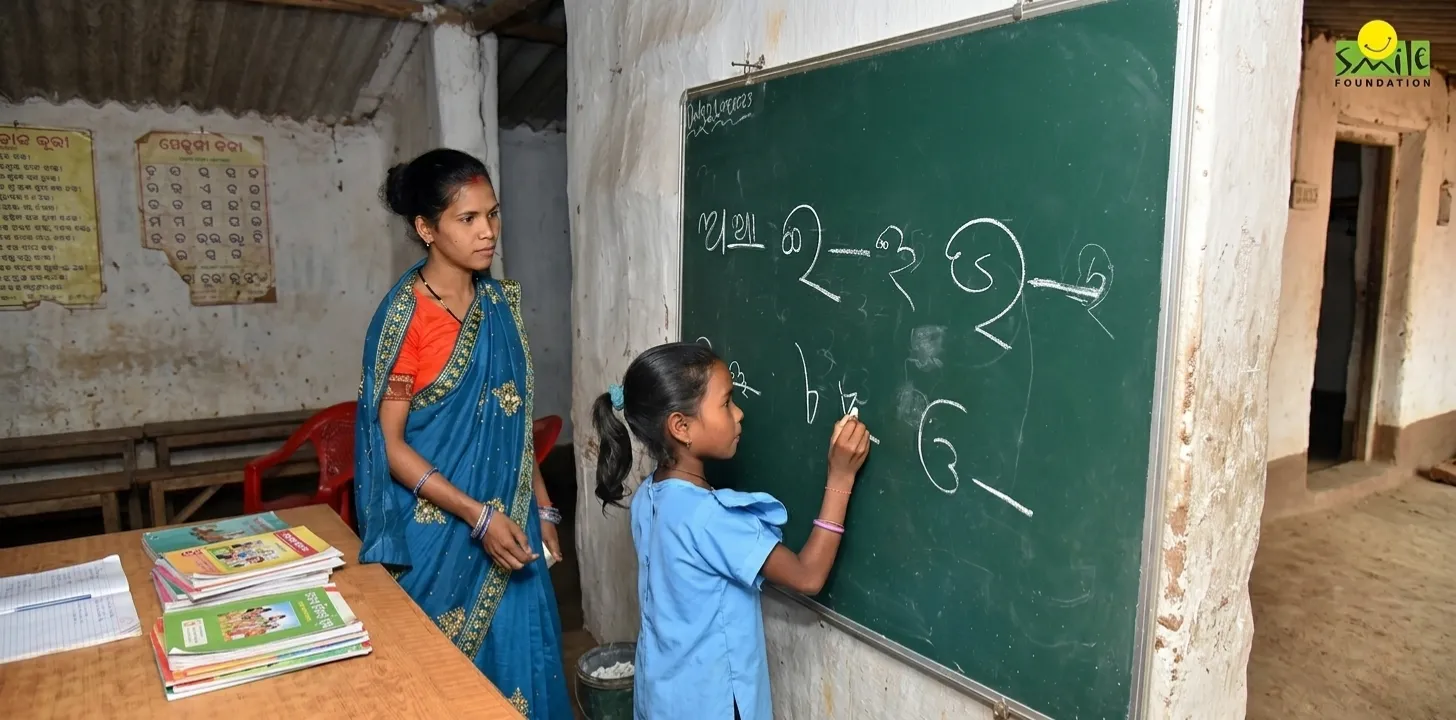

CSR activities in India have moved far beyond compliance. Today, they are shaping how companies engage with society, build trust and create measurable impact. From classrooms in rural districts to mobile health units in underserved communities, corporate social responsibility India efforts are becoming more strategic and outcome-driven.
At its core, CSR is about responsibility with intent.
If you are a business leader, CSR professional or partner NGO, understanding what works in 2026 is critical.
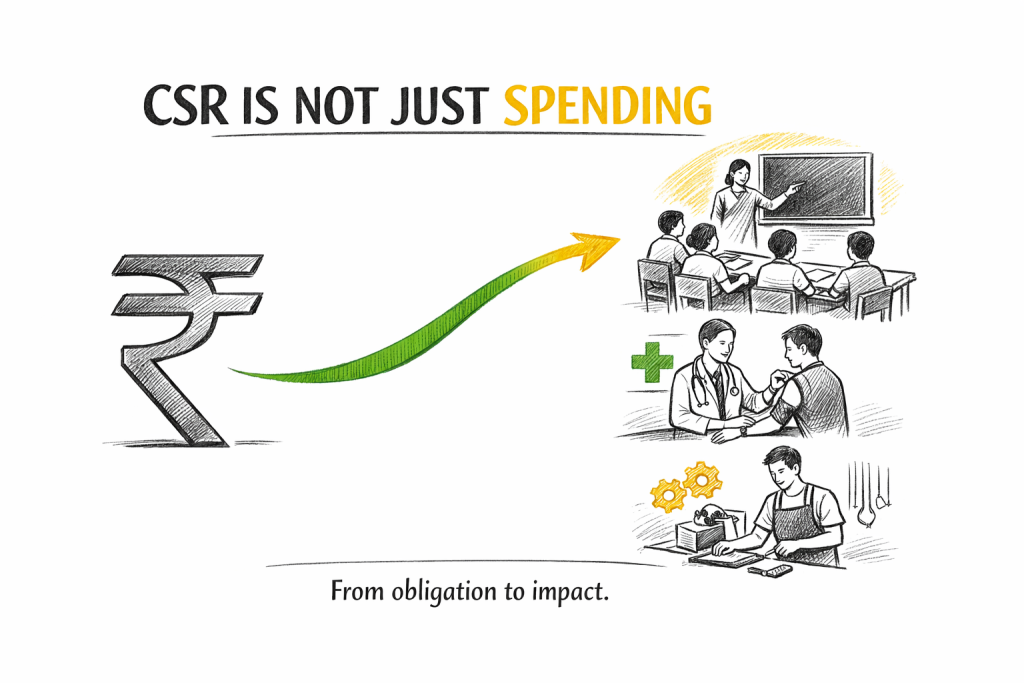
What Is CSR and Why Does It Matter in India?
Corporate social responsibility India refers to how companies contribute to social and environmental development while running their business.
India is one of the few countries where CSR is backed by law. This makes it both structured and scalable.
Section 135 of the Companies Act — The Law Behind CSR
Under the Section 135 of the Companies Act 2013, certain companies must allocate funds toward CSR.
Key provisions include:
- Companies with net worth of ₹500 crore or more
- Or turnover of ₹1000 crore or more
- Or net profit of ₹5 crore or more
These companies must spend at least 2 percent of their average net profits on CSR.
This framework ensures CSR is embedded into corporate governance.
Which Companies Must Spend on CSR?
CSR mandatory India applies to:
- Listed companies CSR India
- Large private corporations
- Multinational companies operating in India
These organisations are also required to:
- Form a CSR committee
- Publish CSR annual report India disclosures
- Track impact
This has led to a significant rise in CSR spending India over the years.
Top CSR Activities Companies Are Doing in India
CSR has evolved into a multi-sector approach aligned with national priorities and the UN Sustainable Development Goals.
CSR in Education and Child Development
Education remains one of the most impactful areas.
CSR in education India includes:
- Building and upgrading schools
- Supporting digital classrooms
- Scholarships for underserved children
- Early childhood development programmes
Many companies partner with NGOs to improve learning outcomes, not just infrastructure.
CSR in Healthcare and Sanitation
Healthcare is another priority sector.
CSR in health India initiatives focus on:
- Mobile health clinics
- Preventive health programmes
- Maternal and child healthcare
- Sanitation and hygiene awareness
These programmes often target rural and low-income communities.
CSR in Skill Development and Livelihood
With rising youth unemployment, CSR for skill development has gained importance.
Companies invest in:
- Vocational training India programmes
- Employability skills India training
- Digital literacy youth India initiatives
These efforts directly link to job creation.
CSR in Women Empowerment
Gender-focused programmes are gaining traction.
CSR projects India in this space include:
- Skill training for women
- Financial literacy programmes
- Support for women entrepreneurs
These initiatives help improve participation in the workforce.
CSR in Environment and Sustainability
Environmental sustainability is now central to CSR and ESG India corporate priorities.
Common initiatives include:
- Tree plantation drives
- Waste management systems
- Renewable energy projects
Companies are increasingly aligning CSR with long-term sustainability goals.
CSR Activities in India: What High-Impact Projects Look Like
Not all CSR programmes create lasting change.
High-impact CSR examples India share common traits:
- Long-term engagement, not one-time funding
- Measurable outcomes
- Community involvement
- Strong NGO partnerships
For instance:
- Education programmes that track learning levels
- Healthcare initiatives that ensure follow-up care
- Skill programmes linked to job placement
Impact of CSR in India is strongest when programmes move from input to outcomes.
Real Examples of High-Impact CSR Projects in India
Across sectors, companies are investing in scalable models.
Examples include:
- Digital education labs in rural schools
- Skill training centres linked to industry jobs
- Mobile health units serving remote areas
Many of these initiatives are implemented in partnership with NGOs that understand local contexts.
How to Choose the Right CSR Partner NGO
Selecting the right partner determines the success of CSR projects.
Look for:
- Proven track record
- Transparent reporting systems
- Strong community presence
- Alignment with your CSR goals
Also check:
- NGO transparency India benchmarks
- Impact reports and case studies
- Compliance with CSR regulations
A good CSR partner NGO India does more than execute. It co-creates impact.
How Smile Foundation Partners with Companies for CSR
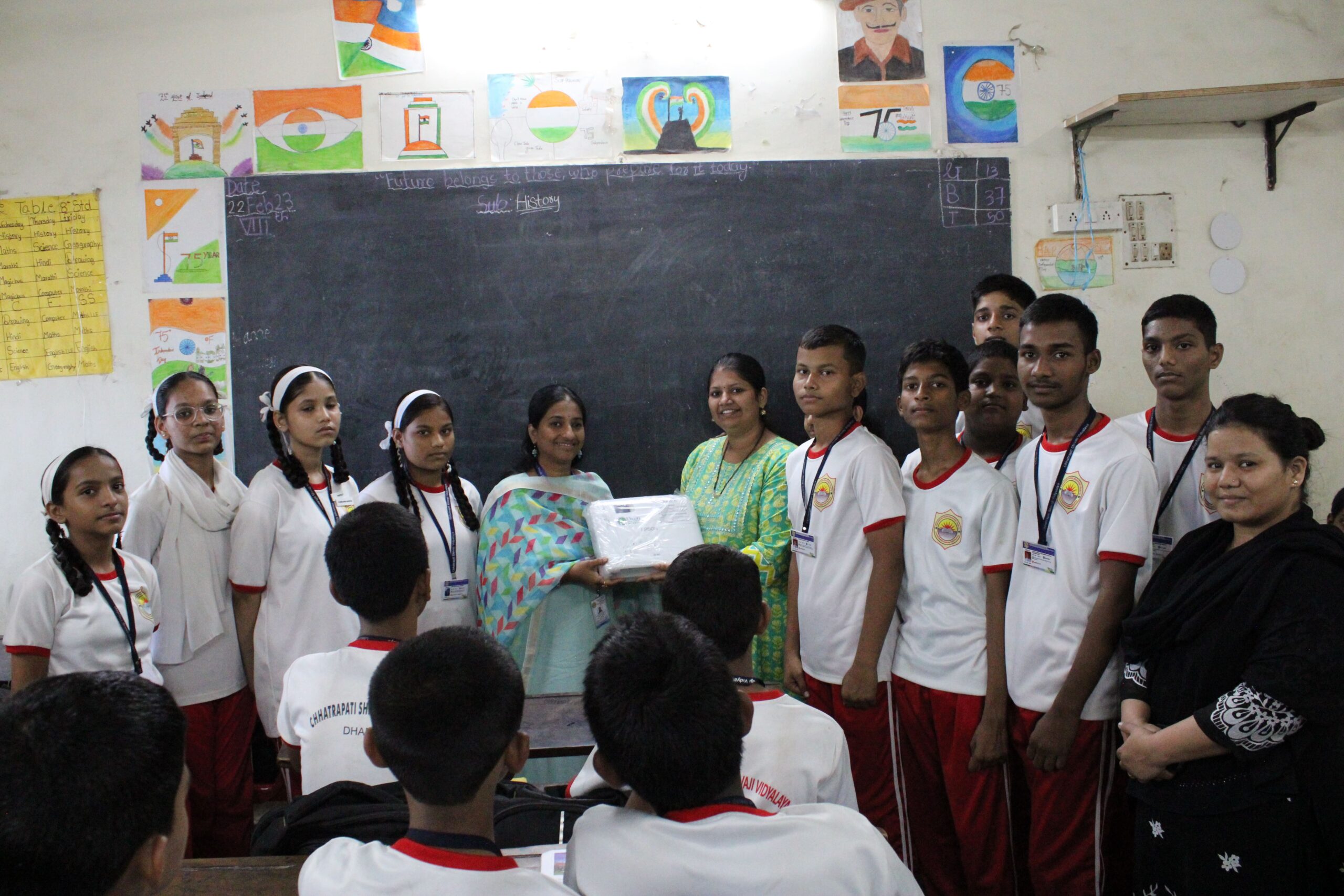
Smile Foundation works closely with companies to design and implement CSR programmes across education, healthcare and skill development.
Their approach focuses on:
- Scalable, replicable models
- Measurable outcomes
- Community-led implementation
Programmes like education initiatives and skill development centres align with both corporate goals and community needs.
👉 If your organisation is exploring CSR partnerships, collaborating with Smile Foundation can help translate intent into measurable impact.
What Makes CSR Effective in 2026
CSR is becoming sharper, more accountable, and more outcome-driven.
Companies are moving away from fragmented efforts to integrated programmes that align with business values and community needs. The shift is visible in how CSR is planned, executed and measured.
Effective CSR programmes today focus on:
- Long-term impact over short-term visibility
- Data-backed decision making using tools like the MCA CSR portal India
- Partnerships with credible NGOs and local institutions
- Alignment with ESG India corporate frameworks and SDGs
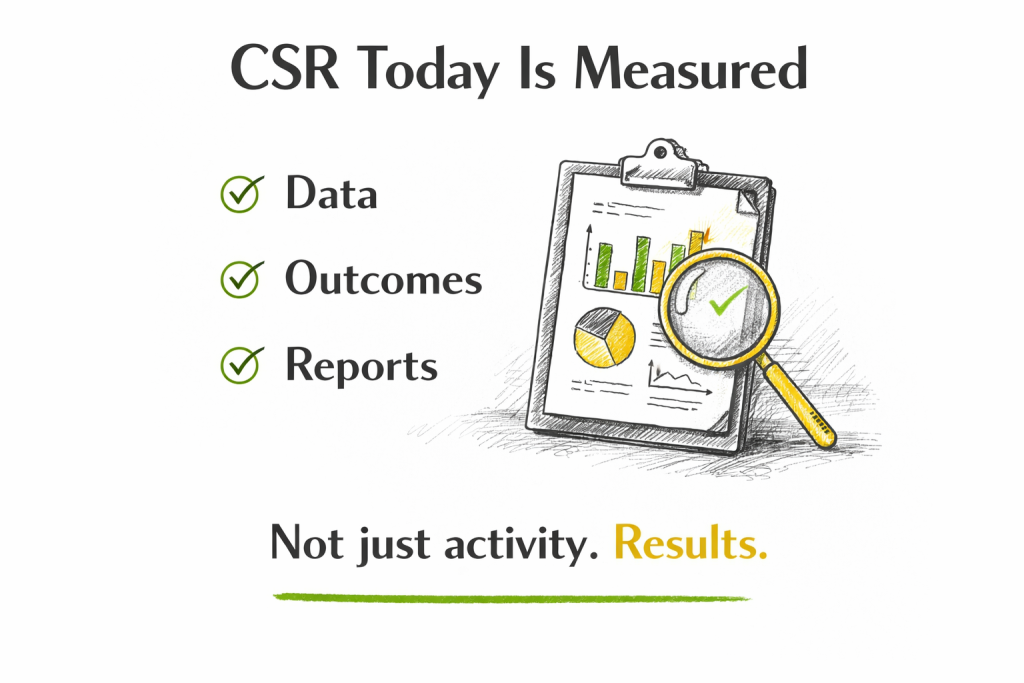
There is also a growing emphasis on measuring outcomes, not just outputs. It is no longer enough to say how many schools were built. The real question is how many children are learning better.
How Companies Measure the Impact of CSR Activities
Impact measurement is now central to CSR strategy.
Companies use a mix of qualitative and quantitative tools to track progress.
Common methods include:
- Baseline and endline assessments
- Third-party evaluations
- Real-time dashboards and monitoring systems
- Beneficiary feedback and case studies
Many organisations also align their CSR impact India reporting with global frameworks like the UN SDGs.
This shift has made CSR more transparent and accountable.
CSR Activities in India: Trends Shaping the Future
Looking ahead, several trends are shaping CSR activities in India:
1. Technology-led CSR
Digital tools are improving reach and efficiency. From online learning platforms to telemedicine, technology is expanding access.
2. Localised Impact
Companies are focusing on districts and communities where they operate. This ensures deeper engagement and better outcomes.
3. Employee Engagement
CSR is increasingly involving employees through volunteering and payroll giving programmes.
4. Climate and Sustainability
Environmental concerns are no longer optional. CSR programmes are integrating climate resilience and sustainability.
5. Outcome-driven Funding
Funding is being linked to measurable results, making programmes more accountable.
The Business Case for CSR
CSR is often seen as a responsibility. It is also a strategic advantage.
Companies that invest in meaningful CSR programmes often see:
- Improved brand reputation
- Stronger stakeholder trust
- Better employee engagement
- Long-term sustainability
CSR is no longer separate from business strategy. It is part of it.
Conclusion
CSR activities in India are at an inflection point.
What began as a compliance requirement has evolved into a powerful tool for social change. Companies today are not just spending CSR funds. They are shaping outcomes that affect education, healthcare, livelihoods and the environment.
The opportunity ahead is clear. When businesses partner with the right organisations and focus on measurable impact, CSR can move beyond obligation and become transformation.
If you are looking to create meaningful impact through CSR, the next step is simple. Choose a cause, choose the right partner and commit for the long term.
FAQs — CSR Activities in India
What are CSR activities and which companies must do them in India?
CSR activities are initiatives taken by companies to contribute to social and environmental development. Companies meeting financial thresholds under Section 135 must spend on CSR.
What does Section 135 of the Companies Act say about CSR?
It mandates eligible companies to spend at least 2 percent of their average net profits on CSR and form a CSR committee.
How much do Indian companies spend on CSR every year?
CSR spending India has grown steadily, with thousands of crores allocated annually across sectors like education, health and environment.
What are the most impactful CSR activities done in India?
Education, healthcare, skill development, women empowerment and sustainability programmes are among the most impactful.
Can a company choose any NGO for its CSR programme?
Yes, but the NGO must meet compliance requirements and demonstrate credibility, transparency and impact.
How is CSR different from donations or charity?
CSR is structured, strategic and regulated, while charity is voluntary and often short-term.
What is the MCA CSR portal and how does it work?
It is a government platform where companies report CSR activities, spending and impact data.
How do companies measure the impact of CSR activities?
Through data tracking, third-party evaluations and outcome-based reporting aligned with SDGs.
What are the penalties for not spending CSR funds?
Companies may face penalties and must transfer unspent funds to specified accounts as per law.
How can a company partner with Smile Foundation for CSR?
Companies can collaborate with Smile Foundation to design and implement programmes in education, healthcare and skill development.