
The world is beginning to pay attention to the world of handicrafts. It’s common to see popular reels on social media featuring women from village communities doing intricate Aari work or block printing or engaging in any handwork. Even leading fashion designers and lifestyle brands are acknowledging this trend and including embroidery in their contemporary collections. This shows us that handmade items aren’t outdated but a form of high art.
Craftsmanship is gaining global recognition. Today’s buyers want to know who made their clothes and products, and how they were made. This growing demand for authenticity presents a unique opportunity.
The handicrafts sector stands as a cornerstone of the Indian economy, providing livelihoods to over seven million individuals. The total exports of handicrafts were valued at INR 31,095 crore (US$ 3.8 billion) in FY24. Its significance cannot be overstated, as it embodies the rich cultural heritage and craftsmanship that define the nation.
Stitching new beginnings with Aari work
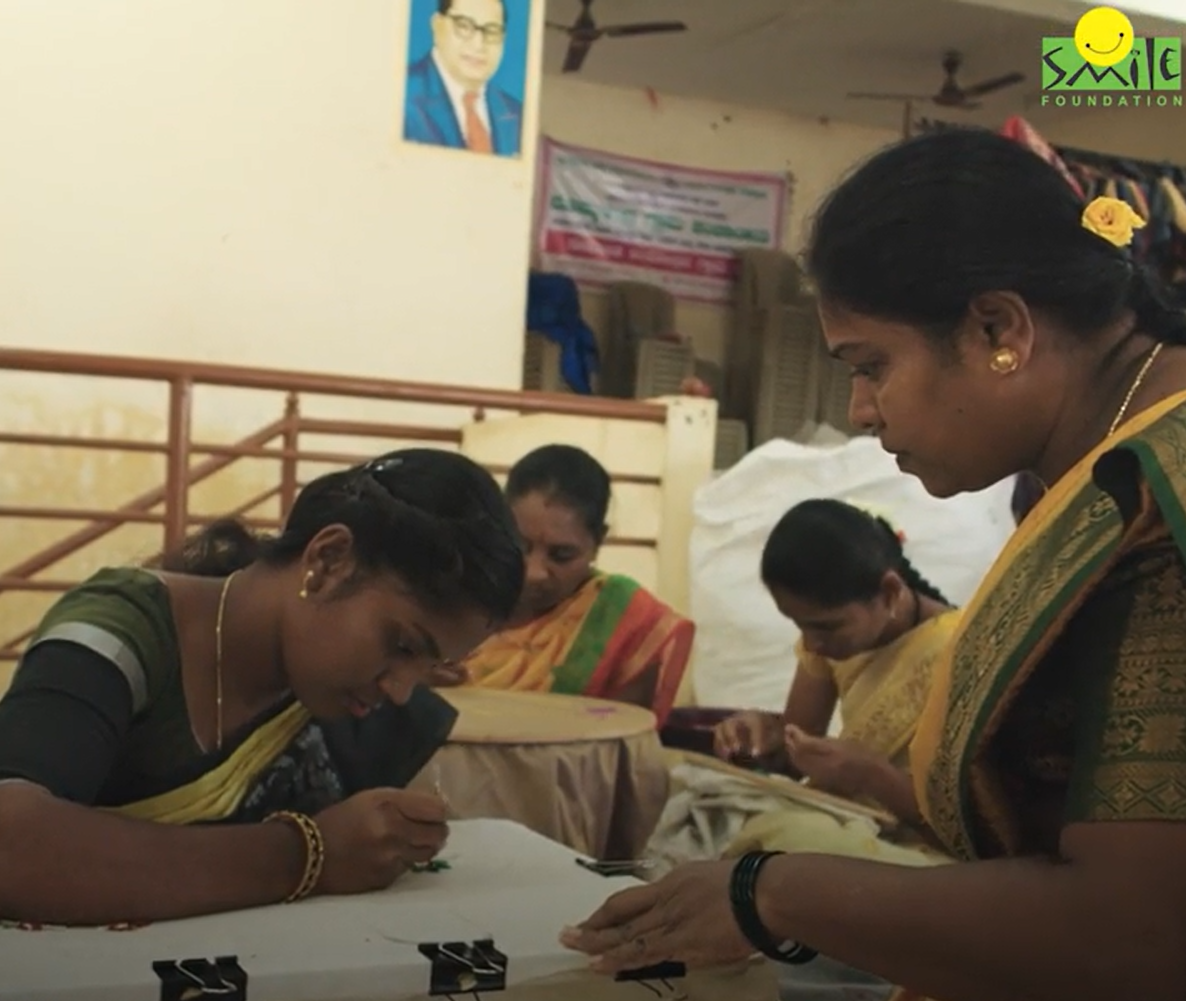
In a small workshop tucked away in the bustling streets of India, a group of women are gathered, their nimble fingers deftly weaving vibrant fabrics, shaping intricate beadwork, and breathing life into stunning handmade creations. These are the women of Smile Foundation’s Swabhiman programme, a remarkable initiative that is not only transforming their lives but also serving as a model for empowering women through craft-based entrepreneurship. The women learn Aari work through Smile Foundation’s women-led training initiatives.

Smile Foundation recognised the need to equip these women with the tools, training, and market access to turn their craft skills into viable businesses.
Aari embroidery traces its origins back to the cobbler or ‘mochi’ communities of ancient Uttar Pradesh and Kutch. Interestingly, the Aari needles were primarily employed in the creation of shoes and soles. The decline of the ‘mocha’ trade compelled individuals to pivot towards the textile industry as a necessary means of sustaining their livelihoods. The Mughals, renowned for their openness to innovative techniques and artistic styles across various mediums, brought it to their royal courts. The skill gradually reached 18th-century Europe, where it was embraced as ‘Tambour’—named after the embroidery frame used.
Building community through Aari work/craft
Smile’s centre is a space of solidarity where women come together to learn, share stories, encourage one another, and grow as a group. Some are forming small collectives. Others are looking for ways to start their own labels.
One of the most notable features of the programme is its overall approach to empowerment. Beyond teaching technical skills or assisting with product development, the project also creating a sense of community, building confidence, and instilling the belief that these women can shape their own futures. There is camaraderie and mutual support among the programme participants. They share their challenges, celebrate successes, and inspire each other to push the limits of what’s possible.
The free-of-cost training programme in Aari embroidery and tailoring also introduces these women to the world of business planning, branding, and digital marketing—tools that once felt out of reach. With these skills, they are preparing to take on the marketplace, not just as workers, but as entrepreneurs.

The power of a mentor
One of the most touching stories is that of Yashodha, a trainer who has become a role model. She gently guides her students through complex embroidery patterns. More importantly, they now discuss opening boutiques and taking customer orders with excitement. Several participants in the programme have learned to contribute to their household income.
The transformation doesn’t stop with learning. These women are encouraged to market their creations, participate in exhibitions, sell through digital platforms, and build local client networks. With knowledge of pricing, customer engagement, and digital tools, they are turning craft into a sustainable business model. The true beauty of this initiative lies in its ripple effect. Each empowered woman becomes a source of strength for many others, including her daughters, her neighbours, and her community.
Why it matters
In a world where millions of women still cannot get jobs, programmes like this show that women do well when they have the chance. Also, the focus on craft-based entrepreneurship aligns with a growing global trend that values handmade and artisanal goods. More and more, people want unique, ethically made things that tell the stories of their makers and reflect their skills.
This is what ‘handmade, heart-led’ truly means. It’s about weaving lives back together with purpose and pride. Through its women-led training initiatives, Smile Foundation is helping craft more than products. It’s crafting futures. These creators, once invisible, are now being celebrated not only for their work, but for their artistry, heritage, and perseverance. What starts as a personal journey becomes a shared movement, bringing economic resilience to entire families and villages.