
Climate change in India is no longer a distant warning issued from international summits or scientific journals. It is visible in everyday disruptions to life and learning. Schools shut down during prolonged heatwaves in north India. Classrooms in flood-prone districts of Assam, Bihar and Kerala are converted into relief shelters. Children in drought-affected regions walk longer distances for water, missing school altogether. In coastal areas, repeated cyclones and salinisation of groundwater steadily erode livelihoods, pushing families into distress migration.
For millions of children, climate change is not an abstract concept. It is shaping attendance, nutrition, safety and learning outcomes. Yet, for most Indian students, climate education remains fragmented, late and often limited to textbook definitions rather than lived experience. This gap has serious implications, not only for environmental outcomes, but for equity, resilience and the future of education itself.
A country at high risk, children at the centre
India ranks among the countries most vulnerable to climate shocks. According to UNICEF’s Children’s Climate Risk Index, India is ranked 26th out of 163 countries in terms of children’s exposure and vulnerability to climate-related hazards. The reasons are structural: high population density, widespread poverty, dependence on climate-sensitive livelihoods, and uneven access to infrastructure.
In 2024 alone, an estimated 54.8 million children in India were affected by heatwaves, with temperatures crossing physiological safety thresholds in several states. Schools across Delhi, Rajasthan, Uttar Pradesh and Bihar were forced to close or shorten hours repeatedly. These disruptions are not evenly distributed. Schools in low-income neighbourhoods, rural areas and informal settlements are the least equipped to cope. Many lack adequate ventilation, drinking water, shaded spaces or cooling systems.
Across South Asia, UNICEF estimates that over 128 million students experience climate-related disruptions to schooling every year, with India accounting for a significant share. Floods, cyclones and droughts routinely interrupt academic calendars, damage infrastructure and displace families. For children already at risk of dropping out, climate shocks often become the final push out of the education system.
Girls are disproportionately affected. During climate-induced crises, they are more likely to be pulled out of school to manage household work, care for siblings or contribute to income generation. What begins as a temporary disruption often turns into permanent dropout.
Climate change is reshaping classrooms
The effects of climate change are no longer external to education. They are reshaping classrooms themselves. Heat stress reduces concentration and learning capacity. Poor air quality, worsened by climate-driven wildfires and dust storms, increases respiratory illness and absenteeism. Flood-damaged schools operate without proper sanitation or electricity for months.
Yet, climate change is rarely treated as a core educational issue. It is still framed as an environmental concern, not as a determinant of learning outcomes. This disconnect has consequences. When climate risks are not understood or anticipated, education systems remain reactive rather than prepared.
What climate literacy actually means
Climate literacy goes beyond knowing that global temperatures are rising. At its core, it enables students to understand how climate systems work, how human activity accelerates change, and how impacts differ across regions and communities.
A climate-literate student should be able to:
- Understand basic climate science and local environmental processes
- Interpret climate-related information and distinguish evidence from misinformation
- Recognise climate risks specific to their geography, such as heat, floods or water stress
- Understand adaptation strategies and everyday actions that reduce vulnerability
- Connect climate change to livelihoods, health, migration and inequality
This kind of literacy is not about creating climate activists. It is about equipping young people with the knowledge to navigate a climate-altered world safely and responsibly.
Why climate literacy must begin before Class 10
Introducing climate literacy only in senior secondary classes is too late. By Class 10, learning pathways are already narrowing. Many students, especially from disadvantaged backgrounds, drop out before reaching higher grades. If climate education begins late, it misses precisely those children who are most exposed to climate risks.
Early adolescence is a formative period. Habits, values and worldviews begin to solidify. Introducing climate literacy before Class 10 allows environmental understanding to grow alongside foundational learning in science, geography and social studies.
Early exposure also shapes everyday behaviour. Practices such as water conservation, waste reduction, energy efficiency and food choices are far more likely to become lifelong habits when introduced early. Climate education at this stage is less about policy and more about lived action.
Equally important is safety. Climate change is making extreme weather more frequent and unpredictable. Students need practical knowledge on heat safety, flood response, water scarcity and disaster preparedness. In many parts of India, children are first responders within households during climate events. Without basic climate literacy, they remain unprepared and at risk.
A worrying gap in public understanding
Despite widespread exposure to climate impacts, understanding remains limited. A 2025 survey revealed that while large sections of the Indian population report being affected by climate change, only about 38 per cent clearly attribute it to human activity. This gap between experience and understanding is alarming.
Climate misinformation spreads easily, particularly in digitally connected but low-information environments. Without structured education, students are left to piece together knowledge from fragmented sources. This undermines informed decision-making and weakens public support for climate action.
India’s demographic profile makes this gap especially significant. The country is home to one of the world’s largest youth populations. Over the next two decades, this generation will shape energy use, urbanisation patterns, consumption and labour markets. Without climate literacy, India’s transition to renewable energy and sustainable development will face social and political resistance.
Policy intent versus classroom reality
The National Education Policy (NEP) 2020 recognises environmental education as a cross-cutting theme. It calls for integrating climate awareness across subjects and stages of schooling. However, implementation remains uneven.
In many schools, climate change appears as a single chapter in geography or environmental studies, disconnected from local realities. Teachers often lack training to translate abstract concepts into practical learning. Assessment systems prioritise rote memorisation over application or problem-solving.
There is also a sharp digital divide. While some urban schools experiment with STEM labs, climate simulations and project-based learning, many government schools struggle with basic infrastructure. Climate education risks becoming yet another axis of inequality unless it is designed with inclusion at its core.
Why climate literacy is a development issue
Climate literacy is not just about environmental protection. It is about development, equity and resilience. Children who understand climate risks are better equipped to protect their health, adapt livelihoods and participate in local decision-making.
In rural India, climate-literate students can support families in adopting water-saving practices, climate-resilient agriculture and disaster preparedness. In urban areas, they can influence energy use, waste management and mobility choices. Over time, this knowledge shapes community behaviour.
From an economic perspective, India’s future workforce will need to operate in sectors increasingly shaped by climate constraints, from agriculture and construction to energy and manufacturing. Climate literacy is therefore a workforce skill, not a niche subject.
The role of civil society: Smile Foundation’s approach
In this context, civil society organisations play a crucial role in bridging gaps between policy intent and ground reality. Smile Foundation’s work in education reflects an understanding that climate change is already shaping children’s lives and learning trajectories.
Through its flagship Mission Education programme, Smile Foundation integrates climate awareness and sustainability into everyday learning. Across hundreds of schools in multiple states, students engage with climate concepts through age-appropriate, context-specific modules. Topics such as renewable energy, water conservation, biodiversity loss and waste management are linked to local experiences rather than taught in abstraction.
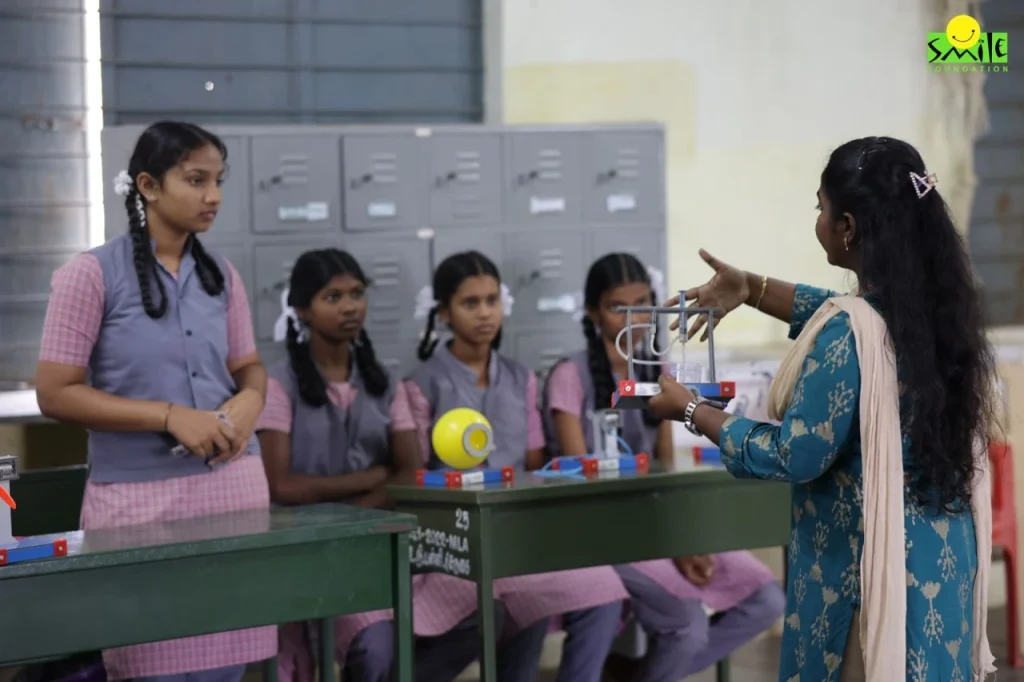
Smart classrooms and STEM labs enable hands-on learning, allowing students to explore climate-resilient technologies and environmental science through experimentation. This approach helps demystify climate change and makes it tangible.
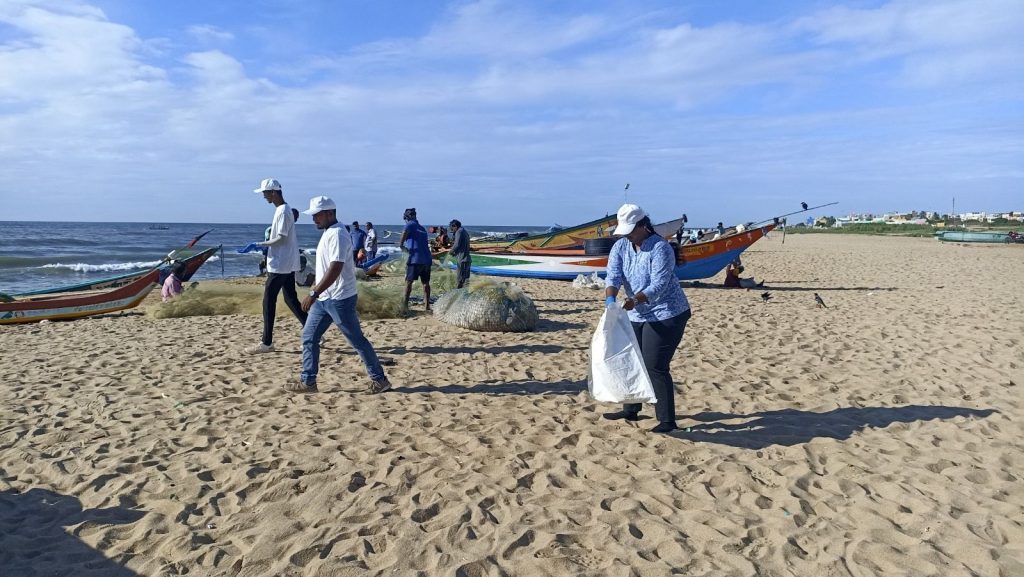
Importantly, Smile Foundation extends learning beyond classrooms. Community-based climate awareness campaigns encourage households to adopt energy-efficient practices and sustainable behaviours. Eco-clubs, exhibitions and student-led projects give children agency, allowing them to design solutions such as rainwater harvesting models or waste segregation systems.
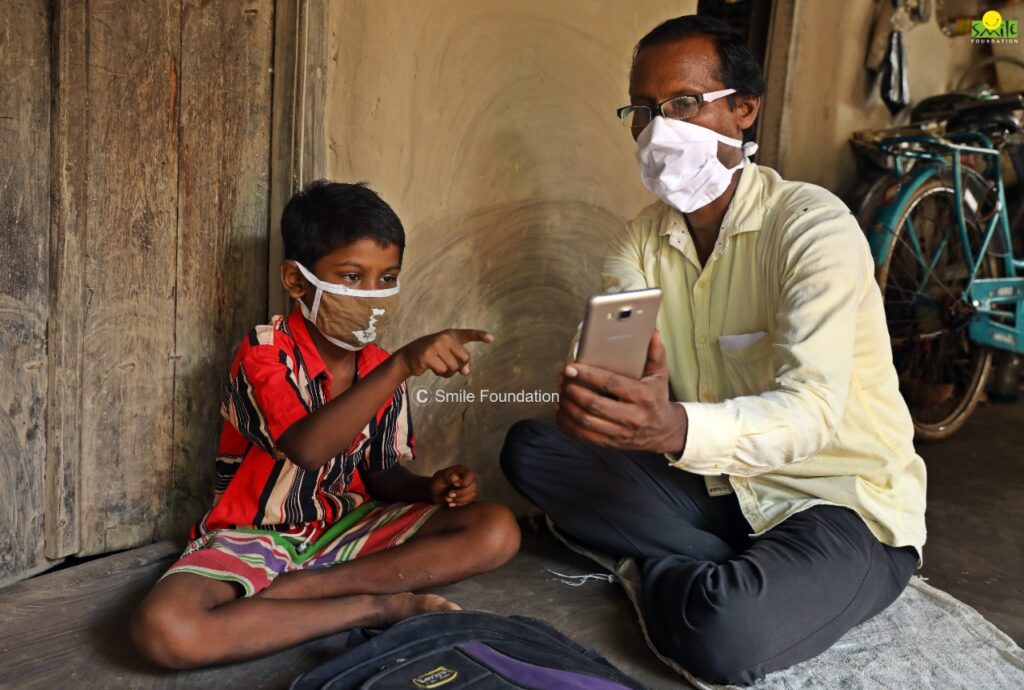
In regions affected by climate-related disruptions, Smile Foundation’s mobile education units and technology-enabled learning models help ensure continuity. These interventions recognise that climate resilience in education is not only about content, but also about access and adaptability.
Educating for a climate-altered future
As climate impacts intensify, early climate literacy is no longer optional. It is a developmental necessity. Introducing climate education before Class 10 ensures that all students, including those who may not progress to higher education, are equipped with essential knowledge and skills.
India’s response to climate change will ultimately depend not only on policy and technology, but on public understanding and collective behaviour. Schools are one of the few institutions that reach nearly every child. Failing to use this space to build climate literacy would be a missed opportunity with long-term consequences.
By embedding climate education early, India can raise a generation that is not only aware of environmental risks but capable of adapting, innovating and leading. Programmes like those implemented by Smile Foundation demonstrate that climate literacy can be inclusive, practical and empowering.
In a country where climate change is already reshaping childhood itself, preparing children to understand and respond to this reality is not just an educational priority. It is a responsibility.